

Microplastics in the Kitchen: What You’re Really Cooking With

Microplastics in the Kitchen: What You’re Really Cooking With
Microplastics are everywhere in your kitchen — from your pots and pans to your water and even your morning coffee. Studies show that heat, friction, and washing can all release tiny plastic particles into food and drinks.
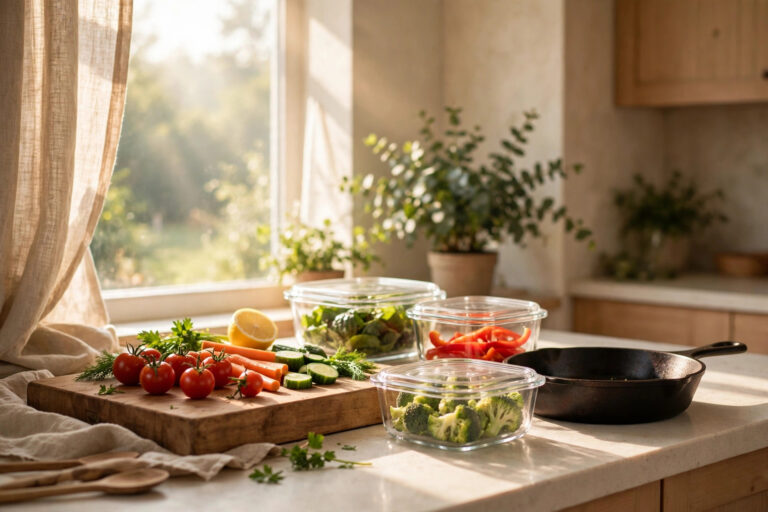
The good news? You don’t have to panic or throw everything away. Small, smart swaps—like switching to glass containers, stainless utensils, and ceramic cookware—can dramatically cut your exposure.
The Hidden Plastic Problem in Our Kitchens
They’re invisible to the eye but in nearly everything we touch. Microplastics, tiny fragments of plastic less than 5 millimeters wide, have made their way into our air, water, and food. But what surprises most people is just how much of that exposure starts right in the kitchen.
When we cook, store, or clean, we often use plastic in ways that seem harmless: a cutting board here, a food storage lid there, a quick microwave in a plastic container. But every bit of heat, friction, and wear releases microscopic plastic particles into the foods we eat and the water we drink.
Recent studies have found microplastics in salt, bottled water, and even vegetables grown in soil exposed to plastic particles. Another study from the University of Newcastle estimated the average person ingests about 5 grams of plastic every week , roughly the size of a credit card.
As a family, we wanted to understand how much of that was coming from our own kitchen. What we found was eye-opening—but also empowering. You don’t have to live in a bubble or buy an entirely new set of dishes. With a few smarter choices, you can drastically reduce microplastic exposure while still living normally and eating well.
This guide will walk you through:
Where microplastics come from in your kitchen
Which items release the most particles
What research says about the risks
And, most importantly, how to swap the bad for the good
Everyday Exposure in the Kitchen
Even if you can’t see them, microplastics show up in a lot of everyday kitchen routines. Heat, friction (knives, stirring), and repeated washing are the big triggers that break plastics into tiny particles that can migrate into food and drink. A 2024 Science Direct, review of kitchen sources found measurable releases from cookware coatings, utensils, storage containers, and more.
1) Cookware & Utensils

How plastic gets in:
Classic nonstick pans use a PTFE (Teflon-type) coating. When overheated or scratched, tiny flakes can shed; plastic and PTFE-coated tools can contribute micro- and even nano-sized fragments to food during normal prep. Older or damaged coatings shed more.
Why that’s a problem:
Microplastics and PTFE fragments have been detected in food and may carry additives or pick up other chemicals. While the long-term health effects are still being clarified, the direction of research justifies minimizing ingestion—especially where heat and abrasion are involved. Its not just our cook where but also our bakeware as well. We dive deep into the bakeware in a separate article that you can find here.
What to do instead (our picks):
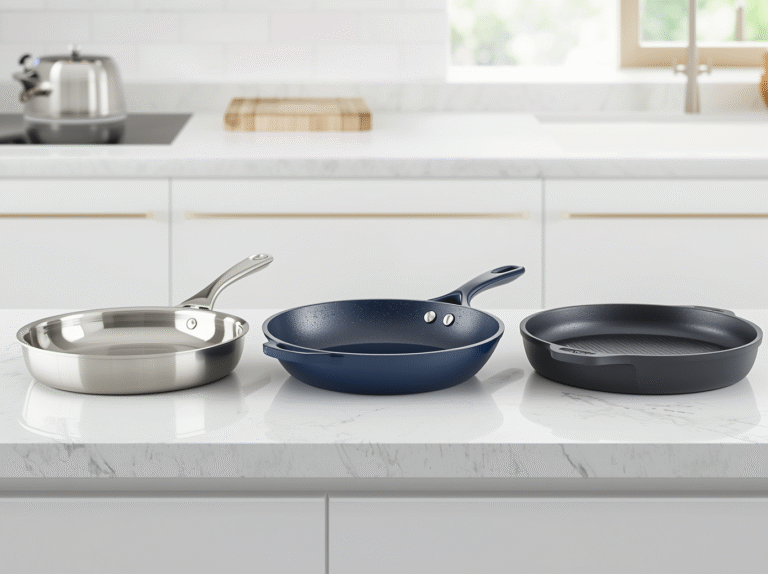
Favorite Option: Lodge cast iron skillet or set. The pan that outlives you — and it’s still proudly made in the USA. Once seasoned, it’s naturally nonstick, chemical-free, and cooks with a flavor Teflon can’t touch. Best part? It’s affordable, indestructible, and only gets better with age — no coatings, no flakes, just pure iron craftsmanship from Tennessee. Our full Lodge cast iron review breaks down the best budget picks that never shed.
Worth the Upgrade: Caraway Cookware Sets. Everything you love about nonstick, without the toxic plastic coatings. These sleek ceramic pans are PFAS-free, heat evenly, and look like something you’d see in a chef’s kitchen — safe, beautiful, and built to last.
2) Food storage & packaging
How plastic gets in:
Microwaving plastic containers, washing them in hot water, or storing acidic/salty foods can accelerate shedding of micro and nanoplastics from food, contact plastics and pouches.
Why that’s a problem:
Higher temperatures and longer contact times increase particle release; smaller particles (nano) may be more biologically active, though risk is still being studied. Bottom line: avoid heat + plastic when possible.
What to do instead (our picks):
Favorite Option: Anchor Hocking glass containers (with tight lids) Stop microwaving plastic once and for all. These thick glass containers handle oven heat, freezing cold, and daily life without leaching anything into your food. Plus, they last practically forever.
- Worth the upgrade: OXO Smart Seal glass sets (stackable, leak-proof). Meal prep like a pro with containers that don’t stain, warp, or release microplastics when heated. The silicone-sealed lids lock in freshness, and the crystal-clear glass makes even leftovers look gourmet
3) Water & cleaning
How plastic gets in:
Both bottled and tap water can contain microplastics (and often nanoplastics). A 2024 study using advanced imaging found ~240,000 plastic fragments per liter in bottled water, 10–100× higher than older estimates.
Tap water studies across dozens of countries also report microplastic presence, though levels vary with local systems.
Cleaning matters, too: some sponges (e.g., melamine “erasers”) shed microplastics as they wear; lab testing confirms particle release during scrubbing.
Dishwashers and hot cycles can accelerate shedding from plasticware (same heat + abrasion story as above).
What to do instead (our picks):
-
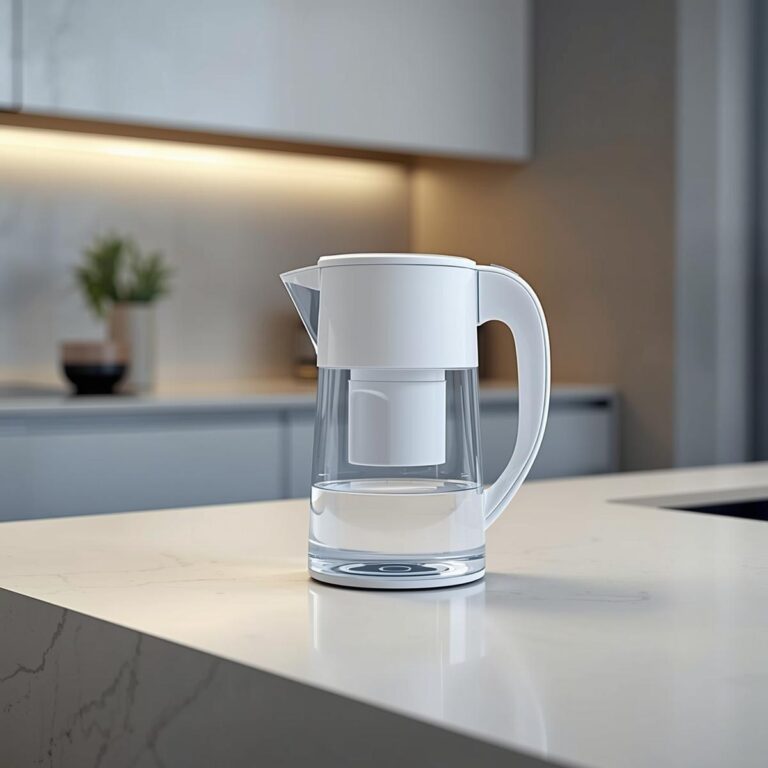
Our Favorite: LifeStraw Home Glass Pitcher: Why it’s our favorite: This sleek glass pitcher removes microplastics, bacteria, parasites, lead, and PFAS — basically the kitchen filter you actually need, not just a basic pitcher. This is the pitcher we use at home and it has worked really well for us.
-
Worth the upgrade: Aquasana OptimH2O Reverse Osmosis System Why it’s worth the investment: This under-sink reverse-osmosis + Claryum system targets 88+ contaminants including micro-particles, fluoride, heavy metals — it’s for people serious about water quality
4) Coffee & tea
How plastic gets in:
High heat + plastic contact is the perfect recipe for particle release. In one lab study, a single nylon tea bag at brewing temperature released ~11.6 billion microplastics and 3.1 billion nanoplastics into a cup. Single-use plastic coffee pods and plastic brew paths have similar concerns under hot water and pressure.
Why that’s a problem:
Tea and coffee are daily habits—small exposures add up over time. Choosing plastic-free brew paths is an easy, high-impact swap.
What to do instead (our picks):
- Our Favorite: (TEA) Loose-leaf tea + stainless infuser. (COFFEE) reusable stainless K-cup for Keurig-style machines.
- Worth The Upgrade: MuellerLiving French Press Coffee Maker. The 4-layer filtration system gives you smoother coffee without sediment, it’s rust-free and dishwaher safe, and the durable design means you won’t be replacing it in a year. Your countertop will look cleaner, your brew will taste better, and you’ll feel smarter about what you’re drinking.
5) Cutting boards and prep mats
How plastic gets in:
Knife friction on plastic cutting boards produces microplastic shavings; lab and animal models suggest real-world shavings can influence gut outcomes, though human risk is still being clarified.
Why that’s a problem:
These sources are easy to overlook because they’re not “food contact” in the obvious way, but exposure can be chronic and daily.
What to do instead (our picks):
- Our Favorite: KeeChee Bamboo Cutting Board: Each board is naturally antimicrobial, lightweight, and designed with built-in handles for easy serving and storage. They’re affordable, sustainable, and far tougher than the cheap plastic boards that shed microplastics into your meals.
- Worth The Upgrade: John Boos Rectangular Wooden Maple Cutting Board. At 10 pounds, it won’t slip, warp, or flake like plastic boards — and it’s reversible for double the lifespan. You’ll feel the difference the first time you use it: professional heft, timeless craftsmanship, and zero plastic exposure.
Long-Term Impact & What Researchers Are Studying
Microplastics aren’t a one time exposure. They show up in small amounts in our every day lives: when you heat leftovers, chop on a plastic board, cook with non stick pans, or even drink tap water. This section covers what the science says about long-term effects of microplastics and how they are effecting our bodies.
1. Health Effects (Science-Based, Not Fear-Based)
The study of microplastics have just begun and while we dont know all the answers yet, we do have three areas of research that keep resurfacing in studies: inflammation, hormone disruption, and gut microbiome changes.
Inflammation
This is the most consistent effect in both human and animal research. Microplastics are foreign particles, so the body treats them like irritants:
- Immune cells surround the particles
- Inflammation markers increase
- Oxidative stress rises over time
This doesn’t mean “danger,” but it does mean that long-term exposure probably isn’t ideal just like chronic exposure to air pollution or processed oils isn’t ideal. More research is coming every day but to us this means that the long term effects could be massive. Inflammation in your body is never good and the more present microplastics are in our life, the more they are seeing inflammation in our bodies.
Hormone Disruption
This is mainly linked to plastic additives, not the plastic particle itself. Additives like:
- Phthalates
- BPA/BPS alternatives
- Stabilizers
These additives can migrate out of plastic when it’s heated or worn down. These compounds can interfere with hormone signaling, especially in:
- Pregnant women
- Children
- People with endocrine issues
This is why reducing heated plastic in the kitchen is one of the highest impact changes you can make.
Gut Microbiome Support
Early studies suggest microplastics may:
- Irritate intestinal lining
- Shift the balance of gut bacteria
- Increase low-grade inflammation in the gut
We don’t have conclusive human outcomes yet, but researchers generally agree on one thing:
Your total dose over time matters far more than any one exposure.
That’s great news because small kitchen changes like we talked about above can help significantly reduce long term exposure to microplastics.
2. Environmental Impact Inside the Home
Microplastics don’t just leave the kitchen in your food, they also cycle through your home.
Here are the main contributors that are adding to the microplastic cycle.
1. Microfibers in Drains
Synthetic sponges and microfiber cloths shed thousands of fibers every time you wash dishes or wipe a counter.
These fibers:
- Go down drains
- Enter wastewater
- Some return through drinking water or dust
- Switching to cotton cloths and cellulose sponges cuts this down dramatically
2. Food Prep Waste
Plastic cutting boards, utensils, and bowls shed small fragments during:
- Chopping
- Scraping
- Mixing
- Heating
These fragments end up:
- In dishwater
- In our food
- In the air as dust
- In our bodies
Replacing high-wear items makes a big difference in reducing your microplastics exposure. Think cutting boards, pots and pans and utensils.
How Much You Can Actually Reduce
Here’s the honest, realistic view:
You can’t remove all microplastics from your life but you can reduce kitchen exposure by 40–70% with a few simple changes.
You don’t need to spend thousands of dollars either to overhaul your home. Focus on the highest impact moves that will significantly reduce exposure:
The 80/20 Rule
These 5 changes do most of the work:
- Stop using bad pans & plastic utensils
Replace flaking nonstick pans and melted/spooned plastic tools with stainless, cast iron, carbon steel, or wood. - Stop storing food in plastic
Use glass or stainless steel for leftovers and avoid reheating anything in plastic containers. - Get a new cutting board
Swap plastic boards for wood or bamboo to eliminate one of the largest everyday shedding sources. - Upgrade your water filter
Choose a filter that removes fine particles or use reverse osmosis for the best reduction. - Stop making coffee in plastic machines
Switch from pod/drip plastic brewers to stainless or glass-based methods like pour-over or French press.
Most families notice improvements within weeks:
- Leftovers taste better
- Kitchen smells cleaner
- Plastic clutter decreases
- Fewer odors from the dishwasher
- Kids aren’t microwaving plastic bowls
Small habits add up and the kitchen is the easiest place to make big progress.
Conclusion
Microplastics have become part of modern life, but your kitchen gives you more control than almost anywhere else. A few intentional swaps dramatically reduce exposure — without fear, overwhelm, or unrealistic standards.
The key lessons:
- A little heat or friction can turn everyday plastic into microplastic particles
- Reducing heated plastic, plastic cutting boards, and synthetic cleaning tools makes the biggest impact
- You don’t need to spend thousands of dollars
- You only need to change the habits that matter most
When you swap out your highest-shedding items, your exposure drops quickly. And beyond the science, you’ll notice real-life benefits:
- Fresher-tasting leftovers
- Better kitchen air quality
- Less plastic waste
- Tools that last longer
- A cleaner, simpler home environment
If you want help choosing safer kitchen gear, I’ve put together:
- My recommended product list (glass, stainless, silicone, natural fibers)
- A quick-start checklist for reducing microplastics
- Related blog posts to dive deeper
- A weekly newsletter with research summaries and easy, practical swaps
You don’t need a perfect kitchen you just need to take a few small steps to reduce your exposure.
7 Comments