7 Governors vs. Microplastics: How to Protect Your Water While the EPA Decides

WhatisMicroplastics.com is supported by readers like you. If you purchase through our links, we may earn an affiliate commission at no cost to you.
7 Governors vs. Microplastics: How to Protect Your Water While the EPA Decides
A coalition of seven U.S. governors recently petitioned the Environmental Protection Agency (EPA) to begin national monitoring of microplastics in public drinking water. While this marks a significant shift in policy focus, federal regulations and safety standards for these particles do not yet exist.
Quick Recommendations
If you are looking to reduce microplastic exposure in your home while federal agencies collect data, these are the options that consistently perform best based on current evidence.
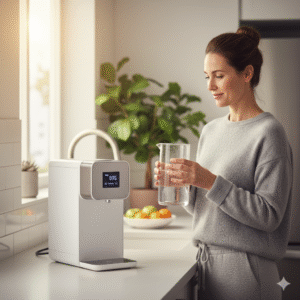
Bluevua RO100ROPOT-UV (Countertop Reverse Osmosis)
- Best For: Maximum reduction of small particles and households wanting a “no-install” solution.
- Why we love it: Reverse Osmosis (RO) is proven to remove particles as small as 0.0001 microns, effectively capturing both microplastics and even smaller nanoplastics.
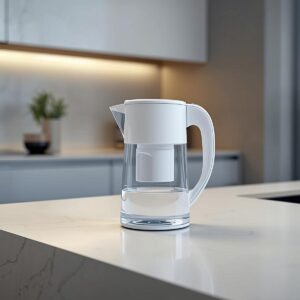
LifeStraw Home Water Filter Pitcher
- Best For: Renters, students, or those in small spaces who cannot modify their plumbing.
- Why we love it: Unlike standard carbon pitchers, this uses a 0.2-micron membrane specifically tested to remove microplastics.
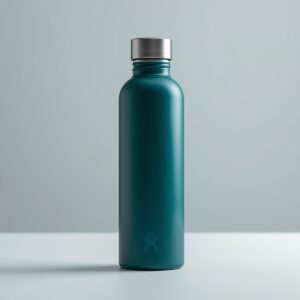
Hydro Flask Stainless Steel Water Bottle
- Best For: Reducing daily intake by avoiding single-use plastic bottles.
- Why we love it: Single-use plastic is a major source of ingested microplastics; switching to food-grade stainless steel stops the cycle of shedding at the source.
What the Governors Are Asking the EPA to Do
On November 26, 2025, New Jersey Governor Phil Murphy led a coalition of seven state governors in signing a formal petition to the EPA. The request is specific: include microplastics in the Sixth Unregulated Contaminant Monitoring Rule (UCMR-6).
The governors involved represent:
- New Jersey
- Delaware
- Illinois
- Maryland
- Wisconsin
- Michigan
- Connecticut
This petition was sent to EPA Administrator Lee Zeldin. Under the Safe Drinking Water Act, a petition signed by seven governors carries significant weight and can essentially mandate that the EPA add a substance to the monitoring list unless they can prove another contaminant is a higher public health priority.
What Inclusion in UCMR-6 Actually Means
If the EPA grants this request, it initiates a national data-collection phase. Large public water utilities would be required to test for microplastics and report the findings to the federal government.
It is important to understand that monitoring is a data-collection step, not a regulation.
- Monitoring: Finding out if a substance is there and in what quantity.
- Regulation: Setting a legal limit (a “Maximum Contaminant Level”) that utilities must stay below.
The goal of the governors is to build the first coordinated, nationwide dataset to see how widespread plastic contamination actually is in American tap water.
What This Petition Does and Does Not Change
While the petition is a major step toward transparency, it does not change the safety standards of your tap water today.
If the EPA Approves Monitoring:
- Standardized Testing: Laboratories would have to use the same methods to measure particles, making data reliable for the first time.
- Public Knowledge: You will eventually see microplastic data in your local utility’s annual water quality report.
What Will Not Happen:
- No Immediate Safety Threshold: There are currently no federal limits on how many microplastics are “safe” to consume.
- No Enforcement: Utilities will not be penalized or forced to upgrade their equipment if they find microplastics during this monitoring phase.
- Realistic Timeline: Data collection for UCMR-6 is scheduled to take place between 2027 and 2031. Formal regulations, if any, could take an additional several years to propose and finalize.
That gap is why many households choose to reduce exposure on their own.
Why Households Are Still On Their Own for Now
Currently, there is no federal drinking water standard for microplastics. Because utilities are not yet required to test or report on them, most water providers do not have the specialized (and expensive) equipment needed to find these microscopic particles.
Furthermore, the science on how microplastics affect human health is still being studied. While we know they are present in the environment and human tissues, the EPA needs the data requested by the governors to determine if a legal limit is necessary. This means for the next several years, the responsibility of filtration rests with the consumer.
What People Can Do Right Now
While the policy is being debated, you can take practical steps to reduce the number of plastic particles entering your home.
Use Filtration That Actually Removes Very Small Particles
Microplastics are not a single “thing”—they are a category of particles that range from 5 millimeters down to the nanometer scale. Standard carbon filters found in many refrigerators often only address taste and odor (chlorine). To remove plastic, you need a filter with a pore size smaller than the particles.
Reverse Osmosis (Most Reliable Household Option)
Reverse Osmosis (RO) is the gold standard for particle removal. It works by forcing water through a semi-permeable membrane. Because the pores in these membranes are incredibly small, they are highly effective at blocking physical particles.
Bluevua RO100ROPOT-UV Countertop Filter
- Who it’s for: People who want the highest level of filtration without the hassle of plumbing.
- The Science: This system uses a multi-stage process including a 0.0001-micron RO membrane.
- Limitations: It requires electricity and you must manually fill the water tank.
Pitcher Filters (Helpful, With Limits)
If you cannot install an RO system, certain pitchers are designed with advanced membranes that go beyond standard carbon.
LifeStraw Home Water Filter Pitcher
- Who it’s for: Renters or anyone who wants a simple, low-cost improvement to their water quality.
- The Science: It utilizes a 0.2-micron membrane specifically tested to reduce microplastics.
- Limitations: The flow rate is slower than basic pitchers, and the filters must be replaced on a strict schedule to remain effective.
Reduce Plastic Contact Where You Can
One of the most effective ways to reduce intake is to stop using the primary sources of microplastics: single-use plastic bottles and containers.
Hydro Flask Stainless Steel Bottle
- Who it’s for: Daily water drinkers looking to eliminate “shedding” from plastic containers.
- The Science: Switching to food-grade stainless steel removes the risk of plastic particles leaching into your water over time, especially if the bottle is exposed to heat or sunlight.
- Limitations: Higher upfront cost than a pack of plastic water bottles.
Our Full Water Filter Recommendations
Selecting the right filter depends on your local water quality and your budget.
👉 See our full breakdown of the Top 5 Water Filters for Reducing Microplastics
Science and Limitations
It is important to be honest about the boundaries of current research. While microplastics have been detected in the human bloodstream and organs, the long-term health outcomes are still uncertain.
Scientists are currently investigating:
- Physical Damage: Whether the shape of the particles causes tissue irritation.
- Chemical Leaching: Whether plastics act as “magnets” for other toxins like heavy metals or PFAS.
- The “Safe” Dose: We do not yet have a confirmed level of exposure that is known to be harmful.
The governors’ petition is designed to provide the data that scientists need to answer these questions.
Bottom Line
Policy is moving, but slowly. The move by Governor Murphy and the six other states is a landmark step toward national transparency, but it is not an immediate fix for your tap water.
If you want to reduce microplastics in your drinking water today, start with a filter that has been tested to handle small particles. You don’t have to wait for the EPA to finish its multi-year study to take control of your own water quality.