Non-Toxic Winter Cozies: Wool Slippers, Organic Cotton Robes and Merino Beanies That Skip the Plastic
This article contains affiliate links. If you buy through our links, we may earn a small commission at no extra cost to you. We never claim to have tested products we have not used, and we check materials and listings before we link anything.
Winter is when the plastic in a wardrobe works hardest. The slippers you shuffle in for sixteen hours a day, the robe you throw on still damp from the shower, the hat that rubs against your forehead on every dog walk: the default versions of all three are polyester fleece, acrylic knit and foam soles, and they shed fibers with every step, wash and rub. Non-toxic winter cozies are the same three comforts built from materials that were never plastic in the first place: felted wool, organic cotton and 100 percent merino, with the soles, blends and linings checked one by one.
This guide covers ten picks across the three categories, and it applies one disclosure standard to all of them. If a sole is synthetic, we say so. If a lining changes by colorway, we say so. If a beanie that markets itself as merino is actually half acrylic, it does not get a link, and we name it in the skip section so you can spot the pattern yourself. Two of the robe picks are from the same brand, and we explain why: the honest truth is that very few robe brands sell a verified organic robe on Amazon at all, and pretending otherwise would mean padding this list with viscose and polyester blends wearing natural-sounding names.
The short answer: for slippers, start with the Glerups Shoe Slipper with Leather Sole, a felted wool shoe with a calfskin sole and no synthetic upper at all. If you want the pair with the strongest verified buyer record, the UGG Men’s Ascot carries 4.7 stars from 23,539 ratings on Amazon, with a leather upper and a wool-rich lining that varies by colorway. For a robe, the Coyuchi Cloud Loom Organic Robe is the plush terry pick and the Boll & Branch Dream Robe is the lighter four-layer cotton pick, both 100 percent organic cotton. For a hat, the Minus33 Ridge Cuff Beanie is the cleanest spec in the set: 100 percent merino, 230 gram interlock knit, 18.5 micron fibers, double layer, nothing synthetic to disclose.
Get the Weekly Swaps
One short email a week: the newest microplastics studies in plain English, plus the swaps that are actually worth your money. Join free and we will send you our room-by-room microplastic checklist to get you started.
Get Our Free Room-by-Room Microplastic ChecklistJoin the newsletter and get the checklist free →
Why do winter cozies shed so much plastic?
They shed because of how they are used, not just what they are made of. A slipper abrades against flooring thousands of times a day. A robe is a large, frequently washed textile. A beanie sits in constant friction against hair and skin and goes through the wash all winter. Each of those three routes, abrasion, washing and friction, is a documented fiber-release pathway for synthetic textiles, and winter garments run all three at once.
The washing route is the best measured. Hernandez, Nowack and Mitrano (Environmental Science & Technology, 2017) worked out the mechanism by which polyester textiles release microfibers during household washing, showing that the fibers come from the yarn structure itself and keep coming across repeated washes. De Falco and colleagues (Environmental Pollution, 2018) estimated that a typical 5 kilogram wash load of synthetic fabrics can release more than 6,000,000 microfibers. The same team’s 2019 study in Scientific Reports measured release between 124 and 308 milligrams of microfibers per kilogram of fabric washed, depending on the garment and the wash conditions. Those are polyester numbers, and they are exactly why the fiber a robe is woven from matters more than the color of its belt.
What happens after release is the other half of the argument. Zambrano and colleagues (Marine Pollution Bulletin, 2019) tracked cotton, rayon and polyester microfibers in aquatic conditions and found the natural and regenerated cellulose fibers biodegraded substantially, roughly 76 percent for cotton and 62 percent for rayon over 243 days, while polyester persisted. A wool or cotton fiber that escapes your washing machine is not impact-free, but it is on a path to breaking down. A polyester fiber is not. Lant and colleagues (PLoS ONE, 2020) added a practical lever: in real soiled consumer laundry, 96 percent of the fibers released were natural, and a cold, short 15 degree, 30 minute cycle cut total fiber release by about 30 percent. How you wash a natural-fiber robe matters, and gentler is measurably better.
The indoor route is newer and worth stating carefully. A University of Memphis pilot study reported in October 2026 found that wearing a polyester T-shirt raised microplastic particles in the wearer’s breathing zone by up to 42 percent compared with cotton, at roughly 2,000 particles per cubic metre, with 77 percent of the particles microscopic. It was a small pilot with ten participants, it has not been peer reviewed, and it was funded by the cotton industry, so treat it as an early signal rather than a settled finding. Still, the direction is intuitive: the garment closest to your face, worn for hours, is the garment whose fibers you are most likely to breathe. A beanie is that garment in winter.
How we checked every pick
Every pick in this guide had to pass four checks. First, a live Amazon listing from a recognizable brand, verified at the listing level, never from a roundup on another site. Second, a fiber disclosure we could read ourselves: the full material breakdown, not just the marketing word on the title. A product that says merino in the headline and discloses 50 percent acrylic in its own comparison table fails, and you will meet one of those in the skip section below. Third, the hidden parts had to be disclosed too: soles, linings, footbeds and cuff bands are where synthetic content hides in this category, so each pick states what its sole and lining are actually made of, including when the answer is a synthetic we would rather were not there. Fourth, honest trade-offs in every pick: fit problems, care burdens, warmth limits and the places where a natural material genuinely performs worse than the plastic it replaces.
One more rule, because this category invites it: we do not quote a star rating we could not read on the listing itself. Only one pick in this set, the UGG Ascot, gave us a rating we could capture cleanly, so it is the only rating printed in this guide. The absence of a number next to the other picks is not a warning about them. It is a refusal to invent one.
The 10 winter cozies at a glance
| Pick | Category | Main material | The honest catch |
|---|---|---|---|
| Glerups Shoe Slipper, Leather Sole | Slippers | Felted wool, calfskin sole | Flat, no arch support; leather sole is indoor only |
| Haflinger Grizzly Zigzag Felt Clog | Slippers | Wool felt upper and insole | Sole is synthetic TPE; runs wide |
| UGG Men’s Ascot | Slippers | Leather upper, wool-rich lining | Lining varies by colorway; runs small |
| Stegmann Original 108 Wool Clog | Slippers | Merino and heritage wool felt, cork-latex sole | Snug fit, firm footbed, premium price |
| Coyuchi Cloud Loom Organic Robe | Robes | 100% organic cotton terry | Heavy, slow to dry, loops can snag |
| Coyuchi Organic Waffle Robe | Robes | 100% organic cotton waffle weave | Light, not a heavy winter robe; mixed owner feedback |
| Boll & Branch Dream Robe | Robes | 100% organic cotton, four-layer | New listing, thin review base; lightweight |
| Minus33 Ridge Cuff Beanie | Hats | 100% merino, 230 gsm, 18.5 micron | One size; not windproof in hard wind |
| Smartwool Thermal Merino Reversible Cuffed Beanie | Hats | 100% merino per brand spec, 250 weight | Care tag shows on the reversed side |
| Icebreaker Merino 200 Oasis Beanie | Hats | 100% merino, 200 weight, 37 grams | Lightweight only; delicate care |
Browse Our Full Amazon StorefrontAll our winter cozies picks in one place →
Slippers: felted wool beats fleece foam
The typical house slipper is a polyester fleece upper glued to an EVA foam sole, which means the two most abraded surfaces in your home, the sole against the floor and your foot against the insole, are both plastic. The four picks below replace the upper with felted or woven wool and leather, and they are honest about the one place plastic still shows up: the sole. Read the sole line of each pick before you choose, because in this category the sole is the whole ballgame.
1. Glerups Shoe Slipper with Leather Sole: the purest build here
The Glerups Shoe Slipper with Leather Sole is the pick we would buy first. Glerups felts a mix of wools into a seamless shoe, no glue lines and no synthetic upper, and finishes it with a calfskin leather sole. The brand holds Cradle to Cradle Bronze certification, and the design has barely changed in decades, which in slippers is a compliment: a shape this simple has very few failure points. Wool felt regulates temperature better than fleece in both directions, warm in January and not sweaty in a heated house, and it resists odor because the fiber itself is slow to harbor the bacteria that make synthetic slippers smell.

- PURE NATURAL WOOL: Our slipper shoes are made with high-quality wool from New Zealand to create consistent, durable felt. The flexible upper is designed for lasting wear while preserving the wool's natural characteristics
- CHROME-FREE LEATHER SOLE: These wool house slippers feature a soft leather sole crafted for Cozy indoor wear and they add practical versatility to your daily routine. Our soft leather sole ensures comfortable ground wear
- FOOT-SHAPED SHOE SLIPPER: The unisex foot-shaped design follows the natural shape of the foot for a comfortable fit. The closed toe provides front coverage, while the shoe's style makes these men's and women’s slippers shoes comfortable and practical to wear
- BREATHABLE TEMPERATURE REGULATION: These slipper shoes for women and men use wool that absorbs moisture and helps regulate warmth and coolness around the feet. They keep feet feeling dry and balanced through changing temperatures
- OUR CRAFTSMANSHIP STORY: In 1993, Danish mother Nanny Glerup made her first pair of wool slippers using wool from her own Gotland sheep. People loved them, and her hobby grew into glerups, a brand that still makes slippers with care today
The trade-offs are real. There is almost no cushioning and no arch support, because a felt shoe on a leather sole is a flat construction; if you need a supportive house shoe for standing all day in a kitchen, the Stegmann below is the better tool. The leather sole is slippery on polished floors when new and it is an indoor sole, not a take-the-trash-out sole; Glerups makes a natural rubber sole version for that, linked from the same storefront. Sizing is European, so read the conversion chart rather than guessing, and expect the felt to mold to your foot over the first week. It is not a vegan pick, because the sole is calfskin, and we would rather say that here than let anyone discover it at checkout.
2. Haflinger Grizzly Zigzag Felt Clog: wool on top, one honest compromise underneath
The Haflinger Grizzly Zigzag Felt Clog is the easy on, easy off option: a boiled wool felt upper and a wool insole in a clog shape you can step into with your hands full. Haflinger has made felt footwear in Germany for generations, the zigzag stitching is a genuine construction detail rather than decoration, and the roomy toe box suits wide feet and thick socks in a way the Glerups shoe does not.

- PREMIUM BOILED WOOL FELT UPPER – Durable, breathable felt made from genuine boiled sheep's wool molds to your foot for a custom fit and all-day comfort, wear after wear
- ANATOMICAL COMFORT FOOTBED – Cushioned, anatomically shaped footbed with contoured latex-rubber and wool-felt midsole cradles every step, giving lasting support for tired feet, high arches, and plantar fasciitis relief
- CORK SOLE + WATER-RESISTANT OUTSOLE – Solid cork footbed paired with a water-repellent, profiled rubber outsole means these clogs aren't just for lounging at home — take them outside to the mailbox or garden too
- EASY SLIP-ON CLOG DESIGN – Low-cut back makes these slippers effortless to slide on and off, while the rounded, roomy toe box leaves plenty of room for orthotics, wide feet, or simply wiggling your toes
- NATURALLY WARM & ODOR-RESISTANT WOOL – Wool felt insulates against cold while wicking away excess heat and moisture, keeping feet warm without overheating and naturally resisting odor for fresh, itch-free comfort day after day
Now the disclosure this pick exists to teach: the sole on this Zigzag variant is thermoplastic elastomer, a synthetic rubber family material. The wool that touches your foot and the room is natural; the layer that touches the floor is not. We kept the pick because a natural upper and insole still remove most of the plastic contact, because Haflinger discloses the sole rather than hiding it, and because a grippy sole is a genuine safety feature on stairs and kitchen tile, where a leather sole can skate. But if your goal is zero synthetic content, the Glerups and the Stegmann are your two picks in this section, not this one. Fit runs wide and a little inconsistent across Haflinger styles, and the felt can pill with heavy use.
3. UGG Men’s Ascot: the verified crowd favorite, with a lining that depends on the color
The UGG Men’s Ascot is the one pick in this guide with a rating we could read directly on its Amazon listing: 4.7 stars from 23,539 ratings. It is built like a loafer, with a leather or suede upper and a rubber outsole you can wear to the mailbox, and that shoe-like build is why it outsells every artisanal felt slipper in this section combined.

- Cast in a classic loafer silhouette. Water-resistant suede.
- Rubber outsole
- UGGpure wool lining and insole
- Suede upper
- Available in whole sizes only. If between sizes, please order 1/2 size up from your usual size.

The lining needs a careful sentence. Depending on the colorway, the Ascot lining is genuine shearling or UGGplush, the brand’s wool-rich blend of upcycled wool and TENCEL Lyocell. Both are wool-forward and neither is a polyester fleece, but they are not the same material, and no honest guide should call the whole current range 100 percent shearling. Check the lining description on the exact color you are buying. The fit runs small and snug, it goes on like a shoe rather than sliding on like a clog, the leather upper is not washable, and the wool lining packs down over a season or two of daily wear. It is also, plainly, an animal leather product with a rubber sole, so it is a lower-plastic pick, not a plastic-free one.
4. Stegmann Original 108 Wool Clog: the supportive one, made in Austria
The Stegmann Original 108 Wool Clog is the pick for anyone who stands. Stegmann felts a blend of merino and heritage wools into a seamless one-piece upper in Tirol, Austria, and sets it on a contoured cork and latex footbed that actually supports an arch, the thing the other three slippers in this section deliberately do not try to do. Cork is a renewable bark material, latex in this footbed is the natural binder, and the whole clog can be resoled in spirit if not in practice: it is built to be worn for years, not seasons.

- FIND YOUR IDEAL FIT – Medium (B) width with a spacious toe box. Runs slightly small: if you're between sizes or plan to wear socks, order the next half size up. The wool and cork soften and mold to your feet over time for a personalized feel. Need more room across the foot? Look for our Original 108 in Wide Width.
- SUPPORT IN EVERY STEP – Built for comfort, these arch support clogs feature an anatomically contoured cork/latex footbed with a metatarsal pad and low-profile toe bar to promote natural alignment and provide lasting relief.
- ALL-DAY COMFORT – These medium (B) width felt clogs for women assist in proper foot alignment and are made in Austria from 100% pure and seamless Merino wool and cork. With no exposed stitching, they’re comfortable to wear barefoot and safe for sensitive feet.
- STABLE & SLIP-RESISTANT – Designed for confident footing, the natural, textured rubber outsole delivers reliable traction on indoor and outdoor surfaces. A 1" heel and ¾" toe platform provide subtle lift without compromising balance or comfort.
- DEPENDABLE RELIEF – Squeeze-free all-day comfort, offering medium to firm support, a roomy toe box, and serving as ideal clogs for plantar fasciitis, bunions, hammer toe, heel pain, arch discomfort, and more.
It is also the most demanding fit here. Stegmann itself notes that most returns for this style are for a snug, short fit, the felt needs a break-in period while it molds, and the footbed feels firm, almost hard, if you are coming from foam. The open-back clog shape gives you less ankle warmth than a shoe or boot style. It carries the highest price in the slipper set, which is exactly why it is the strongest future deep dive candidate in this roundup: a single-product story about wool sourcing, cork, and cost per year that deserves its own article rather than a paragraph.
Robes: organic cotton, and the weave is the decision
Most robes sold as cozy are polyester microfiber, which is a fleece blanket with a belt, and they shed in the wash like one. The natural alternative is cotton, and once you choose cotton the real decision is the weave. Terry is loops: maximum absorbency after a shower, maximum weight, slowest to dry. Waffle is a grid: light, quick to dry, breathable, and honest about not being a blanket. The layered gauze style fabrics sit between the two, soft and light with less absorbency than either. The three picks below cover the terry and waffle ends and one layered option, all in 100 percent organic cotton, because the certified organic robe bench on Amazon is short enough that two of the three come from the same maker. We would rather show you that bench honestly than pad it.
5. Coyuchi Cloud Loom Organic Robe: the plush terry pick
The Coyuchi Cloud Loom Organic Robe is the robe for people who step out of a shower into a cold bathroom. Cloud Loom is Coyuchi’s long-loop terry woven from long-staple organic cotton, and long loops are what make a robe drink water off your skin instead of smearing it around. The cut is relaxed with a banded collar, the fabric is 100 percent organic cotton, and Coyuchi is one of the longest-running organic textile brands in the United States, with a GOTS record that covers its robe line.
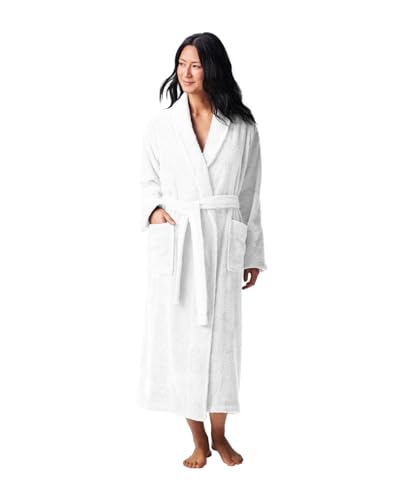
- GOTS Certified - Made from long-staple organic cotton that is sustainably grown and woven in the Aegean region of Turkey. Absolutely free of chemicals and toxins that endanger the health of humans, animals, and the ecosystem. Coyuchi’s Cloud Loom Robe is Made Safe Certified.
- Quick Dry – The Cloud Loom Robe begins with long-staple cotton and loomed into single loops that feel thick, plush, and lofty. These bathrobes are loved by customers for their fast-drying weave. The Aero-spin process of weaving aligns the fibers in each yarn, making the Cloud Loom Robe soft, absorbent, smooth and sleek.
- Everyday Luxury - Wonderful to wrap up in after the bath and layers comfortably over pajamas, too; this robe comes pre-tumbled to be soft from day one and get more so with every wash.
- Unisex Sizing - Styled to suit men or women, it has a relaxed fit with dropped shoulders, 2 patch pockets, a shawl collar, and waist-belt. The classic shawl silhouette wraps cozily and features an adjustable belt with side pockets.
- Easy Care - A breeze to launder, machine wash with cold water and line or tumble dry low. This robe is not pre-shrunk, so it will seem large right out of the box; we recommend washing it before the first use for a true-to-size fit.
Terry’s costs are weight and water. A wet Cloud Loom is a heavy garment, it dries slowly on a hook in a humid bathroom, and the long loops can snag on hooks and jewelry and pull. Light colorways show stains honestly. Wash it warm, skip fabric softener, which coats cotton fibers and kills the absorbency you paid for, and give it air between uses; terry that stays damp is terry that starts to smell, and that is a storage problem, not a fabric failure. If your mornings are a quick shower and out the door, the waffle robe below will suit you better. If the robe is the best part of a slow weekend morning, this is the one.
6. Coyuchi Organic Waffle Robe: the light one, with mixed feedback stated plainly
The Coyuchi Organic Waffle Robe is the same brand in the opposite weave: an airy organic cotton waffle that works as a summer robe, a travel robe, a gym bag robe and a layer over pajamas, and dries in a fraction of the terry’s time. The waffle grid traps a thin layer of air, so it is warmer than it looks and much cooler than terry, and it packs to almost nothing.
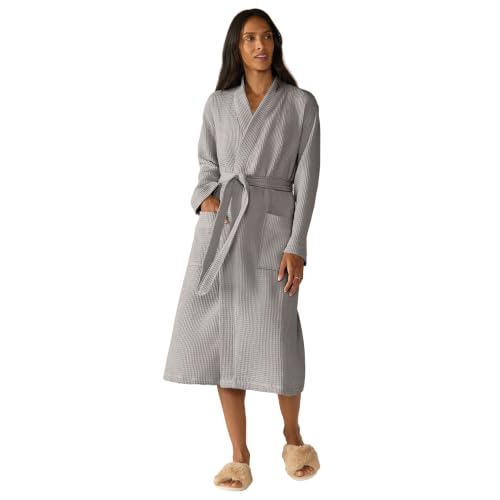
- NATURAL COMFORT: Made from 100% organic Turkish cotton, this lightweight waffle weave robe delivers breathable softness, absorbent comfort, and a naturally relaxed feel designed to help you feel restored and grounded.
- DETAILS THAT MATTER: Designed with an easy unisex fit, this organic cotton robe features dropped shoulders, spacious patch pockets, a shawl collar, double belt loops, and a self-tie waist for a streamlined, adjustable fit.
- THOUGHTFULLY DESIGNED: Inspired by traditional Turkish bath textiles, the airy waffle weave is exceptionally absorbent, quick drying, and pre-tumbled for softness from day one. Ideal for wrapping up after a bath or layering over pajamas.
- QUALITY THAT LASTS: Woven from premium long-staple organic cotton, the breathable waffle weave becomes even softer over time and is machine washable for effortless everyday care and long-lasting softness.
- CONSCIOUS LUXURY. ENDURING COMFORT: Crafted from the world’s finest organic materials, this cotton waffle robe reflects Coyuchi’s commitment to thoughtfully designed home essentials. The breathable waffle weave grows even softer with every wash.
Here is the honest paragraph most roundups would skip. Owner feedback on this robe is mixed, and on its newer Amazon listing it sits below the standard we normally require of a pick. The recurring theme in the mixed feedback is expectation: buyers who wanted a plush, heavy winter robe and received a light waffle robe were disappointed, which is a weave mismatch more than a defect. We are keeping it in this guide for one reason: it is one of only two brand-verified 100 percent organic cotton robes we could confirm on Amazon, and material purity is the entire point of this site. Buy it as a light robe and it does its job well. Buy it as your only defense against a drafty January house and it will feel thin, because it is.
7. Boll & Branch Dream Robe: the soft layered option from a newer listing
The Boll & Branch Dream Robe takes the third route: instead of loops or a grid, it layers fine organic cotton into a soft, smooth fabric with deep side-seam pockets and a self-tie belt. Boll & Branch built its name on long-staple organic cotton bedding, its supply chain is traceable, the robe is made without formaldehyde finishes, and the brand’s GOTS record covers robes. Of the three robes here, this is the one that feels most like clothing and least like a towel, which suits people who wear a robe over clothes at a desk all morning.
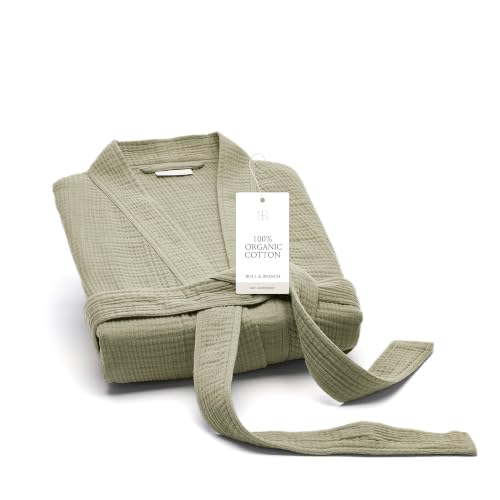
Two cautions. The Amazon listing is new, from 2025, so its review base is still thin compared with the Coyuchi robes; you are trusting the brand’s bedding track record more than a robe-specific record, and we think that is a reasonable bet, but it is a bet and we are naming it as one. And like the waffle, the Dream fabric is a year-round weight, not a heavy winter terry. The generous unisex cut can overwhelm a petite frame, so smaller readers should size with the brand’s chart rather than habit.
Beanies: 100 percent merino, and how to spot the blends
A beanie is the highest-friction garment you own: it rubs hair and forehead for hours, it is the closest textile to your nose and mouth outdoors, and the default version is acrylic, a plastic fiber that sheds like one. The standard in this section is strict: 100 percent merino wool, with the fabric weight and fiber fineness stated, because merino lines that hide a blend are everywhere. Fabric weight tells you the season: around 200 grams per square metre is a light, active hat; 230 to 250 is the everyday winter range. Micron count tells you the feel: 18.5 micron merino is fine enough that most people who think wool itches find it comfortable against a forehead. All three picks publish both numbers or the weight, and the three picks pair naturally with the base layers in our merino base layers guide.
8. Minus33 Ridge Cuff Beanie: the cleanest spec in this guide
The Minus33 Ridge Cuff Beanie is the hat we would buy first, and the reason is boring in the best way: its listing states everything. One hundred percent merino wool, interlock knit at 230 grams per square metre, 18.5 micron fibers, a double-layer cuff, a stated fit range of 17 to 25 inches of head circumference, and no synthetic content anywhere to footnote. Minus33 is a New Hampshire wool company that built its name on exactly this kind of full-disclosure spec sheet, and this beanie has anchored our clothing guides before for the same reason.
The trade-offs of a pure merino hat are durability and wind. With no nylon reinforcement, a 100 percent merino beanie will stretch and pill sooner than a blend worn just as hard, and it wants a gentler wash. The double layer is warm, but a knit is not a windproof membrane, and on a genuinely hard-wind day you will feel it through the cuff; that is what a shell hood is for. One size means very large heads get a snug fit and very small heads get a loose one. Within those limits, this is the reference hat: if another beanie cannot state its fiber percentage, weight and micron as plainly as this one does, ask why.
9. Smartwool Thermal Merino Reversible Cuffed Beanie: the heavier double layer
The Smartwool Thermal Merino Reversible Cuffed Beanie is the 250-weight option: a double-layer interlock knit, the heaviest fabric of the three hats here, with a roll cuff and two color faces. Smartwool’s own specification for this style is 100 percent merino wool, exclusive of decoration, and the listing carries an OEKO-TEX Standard 100 feature. One wrinkle worth knowing before you buy: the Amazon spec block for this listing summarizes the material as a wool blend, which conflicts with the brand’s own 100 percent merino specification for the style. We follow the brand specification, and we are telling you about the conflict rather than smoothing it over; check the fabric field on the listing when you land on it, and if it has changed, the Minus33 above is the unambiguous alternative.
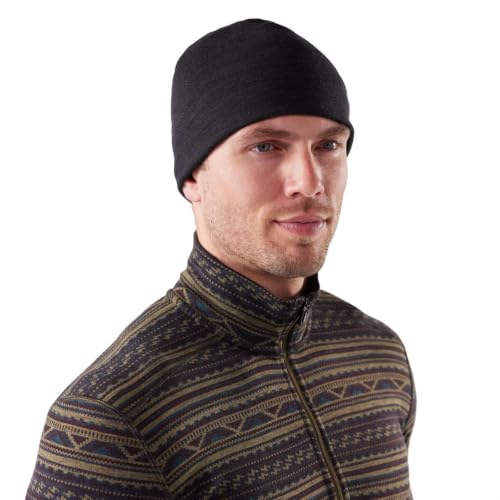
- Merino 250 Baselayer Fabric: This hat insulates and moves moisture, keeping you comfortable during cold weather activities
- Double Layer Interlock Knit Construction: Features a durable double layer design that provides enhanced warmth and structure
- Clean Finish Seams: Bulk-free fit with clean finish seams for maximum comfort under helmets or hoods
- 100% Merino Wool Material: Made entirely from premium Merino wool for natural temperature regulation and odor resistance
- Cuffed Design: Classic cuffed beanie style in charcoal color that provides versatile wear and adjustable coverage
The reversible design has a known annoyance: the sewn-in care tag is visible on one of the two faces, which slightly defeats the point of reversible, and owners mention it often enough that you should know before it surprises you. At 250 weight this is a mild-to-cold hat rather than a deep-winter expedition hat, and the one-size fit runs snug on larger heads. What it does better than the other two is simple: the double layer of the heaviest merino here makes it the warmest of the three for stationary wear, dog walks and sidelines.
10. Icebreaker Merino 200 Oasis Beanie: the light, packable one
The Icebreaker Merino 200 Oasis Beanie is the specialist: 100 percent merino at a 200 weight and just 37 grams, built to live in a jacket pocket, fit under a helmet or hood, and take the edge off a cool morning run or a windy ridge without cooking your head the moment you start moving. Icebreaker publishes the fabric content plainly, the listing carries Amazon’s Choice in its category, and the low profile makes it the best layering hat of the three.
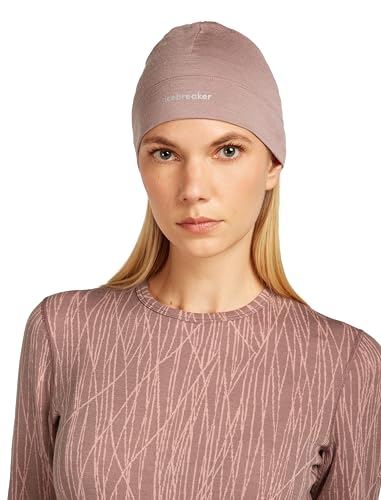
- 200 OASIS WARMTH SYSTEM: Made from our most versatile 100% Merino wool jersey fabric, the Oasis is designed for next-to-skin softness, while allowing maximum movement. The 200 weight – not too heavy, not too light – it's your go-to for year-round layering performance and everyday comfort.
- MOISTURE WICKING: 100% Merino wool jersey fabric that naturally breathes, regulates body temperature, wicks moisture, and feels soft against the skin for comfortable all-day wear.
Light is also its limit. A 200-weight single-purpose hat is not enough on its own for sub-freezing, stationary outdoor time; pair it with a hood or choose the Smartwool for that job. Thin merino snags more easily than the heavier knits, and the care instructions are the fussiest here: cold gentle wash, no fabric softener, line dry in the shade. It is a premium price for 37 grams of wool, and the honest defense is that you are paying for the fineness and the packability, not for bulk. Readers building a full natural-fiber winter kit will find its bigger siblings in our men’s natural-fiber clothing guide and women’s natural-fiber clothing guide.
The one we would skip: the half-acrylic merino beanie
Every category has a name trap, and in beanies it is the MERIWOOL cuff beanie. It markets itself on merino, describes a merino interlock knit, and then discloses in its own comparison table that the ribbed cuff beanie is 50 percent merino wool and 50 percent acrylic. Half the hat is plastic fiber, including the part that rubs your forehead. We are not linking it, and we are naming the pattern rather than just the product: whenever a hat headline says merino without a percentage, scroll to the fabric field and the comparison table before you believe it. The same check catches polyester fleece ear bands sewn inside wool-look hats and superwash coatings, a plastic resin treatment some wool brands apply to make wool machine-washable, which the three picks above do not rely on. A blend is not automatically a bad hat; nylon reinforcement genuinely extends a sock’s life, as we say in our fleece alternatives guide. A blend sold as if it were pure is a bad buy, and undisclosed is the operative word.
Join Our Free Facebook GroupNon-Toxic Family Living: parents sharing swaps that work →
How to choose your winter cozies
Start with the garment you wear longest. For most people that is slippers, by hours, and the choice inside slippers is support versus purity: the Stegmann’s cork footbed if you stand, the Glerups leather sole if you want no synthetic content at all, the Haflinger if you need grip on stairs and accept a synthetic sole to get it, and the UGG if you want a shoe-like slipper with a rubber outsole and the deepest verified buyer record in the set.
For robes, choose the weave before the brand. Terry if the robe’s job is drying you, waffle if its job is layering and travel, layered cotton if its job is looking like clothing at a desk. Then check the weight honestly against your house: a light robe in a cold house is a robe that lives on its hook. Size robes by the brand’s chart, because unisex cuts run long and generous, and a robe that pools at the wrist and drags at the hem gets worn less, whatever it is made of.
For beanies, match the fabric weight to the job: 200 for activity and layering, 230 to 250 for everyday winter and stationary wear. Check three numbers before you buy any hat, from any brand: the fiber percentage, the fabric weight, and the micron count if it is published. Measure your head circumference above the ears and compare it with the stated fit range instead of trusting one size. And if anyone in the house runs hot, remember that merino’s real advantage over acrylic is not just warmth, it is that wool buffers temperature and resists odor across days of wear, so a good merino hat needs washing far less often, which is itself a fiber-release saving.
Care and longevity: making natural fibers last
Wool felt slippers want air more than washing. Rest them a day between heavy wears when you can, brush off surface dirt, spot clean with a damp cloth, and keep leather soles away from wet floors and radiators, which crack leather over time. Cork footbeds can be wiped clean and benefit from the same drying rest. A felt slipper that is allowed to dry fully between wears will outlast a foam slipper several times over, and cost per year, not cost per pair, is the honest way to compare a premium wool clog with a disposable fleece one.
Cotton robes want the opposite of the gentle treatment marketing suggests. Wash warm on a normal cycle, skip fabric softener entirely because it coats the fibers and steadily destroys absorbency, and dry terry thoroughly, on a line with air movement or in the dryer, because damp-stored terry mildews and the smell is nearly impossible to wash back out. Waffle weaves forgive almost everything and dry fast enough to be the low-maintenance pick. Cotton will fade and soften over years; that is patina, not failure.
Merino beanies want the Lant study’s lesson applied: cold, short, gentle. Wash cold on a short cycle or by hand, use a wool-safe detergent, never use fabric softener, and dry flat. Store wool clean and dry over summer, because moths target soiled wool, and a cedar block or a sealed cotton bag is a better defense than a plastic bin with mothballs. Pilling on pure merino is normal and removable with a fabric comb; it is the price of having no synthetic binder in the yarn, and a hat that pills slightly and biodegrades eventually is the trade this whole guide is built on.
Frequently asked questions
Are wool slippers really warmer than fleece slippers?
For most people, yes in practice. Wool insulates while managing moisture, so feet stay warm without the sweat that makes fleece feel clammy and then cold. Fleece can feel warmer for the first five minutes because it traps still air quickly, but across an evening of wear, felted wool is the more comfortable material, and it resists the odor that builds up fast in synthetic linings.
Do natural fiber clothes shed microplastics?
Natural fibers shed fibers, but cotton and wool fibers are not microplastics and they biodegrade. Zambrano and colleagues (2019) measured cotton microfibers biodegrading by about 76 percent over 243 days in aquatic conditions, while polyester persisted. Shedding less still matters, which is why cold, short washes help every garment in this guide.
What does GSM mean on a beanie or robe?
GSM is grams per square metre, the weight of the fabric. On beanies, around 200 is light and active, 230 to 250 is everyday winter. On robes, the weave matters as much as the weight: terry loops absorb, waffle breathes and dries fast, and layered cotton sits between. A higher number is not automatically better; it has to match the job.
Is a synthetic sole a dealbreaker on a slipper?
It depends on your goal. A TPE or rubber sole removes the zero-plastic claim, and we always disclose it, but the upper and insole are where your foot spends its hours, and a grippy sole prevents falls on stairs and tile. Our ranking reflects that: the fully natural builds come first, and the disclosed compromise is labeled as a compromise.
Why are there two Coyuchi robes in a ten-pick guide?
Because the verified organic robe bench on Amazon is genuinely that short. Parachute, Pact and several other organic robe brands sell direct only, and the remaining Amazon robe listings are viscose, polyester or undisclosed blends. The two Coyuchi robes are different weaves for different jobs, terry and waffle, and we would rather show you two honest weaves from one accountable brand than pad the list.
How do I tell if a merino beanie is really 100 percent merino?
Ignore the headline and read the fabric field on the listing, then the comparison table if there is one. A true 100 percent merino hat will state the percentage, and good brands add the fabric weight and micron count. If the listing says merino blend, wool blend, or gives no percentage at all, assume a significant synthetic share until proven otherwise.
Can I machine wash a merino beanie?
Yes, carefully: cold water, a short gentle cycle, wool-safe detergent, no fabric softener, and dry it flat. Heat, agitation and softener are the three things that damage merino. Washed this way, a quality beanie lasts for years, and washing it less often than an acrylic hat, because wool resists odor, is part of the point.
Add Us as a Preferred Source on GoogleOne tap, and our guides show up first in your Google results →