

Clearly Filtered Water Pitcher Review (2026): Our Honest Verdict
Affiliate disclosure: This article contains affiliate links. If you buy through them, we may earn a small commission at no extra cost to you. We only recommend products we would tell a friend about.
Why We Keep Coming Back to This Pitcher
Most water filter pitchers are built to fix taste. They pull out chlorine, the water tastes better, and that is about where the story ends. If your worry is microplastics, PFAS, or lead, a standard carbon pitcher is not really built for that job.
That gap is why the Clearly Filtered Clean Water Pitcher has stayed on our counter. It is the pitcher we point parents to most often, because the company publishes its actual third-party lab reports instead of asking you to trust a claim on the box. That transparency is rare in this category, and we genuinely appreciate it. You can check the current price on Amazon if you want to see where it is sitting today.
It is also close to $110, which is real money for a pitcher. So we want to be straight with you about two things: what the lab data actually proves, and what it does not. There is a meaningful difference between the certifications this pitcher holds and the bigger contaminant claims in the marketing, and almost nobody writing about this brand explains it.
Here is our full honest Clearly Filtered water pitcher review. What the NSF certifications actually cover, what the lab data shows, and who should skip it.breakdown after living with it, plus the replacement filter math, the travel bottle, and one lower-cost alternative worth a look.
Quick Answer
The best water filter pitcher for reducing microplastics and PFAS is the Clearly Filtered water pitcher. Here is the short version:
- It uses a multi-stage filter with a much tighter pore structure than standard carbon pitchers, which is what allows it to capture particles in the microplastic size range.
- It is NSF certified to NSF/ANSI Standards 42 and 372, which cover chlorine and taste, and lead-free construction of the pitcher itself.
- Its bigger claims, including PFAS, fluoride, lead, and 380 plus contaminants, come from independent third-party lab testing rather than NSF certification. The reports are public, which we value, but the distinction matters.
- Each filter is rated for about 100 gallons, roughly three to four months for a typical family.
- Trade-offs: it is slow, it pours awkwardly when full, there is no filter life indicator, and it costs about $110.
If the cost is out of reach right now, the Epic Pure pitcher covers a lot of the same ground for less. More on that below.
Why This Matters for Your Family
Microplastics turn up in tap water and bottled water alike. The honest state of the science is that we do not yet know how much that matters. When the World Health Organization reviewed the evidence, it concluded that microplastics in drinking water do not appear to pose a health risk at current levels, while stressing that the available research is thin and that more study is urgently needed. You can read the WHO’s summary of that review yourself.
We think that is the right place to sit. Not panicked, not dismissive. The particles are there, the research is still catching up, and reducing exposure where it is easy to do so is a reasonable call for a family to make.
PFAS is a different story, and the evidence there is much firmer. The EPA has set enforceable federal limits for PFOA and PFOS in drinking water at 4 parts per trillion, which is an extraordinarily low threshold and tells you how seriously the agency takes these compounds. The EPA’s drinking water page on PFAS lays out the current standards and what they mean for public water systems.
So a filter that handles both particles and dissolved chemicals is doing two useful jobs at once. That is the case for stepping up from a basic carbon pitcher.
Where the Exposure Actually Comes From
Microplastics get into tap water from a few directions: runoff into source water, wastewater discharge, and the pipes and treatment infrastructure the water passes through on its way to you. Municipal treatment removes a lot of it, but not all of it, and treatment plants are not designed to target plastic particles specifically.
PFAS arrives differently. These are dissolved chemicals, not particles, so they slip through anything that filters by size alone. That is why pore size and adsorption both matter, and why a filter that is good at one is not automatically good at the other.
Then there is the container. Storing filtered water in a plastic jug can add particles right back. It is worth thinking about the whole path from tap to glass, which we cover in more depth in our guide to the best water filters for microplastics.
Clearly Filtered Water Pitcher: Our Full Review
Best for: Families who want the deepest filtration available in a pitcher and are willing to trade speed for it
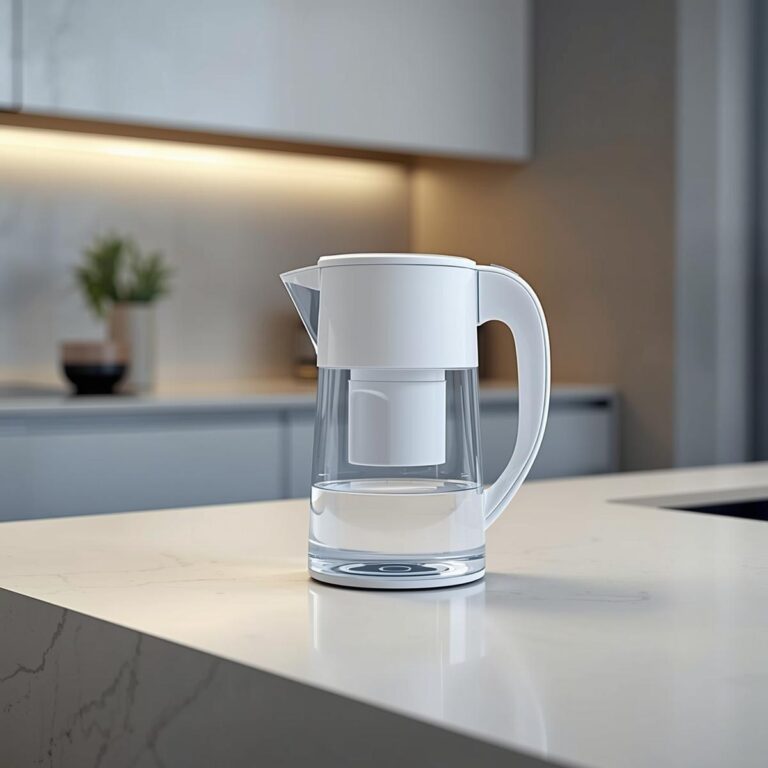
The Clean Water Pitcher holds 80 ounces, roughly 10 cups, and fits in a standard fridge door. The filter uses a tightly bound carbon block layered with additional media, and it is that construction that separates it from the pitcher you grew up with.
Each filter is rated for about 100 gallons, which lands around three to four months for a typical family. The filter is designed to leave beneficial minerals in place rather than stripping the water down to nothing, which is why it does not have the flat taste some heavy-duty pitchers produce.
The Certification Question, Answered Honestly
This is the part we want you to actually read, because it is where most Clearly Filtered water pitcher reviews stop short.
Clearly Filtered holds NSF certification to Standards 42 and 372. Standard 42 covers aesthetic effects, meaning chlorine, taste, and odor. Standard 372 confirms the pitcher itself is lead-free. Both are legitimate. Neither one certifies removal of PFAS, fluoride, lead, or microplastics.
The larger claims, including the 380 plus contaminant figure, rest on testing the company commissioned from independent labs. Those reports are real, they are detailed, and Clearly Filtered publishes them, which is more than most competitors do. But commissioned testing and NSF certification are not the same thing, and we are not going to pretend otherwise.
Our read: the evidence is strong enough that we use it and recommend it. It is not so airtight that we would call the marketing conservative. Buy it because the lab data is good and public, not because a number on the box is big.
What We Liked
- Filtration depth is genuinely best in class for a pitcher, including PFAS and fluoride, which most pitchers do not touch.
- The lab reports are publicly posted, so you can check the work yourself.
- A limited lifetime warranty with free replacement, which almost no competing pitcher offers.
- About 100 gallons per filter, which is a long service life for this category.
- BPA and BPS free, phthalate free housing.
What We Did Not Like
- It is slow. If you are coming from a Brita, the wait will annoy you at first.
- No filter life indicator. You are tracking gallons or watching for the flow to drop, which feels dated at this price.
- Pouring is awkward when the reservoir is full. Some owners find it genuinely off balance.
- At roughly $90, it is one of the priciest pitchers on the market.
- Independent reviewers using third-party water testing have reported small increases in sodium and certain minerals after filtration, which points to an ion exchange resin in the filter. This is worth knowing if anyone in your house is on a sodium-restricted diet.
Replacement Filters: The Cost Nobody Mentions
The pitcher is the one-time cost. Filters are the ongoing one, and they are the reason we tell people to run the two-year math before buying anything.
Each Clearly Filtered water pitcher filter is rated for about 100 gallons. For most families that lands somewhere between three and four months. Buying singles is fine if you want to test the pitcher first, but the multi-pack is the better value once you know you are staying.
- Clearly Filtered replacement filter, 3-pack is the better buy. Roughly a year of coverage in one purchase.
- Clearly Filtered replacement filter, single makes sense for a first reorder or if storage space is tight.
One practical tip: write the install date on the filter with a marker before you seat it. Since there is no indicator light, that piece of tape is your reminder system.
The Travel Bottle: Worth It or Not?
Clearly Filtered also makes a filtered water bottle, and we get asked about it enough to address it directly.
The Clearly Filtered insulated stainless steel bottle uses the same filtration approach in a portable form, with a stainless body instead of plastic. That last part matters to us. A filtered bottle made of plastic is solving one problem while introducing another.
The honest verdict: it is a strong option for travel, hotel tap water, camping, and offices with questionable water. It is not a replacement for the pitcher at home. The most common complaint from owners is that drawing water through a filter this fine takes real effort. Buy it as a travel tool, not as your everyday bottle.
See Every Filter We Actually Use
We keep our full list of tested water filters, pitchers, and bottles in one place.
See Our Non-Toxic Picks →How Clearly Filtered Compares
The two comparisons people ask about most are ZeroWater and Brita. Here is where each one actually lands.
| Pitcher | Filters PFAS | Filter Life | Price | |
|---|---|---|---|---|
| Clearly Filtered Clean Water Pitcher | Yes, per third-party lab testing | About 100 gallons | $$$ | Buy Now on Amazon |
| Epic Pure | Yes, per third-party lab testing | About 150 gallons | $$ | Buy Now on Amazon |
| Brita Elite | No | About 120 gallons | $ | Buy Now on Amazon |
The comparison people ask about most is Brita. Here is where each option actually lands.
Brita is inexpensive and fast, and the Elite filter is a real improvement over the basic one. But standard Brita filters are built primarily for taste. The company is currently facing a class action alleging its packaging overstates contaminant removal, which is a useful reminder to read what a filter is certified for rather than what the box implies.
The Epic Pure pitcher is our value pick. It targets a similar contaminant list at a lower price, and its filters are rated for about 150 gallons, so you replace them less often. What you give up is the depth of Clearly Filtered’s testing and the lifetime warranty. We covered it in full in our Epic Pure water filter review.
If you want removal beyond what any pitcher can do, that is a different category. Our guide to reverse osmosis filters for PFAS and microplastics walks through when it is worth the install.
One correction folded in there: the old paragraph said Epic Pure’s filters “do not last as long,” but your table has Epic at about 150 gallons against Clearly Filtered’s 100. Epic actually lasts longer. I flipped the trade-off to testing depth and warranty, which is where Clearly Filtered genuinely wins and is the more honest argument anyway.
Frequently Asked Questions
Does the Clearly Filtered pitcher remove microplastics?
Clearly Filtered’s independent lab testing reports removal of microplastics, and the filter’s pore structure is tight enough to capture particles in that size range, which most carbon pitchers cannot do. This claim comes from third-party testing the company commissioned and publishes, not from NSF certification. No pitcher on the market is NSF certified specifically for microplastic removal, because no such standard is in wide use yet.
Does the Clearly Filtered pitcher remove PFAS and fluoride?
Independent lab testing reports high reduction rates for both PFAS and fluoride, which puts it ahead of nearly every standard pitcher. Its NSF certifications cover Standards 42 and 372, which address chlorine, taste, and lead-free materials, not PFAS or fluoride removal. The lab reports are published on the company’s site if you want to review the numbers.
How do you clean a Clearly Filtered water pitcher?
Remove the filter and set it aside, then wash the pitcher, lid, and reservoir by hand with warm water and mild dish soap. Do not put the filter in the dishwasher and do not soak it, because that can damage the media. Rinse everything well and let it air dry before reassembling. Cleaning once a month keeps buildup from slowing the flow.
How do you prime a new Clearly Filtered filter?
Run one full reservoir of water through the new filter and pour that first batch out. Some users see cloudy water or fine dark specks on the first pass, which is normal carbon dust and clears after one or two cycles. If the water is still cloudy after the third fill, contact the company, since that points to a defective filter.
How often do you replace the filter?
About every 100 gallons, which works out to roughly three to four months for a typical family. There is no indicator light, so mark your install date on the filter or your calendar. A noticeable slowdown in flow is the other signal that it is time.
Is the Clearly Filtered pitcher worth the money?
The Clearly Filtered water pitcher is not worth it if your main concern is taste. A basic pitcher does that for a quarter of the price. If you are specifically trying to reduce microplastics, PFAS, lead, and fluoride, it is the most capable pitcher in this format, and the lifetime warranty softens the cost over time. The slow flow is the price of that filtration.
The Bottom Line
The Clearly Filtered water pitcher is the one we recommend most, and we are comfortable saying we like it a lot. The filtration is deeper than anything else in this format, the lab data is public, and the lifetime warranty is a real backstop. Just go in knowing the certifications cover a narrower scope than the marketing suggests, and that you are trading speed for that filtration.
You do not have to fix your whole house this week. One better pitcher on the counter is a small swap that quietly changes every glass your family drinks. Check the current price on Amazon and start there.
Join Other Families Making the Switch
Real questions, honest answers, no judgment.
Join Our Free Facebook Group →

2 Comments