
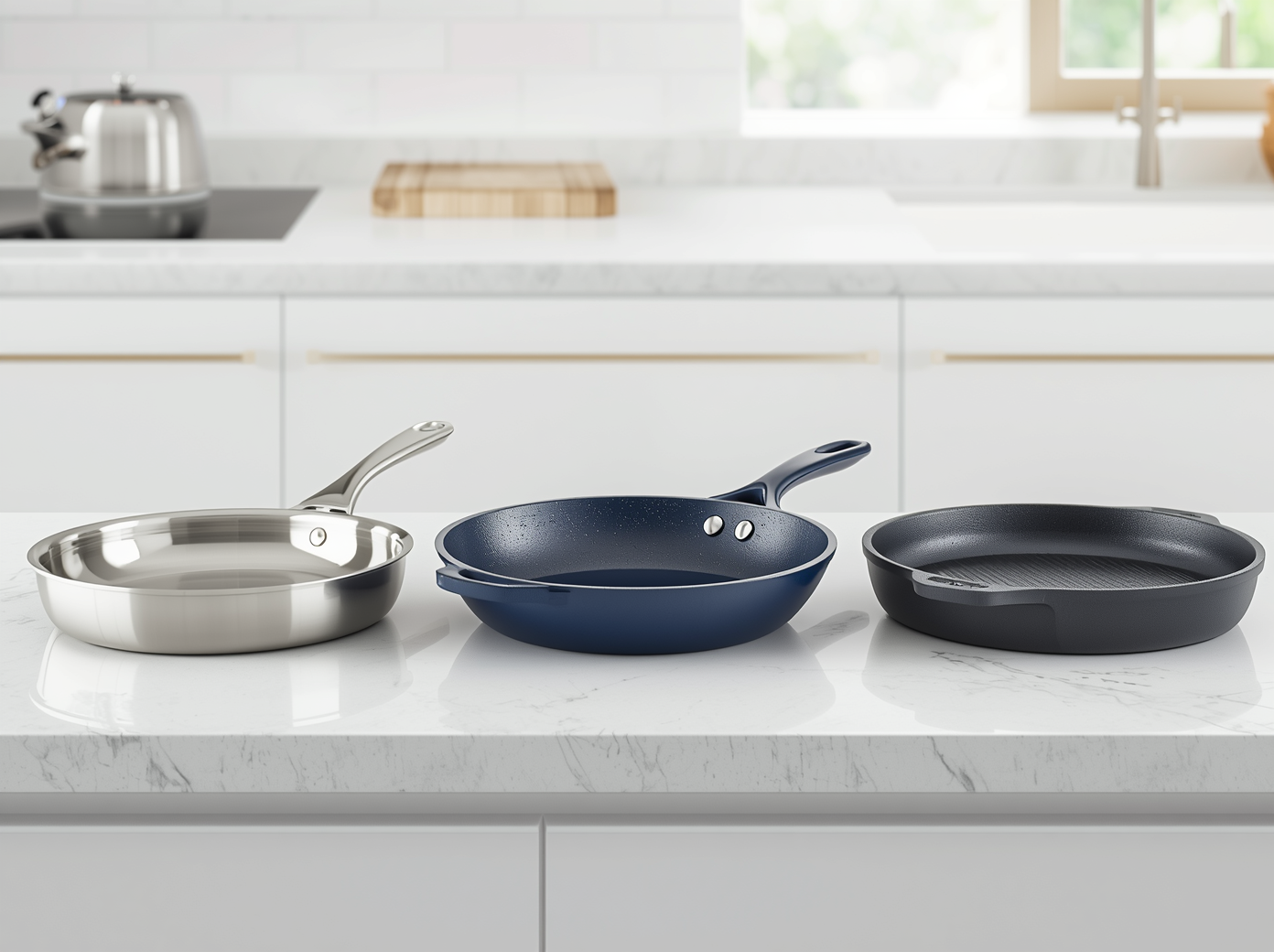
The Best Non-Toxic Cookware to Avoid Microplastics (2026 Guide)
This article contains affiliate links. If you purchase through our links, we may earn a small commission at no extra cost to you. Full disclosure here.
In 2025, researchers publishing in Nature Medicine found microplastics in human brain tissue — and the concentration had increased by roughly 50% between 2016 and 2024. We are accumulating plastic faster than we were a decade ago, and it is showing up in places it has no business being.
Your cookware is one of the places it enters. A peer-reviewed study found that cooking with non-stick PTFE-coated pans adds microplastics directly to food — and that non-plastic cookware introduced none. The fix, it turns out, is not complicated.
Cast iron, carbon steel, and stainless steel have no polymer coating to shed. They perform as well or better than non-stick for most tasks, last decades, and several excellent options are on Amazon right now. Our top pick: the Lodge 10.25″ Cast Iron Skillet — made in the US since 1896, pre-seasoned with vegetable oil, zero coatings, under $30.
We have covered the broader kitchen exposure picture in our guide to microplastics in the kitchen: what you are really cooking with. This article focuses specifically on cookware, what the research says, which materials are safest, and which specific pans are worth buying.
Best Non-Toxic Cookware in 2026
Here is what we recommend, and why:
- Best overall: Lodge 10.25″ Cast Iron Skillet — made in the US, pre-seasoned, zero coatings, under 0, lasts forever. Full Review Here
- Best set: Lodge 5-Piece Cast Iron Set — skillet, griddle, and dutch oven, all cast iron, all coating-free
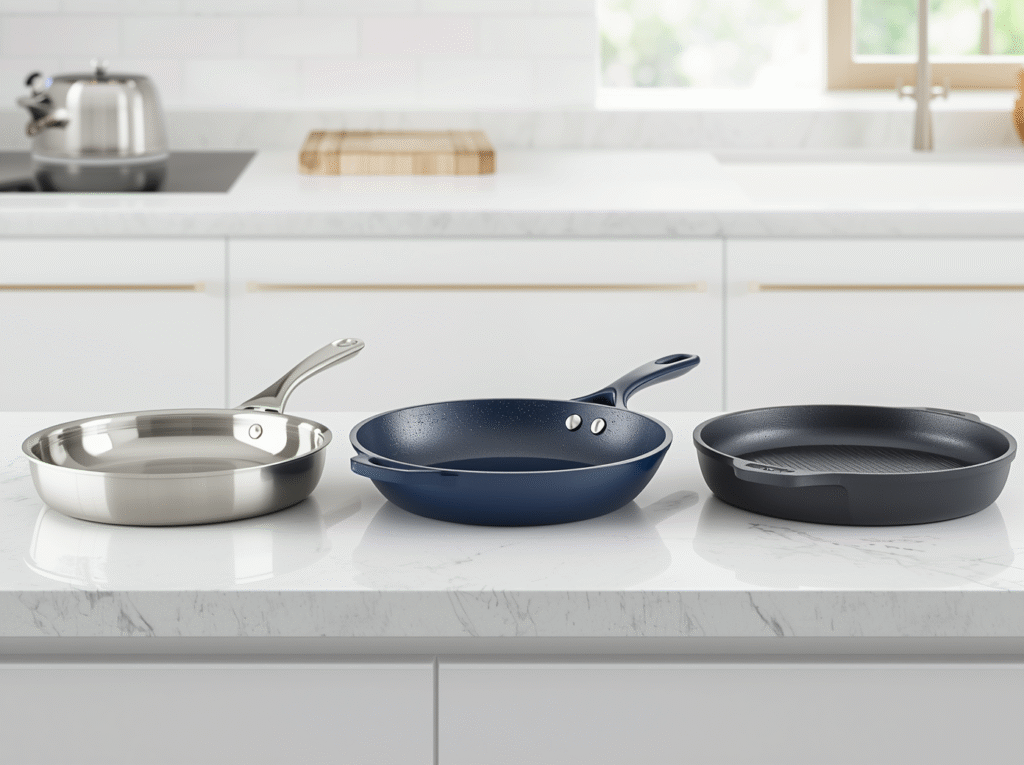
- Best for everyday cooking: Made In Stainless Steel Frying Pan — tri-ply construction, no coatings, professional-grade
- Best stainless set: All-Clad D3 10-Piece Cookware Set — the full stainless kitchen in one purchase, made in the USA
- Best carbon steel: Made In Blue Carbon Steel Pan — lighter than cast iron, seasons like one, handles high heat well
- Best enameled cast iron: Le Creuset Signature Skillet — the lifetime investment pick, glass enamel surface, completely inert
- Best ceramic option (with honest caveat): Caraway Nonstick Ceramic Fry Pan — PFAS-free, PTFE-free, cleaner than conventional non-stick, ceramic does wear over time
- Best ceramic set: Caraway 12-Piece Ceramic Cookware Set — fry pan, saucepan, saute pan, dutch oven, plus storage — the full PFAS-free kitchen swap
Why Cookware and Microplastics Are Worth Paying Attention To
The 2024 Plymouth Marine Laboratory study, published in Science of the Total Environment, used jelly as a food simulant and put it through realistic cooking steps, heating, cooling, mixing, slicing, storage, using both plastic and non-plastic cookware. The result: non-plastic cookware introduced zero microplastics. New and old plastic cookware, including PTFE-coated non-stick pans, both introduced significant contamination.
The PTFE finding deserves specific attention. A separate study published in Science of the Total Environment found that a single crack in a non-stick surface could leave behind approximately 9,100 plastic particles and that a broken coating could release over 2 million microplastic and nanoplastic particles. These are not hypothetical numbers from extreme lab conditions. They reflect what happens to pans that get scratched during normal use.
A 2025 study in Nature Medicine confirmed that microplastics are now accumulating in human brain tissue at levels roughly 50% higher than just eight years ago. The research team noted the long-term health implications remain under active investigation — we want to be honest about that. But the exposure pathway is clear, and reducing kitchen microplastic sources is one of the most practical steps a family can take.
It is also worth knowing that several US states have moved on this. Minnesota banned PFAS-coated non-stick cookware sales starting January 2025. Colorado and Maine followed with bans in January 2026. Vermont and Connecticut have bans coming in 2028. The legislative momentum reflects where the science is heading.
Where the Microplastic Exposure Actually Comes From
Not all cookware presents the same risk. The exposure breaks down by material:
PTFE-Coated Non-Stick (The Highest Concern)
PTFE, polytetrafluoroethylene, marketed as Teflon, is the standard coating on most conventional non-stick pans. The research is consistent: scratched or damaged PTFE surfaces release particles into food. Even using a soft silicone whisk on a new non-stick pan can initiate PTFE particle release. Heat accelerates the process.
Ceramic-Coated Cookware
Ceramic-coated pans contain no PFAS, no PTFE, and no PFOA, a meaningfully cleaner choice than PTFE-coated non-stick. The concern is durability: ceramic coatings wear down with use. The research on ceramic coating degradation is less developed than the PTFE literature, but ceramic is better than PTFE non-stick, and Caraway is among the best in that category.
Stainless Steel, Cast Iron, and Carbon Steel
These are the materials the Plymouth Marine Laboratory study used as the non-plastic control and they introduced zero microplastics. There is no polymer layer to shed. Cast iron and carbon steel build a natural non-stick layer through seasoning with oil, polymerized oil, not a synthetic polymer coating.
Enameled Cast Iron
The enamel on Le Creuset and Staub is glass-based, not plastic. Fused to the iron at high heat, it forms a completely inert surface. The only caveat is that enamel can chip if the pan is dropped. A chipped enamel surface should be replaced, but a well-maintained pan raises no microplastic concerns.
When your food comes off the pan, storing it in glass food storage containers keeps the same non-toxic approach going.”
What to Look for in a Safe Pan
- No PTFE or PFAS coatings. This rules out most conventional non-stick pans. If the company cannot tell you plainly what the cooking surface is made of, that is a clear signal to look elsewhere.
- An uncoated cooking surface. The safest pans have no coating at all. Cast iron, carbon steel, and stainless steel all fall into this category.
- Or a glass-based enamel coating. Enameled cast iron is the exception: the glass enamel is genuinely inert.
- Clarity from the manufacturer. Good brands like Lodge, Made In, Le Creuset, All-Clad are straightforward about materials. Vague answers are a red flag.
- Realistic durability. Cast iron lasts generations. Stainless steel does not degrade meaningfully with normal use. Ceramic coatings are better than PTFE but will eventually need replacement.
Our Recommendations: The Best Non-Toxic Cookware for 2026
Lodge 10.25″ Cast Iron Skillet — Best Overall
Best for: Families who want one pan that does almost everything, built to last a lifetime at an accessible price.
Lodge has been making cast iron in South Pittsburg, Tennessee since 1896. The 10.25″ skillet is pre-seasoned with 100% vegetable oil, made without any synthetic coatings, and the cooking surface improves with use rather than degrading. There is nothing to chip, nothing to scratch off, no polymer layer between your food and the iron.
Cast iron holds heat exceptionally well, making it ideal for searing, frying, baking, and finishing dishes in the oven. The main adjustment coming from non-stick is that it benefits from a bit more fat and a proper preheat but with practice, eggs slide out of a well-seasoned cast iron pan as easily as they do from any non-stick surface.
READ OUR FULL LODGE REVIEW HERE
At under 0, it is also one of the best value purchases in any kitchen category.
- Pros: Zero coatings, made in the US, pre-seasoned, improves with age, oven-safe to any temperature, induction compatible, under 0
- Honest con: Heavy, a real consideration for anyone with wrist or grip issues. Requires hand washing and occasional re-seasoning. Not the pan for simmering tomato sauce or very acidic foods.
Also available as a set: The Lodge 5-Piece Cast Iron Set includes an 8″ skillet, 10.25″ skillet, 10.5″ griddle, and 5-quart dutch oven with lid — everything you need to replace a full set of non-stick cookware in one purchase. All cast iron, all pre-seasoned, all coating-free. This is the move for a household that wants to make the switch decisively rather than piece by piece.
Made In Stainless Steel Frying Pan — Best for Everyday Cooking
Best for: Home cooks who want professional-grade stainless steel with no coatings and no adjustment period.
Made In sells restaurant-quality stainless to home cooks. Their frying pan is tri-ply bonded, stainless steel exterior, aluminum core for even heat, stainless interior, with no coatings of any kind on the cooking surface. The stainless steel you cook on is the same stainless steel that goes in professional kitchens.
The learning curve with stainless is real but short: preheat the pan, add oil, wait until it shimmers, then add food. Once that clicks, the release is excellent and you get better browning than you would ever get on a non-stick surface.
- Pros: No coatings anywhere, tri-ply construction, oven-safe to 800°F, induction compatible, professional-grade build quality
- Honest con: Requires a learning adjustment if you have only ever cooked on non-stick. Higher price point than Lodge.
Made In Blue Carbon Steel Pan — Best Carbon Steel
Best for: Cooks who want cast iron performance in a lighter, more responsive pan.
Carbon steel is what professional kitchens use when they want cast iron without the weight. It seasons the same way, develops the same natural non-stick surface, and handles high heat just as well. Made In’s Blue Carbon Steel Pan is French-made, responsive on the stovetop in a way cast iron is not, and significantly lighter for the same size pan.
- Pros: Lighter than cast iron, develops natural non-stick seasoning, handles higher heat than ceramic-coated pans, no synthetic coatings, oven-safe
- Honest con: Requires active seasoning maintenance. Avoid acidic ingredients until a well-established seasoning layer builds up.
Le Creuset Signature Enameled Cast Iron Skillet — The Lifetime Investment
Best for: Anyone who wants to buy one pan for life. Also excellent for acidic foods like tomato sauce where bare cast iron is not ideal.
Le Creuset’s enameled cast iron earns its exception to our preference for uncoated cookware. The enamel is glass-based, fused to the iron at extremely high temperatures, and completely inert. No PTFE, no PFAS, no synthetic polymer of any kind. The smooth enamel surface does not require seasoning, is dishwasher safe, and will not react with acidic ingredients. It comes with a lifetime warranty.
- Pros: Glass enamel is completely inert, no seasoning required, dishwasher safe, safe for acidic ingredients, lifetime warranty, works on all cooktops including induction
- Honest con: Heavy. Enamel can chip if the pan is dropped or subjected to thermal shock. A chipped pan should be retired.
No full set needed: Le Creuset is best bought piece by piece, each piece is a significant investment and they are built to last indefinitely. Start with the skillet, add a dutch oven when ready. The two pieces cover 90% of home cooking between them.
All-Clad D3 Stainless Steel Fry Pan — Best Budget Stainless
Best for: Home cooks who want trusted, widely available stainless at a lower price than Made In.
All-Clad has been the benchmark for bonded stainless cookware in the US since the 1970s. Their D3 line is tri-ply — 18/10 stainless interior, aluminum core, magnetic stainless exterior, with no coatings on the cooking surface. One important note: All-Clad also sells PTFE-coated non-stick under the same brand name. Make sure you are buying the uncoated D3 stainless, not their HA1 or other non-stick lines.
- Pros: Tri-ply bonded, 18/10 stainless cooking surface, no coatings, oven-safe to 600°F, induction compatible, decades of track record, widely available
- Honest con: Always verify you are buying the uncoated stainless version, All-Clad also makes PTFE-coated non-stick pans. Same learning curve as any stainless pan.
Also available as a set: The All-Clad D3 10-Piece Cookware Set is one of the most complete stainless steel kitchen setups available, two frying pans, two saucepans, a saute pan, and a stockpot, all with lids, all made in the USA. If you are replacing an entire kitchen of non-stick in one go, this is the set. Just make sure you are selecting the D3 Stainless version specifically, not the D3 Nonstick.
Worth Knowing About: A Cleaner Non-Stick Option With One Honest Limitation
Caraway Nonstick Ceramic Fry Pan
Caraway has done more than almost any brand to bring ceramic cookware into mainstream kitchens. Their pans contain no PFAS, no PTFE, no PFOA, and no lead or cadmium. The ceramic coating is silicon-based and the brand is transparent about what is in it.
Our Full Caraway Review Here →
The honest limitation is durability. Ceramic coatings, including Caraway’s, wear down with use. The non-stick properties diminish over time, especially with high heat or metal utensils. When the coating degrades, it should be replaced. Ceramic is a meaningfully cleaner choice than PTFE non-stick, and Caraway is among the best in that category.
Also available as a set: The Caraway 12-Piece Ceramic Cookware Set includes a 10.5″ frying pan, 3 qt saucepan, 4.5 qt saute pan, and 6.5 qt dutch oven with lids, plus magnetic pan racks and a canvas lid holder. It is the most complete PFAS-free non-stick kitchen you can put together in one purchase. For households making the switch away from conventional non-stick and not ready for the learning curve of stainless or cast iron, this set covers everything.
What About the Non-Stick Pans Already in Your Kitchen?
If your non-stick pan has visible scratches, chips, or the coating is peeling: replace it. A compromised PTFE coating sheds particles more aggressively, and there is no way to reverse that.
If your pan looks intact: the research suggests the risk is lower but not zero, especially with heat and abrasive utensils. Using lower heat, wooden or silicone utensils, and hand washing extends the life of any coated pan. The longer-term move, particularly if you are cooking for young children, is to transition away from PTFE-coated non-stick over time.
The easiest on-ramp is to add one cast iron skillet or stainless pan, use it until it is familiar, and replace non-stick pieces as they wear out. Small swap, real difference.
FAQ
Does non-stick cookware release microplastics?
Yes, the research is clear. PTFE-coated non-stick pans release microplastic particles into food during cooking, with scratched or damaged surfaces releasing significantly more. A 2024 study found that a single crack in a non-stick coating can leave approximately 9,100 plastic particles, and a broken coating could release over 2 million particles.
Is ceramic cookware safe from microplastics?
Ceramic-coated cookware is a meaningfully cleaner choice than PTFE non-stick, it contains no PFAS and no PTFE. The honest limitation is that ceramic coatings wear over time. Uncoated stainless steel, cast iron, and carbon steel are cleaner still.
Is cast iron actually safe to cook on?
Yes. Cast iron has no polymer coating to shed. The cooking surface is the iron itself, seasoned with polymerized oil, not a synthetic polymer. The Plymouth Marine Laboratory study used stainless steel and glass as the non-plastic controls, and both introduced zero microplastics. Cast iron falls into the same category.
What is the safest non-stick pan?
The safest non-stick cooking surface is a well-seasoned cast iron or carbon steel pan, the non-stick properties come from the oil seasoning, not a synthetic coating. Among dedicated non-stick pans, ceramic-coated options like Caraway are the cleanest choice, though the ceramic does wear over time.
Can I put cast iron in the dishwasher?
No, dishwashers strip the seasoning from cast iron and carbon steel and can cause rust. Both need hand washing and a light wipe of oil before storage. Stainless steel and enameled cast iron are dishwasher safe.
What cookware is best for acidic foods like tomato sauce?
Enameled cast iron is the best choice for acidic ingredients, the glass enamel surface is completely non-reactive. Stainless steel handles acidic foods fine. Avoid cooking tomato sauce in bare cast iron or carbon steel, especially for extended periods.
The Bottom Line
The Lodge Cast Iron Skillet is where we would start for most families, genuinely capable, costs less than a tank of gas, and will outlast every non-stick pan in your kitchen combined. If you want to replace your whole kitchen at once, the Lodge 5-Piece Set or the All-Clad D3 10-Piece Set cover everything in one purchase. And if you want the easiest transition away from non-stick without a learning curve, the Caraway 12-Piece Set is the most complete PFAS-free non-stick kitchen swap available. Its not just our cookware but our bakeware as well. If you want to read more on non toxic bakeware, click here to read more.
Small swap, real difference. Your pans are the thing between your food and your family, make sure they are not adding anything extra to the meal.
One Comment