
Reduce Microplastics in Your Home: A Room-by-Room Guide to 25+ Simple Swaps
Reduce Microplastics in Your Home: A Room-by-Room Guide to 25+ Simple Swaps

This article contains affiliate links. If you purchase through our links, we may earn a small commission at no extra cost to you. Full disclosure here.
Reducing microplastics in your home is more achievable than most people think and the kitchen is the best place to start. And while the conversation about microplastics tends to focus on bottled water or the ocean, the truth is that our homes are one of our biggest sources of daily exposure, through the food we cook, the air we breathe, the water we drink, and the products we use every day.
That does not mean your home is a danger zone. It means there are real, practical things you can do, room by room, to meaningfully reduce what you and your family are exposed to. We spent months mapping out exactly where microplastics enter the picture at home and what swaps actually make a difference. This is what we found.
If you want one place to start, the kitchen matters most. Switching to glass food storage is one of the highest-impact changes most families can make, the Pyrex 12-Piece Glass Storage Set is the one we recommend most often, and it covers most family needs at a price that makes sense.
The Short Version
The rooms where microplastic exposure is highest in your home are the kitchen, laundry room, and bathroom. The most effective swaps are:
- Replace plastic food storage with glass or stainless steel
- Filter your tap water with a reverse osmosis or solid carbon block filter
- Use a microplastic catching laundry bag for synthetic clothing
- Switch from plastic cutting boards to wood or bamboo
- Choose natural fiber clothing and bedding where you can
Small swaps, made over time, add up to real change.
Why Reducing Microplastics in Your Home Matters
Research has confirmed what many parents suspected: we are not just exposed to microplastics outdoors. A 2022 study published in Science of the Total Environment.found that indoor dust is a significant source of microplastic exposure, particularly for young children who spend more time on the floor. The World Health Organization’s 2022 report on microplastic exposure via food and air identified inhalation as a meaningful exposure pathway, and noted that indoor environments, where most of us spend the majority of our time, are a significant source.
The good news is that unlike outdoor pollution, your home environment is largely within your control. You cannot filter the air in every city park your kids run through. But you can make meaningful choices about what materials you cook with, how you store food, and what goes into your drinking water.
The science on health effects is still evolving , we want to be clear about that. What we know is that reducing unnecessary exposure is a reasonable, practical step that costs nothing in terms of quality of life and potentially a great deal in terms of long-term health.
Where Microplastics Come From in Your Home
Before going room by room, it helps to understand the main pathways. In a home setting, microplastics enter through:
Ingestion — from plastic containers that shed particles into food and water, especially when heated or scratched.
Inhalation — from synthetic textiles, furniture, and carpets that shed plastic fibers into the air. Indoor dust can contain significant concentrations of microplastic particles.
Skin contact — a less-studied pathway, but relevant for plastic-based personal care products and some synthetic fabrics.
The kitchen and laundry room are the two biggest sources for most families. That is where we will spend the most time.
Reducing Microplastics in Your Kitchen
The kitchen is ground zero for microplastic exposure in most homes. The combination of plastic containers, plastic cooking utensils, and plastic-coated cookware creates multiple daily exposure points, many of which involve heat, which accelerates how quickly plastic sheds particles.

Food Storage
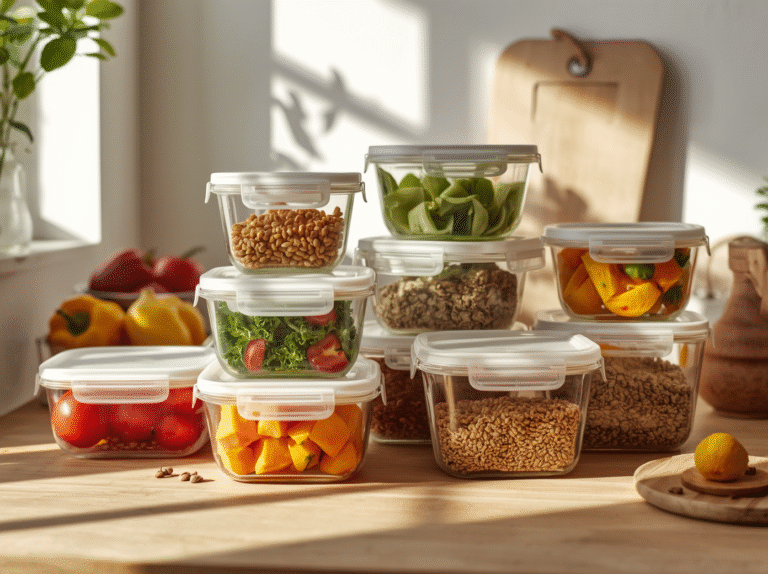
Plastic containers, including the ones labeled BPA-free, can shed microplastics into food, especially when microwaved, dishwashed repeatedly, or scratched. The fix is straightforward: switch to glass or stainless steel.
Our top pick: The Pyrex 12-Piece Glass Storage Set is what we recommend for most families. It covers every size you actually need, goes from fridge to microwave without issue, and lasts for years.
More affordable option: If you want to start smaller, the Pyrex Simply Store 9-Piece Set covers the essentials at a lower entry price.
For on-the-go: The Hydro Flask Stainless Steel Food Flask is excellent for packed lunches and leftovers, no plastic contact, no leaching, genuinely durable. Check the current price on Amazon.
For more on this topic, our Ultimate Guide to Plastic-Free Food Storage covers every container type in detail and we do in depth on glass food storage containers that replace containers here.
Other swaps worth making:
- Plastic zip bags → Stasher Reusable Silicone Bags, the ones we use daily and genuinely trust.
- Plastic wrap → Bee’s Wrap Organic Beeswax Wraps — they work, they last, and they compost at end of life.
Cutting Boards
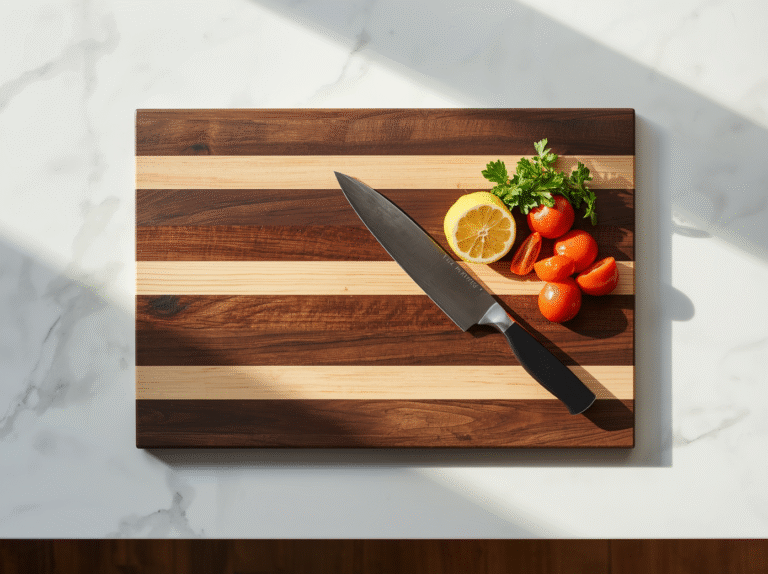
Plastic cutting boards are a quiet but significant source of microplastic ingestion. Every cut deposits small plastic particles directly onto your food. Research from the University of California estimated that a typical plastic cutting board can shed hundreds of thousands of microplastic fragments per year of normal use.
Wood and bamboo boards are the alternative, and this is one swap that can actually cost less than what most families already own.
Premium pick: The John Boos Maple End Grain Reversible Cutting Board is the one we come back to most often. End grain boards are gentler on knife edges, self-healing to a degree, and built to last decades. Oil it monthly and it only gets better.
Budget pick: The Totally Bamboo Cutting Board is a no-fuss swap that gets the job done for around $25. Bamboo is naturally antimicrobial, harder than most woods, and holds up well to daily use. It is one of the most consistently well-reviewed boards on Amazon for good reason.
Either way, hand wash and dry. No dishwasher.
Cookware and Bakeware
Non-stick pans with damaged coatings are a genuine concern. Scratched or flaking surfaces can shed particles directly into food. Intact non-stick coatings are generally considered safe but once a surface is visibly scratched or peeling, it is time to replace it.
The better long-term choice is cookware that does not raise the question at all.
Premium pick: The All-Clad D3 Stainless Steel Skillet is an investment, but it is the kind of pan that gets handed down. Fully clad stainless steel, no coatings, no concerns, just excellent cooking performance.
Budget pick: A Lodge Cast Iron Skillet costs around $30, lasts a lifetime, and becomes genuinely non-stick once properly seasoned. It is the most recommended cast iron pan for a reason. Our full Lodge cast iron review breaks down the best budget picks that never shed.
For non-stick performance without the coating worry: The Caraway Ceramic Non-Stick Pan uses a ceramic coating rather than PTFE, lower concern, easy release, and it looks good on the stovetop.
For cooking utensils, swap plastic spatulas and spoons for wood or stainless steel. Plastic utensils in a hot pan are one of the easiest exposures to eliminate. The OXO Good Grips Wooden Spoon Set is a simple, inexpensive fix. We also do a deep dive into bakeware in a separate article. click here to learn more.
Water
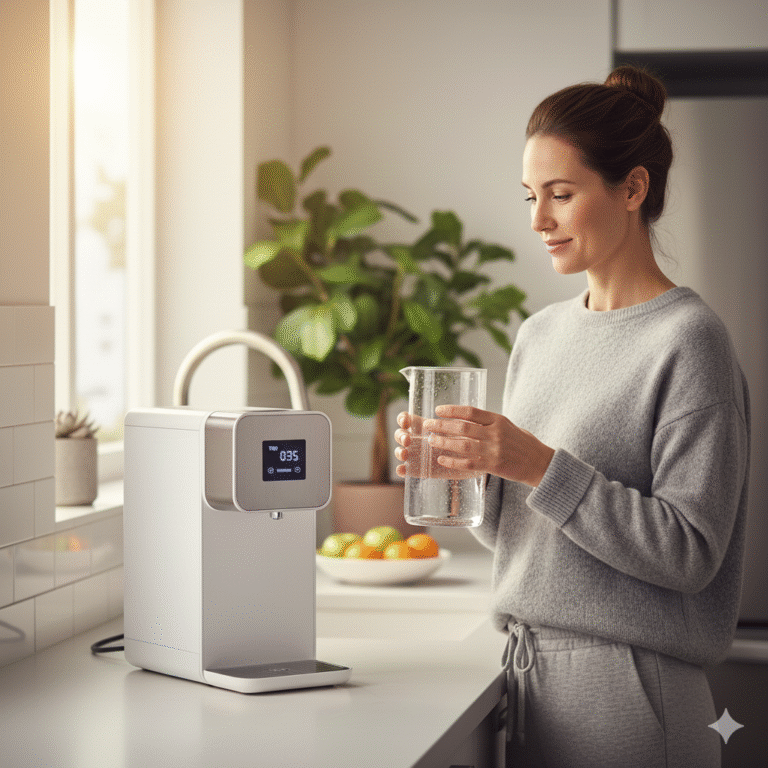
Tap water filtered through a quality system is almost always safer than bottled water from a microplastics standpoint. Bottled water consistently shows higher microplastic concentrations than well-filtered tap — partly because of the bottles themselves.
Premium pick: The Bluevua RO100ROPOT Countertop Reverse Osmosis Filter is the system we recommend most. It requires no installation, sits on your countertop, and removes microplastics along with PFAS, heavy metals, and hundreds of other contaminants. It is the most practical RO solution we have found for families who want serious filtration without a plumber.
Budget pick: The Clearly Filtered Water Pitcher is the pitcher we trust most at the lower price point, independently tested to remove microplastics, PFAS, and over 270 contaminants. No installation required.
Our guide to the best water filters for microplastics covers every option in detail, including under-sink and whole-house systems.
Quick wins in the kitchen:
- Never microwave food in plastic, not even “microwave-safe” plastic
- Replace scratched plastic utensils with wood or stainless steel
- Store leftovers in glass, not plastic wrap
- Ditch the plastic kettle for a stainless steel one — the Fellow Stagg EKG Electric Kettle is a premium option worth it for daily tea and coffee drinkers.
The Laundry Room
Synthetic fabrics like polyester, nylon and acrylic shed plastic microfibers every time they go through the wash. These fibers pass through most washing machine filters, enter the wastewater system, and also become airborne in your home during drying.
This does not mean you need to throw out your wardrobe. It means being thoughtful about catching the fibers before they escape, and gradually shifting toward natural fiber clothing when you replace items.
Laundry Bags and Filters
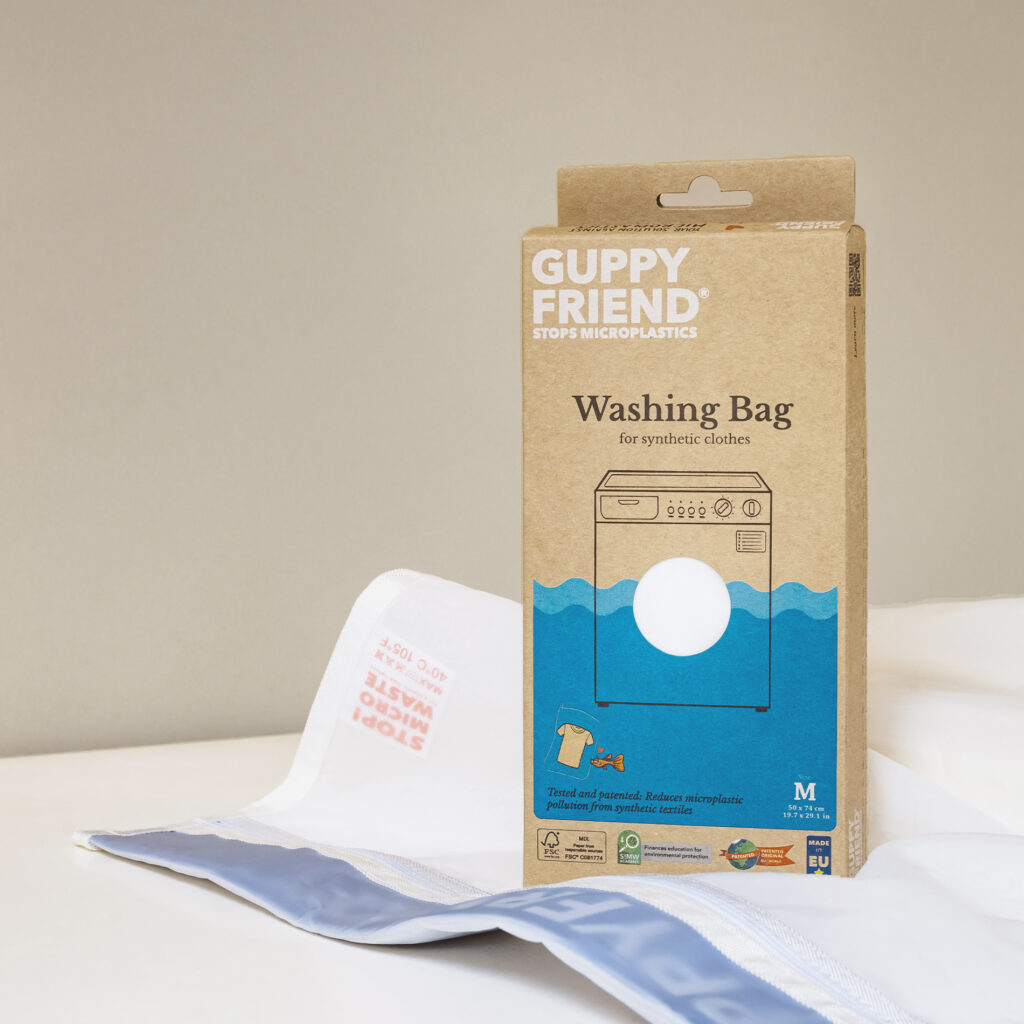
Our top pick: The Guppyfriend Washing Bag is the most research-backed option available. You place your synthetic items inside before washing, wash as normal, and remove the captured fibers from the bag afterward. Independent testing has confirmed it captures a significant portion of shed fibers.
Budget option: The Cora Ball Laundry Ball goes directly into the drum with your clothes and catches fibers as they shed. It is less effective than the Guppyfriend for a single load, but it requires no behavior change, you just toss it in. Check the current price on Amazon.
Washing Machine Settings That Help
- Cold, gentle cycles create less agitation and therefore less shedding
- Full loads generate less fiber release per garment than partial loads
- Line drying eliminates the additional shedding that happens in the dryer
- Liquid detergent causes less friction than powder, less friction means less fiber release
Natural Fiber Clothing
When you replace synthetic items, choosing cotton, wool, linen, or hemp reduces shedding significantly. This is not a fast swap and it does not need to be. Each replacement is a step forward.
For everyday basics, Pact Organic Cotton Clothing is a widely available, reasonably priced option for adults and kids.
The Living Room and Bedrooms
These rooms matter less from a direct ingestion standpoint, but they are significant sources of microplastic-laden dust, primarily from synthetic carpets, upholstered furniture with synthetic fabrics, and soft furnishings.
Air Quality
A HEPA air purifier captures airborne microplastic particles and fibers before they settle into dust you and your kids breathe in.
Budget pick: The Levoit Core 300 Air Purifier is genuinely effective for smaller rooms and one of the best-selling air purifiers on Amazon. AHAM verified, whisper quiet at 24dB in sleep mode, and rated to cover up to 1,073 square feet. If you have a child’s bedroom you want to prioritize, this is where we would start. Check the current price on Amazon.
Premium pick: The Dyson Purifier Cool TP07 is the step-up option — a fully sealed HEPA H13 system with real-time air quality monitoring and whole-room projection. It is a significant investment, but it doubles as a fan and works year-round. Check the current price on Amazon.
Regular vacuuming with a HEPA-filter vacuum removes microplastic-laden dust before it becomes airborne again. The Shark Navigator Lift-Away Vacuum is a well-rated, affordable option with HEPA filtration.
Bedding
Polyester bedding sheds microfibers throughout the night and we spend eight hours in contact with it. Natural fiber bedding is one of the higher-impact bedroom swaps.
Our pick: Amazon Basics 100% Cotton Percale Sheets straightforward, affordable, and genuinely 100% cotton. No polyester blends, no synthetic content. See current availability on Amazon.
Premium pick: Brooklinen Classic Core Sheet Set — long-staple cotton, durable, gets softer with every wash, and widely available on Amazon. Check the current price on Amazon.
The Nursery and Kids’ Rooms
Parents researching microplastics are often most concerned about their youngest children, and that concern is well placed. Young children have higher exposure relative to body weight, and their developing systems warrant the extra attention.
Bottles and Feeding
Glass baby bottles eliminate plastic contact during feeding entirely.
Our pick: The Philips Avent Natural Glass Baby Bottle is the one we recommend most for new parents — wide neck for easy cleaning, anti-colic design, and genuinely durable glass. Check the current price on Amazon.
Also excellent: The Dr. Brown’s Natural Flow Glass Bottle is particularly good for babies with gas or reflux.
Our full guide to the best glass baby bottles covers every option worth considering.
Plates, Bowls, and Utensils
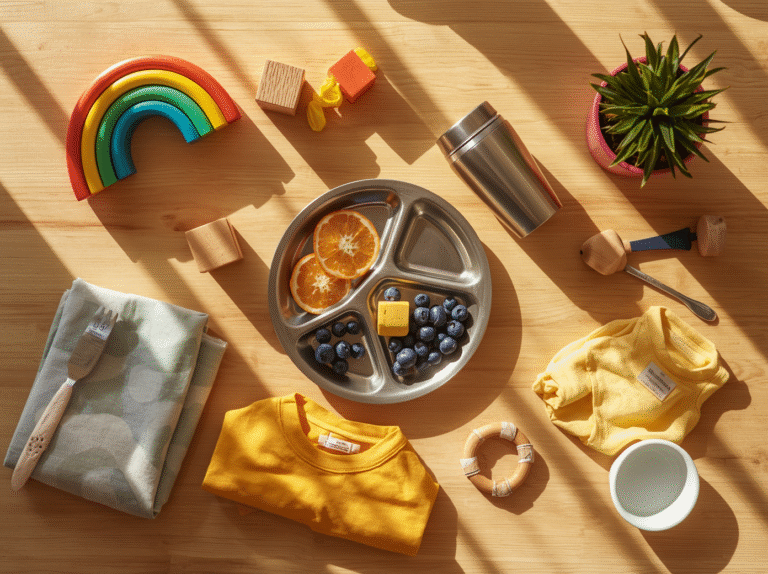
Our pick: The Elk & Friends Stainless Steel Divided Plates with Silicone Sleeve is the one we keep coming back to for toddlers. The divided plate makes mealtime easier, the silicone sleeve protects little hands from the cold steel, and the whole thing is plastic-free where it counts, no plastic touching food.
Our guide to non-toxic kids plates and bowls goes deeper on materials and what to avoid.
Budget option: The Munchkin Stainless Steel Toddler Bowls are widely available, dishwasher safe, and affordable.
Nursery Bedding
Our pick: Burt’s Bees Baby Organic Cotton Fitted Crib Sheets are GOTS-certified organic, machine washable, and among the most affordable certified organic crib sheets on Amazon. They get softer with every wash.
Premium pick: For the crib mattress itself, a GOTS-certified organic option is worth the investment. The Naturepedic Organic Cotton Crib Mattress is widely regarded as the best on the market, no polyester, no synthetic foam, no off-gassing. Children spend more hours on their mattress than on any other surface. Check current availability on Amazon.
Toys
Hard plastic toys are generally lower concern than soft PVC toys. When replacing toys, wood, natural rubber, and fabric options are worth prioritizing.
Our pick: PlanToys Wooden Toy Sets are made from sustainably sourced rubber wood and non-toxic dyes durable, genuinely loved by kids, and widely available on Amazon.
Tap any room to see our picks. Every product is available on Amazon unless noted.
Kitchen
▶Laundry room
▶Bathroom
▶Bedroom
▶Nursery and kids' rooms
▶FAQ
How much microplastic are we actually exposed to indoors? Estimates vary widely depending on the home environment, but research suggests that indoor exposure, through dust, food packaging, and synthetic textiles, can be comparable to or exceed outdoor exposure for people who spend most of their time inside. The research is still developing, but it is enough to justify practical action.
Are air purifiers actually useful for microplastics? A HEPA air purifier can capture airborne microplastic particles and fibers, yes. The filter needs to be rated for fine particles, HEPA standard means it captures 99.97% of particles 0.3 microns and larger. It is not a complete solution on its own, but it is a meaningful one for homes with a lot of synthetic textiles.
Does washing dishes in a dishwasher increase microplastic risk? High-heat dishwashing can degrade plastic containers over time, increasing future shedding. We recommend hand-washing plastic items that are already showing signs of wear, and transitioning those to glass alternatives when they need replacing.
Is it worth replacing all my plastic containers at once? No and we would not recommend it. Replacing everything at once is expensive and wasteful. The better approach is to replace items as they wear out, starting with those that come into contact with heat.
Does buying natural fiber clothing make a difference? Yes, meaningfully so. Natural fibers like cotton, wool, and linen do shed during washing, but they shed biodegradable fibers rather than plastic ones. Over the life of a garment, the difference in microplastic contribution is significant.
The Bottom Line
You do not need to renovate your home or replace everything at once to make a real difference. The highest-impact changes — glass food storage, filtered water, a laundry bag for your synthetic clothes — are also some of the easiest and most affordable.
The honest truth is that we cannot eliminate microplastic exposure entirely. But we can reduce it meaningfully in the places that matter most, one room and one swap at a time. Start in your kitchen. Filter your water. Work outward from there.
Small swaps, made over time, add up to a big difference.