
Caraway Cookware Review: Is It Actually Worth It for Avoiding Microplastics? (2026)
Affiliate disclosure: We may earn a small commission if you buy through our links, at no extra cost to you. We only recommend products we would tell a friend about. Read our full affiliate disclosure.
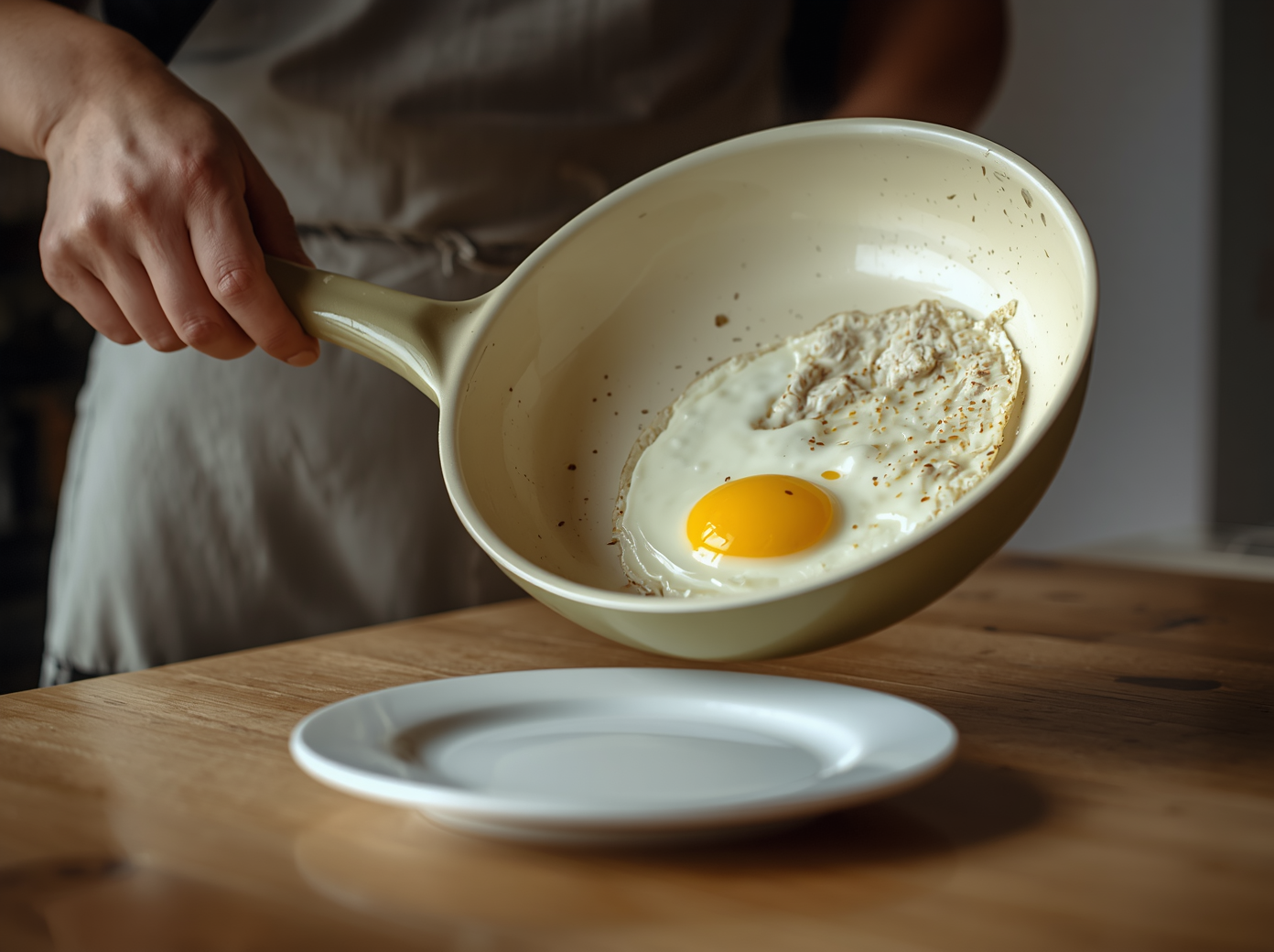
You opened the cabinet, pulled out the non-stick pan, and saw it. The little flake of black coating curling up at the edge. You thought about the eggs you cooked in it this morning. And somewhere between throwing the pan in the trash and Googling “is Caraway worth it,” you ended up here.
Same. That is the exact moment most people start looking at Caraway, and it is the right instinct.
Here is the two-sentence verdict before we go any further. Caraway is genuinely cleaner than Teflon, and the third-party testing backs it up. It will also not last forever, and that is the part the marketing does not tell you.
If you have already made up your mind and you just want the link, the Caraway 10.5″ Ceramic Fry Pan is where we would start, and the Caraway 12-Piece Ceramic Cookware Set is the move if you are replacing everything at once. If you want to know whether it is actually right for your kitchen, keep reading. We have reviewed every major non-toxic cookware brand on the market, and Caraway sits in a very specific spot in our recommendation list. Here is the honest version.
The Short Version: Is Caraway Worth Buying?
Yes, with one honest caveat. Caraway ceramic cookware is a meaningfully cleaner choice than PTFE-coated non-stick pans. The cooking surface is free of PFAS, PTFE, PFOA, lead, and cadmium, and the brand publishes third-party lab results to back that up. It is the cleanest mainstream non-stick option for households that want the convenience of a non-stick pan without the chemistry of Teflon.
The caveat: Ceramic coatings wear down with use. Caraway pans typically perform well for 1 to 3 years depending on care, after which the non-stick properties diminish and the pan should be replaced. They are not lifetime pans. If you want a non-toxic pan that lasts forever, cast iron or stainless steel is the cleaner long-term answer.
Best for:
- Households replacing a damaged or peeling non-stick pan and not ready for the learning curve of stainless or cast iron
- Parents who cook eggs, pancakes, and quick weeknight meals and want easy cleanup without PTFE
- Anyone who wants an entire PFAS-free non-stick kitchen in one purchase
- People making the gradual transition away from Teflon and looking for a familiar cooking experience
Not the right pick for:
- Cooks who want one pan that lasts decades, those people should buy cast iron
- High-heat searing, ceramic does not love sustained high temperatures
- Anyone hoping for a true “buy it for life” pan, that is not what ceramic non-stick is
Why Cookware and Microplastics Are Worth Paying Attention To
Here is the number that started everything for us. A single crack in a Teflon non-stick coating can release approximately 9,100 plastic particles into your food. A broken coating can release over 2 million microplastic and nanoplastic particles. That is from a study published in Science of the Total Environment, and it is the research that turned a vague worry about non-stick pans into a concrete reason to replace them.
A 2024 Plymouth Marine Laboratory study, in the same journal, ran jelly through realistic cooking steps using both plastic and non-plastic cookware. Non-plastic cookware introduced zero microplastics. PTFE-coated non-stick introduced significant contamination. Not from extreme conditions, from normal cooking.
The U.S. Environmental Protection Agency continues to study the long-term health effects of PFAS exposure, and several states have already moved on PTFE cookware. Minnesota banned the sale of PFAS-coated non-stick cookware starting January 2025. Colorado and Maine followed in January 2026. Vermont and Connecticut have bans coming in 2028.
Why traditional non-stick pans shed microplastics in the first place
It helps to understand the actual mechanism, because it is the whole reason ceramic exists. PTFE, the coating better known as Teflon, is a synthetic polymer. A plastic. It is layered onto the metal of the pan as a thin film. Every time you heat that pan, scrub it, scrape it with a spatula, or let the surface get scratched, tiny fragments of that polymer film break away. Those fragments are microplastics and nanoplastics by definition, and at high enough temperatures PTFE can also release fumes. The coating is literally a layer of plastic sitting between your food and the metal, and it degrades a little more every time you cook.
Ceramic bypasses this entirely because it is not a polymer. Caraway’s coating is mineral-based, made from sand-derived silica rather than plastic. There is no polymer film to flake off into your eggs. When a ceramic coating eventually wears down, and it does wear down, the particles are mineral, not plastic. That single difference, plastic film versus mineral coating, is the entire reason a ceramic pan belongs in a conversation about reducing microplastics and a Teflon pan does not.
That is the backdrop for the Caraway conversation. Ceramic-coated cookware exists because consumers want non-stick without the plastic film. The only real question is whether Caraway actually delivers on that promise, or whether it just looks like it does.
What Caraway’s Ceramic Coating Actually Is
Strip away the matte sage colour and the Instagram styling, and a Caraway pan is three things. An aluminum core for heat. A mineral-based ceramic coating on top for non-stick. Stainless steel handles. That is it. The whole product.
The ceramic is the part that matters. It contains no PFAS, no PTFE, no PFOA, no lead, and no cadmium. Caraway publishes third-party lab results from independent testing labs confirming it. We have reviewed the testing methodology in our broader non-toxic cookware guide, and Caraway is one of the more transparent brands in the ceramic category on disclosure.
That is genuinely meaningful. Most conventional non-stick pans on Amazon and in big-box stores are PTFE-coated, often without the brand being upfront about it. Caraway took the opposite approach and built the entire brand around what is not in their pans. From a microplastics perspective, that matters.
How ceramic shedding compares to PTFE shedding
This is the question almost nobody answers honestly, so here it is.
PTFE non-stick is well-studied. When the surface is scratched or worn, PTFE particles, which are plastic, release into food. The research has quantified it. The shedding is measurable, and the particles are microplastics by definition.
Ceramic coating shedding is less studied, and that is the honest truth. The research literature is thinner. What we know is that ceramic is a mineral-based coating, so when it wears down, the particles released are mineral particles rather than plastic particles. That is a meaningfully different chemistry. The National Institutes of Health maintains a growing body of literature on cookware-related exposures, and the research consensus so far is that ceramic coatings present a lower microplastic risk than PTFE.
Our honest position: Ceramic is meaningfully cleaner than PTFE on microplastic shedding. It is not as clean as uncoated cast iron or stainless steel, which shed nothing. Caraway sits in the middle of that spectrum, and it is the best option in its category.
Caraway Ceramic Fry Pan: The Honest Review
If you are only going to buy one piece of Caraway, make it this one. The 10.5″ fry pan is the workhorse, the lowest-risk way to test whether ceramic works for your kitchen, and the piece that delivers the most everyday value for the money. Here is what holds up under scrutiny and what does not.
What it gets right
Real non-stick performance from day one. Eggs slide. Pancakes flip cleanly. You can use less oil than a stainless pan and still get clean food release. For families used to PTFE non-stick, the cooking experience is familiar and easy.
Even heat distribution. The aluminum core does the work here, and it is genuinely good at it. Hot spots are minimal, which matters for eggs and delicate proteins.
Oven-safe to 550°F. Higher than most non-stick pans, including older versions of Caraway. You can sear on the stovetop and finish in the oven, which is rare for a non-stick pan.
Induction compatible. Works on every stovetop type, which is not always true of ceramic cookware.
Third-party tested. Caraway publishes its third-party lab reports, including California Prop 65 and LFGB leach testing confirming the absence of PFAS, PTFE, PFOA, lead, and cadmium. That level of disclosure is genuinely uncommon in the cookware industry.
The honest limitations
The ceramic wears down. This is the single most important thing to know before you buy. Across the consistent reports from long-term reviewers, most people see the non-stick performance start to diminish somewhere between 9 months and 3 years of regular use. Heavy daily cooking accelerates it. Gentle use extends it. Either way, these are not pans you buy once and use forever.
Sensitive to high heat. Caraway specifically recommends low to medium heat. Sustained high heat degrades the ceramic faster. If you sear a lot of steaks, this is not your pan.
Metal utensils accelerate wear. Wooden, silicone, or nylon only. The pan can technically handle a careful metal spatula, but the ceramic will degrade faster, and you will notice.
The warranty is short. One year, which is shorter than what you get from premium cast iron or stainless brands. For the price, a longer warranty would feel more reasonable.
It is not cheap. The fry pan alone costs more than a Lodge 10.25″ Cast Iron Skillet that will outlast it by decades. Whether that is worth it depends on how much you value the non-stick experience.
Who should buy the fry pan
Buy the single fry pan if you want to test ceramic before committing to a set, replace a damaged conventional non-stick, or add one easy weeknight pan to a kitchen that already has cast iron or stainless. It is the easiest, lowest-commitment way into ceramic cookware
Caraway 12-Piece Ceramic Cookware Set: The Honest Review
Buying the set is a different decision than buying the fry pan. The fry pan is a test. The set is a commitment. For the right household, the math works out. For everyone else, it is too much pan, and you would be better off mixing materials. Here is how to tell which one you are.
What is in the box
- 10.5″ Fry Pan
- 3 qt Sauce Pan with lid
- 4.5 qt Saute Pan with lid
- 6.5 Qt Dutch Oven with Lid
- 4 Magnetic pan rack for cabinet storage
- Canvas lid holder
Everything in the set carries the same ceramic coating, the same aluminum core construction, the same oven-safe rating to 550°F, and the same third-party testing.
Why the set makes sense for some families
One purchase, full kitchen. If you are throwing out conventional non-stick because the coating is chipping, you do not want to stretch the replacement over six months. The set gets you cooking again immediately, with everything PFAS-free from day one.
Better per-piece cost. The set works out cheaper than buying each pan individually. For a household that knows it wants the full ceramic kitchen, the math favours the set.
Genuinely useful accessories. The magnetic pan rack is not just marketing. It actually solves the problem of stacking ceramic pans in a cabinet without scratching them.
Why the set is not for everyone
The same ceramic wear applies to every piece. You are not buying a lifetime kitchen. In 2 to 4 years, the pieces you use most will likely need replacing. That is the trade-off for the convenience of true non-stick.
Most households do not actually need a Dutch oven and a saute pan in ceramic. If you are honest about how you cook, you may use the fry pan daily, the sauce pan often, and the others rarely. A Lodge cast iron Dutch oven would arguably serve you better than a ceramic one for the long term.
Who should buy the set
Buy the set if you are doing a complete kitchen replacement, you cook primarily on low to medium heat, you want everything PFAS-free from day one, and you are comfortable with the idea of replacing pieces every few years. It is the most complete PFAS-free non-stick kitchen you can put together in one purchase, and for the right family it is the easiest transition off Teflon.
Caraway vs the Alternatives: How It Stacks Up
Caraway is not the only non-toxic option, and it is not always the right one. Some kitchens are better served by a $30 cast iron skillet. Some by a $200 stainless steel pan that lasts forever. Here is the full comparison, no spin.
| Pan | Material | Microplastic Risk | Lifespan | Best For |
|---|---|---|---|---|
| Caraway Ceramic | Ceramic-coated aluminum | Low (ceramic wears) | 1 to 3 years | Easy non-stick transition |
| Lodge Cast Iron | Cast iron | None | Lifetime+ | Budget, durability, all-round |
| Made In Stainless | Tri-ply stainless steel | None | Lifetime | Everyday cooking |
| Le Creuset Enameled | Enameled cast iron | None (glass enamel) | Lifetime | Lifetime investment |
| Conventional PTFE Non-Stick | PTFE coating | High | 1 to 5 years | Not recommended |
The honest takeaway from the table: if you want the cleanest possible cookware with zero microplastic risk, cast iron or stainless steel is the answer. If you want the ease of non-stick without PTFE, Caraway is the right pick in that category. Conventional Teflon non-stick is the one we would not buy.
How to Make Caraway Last as Long as Possible
Here is the part the marketing skips. The difference between getting 12 months out of a Caraway pan and getting 3 years comes down almost entirely to five things. Get them right and you nearly triple the lifespan of the pan. Get them wrong and you will be back here next year searching for a replacement.
- Low to medium heat only. This is the single most important rule. High heat is the fastest way to degrade ceramic.
- Wooden, silicone, or nylon utensils. No metal, even if a review says it is fine. Every metal contact shortens the life of the coating.
- Hand wash. The dishwasher technically works, but the abrasive detergents and high heat will wear the ceramic faster. A soft sponge and warm soapy water is the move.
- Skip cooking spray. Aerosolised cooking sprays can leave a residue that bakes onto ceramic and reduces non-stick performance. A small amount of regular oil or butter is fine.
- Let it cool before washing. Thermal shock can cause warping. Wait until the pan is warm, not hot, before running water on it.
Follow those five rules and you will get the longer end of the lifespan range. Ignore them, and you will be replacing the pan within a year.
How We Evaluate Cookware
A fair question to ask any review site: where does this actually come from? Here is our process, plainly.
We start with the materials. What is the cooking surface made of, what is underneath it, and what does the manufacturer disclose. For Caraway, that meant going through the published third-party lab results confirming the absence of PFAS, PTFE, PFOA, lead, and cadmium, which independent testing by Light Labs has separately confirmed.
We weigh that against the peer-reviewed research on cookware and microplastics, including the studies cited throughout this article, so that a recommendation rests on evidence rather than marketing copy. We then read across long-term owner reports and established review outlets, looking specifically for the consistent patterns, the things that show up again and again across hundreds of reviews rather than one-off complaints. The 1-to-3-year lifespan range, the high-heat sensitivity, and the metal-utensil wear are all examples of patterns that held up across sources.
Where we have personally cooked on a product, we factor that hands-on experience in, and we tell you when a point comes from direct use versus from the wider research. We do not accept free product in exchange for a positive review, and we only recommend cookware we would genuinely put in our own kitchen. When the honest answer is “buy something else,” that is what we say, which is why this review points you toward cast iron for some households even though it earns us less.
Looking for safer swaps?
We keep all of our favorite low-plastic kitchen, kids, and home products in one place, so you can skip the research and find what actually works.
See Our Non-Toxic Picks →Frequently Asked Questions
Does Caraway cookware shed microplastics?
Not in the same way Teflon does. Caraway uses a mineral-based ceramic coating rather than a plastic-based PTFE (Teflon) coating, so the cooking surface does not shed plastic particles or release toxic fumes when heated. The 2022 Newcastle/Flinders University Raman-spectroscopy study found ceramic-coated cookware showed fewer signs of wear and was more resistant to degradation than PTFE. When a ceramic coating eventually wears down, the particles released are mineral rather than plastic. Cast iron and stainless steel remain the only options that shed nothing at all.
Is Caraway cookware actually safe?
Yes, Caraway is one of the safer non-stick options on the market. The ceramic coating contains no PFAS, PTFE, PFOA, lead, or cadmium, and Caraway publishes third-party lab results confirming this. The honest limitation is that the ceramic coating wears down over time, after which the pan should be replaced.
How long does Caraway cookware last?
Most Caraway pans perform well for 1 to 3 years of regular use, depending on care. Using only low to medium heat, wooden or silicone utensils, and hand washing extends the lifespan significantly. Daily high-heat cooking or dishwasher use can reduce it to under a year.
Is Caraway better than cast iron?
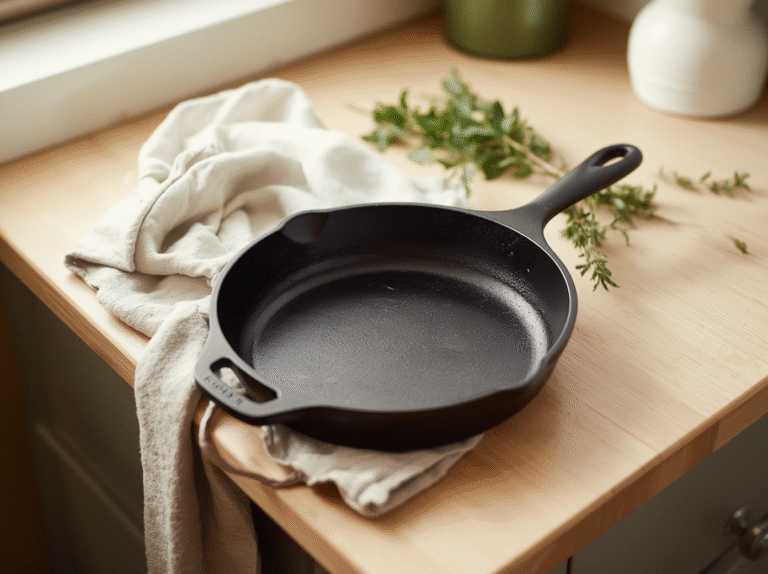
It depends on what you value. Caraway is easier to use and has true non-stick performance from day one. Cast iron is cleaner from a microplastics perspective, lasts a lifetime, and costs less, but it requires seasoning and a learning curve. For most families, we recommend owning both: a Lodge cast iron for searing and high-heat work, and a Caraway fry pan for eggs and quick meals.
Read our full review of cast iron here.
Can you use metal utensils on Caraway?
Technically yes, but we recommend against it. Metal utensils accelerate ceramic coating wear faster than anything else apart from high heat. Wooden, silicone, or nylon utensils are the right choice for getting the maximum lifespan out of the pan.
Is Caraway worth the price?
For the right buyer, yes. If you want a familiar non-stick cooking experience without PTFE chemistry, Caraway is the cleanest option in its category. If you are comparing to cast iron purely on cost or durability, Caraway loses that comparison. The value depends entirely on whether the non-stick convenience is worth the higher price and shorter lifespan to your household.
The Bottom Line
Caraway is one of the cleanest non-stick options on the market. That is the real win, and it is the reason it sits in our recommendation list. If you have never cooked on ceramic, start with the Caraway 10.5″ Ceramic Fry Pan. If you are doing a full replacement of conventional non-stick in one go, the Caraway 12-Piece Ceramic Cookware Set is the most complete PFAS-free non-stick kitchen you can buy.
The honest caveat stands. Ceramic coatings wear down. These are not lifetime pans. If you want one pan that outlasts your kitchen, the Lodge 10.25″ Cast Iron Skillet is the cleaner long-term answer, and it costs less than a tank of gas. For most families, the real answer is probably both. A cast iron skillet for searing and high-heat work. One Caraway fry pan for the eggs and pancakes. That is how we cook, and it is what we would tell a friend. You can read our full breakdown of lodge and cast iron here.
Whatever you decide, the peeling Teflon pan in your cabinet is the easy win. Replace that one pan and you have just made one of the highest-impact microplastic swaps a family can make. Small swap, real difference.

One Comment