Best Lodge Cast Iron Cookware for 2026: USA-Made and Built to Last
This article contains affiliate links. If you purchase through our links, we may earn a small commission at no extra cost to you. Full disclosure here.
When it comes to Lodge cast iron cookware, most advice starts with what to avoid. We want to start with what works. If you are looking for pans that are genuinely affordable, made in the USA, free of any plastic coating, and built to outlast you, cast iron is one of the few honest answers left. It is one of the simplest swaps in our guide to microplastics in the kitchen: what you are really cooking with, and no brand has been doing it longer than Lodge.
Here is the part that matters for your family: non-stick pans shed microplastics. A peer-reviewed study found that a single crack in a PTFE non-stick surface could release over 2 million plastic particles into food. Cast iron has no coating to crack, scratch, or shed. It is solid iron, seasoned with oil, and it gets better the more you use it. If you are new to the topic, our Ultimate Beginner’s Guide to Microplastics covers the basics in plain language.
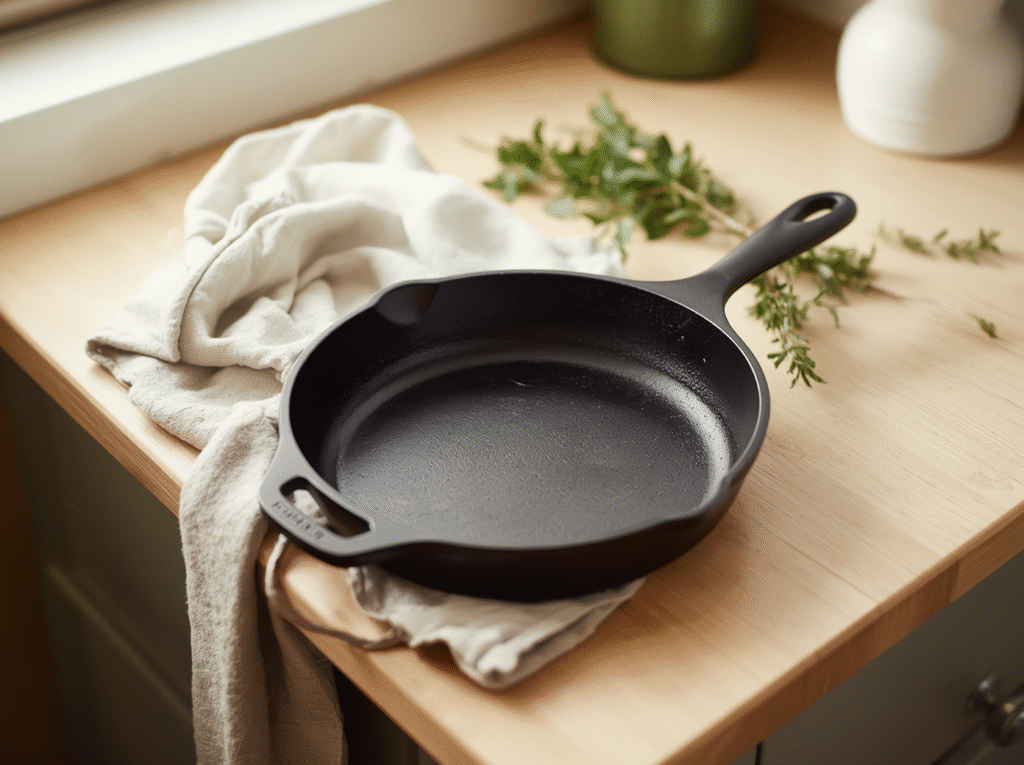
Our top pick for most households is the Lodge 10.25″ Cast Iron Skillet, made in the USA since 1896, pre-seasoned and ready to cook, and usually under the price of a single dinner out. Check the current price on Amazon.
This article focuses on Lodge specifically: what the research says, which pieces are worth owning, and the honest trade-offs of cooking with cast iron. If you would rather start with the smallest, cheapest changes first, our 12 simple kitchen swaps is a good companion checklist.
Looking for safer swaps?
We keep all of our favorite low-plastic kitchen, kids, and home products in one place, so you can skip the research and find what actually works.
See Our Non-Toxic Picks →The Short Version: Best Lodge Cast Iron in 2026
Here is what we recommend, and why:
- Best overall: Lodge 10.25″ Seasoned Cast Iron Skillet: made in the USA, pre-seasoned, zero coatings, the everyday workhorse, lasts forever
- Best value set: Lodge 5-Piece Cast Iron Set: two skillets, a griddle, and an enameled dutch oven in one purchase, the full cast iron kitchen
- Best for braising and baking: Lodge Enameled Cast Iron Dutch Oven: no seasoning required, oven safe to 500°F, half the price of Le Creuset
- Best for breakfast: Lodge Cast Iron Griddle: pancakes, bacon, and grilled cheese on one even surface, fits standard burners
- Best high-end pick: Lancaster Lightweight Cast Iron Skillet: smoother machined surface, about a pound lighter than Lodge, the splurge pan made in the USA
Why Cast Iron and Microplastics Are Worth Paying Attention To
Cookware is one of the more direct microplastic exposure points in the kitchen, and the mechanism is simple: heat and abrasion break down plastic coatings, and those particles end up in your food.
A study published in Science of the Total Environment found that a single crack in a non-stick surface could leave behind roughly 9,100 plastic particles, and that a broken coating could release over 2 million microplastic and nanoplastic particles. These are not extreme lab numbers. They reflect what happens to pans that get scratched during normal cooking. Even pans labeled “PFOA-free” usually still use PTFE, which is itself a type of PFAS, the “forever chemicals” that do not break down in the body or the environment. You can read the peer-reviewed study on Teflon microplastic release (ScienceDirect) for the full method and findings.
Cast iron sidesteps the entire problem. There is no polymer layer to shed, because there is no polymer at all. As you cook with oil or butter, you build a natural seasoning layer that is chemically bonded to the iron itself. We want to be honest about where the science stands on long-term health effects: that research is still developing. What is not in dispute is the exposure pathway, and when a $30 pan eliminates it entirely, the swap is straightforward.
What Makes Lodge Cast Iron Cookware Worth It
Lodge has been making cast iron in South Pittsburg, Tennessee since 1896. It is the oldest continuously operating cast iron manufacturer in the United States, still family-owned, and everything is melted, poured, molded, finished, and seasoned at two foundries in its hometown. There is no outsourcing and no coating to worry about.
The value case is hard to argue with:
- A 10.25-inch skillet runs around $30 to $40. A 5-piece set is under $130. Compare that to ceramic-coated pans that wear out in two to three years, or high-end non-stick at $150 and up per pan.
- Cast iron does not wear out. It can last 100 years or more. People cook daily on skillets they inherited from a grandparent. There is no replacement cycle.
- Cast iron retains heat better than almost any other material, so you use less energy and get a better sear. The seasoning improves with every meal.
- Lodge stands behind its bare cast iron for life, and its enameled cast iron carries a limited lifetime warranty covering manufacturing defects and normal-use damage.
Our Recommendations: The Best Lodge Cast Iron for 2026
Lodge 10.25″ Seasoned Cast Iron Skillet — Best Overall
Best for: Most households who want one reliable, affordable pan that handles nearly everything and lasts for decades.
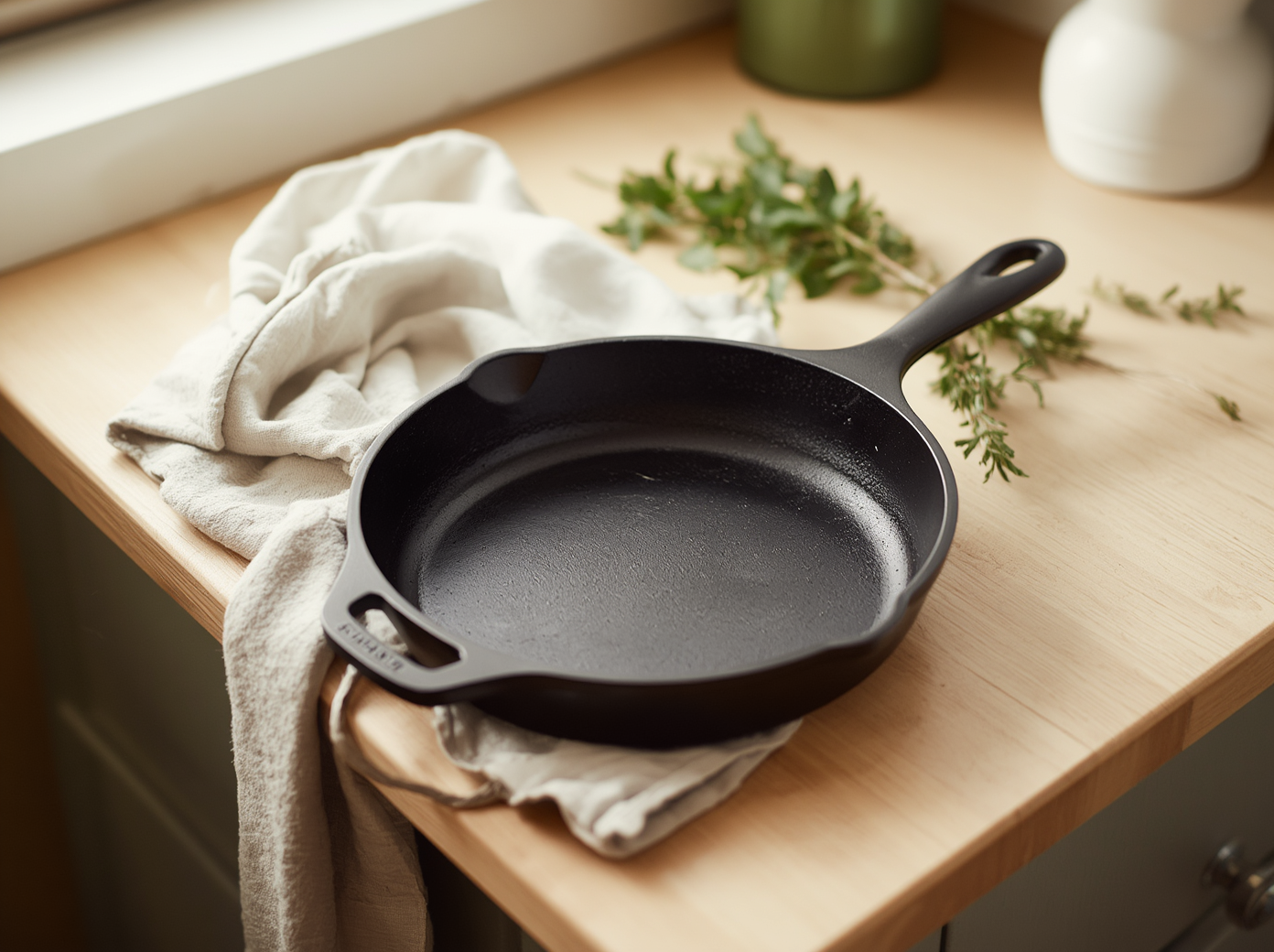
Of all the Lodge cast iron cookware we tested, this is the workhorse, and the pan we would tell almost anyone to start with. At 10.25 inches across and about 1.5 inches deep, it fits most burners without overhang and weighs around four pounds. It sears steaks, fries eggs and bacon, bakes cornbread and skillet cookies, and moves straight from stovetop to oven without a second thought. It ships pre-seasoned with soy-based vegetable oil, so it is ready to cook the moment you unbox it.
Maintenance is simpler than its reputation suggests. Wash it with a little mild dish soap, yes, that is allowed, dry it, and rub on a thin layer of oil. The more you cook, the better the surface gets.
- Pros: American-made hard cast iron, pre-seasoned and ready to use, naturally coating-free, excellent heat retention, oven and grill safe, lifetime durability, available in multiple sizes
- Honest con: It is heavy. Four pounds is a real consideration if you have limited hand or wrist strength. That weight is also why it holds heat so well.
Lodge 5-Piece Cast Iron Set — Best Value Set
Best for: Families building a kitchen from scratch, or anyone ready to replace their non-stick lineup in a single purchase.
This set is the most efficient way to move a whole kitchen off coated cookware. It includes a 10.25-inch skillet, a 12-inch skillet, a 10.25-inch square griddle, a 5-quart enameled dutch oven, and a silicone hot-handle holder. That covers a small pan, a large pan, a griddle for breakfast, and a dutch oven for braising, soups, and bread, all for under $130.
The enameled dutch oven in the set is worth calling out: its porcelain enamel surface needs no seasoning at all, so it is the lowest-maintenance piece in the bundle and goes from stovetop to oven to table without fuss.
- Pros: Covers the core of a kitchen in one purchase, includes an enameled dutch oven, all coating-free, exceptional value per piece, made in the USA
- Honest con: Bigger upfront cost than a single skillet, and you need the storage space. If you only cook occasionally, a single skillet may be the smarter start.
Lodge Enameled Cast Iron Dutch Oven — Best for Braising and Baking
Best for: Anyone who makes soups, stews, braises, or bakes bread, and wants a piece that needs zero seasoning maintenance.
A dutch oven is one of the few pieces of cookware you will use for 30 years or more, and Lodge’s enameled version delivers the performance of premium brands at roughly half the price. The cast iron core gives it the deep, even heat that makes braising work, and the porcelain enamel surface means no seasoning, ever. It handles oven heat up to 500°F, works on any cooktop, and comes in several colors. Sear a chicken on the stovetop, cover it, and move it to the oven. That is the whole workflow.
It carries a limited lifetime warranty, and reports from professional kitchens suggest enamel chipping is genuinely rare, on the order of one pot in a hundred over years of use.
- Pros: No seasoning required, oven safe to 500°F, works on every cooktop, excellent heat retention, limited lifetime warranty, far cheaper than Le Creuset or Staub
- Honest con: The handles are narrower than some competitors, about 3/4 inch, which can be tight with thick oven mitts. It is also heavy when full, so lift with care.
Lodge Cast Iron Griddle — Best for Breakfast
Best for: Pancake mornings, bacon, grilled cheese, and anyone who wants one flat surface that heats evenly end to end.
A griddle is more useful than people expect. The 10.25-inch square griddle fits a standard burner and gives you a flat, even cooking surface for pancakes and bacon at the same time, grilled cheese for the whole family, smash burgers, or sautéed vegetables. Because it is cast iron, heat spreads evenly across the whole surface instead of pooling in hot spots. Like the rest of the seasoned line, it arrives ready to use and only improves with cooking.
- Pros: Even heat across a flat surface, fits standard burners, pre-seasoned and coating-free, versatile for breakfast and beyond, made in the USA
- Honest con: A flat griddle is a specialist, not a do-everything pan. It pairs best with a skillet rather than replacing one.
Lancaster Lightweight Cast Iron Skillet — Best High-End Pick
Best for: Anyone who loves the idea of cast iron but wants a lighter, smoother pan, and does not mind paying a premium for it.
Lodge is our value pick, but if you want to see what a higher-end American cast iron skillet feels like, Lancaster is the one to know. This Pennsylvania company machines and polishes the cooking surface to a smooth, almost glassy finish reminiscent of the vintage Griswold pans collectors prize. The 10.5-inch skillet weighs about a pound less than a comparable Lodge, which makes it noticeably easier to lift and maneuver, especially moving from stovetop to oven. The smoother surface also releases food a little more easily right out of the box, before months of seasoning have built up.
To be clear about what you are paying for: this is a refinement and comfort upgrade, not a safety one. Both pans are equally coating-free and microplastic-free. If budget drives the decision, Lodge does the same core job for a fraction of the price. If you already own a Lodge and want a more elevated everyday pan, Lancaster is a genuinely lovely one.
- Pros: Smooth machined surface, about a pound lighter than Lodge, two pour spouts, made in the USA, lifetime warranty, coating-free
- Honest con: The splurge option. You are paying a premium for finish and lighter weight, not for better microplastics protection.
| Product | Material | Coating-Free? | Best For | Maintenance |
|---|---|---|---|---|
| Lodge 10.25" Skillet | Seasoned cast iron | Yes ✓ | Best overall, everyday use | Season with use |
| Lodge 5-Piece Set | Cast iron + enamel | Yes ✓ | Full kitchen in one buy | Mixed, low overall |
| Lodge Enameled Dutch Oven | Enameled cast iron | Yes ✓ | Braising, baking, soups | None required |
| Lodge Griddle | Seasoned cast iron | Yes ✓ | Breakfast, flat-top cooking | Season with use |
| Lancaster Skillet | Seasoned cast iron | Yes ✓ | Premium, lighter weight | Season with use |
What to Look for in Cast Iron Cookware
- No synthetic coating. The whole point of cast iron is that the cooking surface is iron and seasoning, not a polymer. Bare seasoned cast iron and porcelain enamel both qualify. Anything marketed as “non-stick cast iron” with an added coating defeats the purpose.
- Pre-seasoned from the factory. Modern Lodge and Lancaster pans arrive ready to cook. You should not have to do a multi-hour seasoning ritual before the first use.
- Made-in transparency. Both Lodge and Lancaster are made in the USA and say so plainly. Knowing where and how a pan is cast is a reasonable thing to expect.
- The right size. A 10 to 10.5-inch skillet is the most versatile starting point for most households. Add a larger pan or a dutch oven as your cooking grows.
- Realistic weight. Cast iron is heavy by nature. If that is a concern, the lighter Lancaster or an enameled piece with helper handles is worth considering.
The Seasoning Question, Honestly
Cast iron’s reputation for being high-maintenance is mostly outdated. A few myths worth clearing up:
- You can use dish soap. A small amount of mild soap will not strip your seasoning. That myth comes from the era of harsh, alkaline soaps. Modern detergents are fine.
- You do not need to season a new pan. Lodge and Lancaster both pre-season at the factory. Rinse, dry, add a little oil, and start cooking.
- The best maintenance is cooking. Every time you cook with oil or butter, you add a thin layer of seasoning. Wash, dry, and rub with a little oil after each use, and the surface keeps improving. If a pan ever looks dull or develops rust, you can re-season in the oven, but most people rarely need to.
FAQ
Does cast iron leach iron into food?
In small amounts, yes, and for most people that is a benefit rather than a concern. Cooking in cast iron can modestly increase the dietary iron in your food, which is helpful if you are iron-deficient or pregnant. Iron is an essential mineral at normal levels. The one exception is people with hemochromatosis, an iron-overload disorder, who should talk to their doctor before cooking in cast iron regularly.
Is cast iron really better than non-stick for microplastics?
Yes. Non-stick pans with PTFE coatings can shed microplastic particles when the surface is scratched, cracked, or overheated. Cast iron has no coating to shed. As the seasoning layer builds, it becomes more durable, not more likely to flake, because it is bonded to the iron rather than sitting on top of it. A 2024 systematic review of kitchen microplastics (NIH) notes that seasoned iron pans build a natural non-stick surface and avoid the PTFE problem entirely.
How long does Lodge cast iron actually last?
Properly cared for, 100 years or more is realistic. There are cast iron skillets in daily use today that are 60, 80, even over 100 years old, and they perform better than new because the seasoning is so well established. This is genuinely heirloom cookware.
What do I do if my cast iron rusts?
Rust does not ruin cast iron. Scrub the spots with steel wool or a stiff brush, rinse, dry completely, and rub with a thin layer of oil. Re-season in the oven if needed. A pan that has been neglected for years can be brought fully back to life, which is one of cast iron’s real advantages over coated cookware.
Can I use cast iron on an induction cooktop?
Yes. Cast iron works on gas, electric coil, smooth-top electric, induction, and open flame. You can even through it right into the oven. It is one of the most versatile cookware materials you can own.
The Bottom Line
Moving off coated non-stick is one of the most direct microplastic swaps you can make in the kitchen, and Lodge cast iron cookware makes it an easy one. There is no learning curve you cannot clear in a week, and the pans work better the longer you own them.
For most families, the Lodge 10.25″ Skillet is where we would start, an affordable, coating-free pan with a 125-year track record behind it. If you want to replace a whole non-stick lineup at once, the Lodge 5-Piece Set gets you there in a single purchase. And if you want the most refined, lightest cast iron experience and do not mind the price, the Lancaster Skillet is the pan you buy once and keep for good.
Small swap, real difference. The pan you cook in every day is worth getting right, make sure it is not adding anything to the meal.