Do HEPA Vacuums Actually Catch Microplastics?
This site is reader-supported. When you buy through links on this page, I may earn a small commission. It keeps the lights on and never changes what I recommend.
The quick version: A good HEPA vacuum can help reduce the microplastic dust in your home, but the filter is only half the story. What actually matters is HEPA-level filtration plus a sealed airflow path plus (ideally) a bag. If you want the strongest filtration story in one machine, it is the Miele Complete C3 Marin. If you want the accessible pick most people actually buy, it is the Shark Navigator Lift-Away. The full explanation and all five picks are below.
If you are trying to reduce microplastics in your home, your vacuum cleaner sits right at the center of the question. A HEPA vacuum sounds like exactly the tool for the job: tiny plastic particles floating around, a filter built to trap tiny particles. But the real answer has a catch, and the catch matters more than the filter. Here is what the science actually says, and how to pick a vacuum that does the job properly.
Your Indoor Air Carries More Microplastics Than We Used to Think
In 2025, researchers at the Université de Toulouse sampled apartment and car air using Raman spectroscopy. The median apartment held 528 microplastic particles per cubic meter of air. About 94% of the particles were under 10 micrometers, small enough to reach deep into lung tissue. Their estimate: adults inhale roughly 71,000 microplastic particles per day in indoor environments, about 100 times higher than previous estimates. (ScienceAlert summary of the PLOS ONE study)
That is the reason this question matters. Now here is where those particles come from.
Most Household Microplastic Dust Is Tiny Fibers From Your Own Stuff
A University of Hull team sampled 20 homes over six months and found an average fallout of 1,414 microplastics per square meter per day. About 90% were small fibrous particles in the 5 to 250 micrometer range, and PET (polyester) showed up in 90% of samples, making up 62% of identified microplastics. Indoor levels ran 1 to 45 times higher than outdoor levels. (Hull repository)
Translation: your clothes, bedding, carpets, and couch shed the fibers, and household dust is the delivery system. A vacuum is the tool that removes the settled dust reservoir before it gets kicked back into the air. Which brings us to the good news and the gotcha.
Homes That Vacuum Often Have Less Microplastic Dust
A study of household dust across 29 countries found that frequent vacuuming was the household habit most clearly linked to lower levels of deposited microplastics. Regular vacuuming, rather than sweeping, was associated with less airborne microplastic pollution indoors. (phys.org)
That is an association, not proof that a specific vacuum caused the reduction, and the article behind it says so. But it is a real signal, and it makes the next question sharper: does the HEPA part actually do anything?
HEPA Filtration Can Catch Particles in the Microplastic Size Range
A True HEPA rating is commonly defined as at least 99.97% capture at 0.3 micrometers under controlled test conditions. That 0.3 micrometer figure is the most penetrating test size, not a lower limit. HEPA media captures larger and smaller particles through different mechanisms. A 2024 review in the journal Microplastics notes that many airborne microplastics fall in HEPA’s target range, while also noting that few direct tests of household filtration against airborne microplastics exist yet. (MDPI review)
So the filter media is capable. Now the gotcha.
The Gotcha: Vacuums Leak, and a HEPA Filter Does Not Always Fix It
Knibbs and colleagues (2012) tested 21 in-use vacuums from 11 manufacturers and measured what came out of the exhaust. Every single vacuum released some fine dust and bacteria into the air. Vacuums with HEPA filters in some cases released only slightly lower levels than the rest. Newer and more expensive machines were generally less polluting. (PubMed)
This is the single most important paragraph in this article. A HEPA filter in a leaky machine can blow fine dust straight out the exhaust, filter or no filter. The sealed airflow path matters as much as the filter itself. If dirty air can bypass the filter through gaps in the housing, the HEPA rating on the box is decoration.
The 3-Part Shopping Rule
Forget brand hype. When you are shopping for a HEPA vacuum to cut down microplastic dust, check three things:
- Genuine HEPA-level filtration. Look for True HEPA or whole-machine filtration rated at 99.97%. “HEPA-type” and “HEPA media” are weaker claims. They are not the same thing.
- A sealed system. The listing should say sealed system, sealed airflow path, or whole-machine filtration. If it does not mention sealing anywhere, assume air (and fine dust) escapes around the filter.
- Bagged over bagless when you can. Emptying a bagless bin can puff a cloud of captured dust right back into the room you just cleaned. A bag you toss sealed is the cleaner handoff.
Now the five picks, each with the honest drawback included, because every vacuum has one.
1. Shark Navigator Lift-Away NV352: The Accessible Pick
The Shark Navigator Lift-Away pairs a washable HEPA filter with a fully sealed anti-allergen system, which is exactly the combination this article asks for. It is the rare machine that gets the sealed-system story right at a price most people can stomach, and the detachable Lift-Away pod handles stairs and furniture. It currently sits at #1 among upright vacuums on Amazon.
Honest drawback: it is bagless, so emptying the bin can release dust if you do it carelessly (take it outside). It is corded and bulkier than a stick vacuum.
2. Dyson V8: The Cordless Pick
The Dyson V8 advertises advanced whole-machine filtration, which is stronger language than a filter-only claim, with the listing stating at least 99.97% filtration in non-Max modes. Cordless means you will actually vacuum more often, and frequency is half the battle per the 29-country study.
Honest drawback: bagless bin emptying can disturb dust, battery runtime varies a lot by mode, and the smaller bin means more frequent emptying. It may not suit a full large-home clean in one pass.
3. Miele Complete C3 Marin: The Strongest Filtration Story
If filtration is the whole point, this is the machine. The Miele Complete C3 Marin combines a HEPA AirClean filter with Miele’s AirClean sealed system, and it is bagged, so the dust you capture stays captured when you change the bag. This is the most complete answer to the 3-part shopping rule in this lineup.
Honest drawback: premium pricing, a bulky canister compared with a stick, and ongoing bag and filter costs. The included air-driven TurboBrush is less aggressive than an electric powerhead on thick carpet.
4. Kenmore Elite 21814: The Bagged Canister for Pet Homes
The Kenmore Elite 21814 is a bagged canister with HEPA-certified filtration (the listing claims 99.97% capture), a Pet PowerMate head, and two floor nozzles. In a home where pet hair and fibers pile up fast, the powered pet head plus a bag you toss sealed is a strong combination. It ranks #3 among canister vacuums on Amazon with around 13,000 reviews.
Honest drawback: heavy at around 23 pounds, bulky, corded, and the listed warranty is only one year. Bags are an ongoing cost.
5. Hoover WindTunnel 3 Max Performance Pet: The Value Pick
For readers who will not buy a premium machine, the Hoover WindTunnel 3 Max Performance Pet is the budget-friendly pet upright in this lineup. Here is the plain truth about it: Hoover advertises HEPA media, not certified True HEPA, and makes no sealed-system claim, so this is the weakest filtration story of the five. It earns its spot on price and pet-hair performance, not on filtration.
Honest drawback: the filtration story above, plus bagless and corded, and lower review scores (4.0 stars) than the Shark.
How to Vacuum for Less Microplastic Dust
The machine is half of it. The habits are the other half:
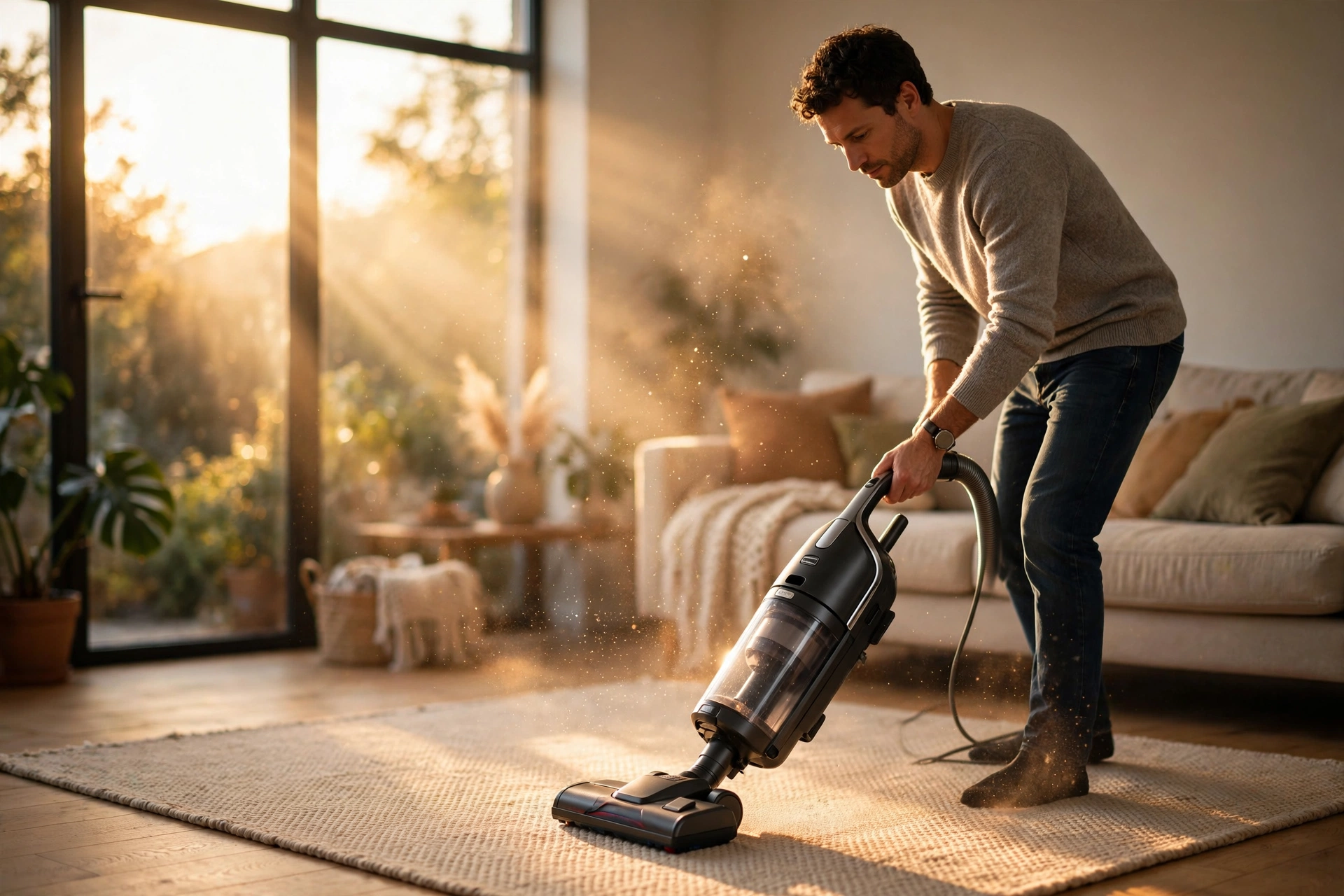
- Vacuum often, and slowly. Frequency is the habit most linked to lower microplastic dust. Slow passes give the brush and airflow time to pull fibers out of carpet instead of skimming over them.
- Empty bins and change bags outside when you can. The whole point is getting the dust out of your air. Do the dusty part of the job outdoors.
- Hit the soft furnishings. Upholstery, curtains, and mattresses shed fibers too. Use the attachments, not just the floor head.
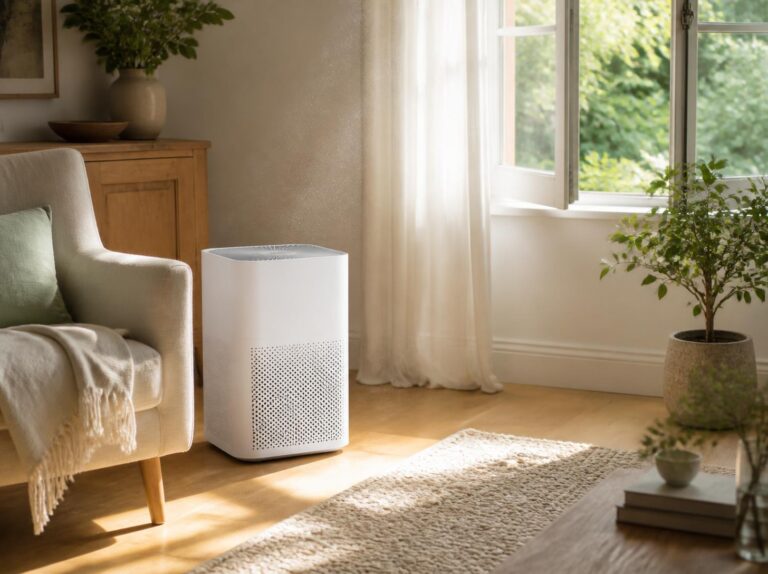
- Do not rely on the vacuum for the air itself. A vacuum removes the settled dust reservoir. For particles already floating, that is an air purifier’s job. Our Levoit Core 300S review covers one option.
What a HEPA Vacuum Cannot Do
Keeping the honest framing this site runs on: no study has tested whether a specific vacuum brand or model removes a known percentage of microplastics from a real home. No study proves HEPA vacuums reduce a person’s actual microplastic exposure or health risk. Most household microplastics are settled fibers, not floating particles, so a vacuum is not an air purifier and will not scrub your air. And fiber shape means some fibers are longer than HEPA test particles, so a 0.3 micrometer efficiency claim does not map one to one onto real-world fiber capture. What a good HEPA vacuum does is shrink the dust reservoir in your home, which is worth doing, without promising more than the science supports.
Frequently Asked Questions
Do all HEPA vacuums catch microplastics?
Not equally. The filter media can capture particles in the microplastic size range, but a 2012 study of 21 real vacuums found every machine leaked some fine dust, and HEPA models were sometimes only slightly better than the rest. A sealed airflow path matters as much as the filter.
Is a bagged vacuum better than bagless for microplastics?
For keeping captured dust captured, yes. Emptying a bagless bin can puff fine dust back into the room. A sealed bag you toss intact avoids that entirely.
How often should I vacuum to reduce microplastic dust?
A 29-country dust study linked frequent vacuuming to lower deposited microplastics, but it did not establish an exact schedule. The practical takeaway: regular and thorough beats occasional and quick, and slow passes pull more fibers out of carpet.
Can a vacuum remove microplastics from the air?
Not really. Vacuums remove settled dust, which is the reservoir that gets resuspended into the air. For particles already floating, an air purifier with a HEPA filter is the right tool.
Keep Going
Microplastic dust comes mostly from synthetic textiles, so the vacuum is only one front. Our kitchen swaps guide covers where plastic hides around food, and our Levoit Core 300S review covers the air purifier side of the equation.