Your Wardrobe Is Shedding: Lower-Plastic Clothing Swaps
Your closet is quietly one of the biggest sources of microplastic pollution in your home. Not the fleece jacket on the hook, we already covered that one. I mean the ordinary stuff: the tees, the socks, the pants you wear on repeat. Most of it is blended with polyester or nylon, and every wash sends thousands of plastic fibers down the drain.
The fix is simpler than it sounds. You do not need a whole new wardrobe. You need lower-plastic versions of the staples you already wear: a tee that is actually 100% cotton, socks that are mostly wool, pants with zero polyester. Six lower-plastic clothing swaps below, each one a direct replacement for something already in your closet.
Affiliate disclosure: this post contains affiliate links. If you buy through them, I may earn a commission at no extra cost to you, which keeps this site running and never changes what I recommend.
The quick version: most everyday clothes are plastic blends that shed microfibers in the wash. These six swaps replace wardrobe staples with natural fibers: the Fair Indigo organic Pima cotton tee, Darn Tough merino hiking socks, prAna hemp and TENCEL pants, a 100% linen shirt, a 100% cotton fisherman sweater, and a waxed canvas trucker jacket. If you only make one swap, make it the tee: it is the hardest-working item in most closets. Honest trade-offs for every pick below.
Why Your Everyday Clothes Shed Plastic
It is the blends. That soft tee that says “cotton feel” on the front is often 60% cotton and 40% polyester once you read the fine print. Athletic socks, stretchy pants, cozy sweaters: same story. The synthetic fibers in those blends shed plastic microfibers in the wash, and researchers have been measuring it for over a decade.
The numbers are not subtle. A single synthetic garment can shed more than 1,900 fibers per wash (Browne et al., 2011, Environmental Science & Technology). De Falco and colleagues measured 124 to 308 milligrams of microfibers per kilogram of washed synthetic fabric, working out to roughly 640,000 to 1,500,000 microfibers per laundry load (De Falco et al., 2019, Scientific Reports). Napper and Thompson counted about 496,000 fibers from a 6 kg polyester load (Napper & Thompson, 2016, Marine Pollution Bulletin). And it is not just the wash: wearing polyester releases fibers into the air too, up to 400 fibers per gram of fabric in 20 minutes of normal activity (De Falco et al., 2020, Environmental Science & Technology).
Now the honest part, because that is how we do things here. Natural fibers shed too. Wool and cotton come off in the wash in roughly comparable amounts to synthetics in some studies. The difference is what happens next: wool is protein and cotton is cellulose, so those fibers biodegrade. Polyester persists for decades. So this is about lower-plastic clothing, not zero-shed clothing. Nobody gets to claim zero.
If you want the full breakdown of which fabrics shed the most, I wrote a whole science explainer on it: What Clothing Sheds the Most Microplastics?
6 Lower-Plastic Clothing Swaps
Each pick below replaces one specific thing in your closet. I read the materials lists so you do not have to, and I flagged every synthetic fiber I found, because a swap you have to squint at is not a swap.
Fair Indigo Women’s 100% Organic Pima Cotton Tee
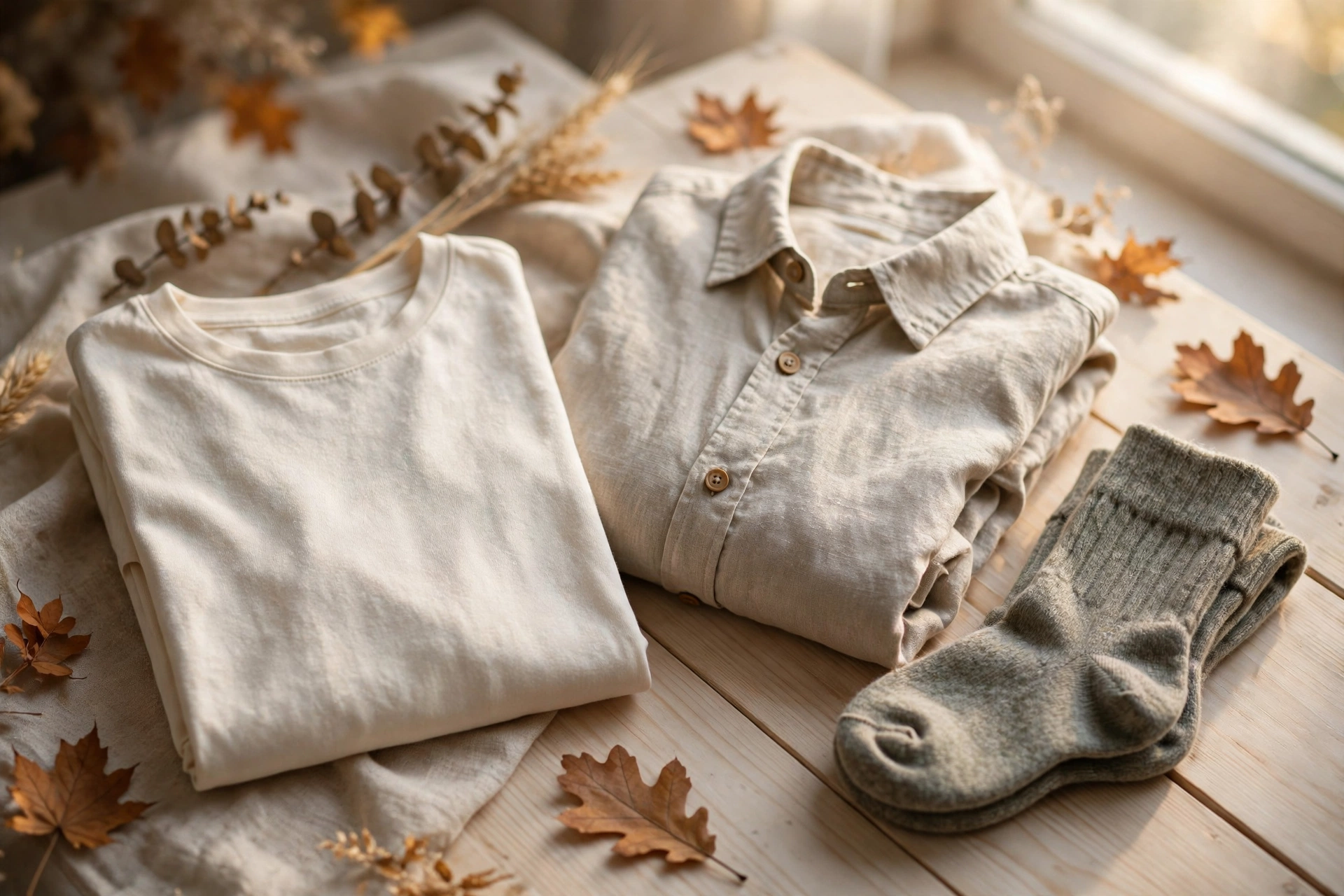
Start with the hardest-working item in your closet. The Fair Indigo organic Pima cotton tee is 100% organic Pima cotton, zero synthetics, dyed with Oeko-Tex tested dyes and fairly made in Peru. Pima is an extra-long-staple cotton, which means it is softer, stronger, and more resistant to pilling than regular cotton. It gets better with washing instead of turning into lint.
The organic part matters more than most people realize. Conventional cotton occupies only about 3% of the world’s farmland but consumes a huge share of agricultural pesticides, so organic is a double win: no plastic fibers in your wash water and no pesticide load on farmland. Honest trade-off: one good organic tee costs more than a multi-pack of blended tees, but it will outlast them by years.
Darn Tough Hiker Micro Crew Socks (Style 1903)
Full honesty up front: these are 59% merino wool, 39% nylon, and 2% Lycra spandex. That is 41% synthetic, so they are not plastic-free and I will not pretend they are. But most hiking and athletic socks are majority synthetic, and the Darn Tough Hiker Micro Crew flips that ratio: mostly wool, with the nylon there for durability and the spandex for fit. It comes in men’s and women’s sizes, it is cushioned, and it is knit in Vermont by a company famous for its lifetime guarantee.
Why socks matter more than you would think: they are small, they get washed after every single wear, and they live a hard life of friction inside your shoes. A sock washed 100 times a year sheds far more over its life than a sweater washed monthly. If you want zero synthetic, look for 100% wool socks, but expect them to wear through faster. This is the durability compromise pick.
prAna Vaha Balance Pant
Casual pants are a sneaky source of polyester: stretch chinos, “performance” fabrics, athleisure. The prAna Vaha Balance Pant is 55% hemp and 45% TENCEL Lyocell, with zero polyester. Hemp is naturally pest-resistant so it needs far fewer pesticides than cotton, and TENCEL is cellulose fiber made from wood pulp that biodegrades. Together they make a pant that looks completely normal, not crunchy, with a soft drape and real breathability.
Two honest notes. Hemp wrinkles, so if you iron everything this will annoy you. And TENCEL is processed fiber, made in a closed-loop solvent process where the solvent is recovered and reused, which is about as clean as fiber processing gets, but it is still a manufactured fiber, not something pulled straight off a plant. Neither of those changes the microplastic math: nothing in this pant sheds plastic.
Huckberry Wills Isles Linen Shirt
Linen is one of the lowest-impact fabrics you can wear. It comes from flax, which needs little irrigation and few pesticides, and the Huckberry Wills Isles Linen Shirt is 100% of it. No blend, no stretch fiber hiding in the fine print. Linen breathes better than cotton in heat, gets softer with every wash, and outlasts most shirts in your closet.
The trade-off is the one everyone knows: linen wrinkles. That is not a flaw, it is the fiber’s personality, but if you like a crisp pressed look, this is not your shirt. Wash cold, hang to dry, and embrace the lived-in look. Your waterways will thank you.
Amazon Essentials 100% Cotton Fisherman Cable Sweater
The classic fall sweater is a cable knit, and most affordable ones are acrylic, which is just plastic yarn. The Amazon Essentials fisherman cable sweater is 100% cotton in that same timeless fisherman knit. It gives you the cozy fall look with fibers that biodegrade instead of persisting.
Honest trade-off: this is conventional cotton, not organic, so it does not get the pesticide-free bragging rights of the Fair Indigo tee above. It is the budget-friendly pick in this list, and the compromise is transparent. Care tip that applies to all cotton sweaters: fold it, do not hang it, or the shoulders will stretch into sad little wings.
Huckberry Flint and Tinder Flannel-Lined Waxed Trucker Jacket
Most rain-resistant jackets get their water resistance from a spray-on synthetic coating over a synthetic face fabric: plastic on plastic. The Flint and Tinder waxed trucker jacket takes the older path. The exterior is waxed cotton canvas, so the water resistance comes from the wax finish itself, and it is lined with soft flannel for fall warmth. It is the kind of jacket that looks better at year five than year one.
Honest trade-offs, because this one has a few. The wax is paraffin-based, which is petroleum-derived, though it does not shed microplastic fibers the way synthetic fabrics do. You will need to re-wax it occasionally to keep the water resistance up, which is a chore and also a ritual, depending on your personality. And it is heavier than a synthetic shell. What you get in return is a jacket with no synthetic face fabric and no spray-on coating.
What To Do With the Synthetic Clothes You Already Own
Please do not throw your current clothes in the trash. A working garment worn for five more years beats one sent to landfill, and buying new stuff you do not need is its own kind of waste. Keep wearing what you have, and make it shed less while you do:
- Wash cold and less often. If it does not smell, it does not need a wash. Every skipped cycle is thousands of fibers kept out of the water.
- Wash synthetics in a Guppyfriend bag. It catches the microfibers your clothes shed in the wash so they go in the trash instead of the river. This is the single highest-impact thing you can do for a synthetic garment you already own.
- When something finally wears out, replace it with one of the natural-fiber picks above instead of another plastic blend. That is how the shedding stops for good.
If you have not tackled your underwear drawer yet, that is actually the highest-impact clothing swap of all, since it touches your skin all day: Non-Toxic Underwear: Organic Cotton Picks. And for outer layers beyond the trucker jacket, my fleece alternatives guide covers wool and cotton layers for adults and kids. For the full laundry-side playbook, see Your Washing Machine Is One of the Biggest Microplastic Sources in Your Home.
Frequently Asked Questions
Do natural fibers shed microfibers too?
They shed fibers, yes, and I will not pretend otherwise. Studies have measured natural fibers coming off in the wash in amounts roughly comparable to synthetics. The difference is what happens next: wool is protein and cotton, linen, hemp, and TENCEL are cellulose, so those fibers biodegrade. Polyester and nylon persist in soil and water for decades. That is why the honest framing is lower-plastic, not zero-shed.
Is TENCEL actually plastic-free?
Yes. TENCEL is a brand name for lyocell, a cellulose fiber made from wood pulp. It is not a synthetic polymer, it contains no plastic, and it biodegrades. It is made in a closed-loop process where the solvent is recovered and reused, which is about as clean as manufactured fiber gets. It is still a processed fiber rather than a field fiber like cotton or hemp, but on the microplastic question it is firmly on the good side.
Why do the Darn Tough socks still have nylon if this is about reducing plastic?
Because socks are brutal on fibers and 100% wool socks wear through fast. The nylon is there for durability and the spandex for fit, and the sock is still majority merino, which is a big improvement over typical athletic socks that are mostly synthetic. If you want zero synthetic in your socks, 100% wool options exist, just expect to replace them sooner. I flagged the blend up front so you can make that call yourself.
How should I wash natural-fiber clothes to minimize shedding?
Cold water, gentle cycle, and wash less often than you think you need to. Merino wool resists odor naturally, so airing it out between wears is usually enough. Skip the dryer when you can: heat and tumbling beat fibers up. And for anything with a synthetic blend, like the hiking socks above, a Guppyfriend bag catches what sheds.
Is a waxed canvas jacket really better than a regular rain jacket?
For microplastics, yes. Most rain jackets pair a synthetic face fabric, usually nylon or polyester, with a spray-on water-repellent coating, so they shed plastic fibers from the fabric itself. A waxed canvas jacket gets its water resistance from the wax finish on a cotton canvas base. The trade is maintenance: you re-wax canvas occasionally, while a rain jacket asks nothing of you until its coating wears off and it starts wetting out anyway.