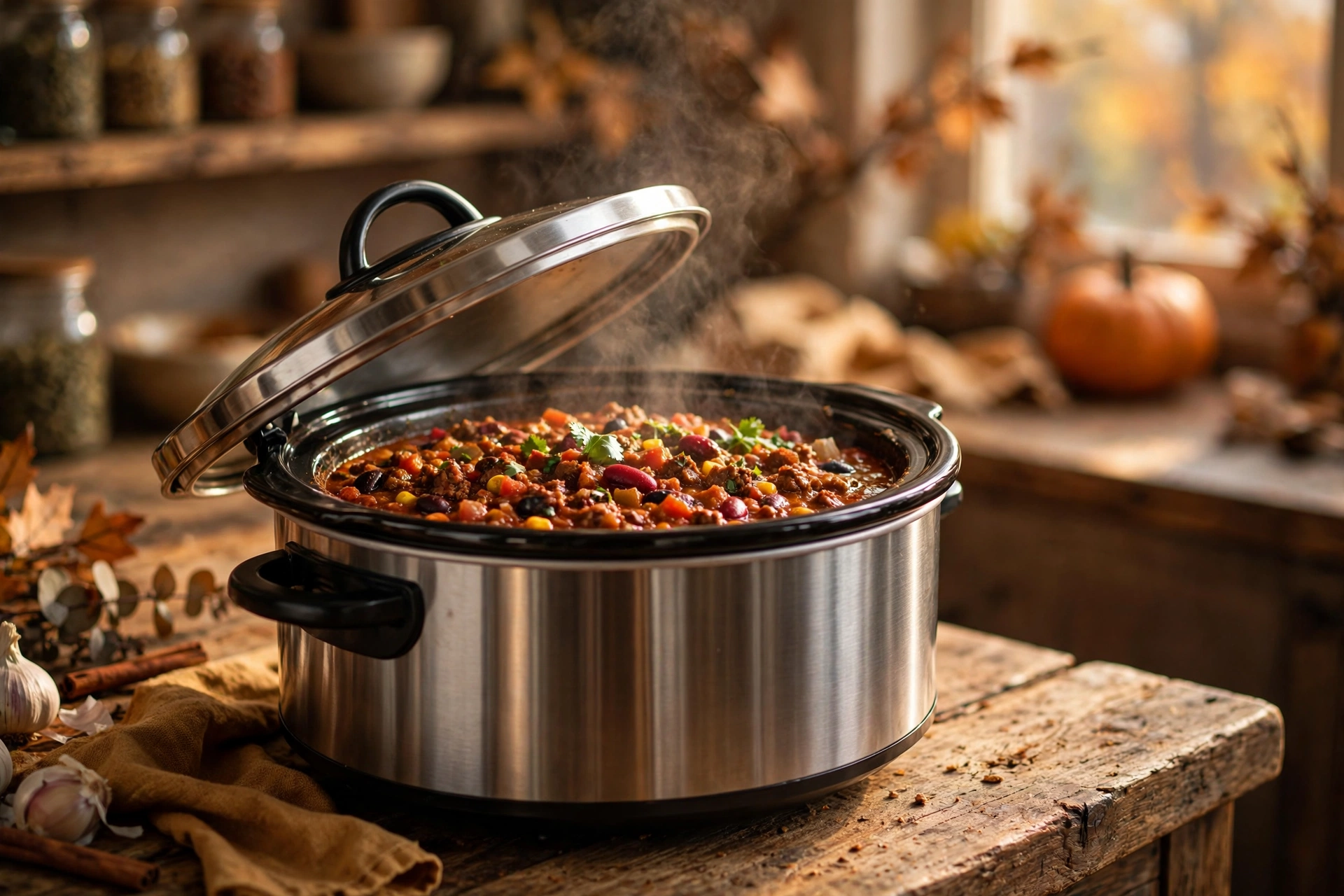
6 Non-Toxic Slow Cookers for Fall (No Lead, No Flaking Coatings)
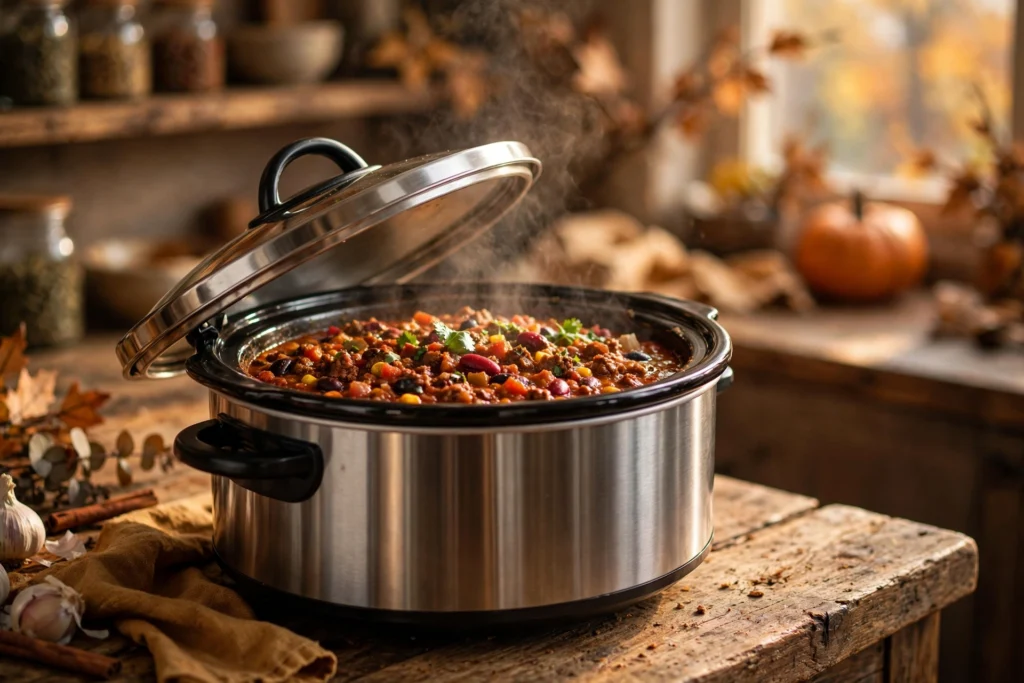
Slow cooker season is here, and your crock is about to work overtime: chilis, soups, stews, pot roasts, all simmering away for hours. Which is exactly why the inside of that pot deserves a second look. Most slow cookers are ceramic crocks with glazed interiors, and ceramic glazes have a long history with lead. Others use nonstick-coated aluminum inserts that flake a little more every year. Either way, whatever is on that cooking surface spends eight hours in hot, often acidic food. That is a lot of contact time.
I went looking for slow cookers that sidestep the whole problem: stainless steel inserts with nothing to leach or flake, unglazed clay with no glaze chemistry at all, and ceramic crocks from the brands that actually publish their lead and cadmium testing. Six picks below, each with the honest trade-offs, plus two fall recipes at the end to break in whichever one you choose.
Affiliate disclosure: this post contains affiliate links. If you buy through them, I may earn a commission at no extra cost to you, which keeps this site running and never changes what I recommend.
The quick version: the concern with slow cookers is lead and cadmium leaching from ceramic glazes (especially with acidic foods) and flaking nonstick coatings shedding into dinner. These six avoid both: the Instant Pot Duo is the #1 pick with a bare stainless steel insert that has nothing to leach or flake, the Instant Pot Duo Plus is the step-up with the same stainless story, the VitaClay uses unglazed clay for the purist option, the 360 Cookware slow cooker is the American-made buy-it-for-life stainless pick, the Crock-Pot Cook & Carry is the honest mainstream ceramic with published lead testing, and the Hamilton Beach Set & Forget is the budget alternative. If you only buy one, get the Instant Pot Duo. Honest trade-offs for every pick below, plus two fall recipes at the end.
Why Your Slow Cooker Might Be Leaching More Than Flavor
Start with the glaze. Ceramic glazes have historically contained lead to give that attractive shine, and the FDA randomly tests ceramic foodware precisely because extractable lead and cadmium keep turning up. The risk is not theoretical: acidic foods are especially good at pulling lead out of ceramics, and a slow cooker full of tomato-based chili is about as acidic as dinner gets. When pottery is fired properly, the lead stays bound in the glaze, but cheap or aging crocks are where the questions start (NPR, 2017).
Then there is the coating problem. Plenty of modern slow cookers and multi-cookers use nonstick-coated aluminum inserts, ceramic-coated or otherwise. Coatings degrade with heat, utensils, and time, and once they start flaking, those flakes go straight into food. From the microplastics lens, degraded polymer coatings shedding particles into a hot, fatty stew is exactly the kind of chronic low-dose exposure this site exists to help you avoid. That is why every coated model got cut from this list, no matter how popular.
The honest middle ground: a well-made glazed crock from a brand that tests its glazes is not the villain here. The picks below are organized by how they handle the trust question. Bare stainless steel and unglazed clay remove the question entirely: there is no glaze chemistry to trust. Tested ceramic asks you to trust the testing, which is reasonable when the brand publishes it and you retire any crock with a chipped or crazed glaze.
The 6 Slow Cookers at a Glance
| Cooker | Insert | Capacity | Standout | Watch out |
|---|---|---|---|---|
| Instant Pot Duo 7-in-1 | Bare stainless steel | 6 qt | Nothing to leach; best value | Slow-cook mode runs cooler |
| Instant Pot Duo Plus 9-in-1 | Bare stainless steel | 6 qt | Newest features, same steel | Costs more for same insert |
| VitaClay Smart Clay Cooker | Unglazed clay | 3.2 qt | No glaze, metal, or coating | Small, fragile, hand-wash |
| 360 Cookware Slow Cooker | T-316 stainless steel | 4 qt | US-made, lifetime warranty | Premium price, 4 qt only |
| Crock-Pot Cook & Carry | Glazed stoneware | 6 qt | Published lead testing | Trust-the-glaze; retire chips |
| Hamilton Beach Set & Forget | Glazed stoneware | 6 qt | Budget pick, temp probe | Trust-the-glaze; retire chips |
The 6 Non-Toxic Slow Cookers, Compared
Instant Pot Duo 7-in-1 (6 Quart): the #1 pick
The Instant Pot Duo wins this list for a beautifully simple reason: its inner pot is bare 18/8 food-grade stainless steel with a tri-ply bottom. No glaze, no coating, no chemistry to evaluate. There is nothing to leach and nothing to flake, which ends the entire debate this article is about. It is PFOA and PTFE free by construction, not by testing statement. Add the fact that it is one of the best-selling slow cookers on Amazon and a genuine 7-in-1 (pressure cooker, rice cooker, yogurt maker, and more), and it is the best value here by a wide margin.
Honest trade-offs. The Slow Cook program behaves differently from a traditional crock: it heats from the bottom only and widely reported owner consensus says it runs cooler, so recipes may need more time or the higher heat setting. And this is a pressure cooker first, so if you want a simple dial-and-walk-away crock with zero learning curve, the single-purpose picks below will feel more familiar.
Instant Pot Duo Plus 9-in-1 (6 Quart): the step-up
The Instant Pot Duo Plus is the updated Duo: same bare 18/8 stainless steel inner pot with the anti-spin design, same PFOA and PTFE free story, plus a quieter steam release, sous vide, sterilizer, and 15 smart programs across 9 cooking functions. If you were going to buy an Instant Pot anyway and like having the newest interface, this is the one.
Honest trade-off: you are paying more for the same insert material. The food-contact story is identical to the Duo, so this pick is about features, not purity. Same slow-cook-behaves-differently caveat as the Duo applies.
VitaClay Smart Organic Clay Cooker (3.2 Quart): the purist pick
For the reader who does not want to trust any glaze statement, the VitaClay removes the question by removing the glaze. The pot and lid are unglazed Zisha clay: no glaze, no metal food-contact surface, no coating. The maker had independent lab testing done (Anresco Laboratories, 2017 and 2018) that found no lead, cadmium, or arsenic leaching above 0.01 ppm detection limits. It also doubles as a rice cooker and yogurt maker, which is a nice bonus for small kitchens.
Honest trade-offs, and they are real. Clay is fragile: drop it and it cracks, though replacement pots are sold. At 3.2 quarts it is the smallest pick here, sized for couples rather than families. And it is hand-wash only. One precision note for the careful reader: present the leach-test results, not an absolute “zero lead” claim. Surface readings can find trace minerals that do not leach into food, and leaching is the measurement that matters for something you eat from.
360 Cookware Stainless Steel Slow Cooker (4 Quart): buy it for life
The 360 Cookware slow cooker has the strongest materials story in this lineup. The pot is T-316 surgical-grade stainless steel with an aluminum core sealed between steel layers, so aluminum never touches food. Zero chemical nonstick coatings, a dry-sanded finish, and it is made in Wisconsin with a lifetime warranty on the pot. The pot itself is a genuine 3-in-1: it works on the stovetop, on the electric slow-cooker base, and in the oven, so you can sear and slow-cook in the same vessel.
Honest trade-offs. This is the premium pick, priced accordingly, and this listing is the 4-quart set, which is smaller than the 6-quart mainstream picks. Note the warranty split too: lifetime on the pot, but only two years on the electric base.
Crock-Pot SCCPVL610-S Cook & Carry (6 Quart): the honest mainstream pick
Not everyone wants a multi-cooker, and the Crock-Pot Cook & Carry is the classic dial-free programmable crock done right. The reason it makes a non-toxic list: Crock-Pot is on the record stating that lead is not an additive in its ceramic glaze, and that accredited third-party lab testing shows the stoneware far below FDA and California Prop 65 limits for extractable lead and cadmium. That is more transparency than most stoneware brands offer. Six quarts serves a crowd, the digital countdown with auto-warm is genuinely useful, and the locking travel lid is a small blessing if you ever bring chili to a potluck.
Honest trade-off: you are trusting a testing statement rather than the material itself. That is a reasonable trust when the brand publishes it, but it comes with a maintenance rule the stainless picks do not need: retire any crock with a chipped or crazed glaze, because damaged glaze is where leaching questions start.
Hamilton Beach Set & Forget (6 Quart): the budget pick
The Hamilton Beach Set & Forget is the budget-friendly alternative to the Crock-Pot, with two features the others lack: a temperature probe that switches the cooker to warm when your roast hits temp, and a defrost function for the perennially frozen-solid meal. Hamilton Beach publishes extraction-test data for its stoneware showing results below detection limits for lead and cadmium, which is arguably the most specific published numbers of any brand here.
Two honest notes. The published test figures reference a specific model in the same stoneware family rather than this exact SKU, so treat them as strong evidence rather than a certificate for your exact unit. And the same trust-the-glaze rule applies: retire chipped or crazed crocks, no exceptions.
Which One Should You Get?
Short version for skimmers:
- Want the cleanest option at the best value: the Instant Pot Duo. Bare stainless, nothing to leach, seven appliances in one.
- Want the newest features too: the Instant Pot Duo Plus. Same stainless story, modern interface.
- Do not trust any glaze, period: the VitaClay. Unglazed clay, lab-tested leaching data.
- Want American-made that lasts decades: the 360 Cookware set. T-316 steel, lifetime warranty on the pot.
- Just want a normal, affordable crock: the Crock-Pot Cook & Carry. Published testing, huge owner base.
- Want the cheapest way in: the Hamilton Beach Set & Forget. Probe and defrost included.
Two Bonus Slow Cooker Recipes for Fall
You have the cooker; here is what to make first. Both are built for the pots above and make excellent leftovers.
Slow Cooker Turkey Chili
Ingredients:
- 2 lbs ground turkey
- 2 cans kidney beans (drained)
- 1 can black beans (drained)
- 1 large can crushed tomatoes
- 1 onion (diced)
- 3 cloves garlic (minced)
- 2 tbsp chili powder
- 1 tbsp cumin
- 1 tsp smoked paprika
- salt and pepper
- optional: 1 diced bell pepper
- 1 tbsp olive oil.
Steps: 1) Brown the turkey in a skillet with the onion and garlic (or use the sear function if your cooker has one), breaking it up as it cooks. 2) Transfer everything to the slow cooker and stir. 3) Cook on low 6 to 7 hours or high 3 to 4 hours. 4) Taste and adjust salt and chili powder at the end. Serve with shredded cheddar, sour cream, or avocado. Makes about 8 servings and freezes beautifully.
Slow Cooker Butternut Squash Soup
Ingredients:
- 1 large butternut squash (peeled, seeded, cubed)
- 1 onion (quartered)
- 3 cloves garlic
- 4 cups vegetable broth
- 1 tsp ground ginger
- 1/2 tsp nutmeg
- salt and pepper
- 1/2 cup coconut milk
- optional: 1 apple (quartered) for sweetness.
Steps: 1) Add everything except the coconut milk to the slow cooker. 2) Cook on low 6 hours or high 3 hours, until the squash is completely tender. 3) Blend smooth with an immersion blender right in the pot. 4) Stir in the coconut milk, season to taste, and serve warm. The apple is optional but lovely: it adds a gentle sweetness that kids tend to love.
Frequently Asked Questions
Can lead really leach out of a slow cooker?
It can from ceramic glazes that contain lead, especially with acidic foods and long cook times, which is why the FDA randomly tests ceramic foodware for extractable lead and cadmium. The risk concentrates in cheap, old, or damaged crocks. A well-made glazed crock from a brand that publishes its testing is a very different proposition from a no-name crock with a mystery glaze.
Is the Instant Pot slow cook mode as good as a real crock?
Honestly, not quite. It heats from the bottom only and runs cooler than a traditional crock, so the same recipe may need more time or the higher heat setting. Owners adapt quickly, but if slow cooking is all you will ever do and you want the classic set-and-forget experience, a dedicated crock like the Crock-Pot behaves more like you expect.
What about ceramic-coated nonstick slow cookers?
We excluded them on purpose. Any coating, ceramic or otherwise, degrades with heat, utensils, and time, and once it flakes, it flakes into your food. From a microplastics perspective, degraded polymer coatings shedding into a hot stew is exactly what this list avoids. Bare steel, unglazed clay, or tested glaze: those are the three acceptable answers here.
My old crock has a chipped glaze. Is it still safe?
Retire it. A chipped or crazed glaze is damaged glaze, and damaged glaze is where leaching questions start. This applies to every glazed pick on this list too: the testing statements assume an intact glaze. When in doubt, replace the crock, not the whole cooker, if your brand sells replacements.
Does stainless steel leach anything?
Stainless steel can leach trace nickel and chromium, particularly with acidic foods and long cook times, which is worth stating plainly. The amounts from food-grade 18/8 and T-316 steel in normal cooking are tiny, and for most people it is a non-issue. If you have a nickel sensitivity, that is a real consideration: the unglazed VitaClay avoids metal entirely.
Keep Reading
- Reduce microplastics in your kitchen (the full kitchen playbook)
- The best non-toxic cookware of 2026 (for everything that is not a slow cooker)
- Plastic-free kettles (glass and stainless picks for the stovetop)