Plastic-Free Dish Soap: 7 Bars, Refills, Concentrates & Gear That Skip the Plastic Jug
As an Amazon Associate, we earn from qualifying purchases. If you buy through our links, we may earn a commission at no extra cost to you.
Quick overview: The average household goes through several plastic dish soap jugs a year, and most of them never get recycled. The fix is simpler than you think: switch to a solid dish soap bar like Meliora, or refill a bottle you already own with Cleancult refills instead of buying a new jug. Seven picks below, each with the honest packaging caveat the eco-guides leave out.
Here is a number that stuck with me: the dish soap bottle under your sink is one of the most reliably trashed plastics in the kitchen. Unlike a milk jug, a dish soap bottle is hard to rinse clean, the pump is usually a different plastic than the bottle, and most curbside programs will not take the combination. So it goes in the trash, and the next one comes home from the store a month later.
The good news is that dish soap is one of the easiest swaps in the whole house. You do not need a new routine or a fancy system. You just need the soap to arrive in something other than a fresh plastic jug every time. That is what this guide is: five exact products, in three formats, with no greenwashing.
Why the Dish Soap Bottle Is a Plastic Problem
A standard liquid dish soap bottle is HDPE plastic, which is technically recyclable. In practice, very little of it gets recycled. The bottles are rarely rinsed well enough, the pumps and caps are mixed materials that jam sorting equipment, and colored or opaque bottles are worth less to recyclers. The EPA has reported on plastic recycling and estimated that only a small fraction of plastic containers actually get recycled in the US, and small-format personal care and cleaning bottles are among the worst performers.
There is also the microplastics angle. Every plastic jug that gets landfilled or littered breaks down over time into smaller and smaller fragments. Choosing a bar that ships in a paperboard box, or a refill pouch that uses a fraction of the plastic, does not just reduce waste. It reduces the total plastic entering the waste stream from your kitchen in the first place.
One more thing worth saying up front: a lot of “eco” dish soap guides recommend products that still ship in plastic bottles, or pods wrapped in PVOH film that dissolves down the drain. We excluded Dropps-style pods from our dishwasher detergents guide for exactly that reason, and the same skepticism applies here. Every pick below comes with its honest caveat, stated plainly in its own section.
Dish Soap Bars
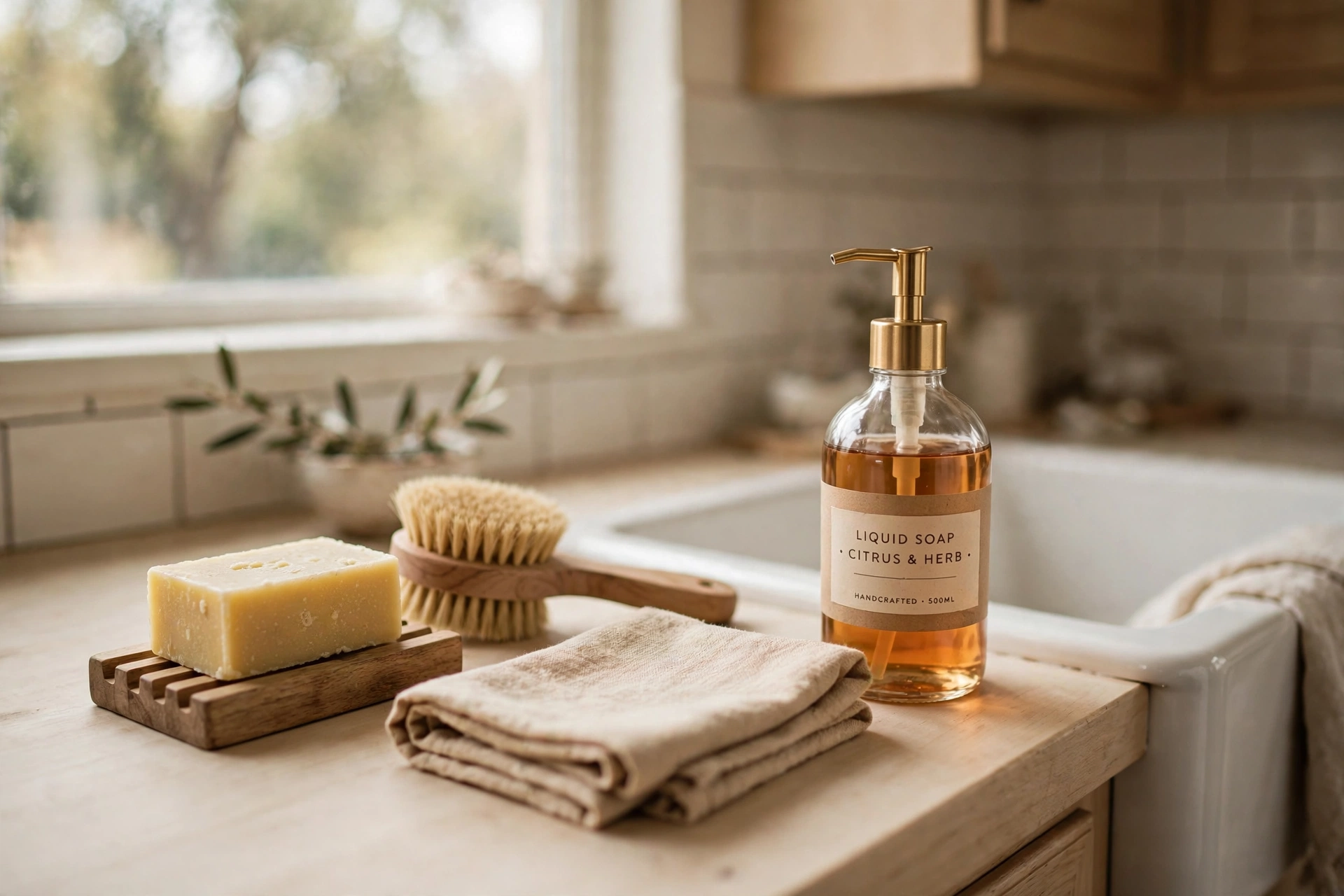
The bar is the simplest possible swap. No bottle at all, ever. You wet your sponge or brush, rub it on the bar, and wash. Keep it on a draining soap dish between uses and a single bar lasts for weeks.
Meliora Dish Soap Bar, Lemon
If you only look at one bar, make it this one. The Meliora dish soap bar is the top pick on just about every serious zero-waste list, and for good reason: it is MADE SAFE certified, Leaping Bunny certified, vegan, made by a B Corp and woman-owned company, and it ships in a recyclable paperboard box. No plastic anywhere in the product or the packaging.
The lemon scent comes from real ingredients, not synthetic fragrance, and the bar itself is a hard-milled soap that holds up well at the sink. People switching from liquid for the first time tend to have the easiest transition with this one because it lathers the way you expect dish soap to lather.
No Tox Life DISH BLOCK, 6 oz
The No Tox Life Dish Block is the other bar worth knowing about. It comes from a small mother-daughter company, it is vegan, it ships in a paper box, and it has a loyal following among people with hard water, which can make some natural soaps underperform. If your water leaves spots on everything, this is the bar to try first.
Like the Meliora, there is no plastic in the product or the packaging. The 6 oz block is a solid chunk that lasts, and the company also sells multi-packs if you want to stock up and cut down on shipping waste.
Refills & Concentrates
Not everyone is ready to give up liquid soap, and that is fine. The middle ground is keeping a bottle you already own and refilling it, or buying a concentrate that makes multiple bottles from one small container. Both cut the plastic dramatically compared to buying a new jug every month.
Cleancult Dish Soap Refill, Lemon Verbena, 32 oz 3-Pack
Cleancult refills are the most practical pick for anyone who wants to keep using liquid soap. You buy the paper-based pouches and pour them into any pump bottle you already have. The formula is plant-based and free of SLS, SLES, phthalates, and phosphates.
The honest caveat, stated plainly: Cleancult says “90% less plastic,” and that is the true claim. The pouch is paper-based, but it has a thin plastic liner to keep the liquid from soaking through. It is not zero-plastic. It is, however, a genuine and large reduction compared to buying three new 32 oz jugs, and the refill habit is the part that matters most.
Dr. Bronner’s Sal Suds, 16 oz
Dr. Bronner’s Sal Suds is a concentrate, which is a different animal from regular dish soap. You dilute it for dishes, and one small bottle replaces many bottles of ready-to-use soap. It is EWG Verified, Leaping Bunny certified, and the bottle itself is 100% post-consumer recycled plastic.
The honest caveat: Sal Suds contains sodium lauryl sulfate (SLS), though it is plant-derived rather than petroleum-derived. Some shoppers avoid SLS entirely, and they should know it is in here. We include it because for greasy pans and hard water, a concentrate with real cutting power is what actually keeps people from going back to conventional soap, and the dilution ratio means very little packaging per wash.
Attitude Dish Soap, Italian Lemon, 24 oz
For the reader who wants a better liquid soap without changing formats at all, Attitude dish soap is the compromise pick. It is EWG Verified, free of SLS and SLES, vegan, and made with 97.8% natural-origin ingredients. The Italian Lemon scent is light and pleasant without smelling like a cleaning aisle.
The honest caveat: this one ships in an HDPE #2 plastic bottle. It is not a plastic-free pick, and we are not going to pretend it is. It is here for the person who is not ready to switch to a bar or a refill system yet but wants a cleaner formula in the meantime. A better bottle is a stepping stone, not the destination.
The Gear That Makes the Switch Work
Two accessories that turn the picks above from a good idea into a daily habit. Neither is soap, but both decide whether the soap actually replaces the plastic jug.
AmazerBath Bamboo Soap Dish, 2-Pack
A dish soap bar that sits in a puddle turns to mush in a week. The AmazerBath bamboo soap dish keeps that from happening: natural bamboo with a slatted, self-draining design and rubber feet so it stays put next to the sink. The bar dries between uses, which is what makes it last for months instead of weeks. This is a 2-pack, so one lives at the kitchen sink and the other wherever your second bar ends up.
Brighter Barns Amber Glass Soap Dispenser Set
If you go the refill or concentrate route, you need something to put it in. The Brighter Barns dispenser set is an Amazon’s Choice pick for a reason: two 16-ounce amber glass bottles with bamboo pumps and a bamboo tray. Fill one with Cleancult refills or diluted Sal Suds and you never buy another plastic dish soap jug. The amber glass looks good on the counter, which matters more than it should for whether a habit sticks.
What Did Not Make the List
A quick note on two things you will see recommended elsewhere. First, powder hand-dish-soap: we could not find a credible powder option sold on Amazon. The refill-system leader in that category sells direct only, so if you want powder, you will need to buy it from the brand’s own site.
Second, dissolvable pods: some “zero waste” dish soap pods are wrapped in PVOH film, a plastic that dissolves down your drain. That is the same reason Dropps-style pods did not make our dishwasher guide. Dissolving plastic is not the same as eliminating it.
Plastic-Free Dish Soap at a Glance
| Pick | Format | The honest caveat |
|---|---|---|
| Meliora Dish Soap Bar | Bar | None on packaging. The cleanest pick here. |
| No Tox Life Dish Block | Bar | None on packaging. Best bet for hard water. |
| Cleancult Dish Soap Refill | Refill pouch | Pouch has a thin plastic liner. “90% less plastic” is the real claim. |
| Dr. Bronner’s Sal Suds | Concentrate | Contains plant-derived SLS. Bottle is 100% recycled plastic. |
| Attitude Dish Soap | Liquid | Ships in an HDPE plastic bottle. A stepping stone, not the destination. |
| AmazerBath Bamboo Soap Dish (2-Pack) | Accessory | Self-draining bamboo keeps bars dry so they last for months. |
| Brighter Barns Amber Glass Dispenser Set | Accessory | Two amber glass bottles with bamboo pumps for refills and concentrates. |
Frequently Asked Questions
Do dish soap bars actually cut grease?
Yes. A good dish soap bar is a concentrated soap with no water in it, so per wash you are using more actual cleaning agents than a squirt of diluted liquid. The Meliora and No Tox Life bars both have strong reputations for handling greasy pans. For truly baked-on messes, let the pan soak first, the same as you would with liquid.
How long does a dish soap bar last?
It depends on how many dishes you wash and whether you let the bar dry between uses. Kept on a draining soap dish rather than sitting in a puddle, a single bar typically lasts several weeks of daily hand washing. The biggest mistake is leaving it in standing water, which melts it fast.
Is a refill pouch really better than a bottle if it has a plastic liner?
Yes, by a wide margin. A thin liner uses a small fraction of the plastic in a rigid jug, and one pouch refills the equivalent of multiple bottles. “90% less plastic” is a real reduction even if it is not zero. The perfect should not be the enemy of the much better.
What is wrong with PVOH pods?
PVOH (polyvinyl alcohol) is a plastic film that dissolves in water. Some brands market it as biodegradable, but it goes down your drain as dissolved plastic, and wastewater treatment does not fully remove it. We apply the same standard here as in our dishwasher guide: dissolving plastic is not eliminating plastic.
Can I use Sal Suds for more than dishes?
Sal Suds is a concentrated cleaner that dilutes for many jobs, which is part of its appeal: one small bottle can replace several single-purpose cleaners. Follow the dilution directions on the label. A little goes a long way, which is the whole point of a concentrate.
Get the Weekly Swaps
One short email a week: the newest microplastics studies in plain English, plus the swaps that are actually worth your money. Join free and we will send you our room-by-room microplastic checklist to get you started.
Get Our Free Room-by-Room Microplastic ChecklistJoin the newsletter and get the checklist free →
Browse Our Full Amazon StorefrontAll our plastic-free dish soap picks in one place →
Keep Reading
If you are working through the kitchen, these go well together:
- Dishwasher Detergents That Skip the Plastic – the machine-wash companion to this guide, with the same no-PVOH standard.
- 17 Non-Toxic Cooking Utensils to Replace Black Plastic – what you wash your dishes with matters, and so does what you cook with.
- Is Silicone Actually Safe? Does It Shed Microplastics? – for the sponges, brushes, and scrubbers side of the sink.