The Best Non-Toxic Cleaning Products That Skip the Plastic (2026 Guide)
This article contains affiliate links. If you buy through one, we may earn a small commission at no extra cost to you. We only recommend products we would tell a friend about. Read our full affiliate disclosure
Walk down the cleaning aisle and almost every bottle says something reassuring. Plant-based. Naturally derived. Non-toxic. Here is the part most people never hear: none of those words mean anything specific under United States law. A company can print non-toxic on a label without meeting any standard at all.
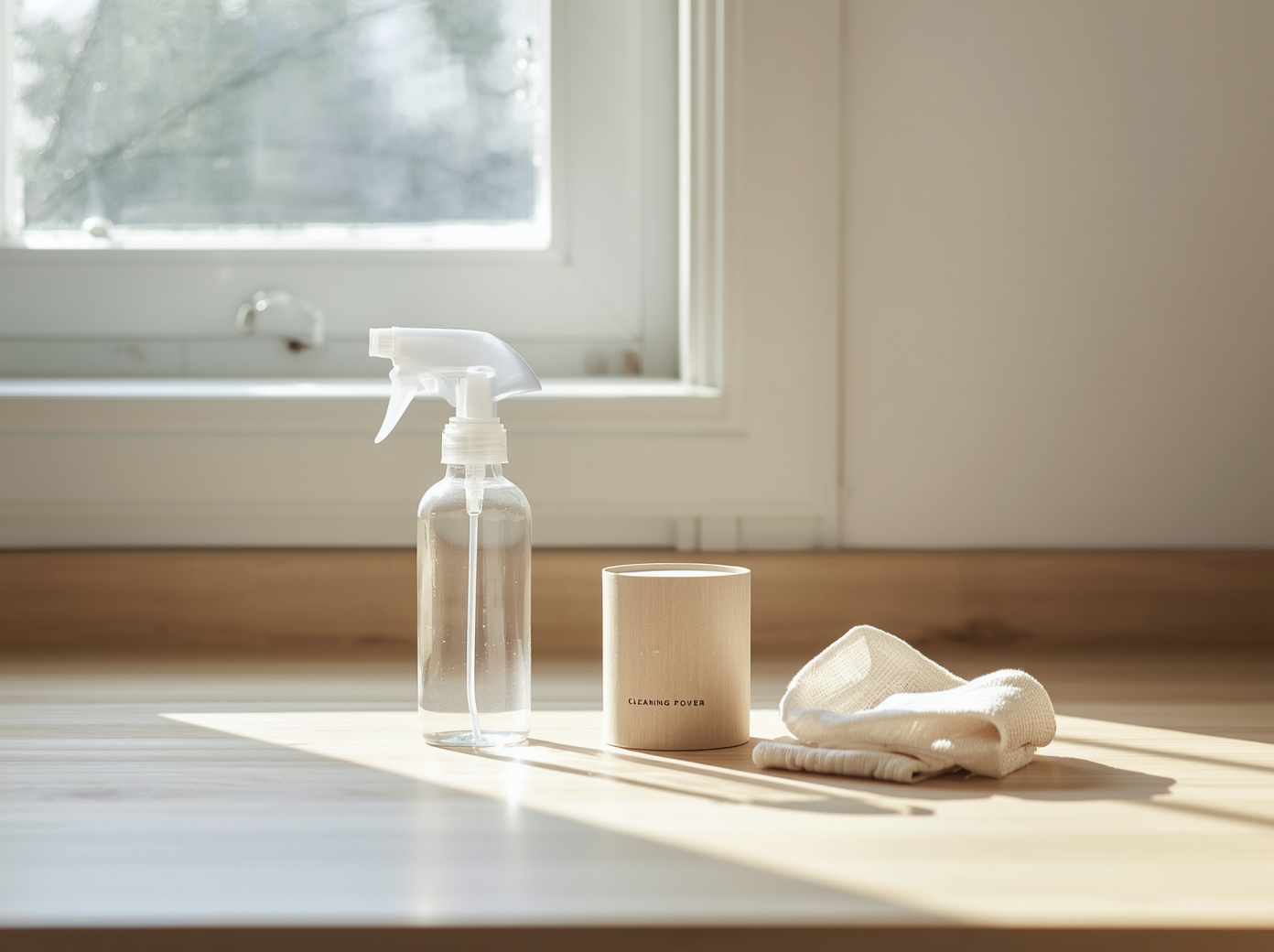
That does not make every product a problem. It means the label is not doing the work you think it is. We went through ingredient lists, third-party certifications, and packaging for the brands families ask us about most, and the one we keep coming back to is the Branch Basics Cleaning Essentials Kit, a fragrance-free concentrate that replaces your all-purpose, glass, and bathroom sprays with a single bottle.
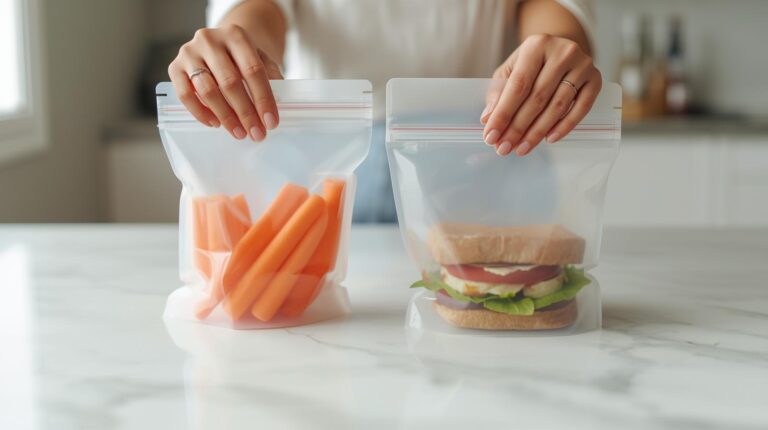
There is a second question almost nobody asks, and for a site about microplastics it matters just as much. A cleaner can be genuinely clean on ingredients and still hand you a new plastic bottle every six weeks.
Below we cover both questions, what is actually inside these products and how much plastic they add to your home, along with our picks for the kitchen, the bathroom, and everything in between. Honest limitations included, because no product is perfect.
Quick Answer
The best non-toxic cleaning products for most families are:
- Branch Basics Cleaning Essentials Kit, best overall. One fragrance-free concentrate replaces all-purpose, glass, and bathroom cleaners.
- Blueland Multi-Surface Starter Set, best refill system. Plastic-free tablets drop into a bottle you keep and reuse.
- Force of Nature Starter Kit, best for disinfecting. An EPA-registered disinfectant made from salt, water, and vinegar.
- ATTITUDE Dish Soap, best dish soap. EWG Verified and cuts grease as well as the conventional brands.
- Bronner’s Sal Suds, best for DIY. One concentrated bottle mixes into floor, surface, and dish solutions.
What sets these apart from most products labeled natural is simple. Each one either discloses its full ingredient list or carries independent certification from a group that reviewed the whole formula, and each one cuts down the number of plastic bottles you buy.
Why Non-Toxic Does Not Mean What You Think
The Food and Drug Administration and the Environmental Protection Agency do not regulate the phrase non-toxic on cleaning labels. There is no test a product has to pass and no agency checking. It is a marketing term, and any brand can use it.
The same goes for natural, eco-friendly, and green. The Federal Trade Commission publishes guidance on environmental claims, but enforcement is thin and the language stays vague on purpose.
This is why we lean on third-party certifications instead. When an outside group has reviewed every ingredient in a formula and published the standard it used, you are looking at something a brand cannot simply write on a bottle.
Where the Plastic Actually Comes From
Most of the plastic in household cleaning is the container. A family that buys separate sprays for counters, glass, bathroom, and floors can move through dozens of plastic bottles a year, and each one gets used for a few weeks and thrown away.
Concentrates and refill tablets change that math. You keep one bottle and buy the cleaning part, which ships as liquid concentrate, powder, or a small tablet. Fewer bottles made, fewer bottles shipped, fewer bottles in the bin.
The pod and sheet question
You may have seen claims that laundry and dishwasher pods are secretly plastic. This one deserves a straight answer, because it is more complicated than either side admits.
The film around pods and the material in dissolvable sheets is polyvinyl alcohol, usually shortened to PVA or PVOH. It is a synthetic polymer made from petroleum. That part is not in dispute. What is in dispute is what happens after it dissolves.
A 2021 study published in the International Journal of Environmental Research and Public Health, available through the National Institutes of Health, modeled how PVA moves through American wastewater treatment plants. It estimated that roughly 17,200 metric tons are used in detergent pods each year in the United States, and concluded that a large share passes through treatment without fully breaking down.
In 2023 a coalition led by the cleaning brand Blueland asked the EPA to require safety testing on PVA. The EPA denied that petition, finding the group had not shown where the evidence gaps actually were. Industry-funded expert panels have since concluded the opposite of the 2021 study, that PVA breaks down readily.
Here is the honest part. Nobody in this argument is neutral. The lead author of the 2021 study is affiliated with one of the groups that signed the petition, the company that pushed hardest sells the alternative, and the rebuttals were paid for by the industry being questioned.
Our take: this is unsettled, and we are not going to tell you it is settled. But PVA-free options cost about the same, so if avoiding synthetic polymers matters in your house, the swap is cheap either way. We cover laundry and dishwasher products in their own guides, since both deserve more room than a section here.
If you want the bigger picture on how plastics reach your water supply in the first place, our guide to water filters that actually remove microplastics walks through what the research shows.
What to Look For in a Cleaning Product
You do not need us to pick for you. Here is how to judge any bottle on any shelf.
Certifications that mean something
- EPA Safer Choice reviews every ingredient in the formula against safety criteria for people and aquatic life, not just the active cleaning agents.
- MADE SAFE screens against a list of ingredients known or suspected to cause harm.
- EWG Verified requires full ingredient disclosure and bans a defined list of ingredients of concern.
Full ingredient disclosure, especially fragrance
One word on a label can hide dozens of chemicals. Fragrance is a trade secret category, which means a brand can list it without naming what is in it.
This is where several well-reviewed brands fall short. If a company will not name what is inside its fragrance blend, the fragrance-free version is the safer pick.
A format that stops the bottle cycle
Look for concentrates, tablets, powders, or bars. Each one ships without the water, which means less packaging and lower shipping weight for the same number of cleanings.
What to skip
- Quaternary ammonium compounds, often listed as quats, common in disinfecting wipes and sprays.
- Chlorine bleach, which produces byproducts you do not want in an unventilated bathroom.
- Undisclosed fragrance, especially in products used on food surfaces or by children.
- Methylisothiazolinone, a preservative that is a known skin sensitizer.
Our Picks: The Four That Cover Most of Your House
Branch Basics Cleaning Essentials Kit — Best Overall
Best for: Families who want one product instead of six, and anyone with fragrance sensitivity or skin reactions.
Branch Basics sells a single concentrate. You dilute it at different strengths depending on the job, so the same bottle becomes your all-purpose spray, your glass cleaner, and your bathroom cleaner. The kit comes with labeled bottles and a dilution chart, so there is no guesswork.
The ingredient list is short and completely fragrance-free. That is unusual, and it is the main reason we put it first. The company also has a history worth knowing: years ago it shut down entirely, reformulated after a dispute over an undisclosed surfactant from a supplier, and relaunched with control of its own supply chain. Very few brands would give up that much revenue to fix a formula.
Honest limitation: The upfront cost is high compared to a single spray bottle, even though the per-use cost is lower over time. Independent testers have also questioned how well the laundry dilution performs, so we would not buy it as a laundry solution.
Blueland Multi-Surface Starter Set — Best Refill System
Best for: People who want the easiest possible switch and like the idea of never buying a spray bottle again.
You fill the bottle with tap water, drop in a tablet, and wait for it to dissolve. The tablets are plastic-free and ship in compostable packaging, which is the whole point. It is EPA Safer Choice certified, and the brand also holds B Corp and MADE SAFE certifications on much of its line.
The system genuinely works, and it takes up almost no cabinet space compared to a row of full bottles.
Honest limitation: The scented versions use undisclosed fragrance and added colorants. We recommend the fragrance-free options only. Blueland has also been reviewed by the National Advertising Division over some of its environmental marketing claims, and it funded the PVA petition we referenced earlier, which is worth knowing when you read its materials on that topic.
Force of Nature Starter Kit — Best for Disinfecting
Best for: Households that want a real disinfectant without quats or chlorine bleach. Useful with young kids, pets, or anyone recovering from illness.
This one is a small countertop appliance. It runs electricity through tap water plus a capsule of salt, water, and vinegar, and produces hypochlorous acid. It is a federally registered EPA disinfectant, registration number 93040-1, which is a meaningful distinction. Most natural cleaners are not registered disinfectants and cannot legally make that claim.
The ingredient list is about as short as it gets, and there is no added fragrance.
Honest limitation: There are three costs, not one. You buy the appliance, then capsules on an ongoing basis, and each 12 ounce batch stays effective for about two weeks. If you clean in occasional bursts rather than regularly, you will waste solution.
Dr. Bronner’s Sal Suds — Best for DIY
Best for: Anyone who wants the lowest cost per use and does not mind mixing their own.
Sal Suds is a concentrated all-purpose cleaner, and it is different from the castile soap the brand is better known for. A tablespoon in a spray bottle of water handles counters. A capful in a bucket handles floors. A few drops handle dishes.
Because it is so concentrated, one bottle lasts a long time, and you can pair it with a refillable glass spray bottle and stop buying sprayers entirely.
Honest limitation: It contains fir and spruce essential oils, so it is not fragrance-free. It also does not disinfect, so it is not a substitute for Force of Nature if that is what you need.
The Best Non-Toxic Dish Soap
You have the whole-house basics covered. From here we get specific, starting with the sink, since dish soap is the product your hands touch every single day.
The real question people have is not about ingredients. It is whether a safer dish soap will cut grease.
That worry is fair. Plenty of natural dish soaps do underperform, and nobody wants to scrub a pan twice. So we sorted this section by how well each one cleans first, and by what is inside it second.
ATTITUDE Dish Soap — Best Everyday Dish Soap
Best for: Almost everyone. This is the easiest swap in the kitchen and the one we would recommend first.
ATTITUDE is EWG Verified, made with 97 to 98 percent naturally derived ingredients depending on the scent. The main cleaning agent is sodium coco-sulfate, a coconut-derived surfactant that is gentler than the petroleum-based sulfates in most dish soap, backed by smaller amounts of glucoside surfactants. It is plant-based, free of parabens, and free of the synthetic preservatives that show up in most conventional brands.
More to the point, independent reviewers who have used it daily report it cuts grease about as well as the conventional brand you are used to. That is the whole ballgame for dish soap, and it is why this one leads.
Honest limitation: The scented versions do contain fragrance, though the individual aroma compounds are listed on the label rather than hidden behind the word fragrance alone, and each one meets industry safety standards for rinse-off products. It also separates a little, so shake the bottle before use, and it is formulated for hand washing, not automatic dishwashers.
Meliora Dish Soap Bar — Best Plastic-Free Dish Soap
Best for: People whose main goal is getting plastic packaging out of the kitchen entirely, not just switching to a different bottle.
Meliora is a woman-owned B Corp founded by an environmental engineer who could not get a straight answer on what was actually in her cleaning products, so she started a company that lists everything on the label instead. This dish soap comes as a 7 ounce solid bar made from organic coconut and sunflower oil, MADE SAFE certified, and every ingredient is on the label. It ships in a small paperboard box, or package-free if you want zero waste at all.
Wet a sponge or brush, rub it over the bar, and wash. For a full sink of soapy water, hold the bar under running water for a few seconds first rather than squirting and swishing.
Honest limitation: A bar is a different routine than liquid or powder, so give it a short adjustment period, especially if you are used to filling the sink from a bottle. A soap dish that lets it drain between uses helps it last. If cleaning power and zero-adjustment convenience matter more to you than packaging, ATTITUDE is the easier switch,
For the Bathroom, the Sink, and Stuck-On Messes
Meliora Gentle Home Cleaning Scrub — Best Scouring Powder
Best for: Sinks, tubs, stovetops, and anything with a ring on it.
The same team behind our dish soap pick makes this one too. It is a mix of baking soda and their vegetable soap base, made from coconut oil, packed into a 12 ounce paper-and-steel canister, so there is no plastic packaging at all. The scented version uses organic peppermint and tea tree essential oils rather than a synthetic fragrance blend.
It handles the jobs a spray cannot, like soap scum and baked-on stovetop residue, and works on stainless steel, porcelain, and most other hard surfaces.
Honest limitation: It is a powder, so it is messier than a spray, and it is not the right tool for a quick counter wipe. Baking soda can scratch delicate finishes, so test an inconspicuous spot first if you are unsure about a surface. Think of it as a supplement to your all-purpose cleaner, not a replacement.
Blueland Toilet Bowl Cleaner Tablets — Best Toilet Cleaner
Best for: Getting a bottle of blue liquid out of your bathroom cabinet.
You drop a tablet in the bowl, and citric acid and baking soda react into a fizz that runs for two to five minutes, with a plant-derived foaming surfactant doing the actual work once you brush. The nine-ingredient formula is scented with real lemongrass, peppermint, or lavender oil depending on which you pick, not a synthetic fragrance blend. No chlorine bleach, no dyes, no ammonia, and it is septic-safe.
The starter kit comes with a reusable metal tin to hold the tablets, and refills ship in compostable paper. It is meant for the bowl only, not the tank.
Honest limitation: On heavy hard-water buildup it takes longer than a bleach-based cleaner, and you may need two rounds the first time. After that, regular use keeps up fine.
Blueland Hand Soap Duo — Best Hand Soap
Best for: Kitchens and bathrooms where a plastic pump bottle gets replaced every month.
Same idea as the multi-surface cleaner. You fill the bottle with water, drop in a tablet, and it dissolves into 9 ounces of foaming hand soap, typically a one to two month supply for one person. It is EPA Safer Choice and Leaping Bunny certified, and the formula has been clinically tested at an independent lab and found non-irritating.
Honest limitation: Choose the fragrance-free option here for the same reason we flagged earlier. The scented versions list fragrance as a single ingredient rather than naming the individual compounds, unlike the more disclosed approach ATTITUDE takes with its scented dish soap.
Every Swap We Recommend, In One Place
We keep an Amazon storefront with every product we have vetted across the site, organized by room. Cleaning supplies, kitchen swaps, water filters, kids products, and more.
Browse Our Amazon Storefront →| Product | Price | Best For | |
|---|---|---|---|
| Branch Basics Kit | $$$ | Replacing most cleaners at once | Buy Now |
| Blueland Multi-Surface | $$ | Easiest switch, least plastic | Buy Now |
| Force of Nature | $$$ | Real disinfecting without bleach | Buy Now |
| Dr. Bronner's Sal Suds | $ | Lowest cost, DIY mixing | Buy Now |
| ATTITUDE Dish Soap | $ | Everyday dishes, grease cutting | Buy Now |
| Meliora Dish Soap Bar | $ | Plastic-free kitchen | Buy Now |
| Meliora Scrub | $ | Sinks, tubs, stovetops | Buy Now |
| Blueland Toilet Tablets | $$ | Bathroom without bleach | Buy Now |
| Blueland Hand Soap | $$ | Ending the pump bottle cycle | Buy Now |
If you want the shortest path, pick one product and start there. The Branch Basics kit covers the most ground in one purchase. If the upfront cost is too much, ATTITUDE dish soap is a few dollars and replaces the product your hands touch most.
Here is the trade-off worth naming. Concentrates and tablets cost less per use and create far less plastic, but they ask you to do a small amount of work, mixing, diluting, or waiting for a tablet to dissolve. Ready-to-use sprays are easier and more expensive in both money and packaging. Neither answer is wrong.
What About Seventh Generation, Method, and the Store Brands?
These come up constantly, so here is our straight read.
They are meaningfully better than conventional cleaners. Seventh Generation, Method, and similar brands dropped a lot of the ingredients people are trying to avoid, and they are widely available at prices that work for most budgets. If they are what fits your life right now, that is a real improvement over what is next to them on the shelf.
Where they fall short is disclosure and packaging. Many of their products use undisclosed fragrance, and most of the line still ships in single-use plastic bottles filled mostly with water. Method and Mrs. Meyer’s are both owned by SC Johnson, and brand-level supply chain transparency is limited.
So: better than conventional, not as good as the brands above on the two things this article is about. Buying them is not a mistake. It is just not the ceiling.
Non-Toxic Cleaning During Pregnancy
This is one of the most common reasons people start looking, and the advice is simpler than the internet suggests.
Fragrance-free is the single most useful filter. Fragrance blends are undisclosed, which means you cannot evaluate them, and they are a common trigger for headaches and nausea when your sense of smell is heightened.
Beyond that, skip aerosols, skip quats, and skip chlorine bleach, mostly because of what they do to indoor air in small unventilated rooms like bathrooms. Open a window when you clean.
From our list, Branch Basics is the most straightforward pick during pregnancy because it is fragrance-free by default and there is nothing to check. If someone else is doing the cleaning, that matters less, but the products stay in the house either way. Talk to your doctor or midwife about anything specific to your situation, since we cannot give medical advice.
Non-Toxic Cleaning With Cats and Dogs
Pets spend their lives at floor level and then groom themselves, so whatever you clean with ends up somewhere. Cats are especially worth thinking about because of how much time they spend licking their paws and fur.
Two things to avoid. Quats, found in most disinfecting wipes, are an irritant and pets walk through them. Concentrated essential oils are the second, and this surprises people. Tea tree, pine, citrus, and eucalyptus oils can be a problem for cats in particular, so a cleaner being natural does not automatically make it pet-safe.
From our list, Force of Nature works well here because it disinfects without quats and has no added fragrance. Blueland’s fragrance-free multi-surface cleaner is the simpler everyday option. Rinse or wipe floors dry after cleaning, whichever product you use.
What People Actually Report After Switching
We read a lot of unfiltered reviews before writing this, and the same few themes come up over and over. Here is the honest version, complaints included.
The good: Almost everyone notices the smell first. Not a new scent, the absence of one. People with headaches or asthma triggered by cleaning products bring this up constantly. The second thing people mention is cabinet space, because four bottles becomes one.
The complaints: The upfront cost is the most common one, and it is legitimate. So is the adjustment period with powders and tablets, which some people never get used to. A smaller group reports that concentrates feel like they are not doing anything, mostly because there are no suds. Suds come from ingredients that do not clean, so this is a perception issue, but it is a real one.
The pattern worth knowing: People who switch everything at once are the most likely to give up. People who swap one product, get used to it, then swap the next one tend to stick with it.
Join Other Families Making the Switch
We run a Facebook group where families share what is actually working, ask questions, and compare notes on products. No pressure and no sales pitch, just people figuring this out together.
Join the Group →Frequently Asked Questions
What is non-toxic dish soap?
Non-toxic dish soap is dish soap made without ingredients linked to skin irritation, hormone disruption, or aquatic harm, such as sulfates, undisclosed fragrance, and preservatives like methylisothiazolinone. Because the term non-toxic is not regulated in the United States, look for third-party certification such as EWG Verified or EPA Safer Choice rather than the words on the front of the bottle.
Do non-toxic cleaning products actually work?
Yes. Plant-derived surfactants cut grease and grime as effectively as petroleum-based ones, and several of these products are independently tested against conventional brands. The main difference people notice is fewer suds, which comes from ingredients that make foam rather than ingredients that clean.
Are non-toxic cleaning products safe for pets?
Most are, but not all. Avoid quaternary ammonium compounds, found in most disinfecting wipes, and be careful with concentrated essential oils, especially around cats. Fragrance-free products with full ingredient disclosure are the safest starting point.
What are good alternatives to non-toxic cleaning products from the store?
A concentrate you dilute yourself is usually the cheapest and lowest-waste alternative. Dr. Bronner’s Sal Suds mixed with water handles floors, counters, and dishes, and a simple mix of white vinegar and water works on glass. Skip vinegar on natural stone, since it can etch the surface.
How do I make non-toxic dish soap at home?
The simplest version is a few drops of Sal Suds or castile soap in a pump bottle topped with water. Keep in mind that homemade dish soap is thinner than commercial soap and does not preserve well, so mix small batches and use them within a couple of weeks.
Where can I buy non-toxic cleaning products?
Most of the brands here are available on Amazon and directly from the companies. Target, Walmart, and Costco carry a growing selection too, though the range is narrower and the fragrance-free versions are often the ones missing from shelves.
The Bottom Line
The label on the front of the bottle is not doing the work. Third-party certification and a full ingredient list are, and so is a format that stops handing you a new plastic bottle every few weeks.
If you take one thing from this, make it this: you do not have to replace everything. Pick the product your family touches most, swap that one, and get comfortable with it before you move to the next. Small swaps, made over time, add up to a house with a lot less plastic in it.
For most families the Branch Basics Cleaning Essentials Kit is the single best place to start, because it replaces the most products in one purchase. If you want to spend a few dollars instead of a few dozen, start with ATTITUDE dish soap and go from there.
For a wider look at reducing plastic exposure across your kitchen, water, and daily routine, our guide to avoiding microplastics in your food, water, and home covers the rest of the house.