Non-Toxic Activewear: PFAS-Free Leggings Without the Recycled-Plastic Trick
Non-Toxic Activewear: PFAS-Free Leggings Without the Recycled-Plastic Trick
This article contains affiliate links. If you buy through them, we may earn a commission at no extra cost to you. We never claim to have tested products we have not tested, and we say so plainly when the evidence is thinner than the marketing.
Here is a scene you already know. You finish a workout, peel off your leggings, and toss them in the wash, same as yesterday, same as last year. Those leggings are probably nylon or polyester with a fifth of their weight in spandex. They were probably treated to wick, resist odor, and shrug off stains. And there is a decent chance, about one in four based on the only large independent test of its kind, that the crotch panel carries a chemical fingerprint associated with PFAS, the forever chemicals, in a garment you wear against your skin, warm and sweating, for hours at a time.
That is not a scare line. It is the measured result of sending 42 pairs of workout leggings and yoga pants to an EPA-certified lab, which is what the Mamavation non-toxic activewear investigation did. Twenty five percent of the pairs showed detectable organic fluorine, the standard screening marker for PFAS, at levels from 10 to 284 parts per million. Seventy five percent showed none at all, which is the part that matters most: the category can clearly be made without these chemicals, because most of it already is.
So the question is not whether you should panic about your gym clothes. You should not. The question is what you buy next time a pair wears out, because that is the one moment you actually control. And that question turns out to be harder than the marketing suggests, because the honest answer involves a trade-off nobody in this category wants to print on a hangtag: right now, in anything you can buy on Amazon, you can have plastic-free or you can have compression performance. You cannot fully have both. This guide is built around that trade-off, stated plainly, with the lab numbers attached.
So what should you actually buy?
The verdict: buy the Fair Indigo 100% Organic Pima Cotton Leggings. They are the only leggings in this guide whose fabric contains zero plastic: 100 percent organic Pima cotton in a double-knit interlock, with the stretch coming from the knit itself rather than from spandex. No elastane to shed, no synthetic fiber to carry a finish, and dyes the listing describes as free of azo colorants, formaldehyde, and pentachlorophenol. They are a lounge and low-impact legging, not a compression tight, and the next section will argue against them properly. But if your first priority is getting plastic off your skin and out of your wash water, this is the only pair here that does it completely.

- Many customers size down for the best fit. All-cotton leggings have a looser fit than typical synthetic leggings. The fabric will stretch with wear but recovers with washing and drying.
- 30" inseam, flat-lying elastic waistband.
- The fit is slim through the legs but not as tight as synthetic leggings
- Fair Indigo's cotton, yarns, fabrics, and dyes are GOTS certified. Dyes are also Oeko-tex certified.
- Made in a Fair Trade factory in Lima, Peru
That is the whole recommendation in one paragraph. Everything after this is the argument: the case against that verdict, what the lab tests actually found, why the small elastane percentage in every other pair matters more than the label implies, how the three honest fibers compare, and the ranked alternatives for the workouts where a cotton legging is simply the wrong tool. If you read only one more section, read the case against it, because a verdict that cannot survive its own objections is not worth much.
Get the Weekly Swaps
One short email a week: the newest microplastics studies in plain English, plus the swaps that are actually worth your money. Join free and we will send you our room-by-room microplastic checklist to get you started.
Get Our Free Room-by-Room Microplastic ChecklistJoin the newsletter and get the checklist free →
The case against it
The strongest objections to the Fair Indigo legging are real, and you deserve them before the evidence sections, not buried under them.
It is not a performance legging. Mechanical stretch from a knit is gentle stretch. There is no compression, no snap-back recovery, and nothing holding the fabric tight through a deep squat the way a spandex tight does. For yoga, Pilates, walking, lifting at moderate loads, and everyday wear, that is fine. For running, HIIT circuits, or hot classes, it is the wrong garment, and no amount of organic certification changes the physics. Cotton also absorbs sweat instead of wicking it, holds that moisture against your skin, and dries slowly. In a cold gym in January, a sweat-soaked cotton legging is genuinely unpleasant by minute forty.
It will bag. Elastane exists in leggings for a reason: it is the fiber that pulls fabric back to shape. A 100 percent cotton knit relaxes with wear, so knees soften and the seat loosens over a long day, and the fit the listing’s reviewers describe is generous to begin with; the consistent sizing note is to consider going down a size. A drapey fit also means opacity is a lighting question rather than a guarantee. The double-knit interlock is substantial, but if squat-proof certainty is your top requirement, a thicker blended legging further down this page serves you better.
Zero plastic in the fabric is not zero impact. Cotton sheds fibers in the wash too, and conventional cotton farming is chemically intensive, which is why the organic certification matters here. The honest claim is narrower and stronger: cotton fibers are cellulose, and cellulose biodegrades. In Royer et al. 2023, the Scripps Institution of Oceanography study of textiles in marine conditions, natural and regenerated cellulose fibers biodegraded completely in about 35 days, while polyester, polypropylene, and PLA showed no breakdown over 428 days. A cotton fiber in a river is a short-lived fiber. A polyester fiber is a permanent one. That difference, not a fantasy of zero shedding, is the real argument.
You are trusting construction, not a lab result. Fair Indigo does not publish a PFAS test for this legging, and neither do most brands in this guide. The case for it is architectural: an untreated 100 percent cotton fabric has no stain-resistant or water-resistant finish to hide PFAS in, and PFAS in clothing overwhelmingly arrives as a finish, a point the uniform research below makes clearly. That is a strong inference, but it is an inference. The one legging in this category with a published non-detect result in independent testing is named later in this guide, and it is not sold on Amazon, which tells you something about the state of this market.
The price buys less garment technology. You are paying organic and fair-trade prices for a simpler product: no pockets engineered into a waistband, no gusset engineering, no reflective anything. If you judge value by features per dollar, synthetics win easily. If you judge it by what the fabric is made of, they do not. Know which shopper you are before you order.
What did the lab tests actually find in leggings?
Start with what was measured, because the headline version of this story is usually sloppier than the data. The Mamavation investigation bought 42 pairs of workout leggings and yoga pants, cut the crotch panel, the highest-contact, highest-sweat area of the garment, and sent it to an EPA-certified laboratory. The lab measured organic fluorine by oxygen flask combustion with an ion-selective electrode, with a detection limit of 10 parts per million. Ten pairs, 25 percent, came back detectable, between 10 and 284 ppm. The worst result, 284 ppm, was a pair of LulaRoe leggings. Thirty two pairs, 75 percent, were non-detects.
Two pieces of interpretation matter, and most coverage skips both. First, total or organic fluorine is a screen, not an identification. There are thousands of PFAS compounds, and a fluorine reading tells you fluorinated chemistry is present without naming which compound or proving it was added deliberately; contamination from equipment lubricants and processing aids can also register. Second, nobody knows the dose. Pete Myers, the environmental health scientist who reviewed the work, put it honestly: PFAS can be absorbed through skin, the amount that transfers from a legging during a workout is unknown, and it is unlikely to be zero. California has started turning that uncertainty into a yardstick anyway: state law already caps total organic fluorine in textile articles at 100 ppm, and the cap tightens to 50 ppm on January 1, 2027. Against that yardstick, a 284 ppm result is not a rounding error. It is nearly triple the current legal ceiling for textiles in the largest state market in the country.
The skin question got a firmer answer in 2024. Ragnarsdóttir et al. 2024 applied 17 different PFAS to 3D human skin models at realistic surface loadings and measured what crossed in 24 to 36 hours. The short-chain compound PFPeA was absorbed at 58.9 percent, PFBS at 48.7 percent, and PFOA, the best-known of the group, at 13.5 percent absorbed with a further 38 percent retained in the skin itself. Absorption fell as chain length rose. This was a skin model, not a person in a spin class, and the study did not test leggings. What it establishes is the mechanism: skin is not a sealed barrier to these compounds, especially the shorter-chain replacements the industry moved to when the long-chain originals were restricted.
Where does the fluorine in a legging come from in the first place? Mostly finishes, not fibers. Xia et al. 2022, the Environmental Science and Technology study of 72 North American school uniforms, found targeted PFAS only in items labeled water-resistant or stain-resistant, and, counterintuitively, 100 percent cotton uniforms carried higher PFAS levels than synthetics, because the treatment, not the fiber, was the source. Read that twice before you buy anything in this category: a natural fiber with a performance finish can be the contaminated option, and a plain untreated fabric of any fiber is usually the clean one. It is also why the finish-free construction of the verdict pick matters more than its fiber name.
Finishes also leave. Schellenberger et al. 2022 weathered side-chain fluorinated polymer treated fabric outdoors in Sydney for six months and tracked what came off: the treatment shed as PFAS-containing microfibers and broke down into smaller mobile PFAS, some at patterns exceeding regulatory textile limits. A stain-resistant legging does not just sit against your skin. It ages into your wash water and your home dust, fiber by fiber, which connects the PFAS story directly to the shedding story below.
Does BPA belong in this conversation too?
Yes, and it is the finding that should most change how long you stay in your gym clothes. The Center for Environmental Health (CEH) testing program in California found that sports bras and athletic shirts made primarily of polyester with spandex could expose wearers to BPA at up to 22 times the California safe limit for skin exposure, and followed with legal action against the brands involved; its earlier work on polyester-spandex socks reached roughly 100 companies. CEH’s investigations have only found BPA in polyester-based clothing with spandex, which is precisely the standard activewear recipe, and its practical advice is the most useful sentence in this whole debate: change out of your activewear after your workout instead of living in it all day. Heat, sweat, and hours of skin contact are the exposure recipe. A natural-fiber legging sidesteps the polyester-spandex combination entirely; whatever you train in, the change-afterward habit costs nothing and applies to everyone.
Your leggings shed when you wear them, not just when you wash them
Most people picture microfiber pollution as a washing machine problem, and the wash numbers are big enough: De Falco et al. 2018 estimated over 6,000,000 microfibres from a typical 5 kg polyester wash load, and De Falco et al. 2019 measured release in the range of 124 to 308 milligrams of fibers per kilogram of fabric washed. But leggings are the garment where the wearing itself matters most, because they are under constant friction: thigh against thigh, fabric against mat, waistband against skin, for the full length of a workout.
De Falco et al. 2020 separated the two pathways directly and found up to 4,000 fibers per gram of fabric released in washing, and up to 400 fibers per gram released in just 20 minutes of wear. Scaled up in the University of Plymouth work that accompanied it, wearing synthetic clothes was estimated to release more fibers to the air each year, over 900 million per person, than washing them, roughly 300 million. The construction details mattered as much as the fiber: compact, tightly twisted fabrics shed least, and loose knits of short-staple fiber shed most. Hernandez et al. 2017 had already shown the mechanism in polyester textiles generally: the yarn and fabric structure govern how many fibers work loose, which is why two leggings with identical fiber labels can shed very differently.
Hold the numbers with some humility, because the methods are young. Tedesco et al. 2024, a systematic review of how textile microfiber release is measured, found that the laboratory washing devices most studies use overestimate release compared with real domestic machines, and that natural and cellulosic fibers dominate actual environmental fiber surveys even though they make up only 18 percent of the fibers researchers choose to test. Translation: everything sheds, the synthetic share of the problem is the part that does not go away, and any guide quoting you a single exact fiber count for a specific legging is inventing precision the science does not have. What the science does support is the ranking: persistent plastic fibers accumulate, cellulose and protein fibers biodegrade, and construction and care move the totals meaningfully in both cases.
The 8 percent problem: what elastane really does in a wash
Every blended legging in this guide, including the ones we recommend, carries a small elastane or spandex percentage, and the natural reading is that 8 percent plastic means 8 percent of the problem. The best direct test of that assumption says otherwise. Rathinamoorthy et al. 2023 washed cotton-elastane knits at 98/2, 95/5, and 92/8 blends, the exact ratios of the organic cotton leggings sold in this category, and counted what came out. Total release rose with elastane content, from about 21 microfibers per square centimeter at 2 percent elastane to about 47 at 8 percent. More importantly, elastane was heavily over-represented in the shed: from a fabric that was only 2 percent elastane, 13.4 percent of the released fibers were elastane. At the 92/8 blend, elastane was 19.6 percent of the shed in the first wash, and its share climbed to 36 percent by the fourth wash as the cotton release fell away. The elastane fragments were also shorter than the cotton fibers, and shortened further with repeated washing.
Elastane is a segmented polyurethane. It is a plastic, full stop, and it behaves like the durable fraction of the garment: the natural fibers around it wear and release early, while the elastane keeps fragmenting into smaller and smaller persistent pieces across the garment’s whole life. This is why this guide uses the phrase lowest-plastic for the blended picks and reserves plastic-free for the two 100 percent fabric options. It is also why the elastane percentage is still worth minimizing rather than dismissing: 5 percent sheds measurably less than 8, 8 less than the 15 to 21 percent spandex loads in mainstream tights, and every point of elastane you skip is a point that cannot fragment later. Small percentages are a real improvement. They are just not zero, and honest copy should not round them down to it.
The same logic convicts the category’s favorite marketing claim. Recycled polyester is still polyester: the fiber chemistry, the finish options, and the shedding behavior are the same, because a plastic bottle and a legging made from it are the same polymer. In Akyildiz et al. 2024, a controlled washing comparison, recycled polyester actually released more microplastic fibers than virgin polyester, 1,193 versus 908 under identical conditions. Recycled content changes the feedstock story. It does not change what comes off the garment in your wash, which is the thing this site exists to track.
Cotton, merino, or TENCEL: which fiber for which workout?
Three fiber families carry the honest end of this category, and none of them wins everywhere. Cotton is the default for a reason: it is soft against reactive skin, it carries no static, it is cheap to make well, and in organic form it skips the pesticide load of conventional cotton. Its weakness is water. Cotton absorbs sweat, holds it, gets heavy, chafes when soaked, and dries slowly, so it suits yoga, Pilates, lifting, walking, and daily wear, and it genuinely fails at long runs and hot high-output classes.
Merino wool is the athlete of the three. A fine merino fiber absorbs up to a third of its weight in moisture before it even feels wet, buffers temperature in both directions, and resists odor so effectively that merino base layers are the standard for multi-day wear. It is the right call for cold-weather training, hiking, and anyone whose main complaint about synthetics is the permanent gym-bag smell, because that smell is a plastic-fiber problem merino largely does not have. Its weaknesses are abrasion and care: merino is a delicate fiber that thins at friction points, pills more readily than nylon, costs more, and asks for gentler washing. One trap deserves a bold warning: most machine-washable merino is superwash treated, which coats the fiber in a polymer resin so it survives the machine. A superwash legging is a plastic-coated wool legging. The merino picks in this guide are the plain, untreated styles, and they are named by exact style for that reason, because the same brand’s other lines can be blends or treated.
TENCEL lyocell, the third family, is a regenerated cellulose fiber made from wood pulp in a closed-loop solvent process. It pulls moisture across the fabric better than cotton, feels cool, and is smoother against skin, which is why several well-regarded low-tox brands build their training leggings on it. It still biodegrades as cellulose at end of life. Its weaknesses are wet strength and pill tendency, and nearly every TENCEL legging pairs it with a higher elastane share, sometimes a recycled or partially bio-based elastane, to get real compression. If you train hard several times a week and cotton is failing you, a TENCEL blend is the honest middle path; just read its elastane percentage as the price of the performance, and know that the best-known TENCEL picks in this category are sold mainly through the brands’ own sites rather than Amazon.
The intensity rule that falls out of all three: match the fiber to the hardest thing you actually do weekly, not the hardest thing you might do someday. Most people’s real week is two moderate sessions, some walking, and a lot of wearing leggings as ordinary clothes. Natural fibers cover that week completely. The hybrid strategy, natural pairs for the 80 percent and one technical synthetic pair reserved for the genuinely hard sessions and changed out of immediately afterward, beats both purist guilt and an all-synthetic drawer.
What does “organic” actually certify on a blended legging?
This is the most misunderstood label in the category, so let us be exact. GOTS, the Global Organic Textile Standard, certifies the organic fiber and the processing chain: the cotton growing, the approved dyes and inputs, the wastewater and labor conditions along the way. On a blended legging, the certification covers the organic portion. A legging that is 92 percent GOTS organic cotton and 8 percent elastane is honestly labeled, but the elastane, the waistband elastic, and the sewing thread sit outside what organic means, and GOTS says nothing direct about PFAS absence as a consumer guarantee; it restricts many harmful inputs, which lowers the odds, without being a PFAS test. When a listing prints a line like “contains 95 to 100 percent organic content” next to a blend, that line is describing the certified fiber share, not claiming the finished garment is 100 percent organic.
The other logos answer different questions. OEKO-TEX Standard 100 tests the finished article for a list of harmful substances and is a genuine safety screen, but it does not mean organic and it does not mean plastic-free; a polyester legging can pass it. bluesign manages chemical inputs and process safety upstream, again without certifying fiber origin. Fair Trade certification is about the people who sewed the garment, not its chemistry. None of these logos is a scam; each one is a real answer to a narrower question than shoppers assume. The stack that means the most on a legging is the one on the verdict pick’s side of the category: certified organic fiber, no performance finish, and a fiber label you can read in one line. When a brand leads with five logos and a fiber label that takes a paragraph to decode, the logos are doing marketing work the label is avoiding.
How natural-fiber leggings fail, and how to make them last
Natural leggings do not usually die dramatically. They fail in predictable places, and most of the failures are care problems before they are product problems. Inner-thigh abrasion is first: friction wears cotton and merino through at the rub point, and the same abrasion is a shedding event, so a thinning thigh is both a lifespan warning and a pollution one. Knee bagging follows in 100 percent cotton, because a knit with no elastane has only its yarn structure to recover with. Waistbands fatigue next, especially where elastic is sewn in and then cooked in a hot dryer. Crotch seams are the structural weak point in every legging regardless of fiber; the 18-month wear notes published by testers in this category record seam failures on natural pairs at around a year and a half of regular use, which is a fair lifespan expectation to budget around: one to two years of regular training wear for cotton, longer for a merino base layer rotated and washed gently, versus the near-immortality of a nylon tight that will outlive its welcome by a decade.
Care is where you claw most of that lifespan back, and the same habits cut shedding at the same time. Lant et al. 2020, studying real soiled consumer laundry, found a cold 15 degree, 30 minute cycle cut fiber release by about 30 percent, and Kelly et al. 2019 showed why the delicate cycle is a trap: its high water-volume-to-fabric ratio released roughly 800,000 more fibers in a first wash than a normal cycle. So: wash leggings less often (merino especially can air between wears), wash cold on a normal cycle with a full load so garments rub less per piece, use liquid detergent, skip fabric softener entirely on anything containing elastane because it degrades the stretch fiber, and line dry. Tumble drying is a double hit, heat aging elastane while the drum abrades every fiber. A wash bag or a laundry filter helps at the margins; neither converts a synthetic legging into a clean one, which is why they are the last step in this section and not the headline of the guide.
If not this one, then which?
The verdict pick is the zero-plastic answer, and this section exists because zero plastic is not everyone’s first priority. Ranked by how much plastic they keep out of the fabric while still working as activewear, here are the alternatives we would actually buy, with the honest cost of each stated next to it.
1. The training compromise: Pact Women’s Everyday Legging. If you train in your leggings rather than lounge in them, this is the pair to buy first. The listing’s specification table puts it at 92 percent organic cotton and 8 percent elastane, in a GOTS-certified fabric sewn in a Fair Trade Certified factory, and that 8 percent buys the things the verdict pick cannot do: real recovery, better opacity under stretch, and a fit that stays put through a full session. Buy it with open eyes. Pact’s own listing cannot agree with itself, describing the blend as 90/10 in one place and 92/8 in the spec table, and per the Rathinamoorthy findings above, even a single-digit elastane share will be over-represented in what the legging sheds. Sizes and colors in specific fits also come and go, so if your size is in stock in the everyday fit, that is the moment to buy rather than bookmark. It is the lowest-plastic legging here that behaves like gym equipment, and for most readers it is the right first pair, with the Fair Indigo as the second pair for everything else.
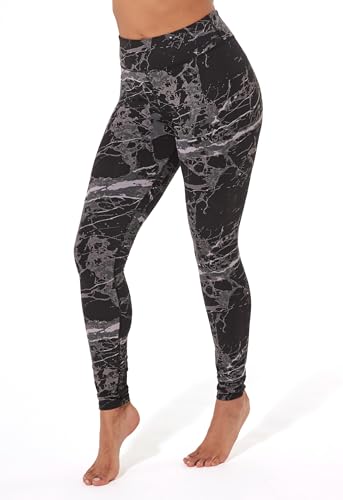
- 𝐎𝐑𝐆𝐀𝐍𝐈𝐂 𝐂𝐎𝐓𝐓𝐎𝐍 𝐂𝐎𝐌𝐅𝐎𝐑𝐓: Crafted from organic cotton, our women's leggings offer breathability and comfort for all activities in everyday wear, ensuring sustainability without compromising style
- 𝐄𝐋𝐀𝐒𝐓𝐈𝐂 𝐖𝐀𝐈𝐒𝐓𝐁𝐀𝐍𝐃: Designed with a mid-rise waisted contoured elastic waistband, these women's yoga leggings provide a flexible fit, allowing you to move freely with confidence
- 𝐒𝐂𝐔𝐋𝐏𝐓𝐈𝐍𝐆 𝐏𝐄𝐑𝐅𝐎𝐑𝐌𝐀𝐍𝐂𝐄: The blend of 92% organic cotton and 8% elastane creates a buttery soft fabric that sculpts, shapes, and contours your body, our leggings for women offer support for any workout or casual outing
- 𝐕𝐄𝐑𝐒𝐀𝐓𝐈𝐋𝐄 𝐖𝐄𝐀𝐑𝐈𝐍𝐆: With a double-layer gusset and 7/8 length fit, the women leggings are versatile for gym routines, jogging, or simply running errands, providing comfort and style for any occasion
- 𝐄𝐂𝐎 𝐅𝐑𝐈𝐄𝐍𝐃𝐋𝐘 𝐀𝐒𝐒𝐔𝐑𝐀𝐍𝐂𝐄: Made from earth-friendly, natural fabric and crafted in a fair trade certified factory with carbon offset, our womens yoga pants provides peace of mind for both your body and the environment
2. The cold-weather and low-odor pick: Icebreaker Women’s 175 Everyday Leggings. One hundred percent merino wool in a light 175-weight rib knit, with no elastane at all, which makes it the second zero-plastic fabric in this guide. As a base layer under ski pants, a winter running layer, or a travel legging you can wear three days running without it smelling like it, nothing synthetic touches it. The discipline this pick demands is naming: buy the 175 Everyday specifically. Icebreaker’s better-known 200 Oasis and Zone lines contain LYCRA, and the brand name alone guarantees nothing. Treat it as the delicate garment it is, gentle wash, flat or line dry, and it will repay you in seasons rather than months.
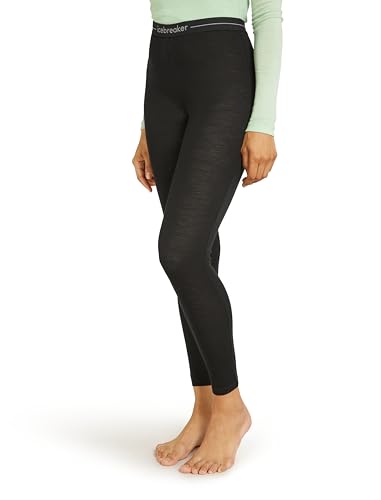
- DESIGNED FOR: Everyday use, these versatile year-round base layer bottoms, offer premium breathability and next-to-skin comfort, these women’s leggings are ideal for running, skiing, yoga, hiking, mountaineering and everyday training.
- 175 WARMTH SYSTEM: Perfectly balancing warmth and lightness, our 175 base layers are ideal for warm days outdoors. Made with 100% Merino wool, it’s a classic, all purpose base layer that helps regulate body temperature in all weather conditions.
- MERINO WOOL CONSTRUCTION: Natural 100% Merino wool is a soft, lightweight fabric that actively wicks moisture away from your body to keep you dry and comfortable.
- COMFORT FIT: Rib fabric provides ample stretch and comfort for all-day wear.
- SIZING & CARE: Slim fit construction provides a snug, close-to-body fit ideal for low-bulk layering. Machine Washable; line dry in the shade.

3. The value merino: MERIWOOL Women’s Base Layer Bottoms. The listing’s own comparison table puts the 250-weight version of these bottoms at 100 percent merino wool, with OEKO-TEX Standard 100 screening on the range, at a friendlier price than the premium merino brands. Everything said about the Icebreaker applies here with the volume turned down slightly: it is a base layer first and a legging second, it wants gentle care, and the midweight 250 version is the one to choose for standalone wear in cold weather while the lighter weight is a layering piece. For a reader building a natural-fiber drawer on a budget, this is where the merino experiment starts.
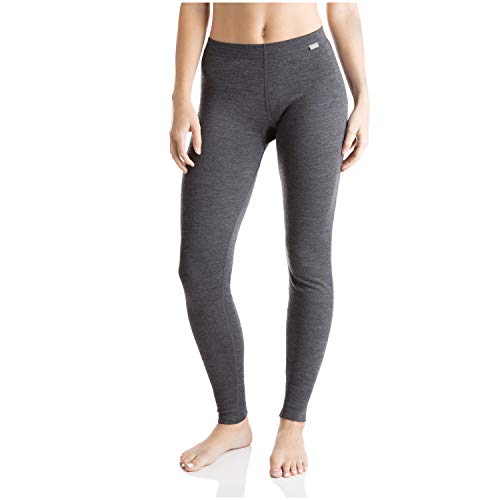
- PACKAGE INCLUDES: 1 – Merino wool Base Layer Thermal Underwear Pants for Women in Charcoal Gray / Large | MATERIAL: 16.5 Micron, 100% Merino wool, 190g/m2 | FIT: Next-to-Skin
- LAYERING MADE EASY: Ideal for both warm or cool weather conditions, our Merino wool underwear provides cozy comfort indoors and out! With a 16.5 micron jersey knit, it’s super-soft with zero itch for a lightweight base layer you can wear every day. ENVIRONMENTALLY FRIENDLY: When you want luxury, you want MERIWOOL! Our 100% Merino wool base layer is a renewable fabric that’s gentle on the earth. And since you won’t have to wash it as often as synthetic materials, you’ll even use less water.
- BREATHABLE COMFORT: A must-have for women who aren’t afraid to work up a sweat, our quick-drying merino wool base layer leggings pull moisture away from the skin! As warm as it is breathable, you can hike, bike and cycle without feeling hot or weighed down.
- STRESS-FREE TRAVEL: Say goodbye to over-stuffed luggage! Our Merino wool base layer bottoms are naturally odor-resistant, so it stays fresh with multiple wears. Not only will you pack less, at just 190g it’s super-lightweight for easy, comfortable transport.
- EXCEPTIONAL CUSTOMER CARE: If your MERIWOOL Women’s Lightweight Base Layer Bottoms do not perform to your satisfaction, return it to us within 30 DAYS along with proof of purchase for a hassle-free refund, exchange, or replacement. Includes a 90 DAY limited manufacturer’s warranty, which covers manufacturing and material defects.
4. The pocket pick, with a transparency asterisk: Woolly Women’s Flex Merino 7/8 Pocket Legging. Readers ask for two things natural leggings rarely offer, a phone pocket and a modern 7/8 gym cut, and this is the pair that offers both, in RWS-certified merino with the brand’s whole identity built around performance without plastic. The asterisk: brand materials and independent reviews put the fabric at roughly 95 percent merino and 5 percent elastane, while the Amazon listing itself does not print the percentages, which is exactly the kind of small disclosure gap this guide exists to notice. Five percent elastane is the lowest stretch share among the gym-cut options here, the pocket is genuinely useful, and if the elastane trade buys you a legging you will wear for years instead of a purist pair you abandon, it is a trade worth making knowingly.
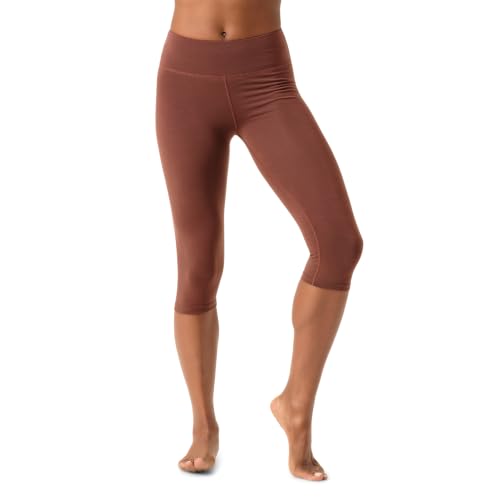
- Your Go-To Leggings | Made from Woolly's premium flex merino for luxuriously soft, breathable, and naturally stretchy feel. Designed to move with you, they offer all-day anywhere comfort for lounging, layering, or getting active. Available in a classic cut and 7/8th length with pockets for everyday ease or a vented MerinoAire upgrade for peak performance.
- Naturally High-Performance | Moisture-wicking, odor-resistant, and ultra-breathable, merino wool keeps you feeling fresh and comfortable through anything—so you can focus on your day, not your clothes.
- The Wonder Wool | Naturally temperature regulating, moisture-wicking, odor-resistant, and ultra soft – merino does more. It's breathable, wrinkle resistant, and keeps you warm, dry, and looking good all day.
- Responsible Wool, Minimized Impact | Comfort with a conscience. Our RWS-certified merino meets the highest standards of animal welfare & land practices and ships in 100% plastic-free paper packaging.
- Backed By The Woolly Promise | We like to keep things simple, if you are ever dissatisfied with our gear, at any time, just reach out. No stress, no hassle—we’ll make it right.
The one we would skip: recycled-polyester leggings, Girlfriend Collective first among them. The Compressive High-Rise legging is 79 percent recycled polyester and 21 percent spandex, marketed on the roughly 25 plastic bottles diverted per pair. The bottles are the problem wearing a halo. The finished fabric is 100 percent plastic, it carries the highest spandex load of anything discussed in this guide, recycled polyester shed more fibers than virgin polyester in the Akyildiz comparison above, and the polyester-spandex combination is the exact recipe the CEH BPA findings center on. It is sold direct and through outdoor retailers rather than Amazon, and we are not linking it, because there is no version of this site’s argument in which it earns a buy button. If you already own a pair, wear it out rather than replacing it early; the greenest legging is the one already in your drawer. Just do not buy the next one under the impression that recycled means plastic-free.
Three more honesty notes before the buying plan. The best-tested legging in this whole category is MATE The Label’s organic stretch legging, 92 percent organic cotton and 8 percent spandex, from a brand that states plainly it uses no PFAS and whose leggings returned a non-detect in the Mamavation testing; it is sold only on the brand’s own site, so it gets a recommendation here without an Amazon button, and if you buy one pair direct this year, that is the pair. At the other end, read eco names with suspicion: one widely sold “Ecofabric” yoga pant is 60 percent rayon, 25 percent organic cotton, and 15 percent spandex, and the best-known bamboo legging is 79 percent bamboo viscose hiding 15 percent nylon and 6 percent elastane, one fifth plastic under a bamboo headline. Even merino marketing needs the label check: a prominent merino-led compressive legging sold direct is 76 percent merino over 14 percent nylon and 10 percent elastane, nearly a quarter synthetic. The fiber label, read to the percentages, is the whole skill this category asks of you.
Browse Our Full Amazon StorefrontAll our activewear and natural-fiber clothing picks in one place →
The buying plan
Here is exactly what we would do with a normal budget and a normal week of workouts. Buy two pairs, not five. First, the Pact Everyday Legging in your training size, sized up if you are between sizes, because opacity beats compression vanity in a cotton legging. That pair covers gym sessions, classes, and hard days. Second, the Fair Indigo 100% Organic Pima Cotton Leggings, sized down if you are between sizes because the cut runs generous, for yoga, walking, work-from-home, and every other hour you live in leggings. Between them you have covered the whole week with one blended pair and one zero-plastic pair, which is a better outcome than five pairs of anything.
Add the merino layer only if your life calls for it: the MERIWOOL 250-weight bottoms if winter training or skiing is real in your house, the Icebreaker 175 Everyday if you want the premium version of the same idea. Skip, without a second thought: any recycled-polyester legging purchase, any eco-named pant whose label hides double-digit spandex, a third lounge pair before you own a training pair, and the wash-bag-as-absolution purchase, because a filter accessory on an all-synthetic drawer is decoration, not a fix. Keep one old synthetic pair if you have a genuinely hard weekly session that destroys cotton; wear it, change out of it right after, and let it be the last one you ever buy.
Join Our Free Facebook GroupNon-Toxic Family Living: parents sharing swaps that work →
Rapid-fire answers
Do leggings really contain PFAS? Some do. In the Mamavation lab program, 25 percent of 42 pairs showed detectable organic fluorine in the crotch panel, from 10 to 284 ppm, and 75 percent showed none. It is a finish problem, not an every-legging problem.
What does PFAS-free actually mean on a label? There is no single legal definition on clothing. The working yardsticks are a non-detect total fluorine test at a stated detection limit, and California’s caps: 100 ppm total organic fluorine now, tightening to 50 ppm on January 1, 2027. A brand that will not state a number has not answered the question.
Is 8 percent elastane basically plastic-free? No. It is lowest-plastic, and the difference matters: in the Rathinamoorthy washing tests, elastane made up 13 to 36 percent of the fibers shed from cotton-elastane knits, far above its share of the fabric. Small is better. Small is not zero.
Are recycled polyester leggings a good compromise? No. The fabric is still 100 percent plastic, and recycled polyester released more fibers than virgin polyester in controlled washing comparisons. Recycled is a feedstock story, not a shedding fix.
Can cotton leggings handle real workouts? Moderate ones, yes: lifting, yoga, Pilates, walking. For running, HIIT, and hot classes, cotton’s sweat absorption and slow drying make it the wrong tool. That is what the one blended pair in the buying plan is for.
Why does the exact merino style matter so much? Because brands blend selectively. Icebreaker’s 175 Everyday is 100 percent merino while its 200 Oasis and Zone lines contain LYCRA, and machine-washable superwash merino is resin-coated wool. Buy the named style, not the brand halo.
What is the single highest-impact habit change? Change out of synthetic activewear right after training. The CEH BPA findings are about hours of warm, sweaty skin contact with polyester-spandex, and cutting the hours costs nothing.
How long will natural-fiber leggings last? Budget one to two years of regular training wear for cotton before thigh wear or seam fatigue ends them, longer for gently treated merino. Wash cold, full loads, no softener on elastane, line dry, and you will land at the top of that range.
What about men’s options? The same fiber rules apply, and the honest Amazon-buyable answer today is the merino base layer route, the MERIWOOL and Icebreaker styles above in their men’s versions, plus organic cotton lounge leggings from the same brands in this guide. The dedicated men’s natural-legging market is thinner than the women’s, which is a gap worth naming rather than papering over.
Add Us as a Preferred Source on GoogleOne tap, and our guides show up first in your Google results →
Keep reading
- What Clothing Sheds the Most Microplastics?
- Your Wardrobe Is Shedding: Lower-Plastic Clothing Swaps
- Merino Base Layers: The Winter Layer That Is Not Plastic
- Women’s Fall and Winter Clothing in Natural Fibers
- PFAS-Free Period Underwear: Picks Checked Against Lab Testing
- Do Laundry Detergent Sheets Shed Microplastics?