What Clothing Sheds the Most Microplastics - Synthetics vs. Wool vs. Cotton (2026 Guide)
WhatisMicroplastics.com is supported by readers like you. If you purchase through our links, we may earn an affiliate commission at no cost to you.
Key Summary
The Problem: Synthetic fabrics (polyester, nylon, acrylic) are “spun plastic.” Every wash releases hundreds of thousands of microplastics that never biodegrade, ending up in our oceans and bodies.
The Science: 2025 research confirms that while natural fibers (cotton, wool) shed more by weight, they are biodegradable. Synthetics are permanent pollutants.
The 3-Step Solution:
Filter Existing Clothes: Use a Guppyfriend Bag for all synthetics to stop 86% of shedding.
Catch the Rest: Toss a Cora Ball into every load to capture loose fibers.
Buy Plastic-Free: Transition your wardrobe to 100% natural brands like Pact (Organic Cotton) and Icebreaker (Merino Wool).
Short on time? Jump straight to our Top Picks to see the brands we recommend most.
Why “Shedding” Is the Invisible Problem in Your Closet
Every time you wash your clothes, tiny little threads break off. In the science world, we call these microfibers. If your shirt is made of cotton, those fibers eventually disappear. But if your shirt is made of plastic—like polyester or nylon—those fibers never truly go away.
The Lifecycle of a Microfiber
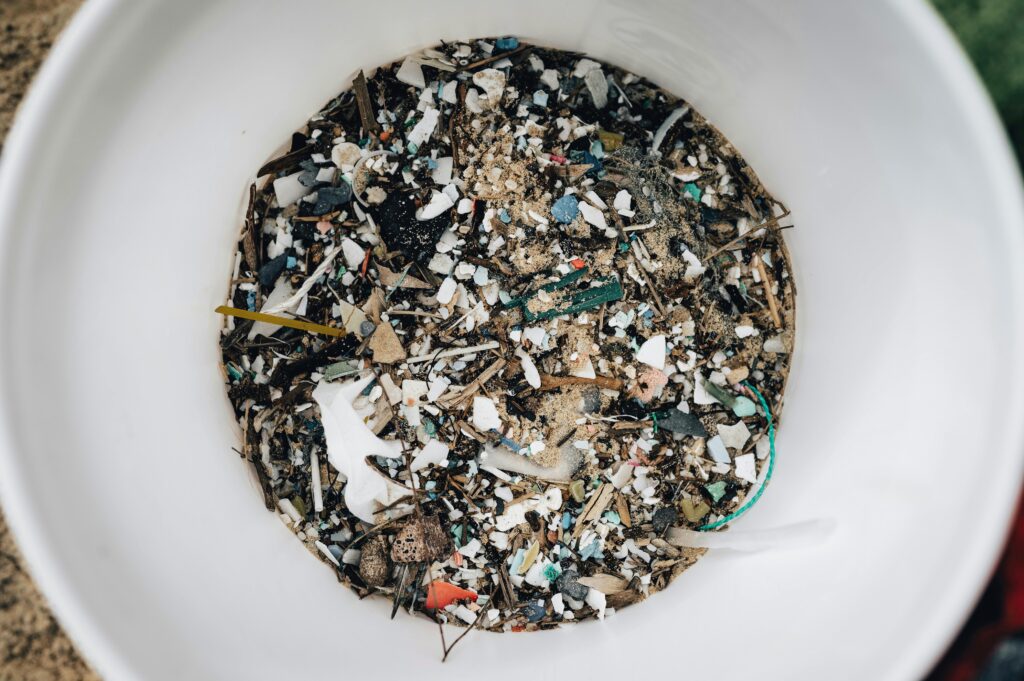
A landmark study by the University of Plymouth (Napper & Thompson, 2016) found that a single load of laundry can release over 700,000 tiny plastic pieces into our water. These pieces are often smaller than 5 millimeters. Because they are so small, they slide right through municipal water treatment plants, which were never designed to catch plastic dust.
Why Plastic Microfibers are “Forever Pollutants”
Unlike organic matter (wool, linen or cotton), synthetic polymers do not have a biological “timer.” They don’t rot or compost and instead, they they just break into smaller and smaller pieces called microplastic and nanoplastics. In 2024 and 2025, researchers found these microplastic and nanoplastics in human lung tissue, bloodstreams, and even bone marrow.
The High Shedders: Ranking the Fabrics by Fiber Release
It is a common misconception that only plastic clothes shed. In reality, almost all textiles lose fibers during the agitation of a wash cycle. The difference lies in what those fibers do once they leave your home. While natural fibers shed significantly, they are part of a biological cycle; synthetic fibers, however, are permanent pollutants.
Polyester Fleece (The Synthetic Shed King)
Fleece is designed for warmth by “brushing” plastic yarns to create a fuzzy, lofted surface. This mechanical brushing creates millions of tiny, loose ends before the garment even reaches your closet. During a wash, these loose plastic “hairs” snap off easily. Because it is so prone to losing mass, fleece is the primary contributor to microplastic lint in most households.
Conventional and Recycled Polyester
Standard polyester is made of long, sleek plastic filaments. While these are stronger than fleece, they still fracture over time. Interestingly, recycled versions of this plastic are often more prone to shedding. Because the material has been melted and reformed, the fibers can be more brittle than virgin plastic, snapping into tiny fragments that are difficult to catch with standard filters.
Acrylic and “Vegan” Knits
Acrylic is often marketed as a synthetic alternative to wool, but it is one of the highest shedders by mass. The fibers are short and loosely spun to mimic the “halo” of a natural sweater. Without the natural scales of a wool fiber to hold the yarn together, these plastic shards fly off the garment at a staggering rate.
Natural Staples: Cotton and Wool
Natural fibers like cotton and wool are actually among the highest shedders in terms of pure volume. If you check your lint trap after drying a heavy cotton towel or a wool blanket, the amount of “shed” is visible and significant.
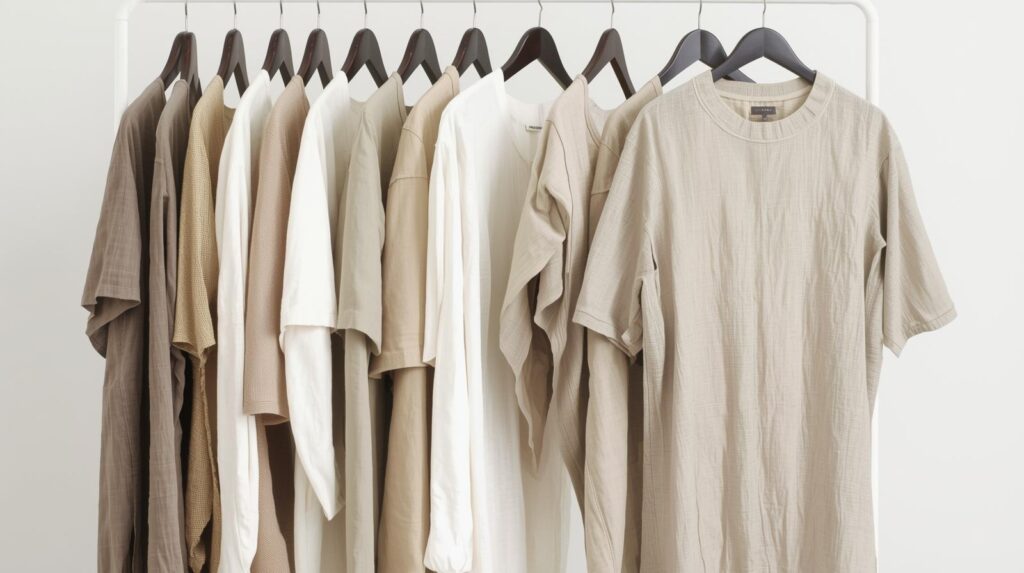
Natural fibers have a “staple length,” meaning they are made of many short hairs twisted together. These short hairs naturally slip out of the weave. However, because these fibers are made of cellulose (cotton) or protein (wool), they are biodegradable. They shed just as much—if not more—than synthetics, but they do not persist in the environment for centuries.
The Fabric Decoder – What’s Really on Your Tag?
Understanding your clothing tag is the first line of defense against microplastic pollution. Most consumers see a “soft” garment and assume it’s natural, but the chemical reality is often different. You need to watch out for “blends”—where a brand mixes 10% plastic into a cotton shirt. Even that 10% will shed thousands of permanent microplastic fibers every single week.
The “Plastic” List (Synthetic Fibers to Avoid)
These four materials are the primary drivers of laundry-based microplastic pollution. If you see these on a tag, the garment requires a laundry filteror a Guppyfriend Bag to prevent environmental damage.
Polyester (PES/PET): The “King of Plastic.” It is found in roughly 60% of all clothing produced globally. It is cheap, durable, and holds color well, but it never biodegrades.
Nylon (Polyamide/PA): Known for its strength and elasticity. While it is vital for high-performance swimwear and rain gear, it sheds sleek, transparent fibers that are nearly impossible for marine life to distinguish from food.
Acrylic: This is “chemical wool.” It is the highest-shedding synthetic by mass. Because the fibers are short and “brushed” to feel soft, they fly off the garment at a rate 1.5x higher than standard polyester.
Spandex / Elastane (Lycra): Even “100% Cotton” jeans often contain 2% Spandex. This is a synthetic rubber that sheds microscopic elastic bits which are particularly difficult for wastewater treatment plants to filter.
5 More Common Fibers to Watch For
To reach true authority on this subject, you must be able to spot these five “hidden” or semi-synthetic fibers that are often left out of the conversation.
Rayon / Viscose: Often marketed as “bamboo” or “natural,” this is a semi-synthetic. While the base is wood pulp, the chemical process used to turn that pulp into fabric is so intense that the resulting fibers often behave more like plastic in our waterways.
Acetate: Commonly found in the shiny linings of suit jackets and wedding dresses. It is a chemical derivative of cellulose that is highly prone to “dry shedding”—releasing plastic dust into your home air even when you aren’t washing it.
Polyurethane (PU): This is the primary ingredient in “Vegan Leather” or waterproof coatings. It doesn’t shed threads; instead, it “flakes” off in tiny, jagged shards that stay in the soil forever.
Modal: Similar to Rayon, Modal is often processed with heavy chemicals. Unless it is specifically labeled as Tencel™, which uses a “closed-loop” process, it can contribute to chemical pollution and microfiber waste.
Polypropylene: Often found in thermal underwear and reusable grocery bags. It is extremely lightweight and floats on the surface of the water, making it one of the most common microplastics found in the stomachs of surface-feeding birds.
The Solution for Your Existing “Tag List” Items
If your closet is currently full of these fibers, don’t throw them away, that just adds to the landfill. Instead, manage the shed using a Guppyfriend Washing Bag.
Our Vetted Brands – Why We Chose These 8 Leaders
Finding brands that balance style with environmental integrity is a massive undertaking. We prioritize 100% natural fibers whenever possible. However, when a brand uses a strategic blend, it’s usually for a good reason: to make the garment stronger, more breathable, or easier to care for. We only recommend synthetics when they genuinely improve the life and utility of the piece, ensuring that a garment stays in your closet for a decade rather than a season.
1. Pact (The Gold Standard for Organic Basics)
Why We Love Them: Pact is the undisputed leader in accessible, high-quality organic cotton. They’ve mastered the “seed-to-skin” process, ensuring that every piece is grown and manufactured under the strictest GOTS and Fair Trade standards. They make going plastic-free feel like a luxury, offering incredible softness without the “fast-fashion” chemical smell.
Their Staples: Pact is the go-to for everyday essentials, including the world’s softest organic cotton underwear, camisoles, and minimalist t-shirts.
Our Favorite: Cotton Camisole Tank Top with Built-in Shelf Bra is the ultimate year-round essential. It provides the support you need with a built-in shelf bra, made from breathable organic cotton. It’s perfect as a summer top or a winter base layer, ensuring zero microplastic shedding against your skin. Has over 4,000 5 star ratings on Amazon.com
2. Icebreaker (High-Performance Material Science)
Why We Love Them: Icebreaker is a pioneer in the “Move to Natural” movement. They have successfully replaced the plastic “dry-fit” culture with Merino Wool, a biological miracle fiber that is naturally antimicrobial and temperature-regulating. They are obsessed with transparency, often allowing customers to trace their wool back to the specific sheep station in New Zealand.
Their Staples: Icebreaker is the gold standard for activewear and technical base layers that don’t stink and don’t pollute.
Our Favorite: Women’s 175 Everyday Short Sleeve Crew Shirt is a 100% Merino wool essential. It is lightweight, breathable, and incredibly soft against the skin. It works perfectly as a standalone tee in the summer or a cozy base layer in the winter, providing plastic-free performance all year long.
3. Mate The Label (The Masters of Clean Chemistry)
Why We Love Them: Mate The Label has built a cult following by proving that “clean” can be incredibly chic. Based in Los Angeles, they focus on Clean Chemistry, eliminating the “forever chemicals” (PFAS) and endocrine disruptors often found in synthetic dyes. Their garments feel expensive because they are—they use high-integrity organic yarns that hold their shape for years.
Their Staples: They dominate the luxury loungewear and high-end basics market, specifically their signature thermals and organic fleece sets.
Our Favorite: Organic Fleece Relaxed Pocket Sweatpant is a seasonal powerhouse. Unlike synthetic fleece made from plastic, this 100% organic cotton fleece is breathable and cozy without the microplastic risk. It features a relaxed fit and functional pockets, making it a permanent bestseller for the brand.
4. Quince (Luxury Fibers at Radical Prices)
Why We Love Them: Quince has completely disrupted the luxury market. By shipping directly from the factory, they offer Mongolian Cashmere and Mulberry Silk at prices that compete with synthetic fast fashion. They are the best tool we have for helping people choose real, biodegradable silk over “polyester satin” (which is just shiny plastic).
Their Staples: They are famous for their affordable cashmere sweaters and silk slip dresses that feel like high-end boutique finds.
Our Favorite: The Quince Mongolian Cashmere Crewneck Sweater is a wardrobe foundation. It’s light enough for chilly summer nights but warm enough for the peak of winter, providing a plastic-free luxury feel every day of the year.
5. Patagonia (The Durability Pioneers)
Why We Love Them: Patagonia is in a league of its own when it comes to durability. While they do use synthetics for performance, they are the only brand that offers a lifetime “Worn Wear” repair program. They actively fund microfiber research and have become a loud voice against the “disposable” fashion industry. When you buy Patagonia, you are buying gear meant to last 30 years.
Their Staples: They are the leaders in technical outerwear, including weather-proof shells and long-lasting insulation layers.
Our Favorite: The Patagonia Women’s Ahnya Pullover is a masterpiece of functional blending. By mixing regenerative organic pilot cotton with a touch of recycled polyester and spandex, they’ve created a soft, everyday sweatshirt that maintains its shape and resists pilling better than pure cotton alone.
6. Everlane (Transparent & Timeless)
Why We Love Them: Everlane is the brand that made “Radical Transparency” mainstream. They don’t just sell clothes; they sell the story of how they were made. Their commitment to high-density, long-staple cotton means their shirts don’t go limp or pill after a few washes, which is a major victory against microfiber shedding.
Their Staples: Everlane is the go-to for structured basics, including the perfect white button-down, tailored cotton trousers, and high-quality alpaca knits.
Our Favorite: The Everlane The Organic Cotton Box-Cut Tee is a bestseller for a reason. It uses a heavyweight, tightly spun cotton that offers a premium drape and significantly higher durability than “disposable” mall tees.
7. L.L. Bean (The Unbeatable Heritage Standard)
Why We Love Them: If you want clothing that outlasts the trends, L.L. Bean is the undisputed champion. They have spent over 100 years perfecting the high-density weave. Their fabrics are so tightly woven that they physically lock fibers in place, making them some of the most “shed-resistant” clothes on the planet. Buying L.L. Bean is an investment in American heritage quality that stays in your family for generations.
Their Staples: They are world-renowned for their heavy-duty flannels, virgin wool sweaters, 100% cotton t shirts and iconic outdoor gear.
Our Favorite: The L.L. Bean Scotch Plaid Flannel Shirt is a legend for a reason. Made of 100% Portuguese cotton that is brushed for softness but woven with incredible density, it’s the ultimate year-round “cabin core” essential.
8. Pendleton (The Heirloom Anti-Plastic Choice)
Why We Love Them: Pendleton is the ultimate “anti-plastic” brand. Their Virgin Wool is sourced largely from family-owned sheep ranches in the USA. Because virgin wool retains its natural oils and elasticity, it is incredibly resistant to breakage. A Pendleton piece is a natural protein that is fully compostable, making it the most responsible choice for a high-quality home.
Their Staples: They are the world leaders in pure wool blankets, western-style shirts, and heirloom-quality outerwear.
Our Favorite: The Pendleton Eco-Wise Wool Blanket is a cradle-to-cradle certified masterpiece. It’s perfect for summer picnics or winter bedding, providing a plastic-free luxury that truly lasts a lifetime.
The Transition Roadmap – How to Systematically Swap Plastic for Nature
Most people look at their closet, realize it’s 80% plastic, and feel like they need to throw everything away. Don’t do that. Sending a pile of polyester to a landfill only speeds up the creation of nanoplastics in our soil. The goal is a systematic transition.
Here is the 4-step professional strategy for moving to a 100% natural, microplastic-free wardrobe without breaking the bank.
Step 1: Protect the Water While You Transition
The clothes you already own are likely the highest shedders. Before you buy a single new organic shirt, you must stop the “leak” from your current wardrobe.
The Action: Install a Filtrol 160 on your washing machine. This is the single most impactful thing you can do today. It allows you to keep wearing your favorite leggings and gym gear while ensuring that 89% of the microplastics they shed are caught in a filter rather than sent to the ocean.
The Tool: For smaller items or renters, use the Guppyfriend Washing Bag.
Step 2: The “Skin-First” Replacement Rule
When you are ready to start buying, prioritize the items that have the most prolonged contact with your skin. Microplastics and the chemical dyes attached to them (like PFAS) can be absorbed through the skin, especially when you sweat.
Priority 1: Underwear & Base Layers. This is where you swap to Pact (Organic Cotton).
Priority 2: Sleepwear. You spend 8 hours a day in your pajamas. Swapping synthetic sets for Quince Silk or Mate the Label Organic Cotton reduces your overnight “microplastic inhalation” significantly.
Step 3: Identify the “High-Frequency” Washers
Look at what you wash the most. For most women, this is activewear and everyday t-shirts. Because these items go through the machine once a week, they are responsible for the bulk of your home’s plastic output.
The Swap: Replace one synthetic workout top with an Icebreaker Merino Crew. Because wool is naturally odor-resistant, you can wear it 3–4 times before it needs a wash, effectively cutting your laundry-based shedding by 75%.
Step 4: Invest in “End-of-Life” Outerwear
The final step is replacing the big items: coats, heavy sweaters, and blankets. These are the items that usually stay in your home for 10+ years.
The Strategy: When your current synthetic “fleece” jacket finally gives out, don’t replace it with more plastic. Invest in an L.L. Bean Flannel or a Pendleton Wool Blanket.
The Benefit: These items don’t just stop shedding; they become heirlooms. A wool blanket from Pendleton can be composted in your backyard in 50 years; a polyester blanket will be in a landfill for 500.
Conclusion – The Future of Your Wardrobe is Bio-Based
The transition to a microplastic-free life doesn’t happen overnight, and it doesn’t require perfection. It requires a shift in mindset: moving away from disposable, plastic-based fashion and returning to high-integrity, biological materials.
By choosing brands like Pact, Icebreaker, and L.L. Bean, you aren’t just buying a piece of clothing—you are casting a vote for a cleaner ocean and a healthier body. You are choosing fibers that the earth recognizes, fibers that can eventually return to the soil rather than fragmenting into permanent pollutants.
Your Immediate Action Plan
If you’re ready to take the first step today, here is the most effective path forward:
Filter what you have: Don’t let your current synthetics reach the ocean. Install a Filtrol 160 this weekend.
Swap your base layers: Start your “skin-first” transition with the Pact Shelf-Bra Camisole.
Spread the word: Share this guide with someone who is still wearing “recycled plastic” leggings thinking they are helping the planet.
The invisible crisis of microplastics is vast, but the solution starts in your laundry room. By making intentional choices today, you ensure that the clothes on your back don’t become the legacy we leave in our water.