
10 Best Plastic Free Kids Plates & Bowls (2026 Guide)
Best Plastic Free Kids Plates & Bowls (2026 Guide)

Updated November 2026: we expanded this guide with per-pick sizing, care, and longevity notes, a materials comparison table, a buying checklist, and a deeper science section. The ten picks are unchanged, and all ten are still available.
I started this project because of a scary realization. When my kids were born, I did what every parent does: I started researching. I wanted the best for them. But the more I looked into the “top-rated” baby gear, the more I found a hidden problem: plastics and PFAS hiding in the very dishes our kids eat from every day.
Here is the fact that changed everything for me: kids inhale and ingest more microplastics relative to their body weight than adults do. Because they are smaller and their systems are still growing, that “tiny” bit of plastic shedding from a scratched bowl is not tiny to them. It is a huge deal.
I looked at our cupboards and realized we were serving hot food on plates that were shedding microscopic plastic bits into every meal. So I went looking for plastic free kids plates that actually work in real life: dishes that survive toddlers, go in the dishwasher, and do not leach anything into the food.
You cannot remove every piece of plastic from your life, but you can change the things your kids touch and taste every single day. This guide is the result of that obsession. Let us dive in.
Quick note: this post contains affiliate links. If you buy through them, we may earn a commission at no extra cost to you. It keeps the lights on and the research free.
The short answer: the safest kids plates are the ones with no plastic in them at all. For babies, start with suction silicone: the WeeSprout Suction Plates & Bowls stay stuck to the tray and go straight in the dishwasher. For toddlers and preschoolers, the buy-it-once answer is stainless steel, and the Elk and Friends Stainless Steel Collection is the set we would buy first. Older kids graduate to the glass and porcelain picks below.
We have not tested these dishes ourselves. The detail comes from the manufacturers’ own listings and the research we name as we go.
Quick Picks: The Best Plastic Free Kids Plates and Bowls
If you want to swap your cabinets today, these are the winners. Every pick below was re-verified in October 2026.
- Best non-slip bowl (baby/toddler): WeeSprout Suction Plates for Babies & Toddlers – the best suction bowl without plastic: it stays stuck so the food stays put.
- Best open cup trainer: SAMiGO Silicone Baby Cups for 6-12 Months – soft on gums and sized to tiny hands.
- Best suction plate: Bumkins Silicone Grip Dish – the industry standard divided plate that actually stays on the table.
- Best pediatrician-designed set: Ahimsa Stainless Steel 5-Piece Dinnerware Set – designed by a pediatrician mom, from 304 stainless steel; divided plate, bowl, cup, and utensils in one kit.
- Best stainless bowl + suction: Elk and Friends Stainless Steel Collection – the “forever” dishes that suction to the table.
- Best stainless cup: Elk and Friends 10oz Stainless Steel Kids Cups – the ultimate plastic free sippy cup alternative.
- Best toddler utensils: Elk and Friends Kids Silverware with Silicone Handle – real metal tips so they can actually eat.
- Best bowls (older kids): Elk and Friends Kids Porcelain Dinner Set – real dishes with a suction safety net.
- Best glass cup (older kids): Duralex Picardie 5 oz Tumbler – classic tempered glass that makes them feel grown-up.
- Best sleeved glass cup: Elk and Friends Kids + Toddler Glass Cups – glass with a silicone shock absorber.
Compare Our Plastic Free Kids Plates Picks at a Glance
| Pick | Best for | Material | Dishwasher | Microwave | Ages |
|---|---|---|---|---|---|
| Ahimsa 5-Piece Stainless Set | Complete mealtime kit, ages 1-5 | Stainless steel | Yes | No | 1-5 yr |
| WeeSprout Suction Bowls | Babies learning to self-feed | Silicone | Yes | Yes (bowl only) | 6 mo+ |
| SAMiGO Silicone Baby Cups | Open-cup training | Silicone | Yes | Yes | 6-12 mo |
| Bumkins Silicone Grip Dish | Toddlers, divided meals | Silicone | Yes | Yes | 6 mo+ |
| Elk and Friends Stainless Collection | Everyday family meals | Stainless steel | Yes | No | Toddler+ |
| Elk and Friends 10oz Cups | Sippy cup replacement | Stainless steel | Yes | No | Toddler+ |
| Elk and Friends Kids Silverware | Learning utensils | Steel + silicone | Yes | N/A | >2 yr |
| Elk and Friends Porcelain Set | Older kids, “real” dishes | Porcelain | Yes | Yes | >4 yr |
| Duralex Picardie Tumbler | Older kids, everyday cup | Tempered glass | Yes | Yes | >4 yr |
| Elk and Friends Glass Cups | Glass with drop protection | Glass + silicone | Yes | Yes (no lid) | Toddler+ |
Get the Weekly Swaps
One short email a week: the newest microplastics studies in plain English, plus the swaps that are actually worth your money. Join free and we will send you our room-by-room microplastic checklist to get you started.
Get Our Free Room-by-Room Microplastic ChecklistJoin the newsletter and get the checklist free —
The Science of Safety: Microplastics and PFAS in Kids Dishes
When we talk about non toxic kids dinnerware, we are addressing two main threats: microplastics and PFAS.
The Body Weight Ratio
Children breathe more air and eat more food per pound of body weight than adults do. This means if there are microplastics in their environment or on their plates, they are getting a significantly higher dose relative to their size. A scratched plastic plate shedding particles into hot mac and cheese is a much bigger deal for a 30-pound toddler than for a 180-pound adult. Heat makes it worse: hot food and dishwasher cycles break plastic down faster, and a worn, scratched surface sheds far more than a new one. That is why the highest-value swap is the dish that meets hot food daily.
PFAS (Forever Chemicals)
Many “eco-friendly” bamboo or paper plates use PFAS to make them water-resistant. These chemicals do not break down in the environment or in the human body. By switching to plastic free kids dishes, you are removing one of the most common pathways for these chemicals to enter your child’s system. In a 2022 study by Rodgers and colleagues at the Silent Spring Institute, published in Environmental Science & Technology, researchers tested 93 children’s products and found targeted PFAS only in items labeled water-resistant or stain-resistant. The treatment is the tell: if a dish needs a chemical finish to repel stains, that finish is the thing to avoid.
What About “BPA-Free” Plastic?
It is a fair question. BPA-free usually means the maker swapped bisphenol A for a close chemical cousin such as BPS, which behaves similarly in the body. A plastic plate can be honestly labeled BPA-free and still shed microplastics every time it meets hot food. That is why this guide skips plastic entirely: if you want microplastic free kids plates, the material has to be made of something else.
What “Plastic-Free” Actually Means for Kids Plates
Not all “natural” materials are safe. Here is how to tell a truly non toxic kids dinnerware set from marketing:
Stainless steel: Look for 304 or 18/8 food-grade. It is inert, meaning it does not leach anything. It does not scratch, cloud, or absorb odors.
Platinum-cured silicone: Are silicone plates safe for toddlers? Yes, if they are high quality. Pure silicone is made from sand and is stable under high heat. Do the pinch test: twist the silicone, and if white filler shows through, it is not pure.
Porcelain and tempered glass: The most chemically pure surfaces. No smells, no stains, zero chemical migration.
The bamboo fiber trap: Avoid “bamboo fiber” dishes. They are usually bamboo powder held together with melamine resin, which is a plastic. They also tend to crack in the dishwasher and are not microwave safe. True bamboo (solid carved bamboo) is a different story, but the molded “bamboo fiber” plates sold for toddlers are the ones to skip. We do not include them in this guide.
Wheat straw sets: You will see these recommended a lot. Many are the same story as bamboo fiber: plant powder bound with melamine or polypropylene. If the listing does not clearly state the binder, assume it is plastic and skip it.
| Material | Best for | Dishwasher | Microwave | Watch out for |
|---|---|---|---|---|
| Platinum-cured silicone | Babies and toddlers; suction bases | Yes | Yes | Can hold odors; pinch test for fillers |
| Stainless steel 304 (18/8) | Toddlers through big kids | Yes | Never | Conducts heat; reheat in glass first |
| Porcelain | Older kids, roughly 4 and up | Yes | Yes | Can chip if thrown |
| Tempered glass | Older kids, roughly 4 and up | Yes | Yes | Still glass; best past the throwing stage |
| Melamine and “bamboo fiber” | Nothing in this guide | Not recommended | No | Plant powder bound in melamine resin, a plastic |
How to Choose: The 60-Second Checklist
Before you buy any set of non toxic kids plates and bowls, run it through these checks:
- Match the material to the age. Silicone with suction for under-2s, stainless steel for toddlers and preschoolers, glass and porcelain once the throwing phase is over.
- Check what touches the food. Lids, straws, and valve parts are where plastic hides in otherwise good sets. Silicone or steel should touch the food, start to finish.
- Plan the reheat. Steel cannot go in the microwave. Keep one glass or porcelain bowl for warming food, then serve it on the steel plate.
- Keep what still works. A plastic plate that only holds cold snacks is not an emergency. Replace pieces as they crack or wear out, hot-food dishes first. Use it up, then swap.
Browse Our Full Amazon StorefrontAll our kids plates and bowls picks in one place —
Best Plastic Free Kids Plates for Babies: Silicone Suction Picks
Silicone is often the first step for parents moving away from plastic. It is soft, it does not break when thrown, and it handles heat well. But not all silicone is created equal. Stick to 100% platinum-cured, food-grade silicone from established brands. The three picks in this section are the non toxic baby plates we point friends to for the first year or so of self-feeding.
The Best Non-Slip Bowl: WeeSprout Suction Plates & Bowls
If you have ever watched your toddler turn a bowl of spaghetti into a hat, you know why suction matters. Most suction bowls use a thin, flimsy ring at the bottom that gives up the moment a crumb gets under it.
The WeeSprout suction bowl is the best suction bowl without plastic because the suction base is heavy-duty and built into the mold of the bowl, not glued on. Press it onto a smooth surface and it creates a vacuum that stands up to the high-chair tantrum test.
The walls are high and curved, which is huge for babies learning to use a spoon: they can push food against the side to load the spoon without it sliding over the edge. It is BPA, PVC, phthalate, and lead free, and it goes from freezer to microwave without breaking a sweat.
Honest trade-off: silicone can hold onto odors from strong foods like fish or curry, and the plastic lids need to be removed before microwaving. Hand washing with unscented soap keeps it freshest.
Sizing and care: the bowls are portioned for first foods through toddler meals (roughly 6 months to 3 years). Because the lids are plastic, never microwave with them on, and move leftovers to glass.
The Best Suction Plate: Bumkins Silicone Grip Dish
The Bumkins Grip Dish is the industry standard for a reason. One side is flat so the plate sits flush against the table or high-chair edge, eliminating the gap where half the meal usually lands.
It has three deep sections, a lifesaver for the “my peas cannot touch my chicken” phase, and they hold liquids like yogurt without spillover. It is made from 100% food-safe platinum silicone, oven safe to 400F, and top-rack dishwasher safe. Unlike plastic, it never gets those greasy white marks.
Honest trade-off: the suction works best on perfectly smooth, clean surfaces. On textured wood tables it grips less firmly. A quick damp wipe under the base helps a lot.
Sizing and care: the sections hold toddler-size portions; by about age 4, big eaters may outgrow them and graduate to steel. Avoid cutting food on it with a serrated knife; nicks trap odors.
Best Open Cup Trainer: SAMiGO Silicone Baby Cups
Pediatric feeding therapists generally recommend moving toward open cups early rather than relying on sippy cups with valves, where mold loves to hide. The SAMiGO tiny cups are 2 oz, weighted at the base so they tip less, and sized for 6 to 12 month old hands learning to sip.
Honest trade-off: at 2 oz you will be refilling often, and open cups mean spills while they learn. That is the point, though: the learning happens faster.
Sizing and care: 2 ounces is a training size a baby can lift when full. Most kids graduate to a bigger cup at 12 to 18 months; these then retire to snack duty.
Best Non Toxic Toddler Plates: Stainless Steel Workhorses
Stainless steel is the ultimate buy-it-once material. It does not get cloudy, does not absorb the smell of old dish soap, and does not scratch. Those tiny scratches in plastic plates are where bacteria breed and where microplastic shedding starts. With steel, that risk is zero.
The Winner: Elk and Friends Stainless Steel Collection
The Elk and Friends fixed the two biggest complaints about steel kids dishes: the sliding and the clang. Their plates and bowls come with a colorful silicone sleeve on the bottom that grips the table and silences the fork racket.
The divided plates have high walls between sections for picky eaters, and you can use real metal forks on them every day without shedding or flaking. The bundle includes plates, bowls, snack cups, utensils, and storage lids, so it covers the whole mealtime routine in one kit.
Honest trade-off: never put stainless steel in the microwave. Heat food in glass or porcelain first, then transfer. It takes ten extra seconds and keeps plastic away from heat entirely.
Sizing and care: pieces are scaled for toddlers through grade schoolers, so this set should last for years. The silicone sleeves remove for a full dishwasher clean; utensil marks are cosmetic only.
The Pediatrician-Designed Pick: Ahimsa Stainless Steel 5-Piece Dinnerware Set
The Ahimsa was created by a pediatrician and mom, and it shows in the details: The 5-piece set includes a divided plate, bowl, training cup, fork, and spoon, all in 304 (18/8) food-grade stainless steel. It is MADE SAFE certified, free from BPA, PVC, phthalates, melamine, and lead. The rainbow colors come from a titanium PVD process bonded to the steel, not paint or coating, and the pieces are unbreakable and dishwasher safe.
Honest trade-off: it is the priciest pick in this guide, and like all stainless steel it cannot go in the microwave. You are paying for the pediatrician-led design and the certifications.
Sizing and care: every piece is scaled for ages 1 to 5. The rainbow finish is titanium bonded to the steel, so no paint can chip into food.
The Best Toddler Utensils: Elk and Friends Kids Silverware
Most baby forks are rounded plastic nubs that cannot actually pierce a piece of pasta, which leads to frustrated kids and food on the floor. The Elk and Friends silverware has real stainless steel tips that are functional but rounded for safety, with chunky silicone handles shaped for the palmar grasp toddlers naturally use.
Honest trade-off: real metal tips mean you will want to supervise the youngest toddlers, same as with any fork.
Sizing and care: sized for ages 2 and up, with handles shaped for the move from fist grip to proper hold. Check the silicone handles now and then; retire a set if one tears.
The Plastic-Free Sippy Alternative: Elk and Friends 10oz Stainless Cups
Most toddler cups hide plastic in the valves and straws, which is also where mold hides. These 10oz stainless cups keep milk and smoothies cold for hours, and the silicone straw has a built-in stopper so it cannot be yanked out and sprayed across the room.
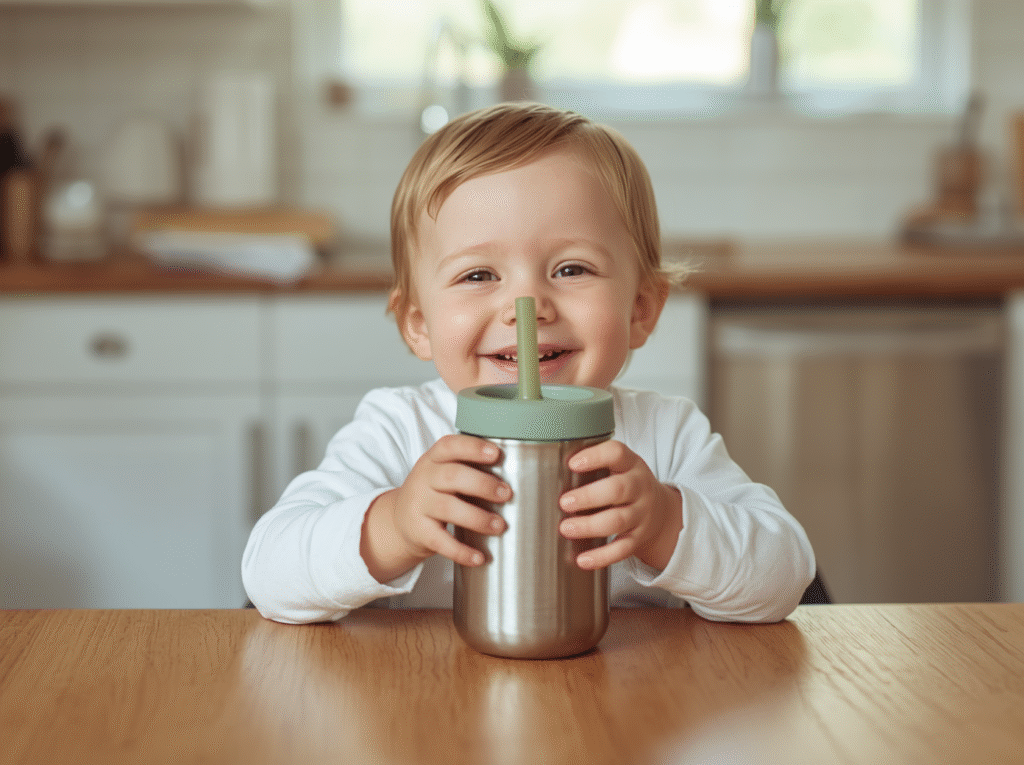
Honest trade-off: they are not leakproof if knocked over, and like all steel, they cannot go in the microwave.
Sizing and care: 10 ounces suits kids from about age 2 through the early school years. The steel is single wall, so it is a cold-drinks cup; wash the straws with a thin brush.
Best Plastic Free Dishes for Older Kids: Glass & Porcelain
Once your child stops treating dinnerware like a frisbee, glass and porcelain are the cleanest materials on the planet: zero chemical migration, zero microplastics, zero lingering smells.
Best Glass Cups: Duralex Picardie Clear Tumbler, 5 oz
The Duralex Picardie is the iconic French cafe glass, and the 5 oz size is the sweet spot for small hands: heavy enough to feel sturdy, small enough to hold one-handed. It is tempered glass, about 2.5 times more resistant to breakage and thermal shock than regular glass, and if it does break, it shatters into blunt fragments rather than shards.
Honest trade-off: it is still glass. Best for kids around 4 and up who have outgrown the throwing phase. For younger ones, the sleeved option below is the safer bridge.
Sizing and care: at 5 ounces, a 4 to 8 year old can carry one one-handed and finish it. The tumblers stack for storage, and the glass never stains or holds odors.
Best Set for Older Kids: Elk and Friends Kids Porcelain Dinner Set
Porcelain is the most chemically pure dish surface you can buy: naturally non-stick, non-porous, and it never absorbs flavors. The Elk and Friends porcelain set pairs it with removable silicone suction sleeves, so from the top it looks like grown-up dishes and from the bottom it grips the table. It is a great way to teach kids how to handle real dishes with a safety net.
Honest trade-off: porcelain can chip if thrown onto tile. The sleeves help, but this set is for kids who are past the throwing stage.
Sizing and care: pieces are scaled-down adult dishes. Porcelain is microwave safe, making it the easiest set for reheating leftovers; remove the suction sleeves once outgrown.
Best Sleeved Glass: Elk and Friends Kids + Toddler Glass Cups
If bare glass still makes you nervous, these sleeved glass cups are the bridge. Thick silicone sleeves act as shock absorbers and give slippery little hands something to grip. They come with silicone straws with stoppers, storage lids, and a cleaning brush, and they work for smoothies, milk, and water on the go.
Honest trade-off: more parts means more washing, and the straws are not spill-proof if tipped upside down.
Sizing and care: the sleeves make these the bridge between silicone training cups and bare glass, for toddlerhood into preschool. Remove sleeves for the dishwasher so water cannot sit against the glass.
Join Our Free Facebook GroupNon-Toxic Family Living: parents sharing swaps that work —
Plastic Alternatives for Kids Plates: What Actually Works
If you are moving away from plastic plates, you have three real alternatives: stainless steel, food-grade silicone, and tempered glass or porcelain. Stainless steel wins for durability and zero leaching risk, silicone wins for quiet mealtimes and grippy suction bases, and glass works best for older kids who have outgrown the throwing phase. Every option in this guide falls into one of these three categories. Parents who search for kids plates not plastic, or non plastic kids plates, are usually trying to escape the melamine and bamboo fiber traps above. If a listing cannot tell you plainly what the dish is made of, that silence is your answer.
FAQs: Plastic Free Kids Plates
Are silicone plates safe for toddlers?
Yes, with one catch: quality matters. You want 100% platinum-cured, food-grade silicone. Do the pinch test: twist the plate, and if white filler shows through, it is not pure. Stick to established brands like WeeSprout and Bumkins.
Can I microwave these items?
Silicone, porcelain, and tempered glass are generally microwave safe. Stainless steel should NEVER go in the microwave. Pro tip: heat food in a glass or porcelain bowl first, then transfer it to the stainless plate.
Is stainless steel okay for acidic foods like tomato sauce?
Yes. Food-grade 304 (18/8) stainless steel is non-reactive. It will not change the taste of the food, and the food will not damage the metal.
What age should I switch from silicone to stainless steel?
There is no hard rule, but many families use silicone through the baby and young toddler years (roughly 6 months to 2 years) for the suction and softness, then move to stainless steel once throwing food becomes less of a daily event. The sleeved stainless options in this guide bridge the gap nicely.
Are bamboo plates safe for kids?
Solid carved bamboo is fine, but most molded “bamboo fiber” toddler plates are bamboo powder bound with melamine resin, which is a plastic. They can also crack in the dishwasher and are generally not microwave safe. We do not recommend them, which is why none appear in this guide.
How do I reduce microplastic exposure at home beyond dishes?
Swapping dishes is the fastest win since heat plus plastic equals shedding. Beyond that, look at drinking water filtration and laundry: synthetic clothes shed microfibers in the wash. Small swaps compound over time.
What should I pack for daycare or school lunch?
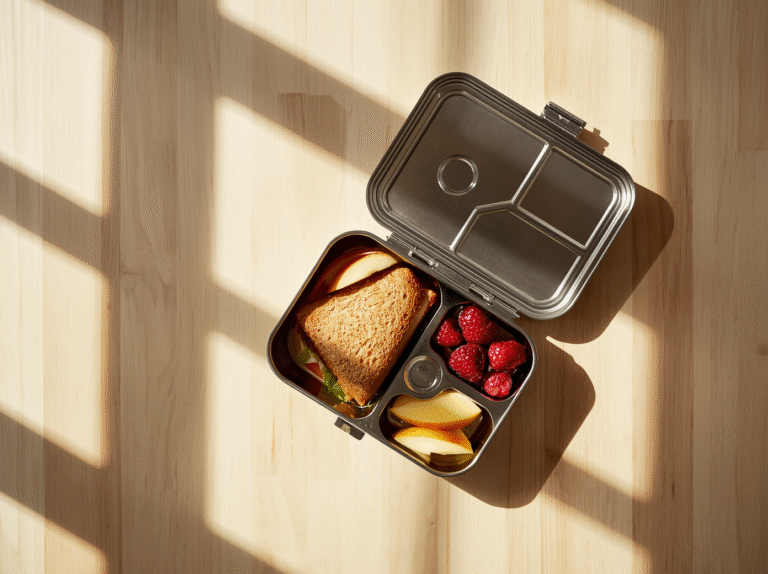
For food that leaves the house, stainless steel wins again: light, unbreakable, and it does not hold yesterday’s smells. Our guide to non-toxic lunch boxes for kids covers the bento boxes we recommend, and our plastic free sippy cup guide covers drinks.
How many sets of kids plates do I actually need?
One full set per child plus one spare plate and bowl is plenty for most families. Silicone for the baby stage, steel for the toddler years, and glass or porcelain later means three small sets across childhood, not a new set every season.
Add Us as a Preferred Source on GoogleOne tap, and our guides show up first in your Google results —
Bottom Line: Small Steps to a Safer Table
You do not have to throw out every piece of plastic tomorrow. Parenting is hard enough without that kind of pressure. But now you know the rule: heat plus wear equals plastic breakdown. The easiest, most effective move is to start where the heat is. Swap the bowls you use for hot oatmeal. Swap the plates you use for warm dinners. Replace the plastic sippy cup that sits in a hot car with a stainless steel cup.
Your action plan:
- For the messy baby: get the WeeSprout Suction Bowls.
- For the daily workhorse: invest in the Elk and Friends Stainless Steel Set.
- For the big kid transition: grab the Duralex Picardie Tumblers.
You have done the research. You know the risks. Now let us get the plastic off the table. And if you are rethinking the rest of the kitchen too, check out our guide to laundry swaps that cut microplastic shedding next.
4 Comments
Comments are closed.