
How to Avoid Microplastics in Your Food, Water, and Home
How to Avoid Microplastics in Your Food, Water, and Home
WhatisMicroplastics.com is supported by readers like you. If you purchase through our links, we may earn an affiliate commission at no cost to you.
Microplastics are everywhere, floating in the air, showing up in our food, and even found in drinking water. The good news is you don’t need to overhaul your entire life to reduce exposure.
A few simple changes, especially in your kitchen, can make a real difference.
What Are Microplastics?
Microplastics are tiny plastic particles, often smaller than a grain of sand, that come from the breakdown of everyday items like packaging, containers, clothing, and synthetic materials.
They enter your body mainly through:
- Drinking water
- Food (especially packaged or processed foods)
- Air (dust and fibers)
Research from organizations like the World Health Organization and National Institutes of Health shows that microplastics are now widespread in the environment and detectable in the human body. A recent overview published by the National Institutes of Health also highlights how these particles are being studied for potential health effects.
The key takeaway:
You can’t eliminate microplastics completely—but you can reduce your exposure in meaningful ways.
The Biggest Sources of Microplastics in Everyday Life
1. Drinking Water
Both tap water and bottled water can contain microplastics. In fact, some studies have found bottled water may contain even higher levels due to plastic packaging.
2. Food Packaging and Storage
Plastic containers, wraps, and packaging can shed particles—especially when exposed to heat, oils, or repeated use.
3. Cooking Surfaces
Nonstick coatings can degrade over time, particularly at high temperatures, releasing particles into food.
4. Kitchen Tools and Surfaces
Plastic cutting boards, utensils, and containers slowly wear down, contributing to microplastic exposure.
The Best Ways to Reduce Microplastics
1. Upgrade Your Water Filtration
If there’s one place to start, it’s your drinking water.
Reverse osmosis systems are widely considered one of the most effective methods for reducing microplastics because they use extremely fine membranes to filter out contaminants.
A simple, no-install option is the Bluevua RO100ROPOT-UV Reverse Osmosis System It sits on your counter, requires no plumbing, and uses a multi-stage filtration process designed to remove very small particles. If you want a deeper breakdown, we tested it in detail in our full review of the Bluevua system.
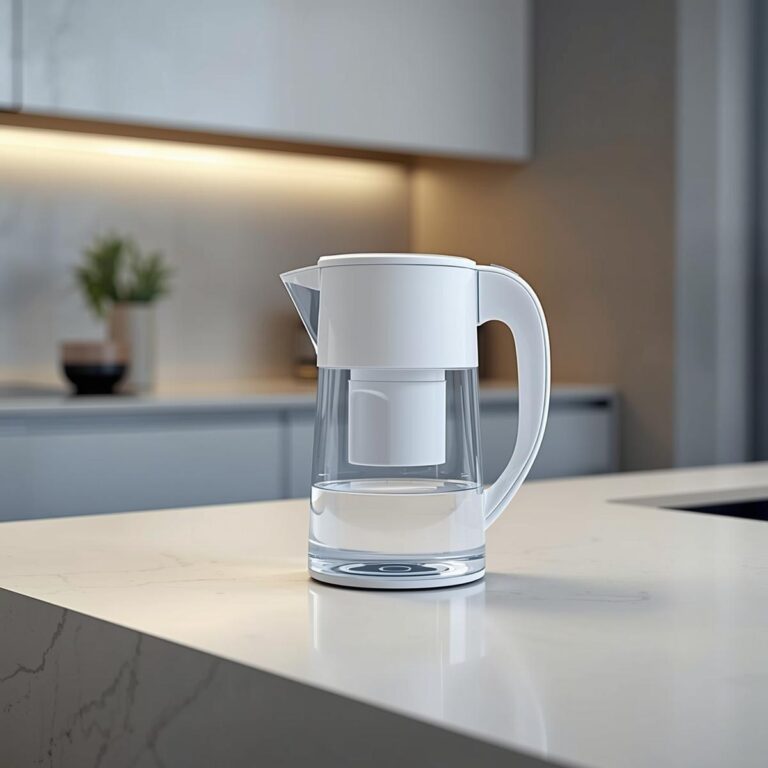
If you want something more affordable and lower maintenance, the Clearly Filtered Water Pitcher is a good alternative. It’s not as powerful as reverse osmosis, but it’s a practical step up from standard pitchers.
2. Stop Storing Food in Plastic
Plastic containers are one of the most overlooked sources of microplastics, especially when used daily.
The problem gets worse when:
- Food is hot
- Containers are microwaved
- Surfaces are scratched or worn
Switching to glass is one of the simplest upgrades you can make.
A solid everyday option is Ello Duraglass Food Storage Containers
They’re affordable, widely available, and eliminate direct plastic contact with your food.
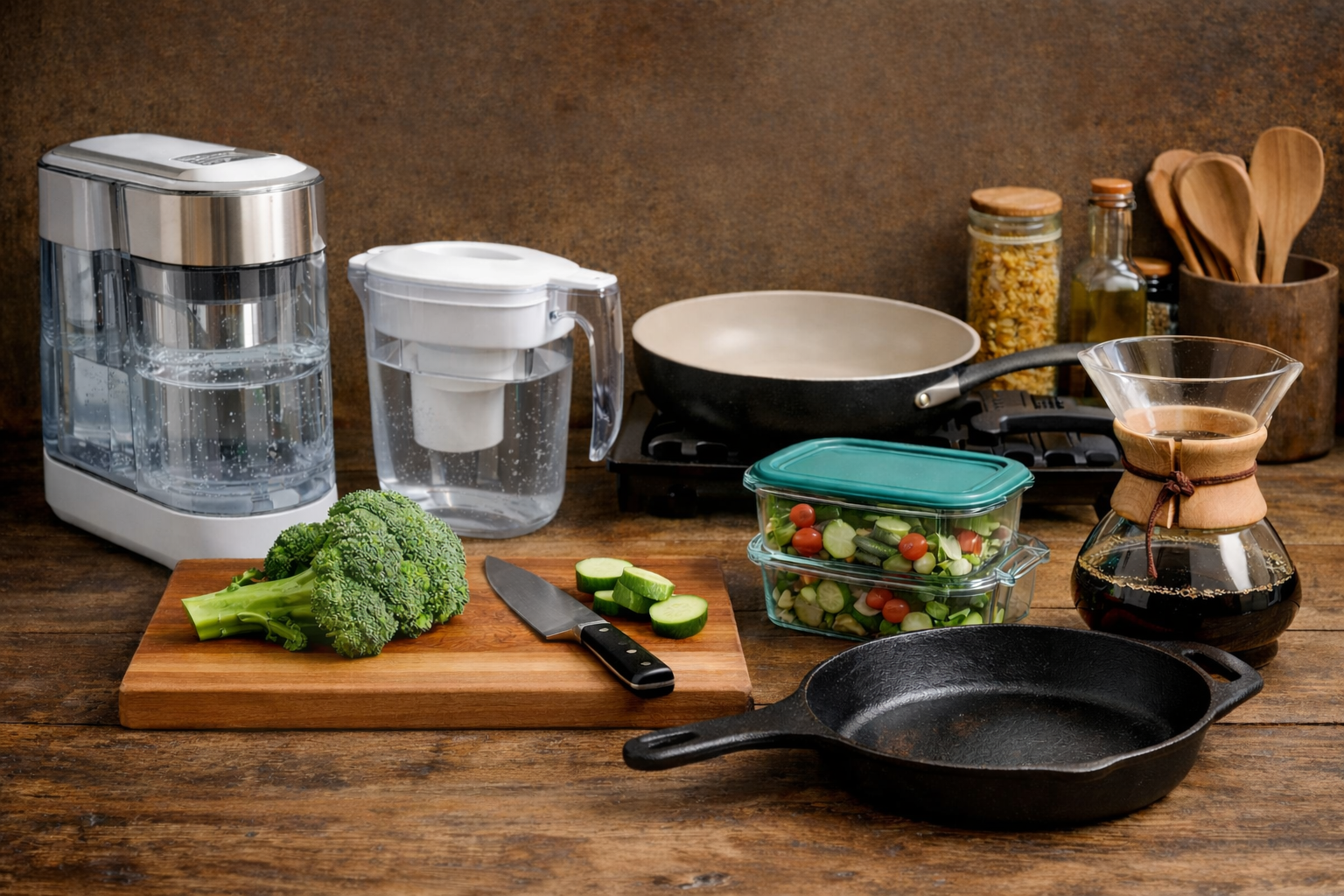
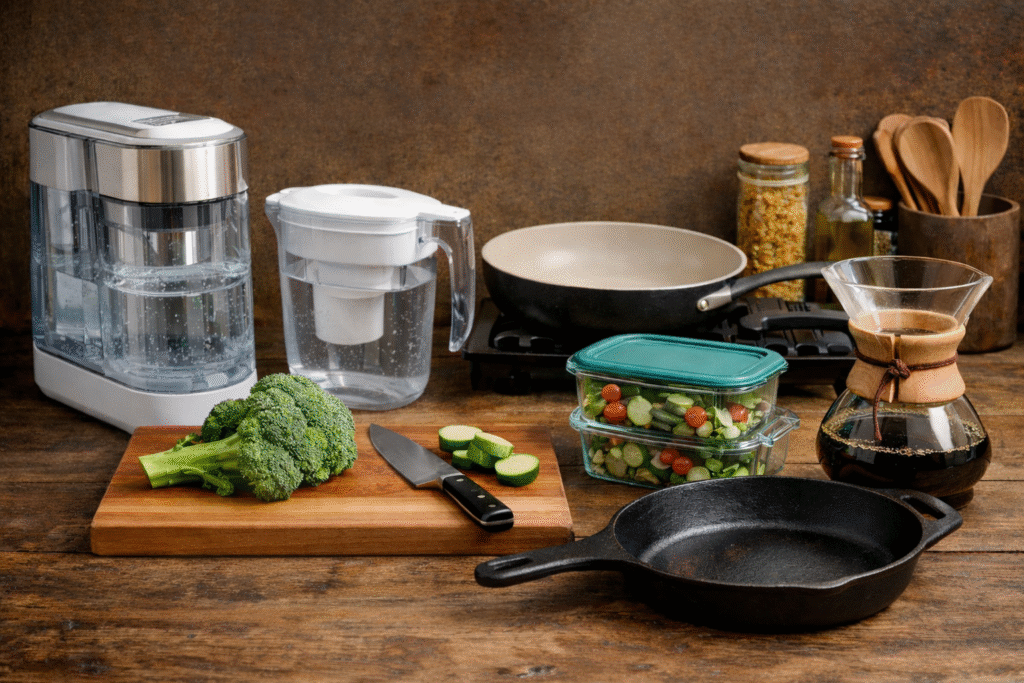
If you’re looking to upgrade everything at once, we put together a full kitchen guide covering the most common sources of microplastics and the best swaps to make.
3. Rethink Your Cookware
Cooking is another major point of exposure—especially with traditional nonstick pans.
Over time, coatings can break down, especially with:
- High heat
- Metal utensils
- Repeated use
There are two strong alternatives:
For convenience and a modern feel: Caraway Nonstick Ceramic Cookware Set is our top pick. Ceramic coatings avoid many of the concerns associated with traditional nonstick surfaces.
For durability and simplicity: Lodge Cast Iron Skillet is a great option as well and something you can hand down to your children. Cast iron has been used for generations, contains no synthetic coatings, and actually improves with use.
Using either option reduces your reliance on plastic-based coatings in everyday cooking.
4. Replace Plastic Cutting Boards
Every time you chop vegetables or slice meat on a plastic cutting board, you’re not just cutting food, you’re slowly shaving off tiny plastic fragments.
Over time, those knife marks you see on the surface aren’t just cosmetic. They’re signs that the board is breaking down. And some of those particles can end up directly in your food.
This is one of the most direct and overlooked sources of microplastics in the kitchen.
The fix is simple: switch to wood.
A high quality option like the John Boos R-Board Series Rectangular Wooden Cutting Board is built to last for years without degrading the way plastic does. It’s thick, durable, and designed for daily use, so you’re not constantly replacing it or worrying about what’s wearing off into your meals.
To keep it in top condition, it helps to oil and maintain the surface regularly. A simple kit like the John Boos Mystery Oil and Board Cream Care Set makes it easy to protect the wood, prevent drying or cracking, and extend the life of the board over time.
Once you switch, it’s one of those upgrades you never think about again—but it quietly removes a major source of exposure.
5. Be Careful With Hot Liquids
Heat changes everything.
When plastic is exposed to high temperatures, like in coffee makers, lids, or single-use pods, it can break down faster and release more microplastics into what you’re drinking.
That means your daily cup of coffee or tea could be one of the most consistent sources of exposure.
The easiest way to reduce that risk is to remove plastic from the equation entirely—especially when heat is involved.
The Chemex Pour-Over Glass Coffeemaker is a simple switch that uses glass and paper filters instead of plastic components. It’s not just about better coffee, it’s about avoiding repeated exposure from something you use every single day.
This is a small habit change that adds up quickly over time.
What Science Says (In Plain English)
Scientists are still working to fully understand how microplastics affect the human body, but a few things are already clear.
Microplastics have been found:
- In drinking water
- In food
- In the air we breathe
And because they’re so small, some particles may be able to enter the body more easily than larger materials.
Research from organizations like the National Institutes of Health suggests that microplastics can carry other chemicals and may contribute to inflammation or cellular stress. At the same time, experts are careful to point out that long-term effects are still being studied.
Here’s the honest takeaway:
- We know exposure is happening
- We don’t fully know the long-term impact yet
- Reducing exposure is a practical, low-risk step
That’s why most recommendations focus on simple, everyday changes especially in areas like food, water, and heat exposure.
Best Products That Help Reduce Microplastics
If you want to simplify everything we covered, these are the upgrades that make the biggest impact:
- Best overall water filter: Bluevua RO100ROPOT-UV Reverse Osmosis System
- Best budget filter: Clearly Filtered Water Pitcher
- Best food storage swap: Ello Duraglass Food Storage Containers
- Best cookware (modern): Caraway Nonstick Ceramic Cookware Set
- Best cookware (traditional): Lodge Cast Iron Skillet
- Best cutting board: John Boos R-Board Series Rectangular Wooden Cherry Cutting Board
- Best coffee setup: Chemex Pour-Over Glass Coffeemaker
You don’t need to do everything at once. Even starting with one or two of these can noticeably reduce your daily exposure.
Frequently Asked Questions
1. Can you completely avoid microplastics?
No. Microplastics are now part of the environment. The goal isn’t perfection—it’s reducing exposure where you can.
2. Are microplastics harmful?
Researchers are still studying this. Early findings suggest potential risks, but there’s no definitive long-term conclusion yet. Most experts agree it makes sense to limit exposure when it’s easy to do so.
3. What’s the biggest source of microplastics at home?
The biggest contributors tend to be:
- Drinking water
- Plastic food storage
- Cooking surfaces exposed to heat
4. What’s the easiest change to start with?
Improving your water filtration is usually the most impactful first step, since it’s something you consume every day.
The Bottom Line
You don’t need to eliminate plastic completely to make a difference.
Focus on the areas that matter most:
- What you drink
- What touches your food
- What gets heated
Then make simple upgrades over time.
Switching to glass containers.
Using better cookware.
Filtering your water.
These are small changes—but they compound quickly because they’re part of your daily routine.
And once they’re in place, you don’t have to think about them again.
Microplastics in the Kitchen: What You’re Really Cooking With


3 Comments
Comments are closed.