
The Best Non-Toxic Sippy Cups for Toddlers: No Plastic, No Microplastics (2026 Guide)
This article contains affiliate links. If you purchase through our links, we may earn a small commission at no extra cost to you. Full disclosure here.
Most parents assume that once they’ve moved away from plastic baby bottles, they’re in the clear. But the sippy cup stage introduces a whole new set of plastic-contact questions and the options at most baby stores don’t make it easy to figure out what’s actually safe.
Here’s what we found: the majority of sippy cups on the market, even the ones labeled “BPA-free”, still contain polypropylene valves, polycarbonate lids, or other plastic components that come into direct contact with your child’s drink. The good news is that genuinely plastic-free options exist, they work well, and several of them are available on Amazon right now.
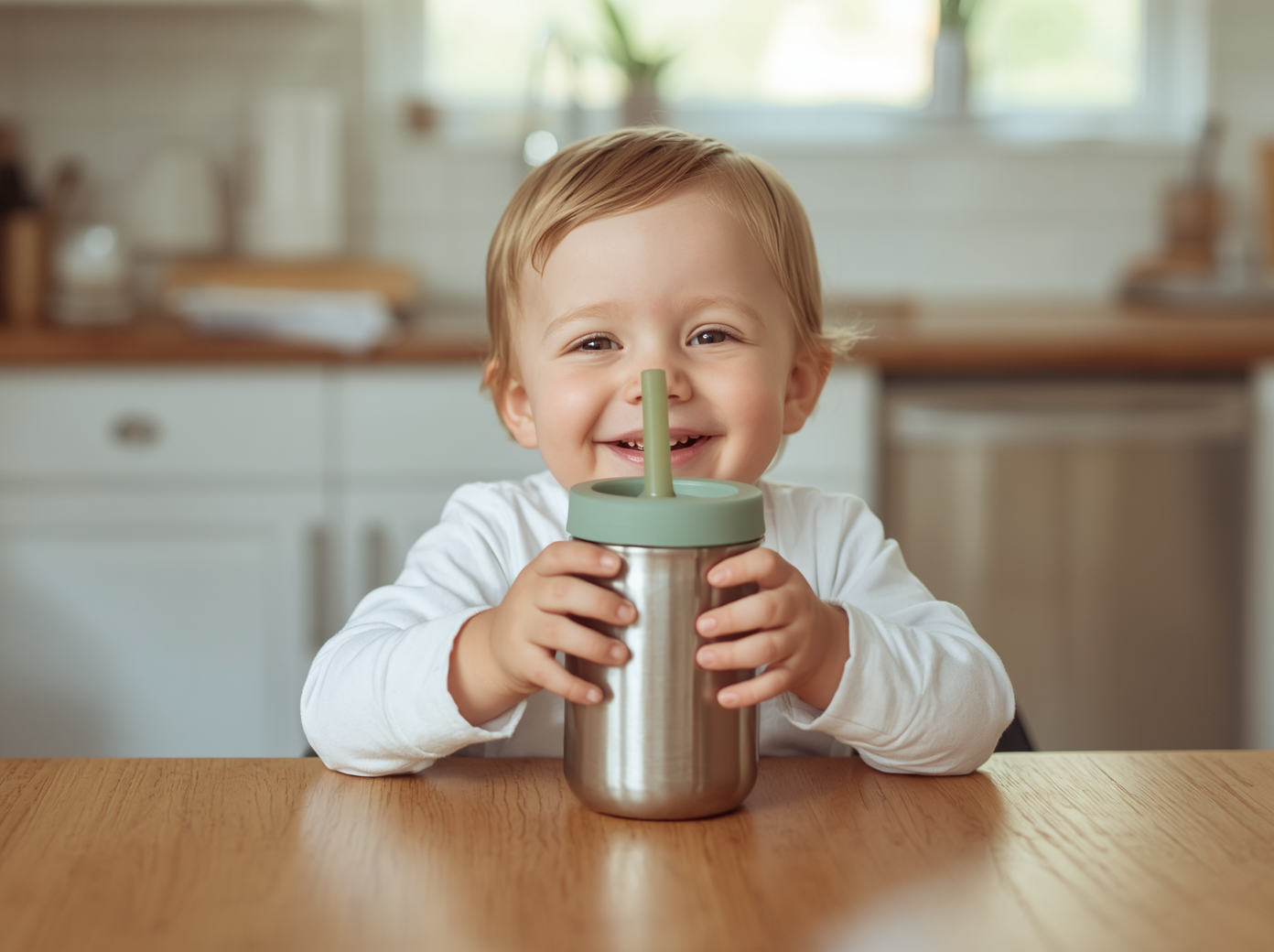
If you want to start here: the Pura Kiki 11oz Stainless Steel Sippy Cup is our top pick. It’s the only sippy cup line on the market that’s MadeSafe certified and 100% plastic-free, stainless steel body, medical-grade silicone spout, zero plastic parts anywhere. Check the current price on Amazon.
The Short Version: Best Plastic-Free Stainless Steel Sippy Cups in 2026
If you need the answer fast, here it is. These are the cups we recommend, and why:
- Best overall: Pura Kiki 11oz — 100% plastic-free, MadeSafe certified, grows with your child
- Best for younger toddlers: Pura Kiki 9oz Insulated — same materials, smaller size, keeps drinks cold
- Best brand-name pick: Klean Kanteen Kid Cup 10oz — recycled steel body, silicone lid, widely trusted brand
- Best transition cup: Hamarue 3-in-1 Stainless Steel — converts from nipple to sippy to straw, third-party tested
- Best for consistency with your existing set: Elk and Friends 10oz Stainless Steel Cups — pairs with the Elk and Friends plates and bowls
- Best 360 cup (with honest caveat): Munchkin Miracle 360 Stainless — stainless body, but valve contains polypropylene
- Best glass option (with honest caveat): Lifefactory Glass + Sippy Cap — borosilicate glass body, but cap contains polypropylene
- Best for ages 3+: YETI Rambler Jr. 12oz — 18/8 stainless, built to last, lid material not fully disclosed
Why Sippy Cups and Microplastics Are Worth Paying Attention To
A 2024 peer-reviewed study published in PubMed/PMC confirmed that plastic beverage cups, including those used for children, release microplastic particles into liquids, with higher temperatures accelerating the process. For toddlers who are handed a cup of warm milk or a heated drink, that matters.
Children are also a specific area of concern in the research. A 2025 review in the journal Clinical and Experimental Pediatrics, available through the National Institutes of Health, found that infants and toddlers are exposed to microplastics through plastic feeding products and that their smaller body weight means a proportionally higher dose relative to adults. That research doesn’t tell us yet exactly what the long-term health effects are and we want to be honest about that. But reducing unnecessary exposure where you have control over it is a reasonable step, and the sippy cup stage is one where you have a lot of control.
We’ve covered the broader science in our Ultimate Beginner’s Guide to Microplastics if you want more context on how this research is evolving.
What ‘Plastic-Free’ Actually Means for a Sippy Cup
This is where it gets tricky. A cup can have a stainless steel body and still have plastic touching your child’s drink, in the valve, the lid collar, the straw, or the spout. We evaluated every cup on this list by looking at what materials come into contact with the liquid, not just what the body is made from.
Here’s what we looked for:
- Stainless steel body: Food-grade 18/8 (304) or 316 stainless steel. Inert, doesn’t leach, lasts for years.
- Medical-grade or platinum-cured silicone spouts and straws: The gold standard for anything that touches your child’s mouth. Not all silicone is equal — look for medical-grade or platinum-cured specifically.
- No polypropylene valves: This is where most ‘stainless’ cups fall down. Polypropylene (PP) is BPA-free but it is still plastic, and it still sheds particles over time, especially with heat and wear.
- Third-party testing: Certifications like MadeSafe tell you an independent body has verified the materials claim, not just the manufacturer.
We’ve noted clearly where any cup on this list doesn’t fully clear all four bars, because that’s the information you need to make the right call for your family.
Our Recommendations: The Best Non-Toxic Sippy Cups for Toddlers
1. Pura Kiki 11oz Stainless Steel Sippy Cup — Our Top Pick
Best for: Toddlers 6 months and up whose parents want to be completely certain there is no plastic anywhere in the cup.
The Pura Kiki is the standard everything else gets measured against. The body and collar are 18/8 stainless steel. The XL Sipper Spout, sleeve, and travel cover are all 100% medical-grade silicone. There is no plastic anywhere — not in the lid, not in the valve, not in the straw. Pura is the only brand in this category with a MadeSafe certification, meaning an independent third party has verified those material claims.
What makes this cup genuinely practical beyond the safety credentials is the modular system. The same bottle works with Pura’s nipple, sippy spout, straw, and sport cap — so it can serve your child from infancy through preschool without buying a new cup at every stage. The 11oz size is ideal for toddlers who are past the early bottle stage and drinking more throughout the day.
- Pros: Completely plastic-free, MadeSafe certified, modular system grows with child, lightweight for a stainless cup, leak-proof
- Honest con: It’s on the pricier end. And the silicone sleeve fits tightly, which can make it harder to remove for deep cleaning.
2. Pura Kiki 9oz Insulated Stainless Steel Sippy Bottle — Best for Younger Toddlers
Best for: Babies transitioning off the bottle at 6–12 months, or smaller toddlers who need a more manageable size.
Same DNA as the 11oz, 18/8 stainless steel body, 100% medical-grade silicone spout, MadeSafe certified, zero plastic but the 9oz size is a better fit for younger or smaller kids. The vacuum insulation keeps milk or water cold, which is useful for parents who pack the cup in a bag and don’t always know when it’ll get used.
It also converts across the full Pura system just like the 11oz, so you’re not buying a dead-end product, it can grow with your child.
- Pros: Same plastic-free, MadeSafe credentials as the 11oz, insulated, right size for 6–18 month range, fully modular
- Honest con: Same sleeve-removal challenge as the 11oz. The 9oz fills up faster, so older or thirstier toddlers may need refills more often.
3. Klean Kanteen Kid Cup 10oz — Best Brand-Name Pick
Best for: Parents who want a well-known, widely available brand with clean materials and a track record of transparency.
Klean Kanteen has been in the stainless drinkware space for a long time, and their Kid Cup earns its place on this list. The cup body and straw are both made from certified 90% post-consumer recycled steel — a materials story that goes beyond just ‘stainless.’ The Straw Lid is food-grade silicone, and the included reusable straw has a soft silicone flex tip. The optional Sippy Lid (sold separately) is also silicone.
It’s not fully leakproof when tipped completely upside down, which is worth knowing before you put it in a diaper bag next to a white onesie. But for a cup with genuinely clean materials at a reasonable price, it’s a strong pick — especially for parents who already trust the Klean Kanteen brand.
- Pros: Recycled steel body, silicone lid, trusted brand, good price point, fits most cup holders
- Honest con: Splash-proof but not fully leakproof when inverted. Sippy Lid sold separately if you want that configuration.
4. Hamarue 3-in-1 Stainless Steel Sippy Cup — Best Transition Option
Best for: Families who want one cup that works from the bottle stage all the way through toddlerhood without buying multiple products.
The Hamarue is built specifically for the transition problem, it ships with a nipple, a sippy spout, and a straw, all made from food-grade silicone, so you’re not replacing the cup as your child’s drinking skills develop. The body is 18/8 stainless steel, and the brand has done third-party testing to confirm it’s free from BPA and its substitutes, PET, phthalates, cadmium, and lead.
It’s also the most wallet-friendly option on this list that still has a genuinely clean materials profile. Good for families who want to reduce plastic exposure but aren’t ready to spend $30+ per cup.
- Pros: Three configurations in one cup, third-party tested, 18/8 stainless body, food-grade silicone mouthpieces, great price
- Honest con: Smaller brand with less long-term track record than Pura or Klean Kanteen. Not vacuum insulated, so drinks won’t stay cold as long.
5. Elk and Friends 10oz Stainless Steel Kids Cups — Best for Consistency With Your Existing Set
Best for: Parents who already have the Elk and Friends plates and bowls and want their drinkware to match — materially and visually.
We’ve already recommended Elk and Friends in our guide to non-toxic kids plates and bowls, and the cups hold up to the same standard. Stainless steel body, silicone sleeve for grip, clean and straightforward. For families who have already built out their mealtime set with Elk and Friends products, adding the cups keeps everything consistent — both in materials and in what you’re telling your kids about what they eat and drink from.
- Pros: Consistent with Elk and Friends mealtime set, stainless steel, silicone sleeve, well-priced, well-reviewed
- Honest con: Not a dedicated sippy cup , works best for toddlers who are already confident drinkers. Not insulated.
Worth Knowing About: Good Cups With One Honest Limitation
These three cups are popular, well-made, and worth considering but we want to be transparent about where they don’t fully clear the plastic-free bar.
Munchkin Miracle 360 Stainless Steel (10oz)
The stainless steel body is real, and the 360° spoutless design is genuinely good for dental development, dentists recommend it because drinking from the rim mimics a regular cup. It’s also one of the most recognizable sippy cups on the market, and parents trust it.
The honest limitation: Munchkin has confirmed the cup contains Olefin Block Copolymer and Polypropylene in its valve system. These are the components that control the liquid flow, meaning plastic does contact the drink. It’s BPA-free, but it is still plastic. If your priority is eliminating all plastic contact, this isn’t the cup. If you’re looking for a well-made stainless cup where the body is safe and the plastic contact is minimal, it’s a reasonable choice.
Lifefactory Glass Baby Bottle + Sippy Cap
For parents who prefer glass over stainless steel, Lifefactory is the right brand. The bottle body is borosilicate glass, thermally stable, completely inert, and arguably the purest drinking surface available. The silicone sleeve protects it from drops better than you’d expect.
The caveat: the sippy cap itself is polypropylene. So while the glass body is completely clean, there is plastic in the lid. Lifefactory notes it’s BPA-free and phthalate-free, and the liquid contact with the cap is limited but it’s there. We’d recommend this for at-home use where it won’t be rattling around in a bag, and for parents who specifically want glass over stainless.
YETI Rambler Jr. 12oz Kids Bottle — Best for Ages 3 and Up
YETI makes a genuinely tough, well-built kids bottle. The 18/8 stainless steel body is real, the double-wall vacuum insulation is excellent, and it’s built to survive the kind of punishment a three-year-old puts things through. It’s also on Amazon with strong reviews and comes in a lot of colors, which kids care about.
Two things to know: YETI’s Rambler Jr. is designed for ages 3 and up — it’s not a true sippy cup for younger toddlers. And YETI doesn’t fully disclose the materials in their straw cap system beyond confirming it’s BPA-free. That’s not unusual in the industry, but it means we can’t confirm it’s plastic-free at the lid. For an older child’s everyday water bottle, it’s a strong pick. For a parent looking for zero-plastic certainty, the Pura Kiki is still the answer.
Quick Comparison: How They Stack Up
Cup | Body Material | Plastic-Free? | Age Range | Best For |
Pura Kiki 11oz | 18/8 Stainless | Yes ✓ MadeSafe | 6 months+ | Zero-plastic priority, best overall |
Pura Kiki 9oz | 18/8 Stainless | Yes ✓ MadeSafe | 6–18 months | Younger/smaller toddlers |
Klean Kanteen 10oz | Recycled Steel | Yes ✓ | 12 months+ | Brand recognition, eco materials |
Hamarue 3-in-1 | 18/8 Stainless | Yes ✓ 3rd party | 3 months+ | Budget-friendly, all-stages transition |
Elk and Friends 10oz | Stainless Steel | Yes ✓ | 18 months+ | Pairs with Elk and Friends mealtime set |
Munchkin 360 Stainless | Stainless Body | Partial ⚠ PP valve | 12 months+ | Dental health, recognizable brand |
Lifefactory Glass | Borosilicate Glass | Partial ⚠ PP cap | 9 months+ | Glass preference, at-home use |
YETI Rambler Jr. 12oz | 18/8 Stainless | Partial ⚠ lid undisclosed | 3 years+ | Older kids, durability priority |
What About Sippy Cup Alternatives? Straw Cups and 360 Cups Explained
We’d be leaving something out if we didn’t mention this: many pediatric dentists and feeding specialists actually recommend skipping traditional sippy cups altogether and moving straight to straw cups or open cups. It’s worth knowing why and what it means for avoiding microplastics at the same time.
Straw Cups
Straw cups support a more natural swallowing pattern than spout-style sippy cups, which is why speech-language pathologists often recommend them over traditional sippies. From a microplastics standpoint, the same material rules apply: look for a stainless steel body with a silicone straw rather than a plastic one. The Klean Kanteen Kid Cup and the Hamarue 3-in-1 (both on our list above) both work in straw configuration with silicone straws, so they cover this use case already.
For parents who want to move directly to straw cups, the Pura Kiki system also supports a straw cap, same plastic-free credentials, same MadeSafe certification, just a different lid configuration.
360 Cups
The 360° or spoutless cup, where the child drinks from the rim of the lid, is increasingly recommended because it more closely mimics drinking from a regular cup. The Munchkin Miracle 360 Stainless is the version on our list. As we noted there, the steel body is genuine but the valve system contains polypropylene. If a fully plastic-free 360 option is a priority, it’s worth knowing that a fully clean version doesn’t yet exist at scale, most 360 cup designs require a polypropylene valve to achieve the spill-proof seal. The honest answer is that the Munchkin is the best available option in this category right now, with the caveat disclosed.
Open Cups
For toddlers 12 months and up, starting with a small open cup, with supervision, is actually the gold standard recommendation from the American Academy of Pediatrics. No spout, no valve, no straw, no plastic concerns at all. The Elk and Friends stainless steel cups on our list work perfectly as open cups for older toddlers who are ready for that step.
We cover the broader picture of reducing your child’s plastic exposure across every part of their day in our guide to How to Reduce Your Child’s Microplastic Exposure, worth a read once you’ve sorted the cups.
FAQ
Are all stainless steel sippy cups plastic-free?
No and this is the most important thing to understand before you buy. A stainless steel body doesn’t mean a plastic-free cup. Most stainless sippy cups still have polypropylene valves, lids, or straws that come into direct contact with the drink. Always check what the spout, valve, and lid are made from, not just the body.
What’s the safest material for a toddler sippy cup?
The safest combination is an 18/8 stainless steel body with a medical-grade or platinum-cured silicone spout and valve, no plastic anywhere in the liquid pathway. Borosilicate glass is an excellent alternative for at-home use, though most glass sippy cups still have plastic in the cap assembly.
Are BPA-free sippy cups safe from microplastics?
BPA-free means the cup doesn’t contain bisphenol-A specifically, but it doesn’t mean it’s plastic-free. BPA was often replaced with BPS or other bisphenol compounds that raise similar concerns. A BPA-free polypropylene valve is still a plastic valve. For genuine plastic reduction, look for silicone and stainless steel components throughout.
When should toddlers stop using sippy cups?
Most pediatric dentists recommend transitioning away from sippy cups by around age 2–3, and toward open cups or straw cups. Extended sippy cup use can affect tooth and jaw development. A 360° cup like the Munchkin Miracle is a useful middle step, and straw cups like the Klean Kanteen Kid Cup support the transition well.
Can I put a sippy cup in the dishwasher?
Most stainless steel sippy cups are dishwasher safe on the top rack. Silicone components are generally safe in the dishwasher too. Glass cups should be hand-washed to extend their life. Always check the manufacturer’s guidance for the specific cup and pull apart all components before washing to ensure a thorough clean.
The Bottom Line
The sippy cup stage doesn’t have to be another plastic exposure point. With a few well-chosen swaps, your toddler can drink from materials that are genuinely clean and the cups on this list will last long enough to be worth the investment.
The Pura Kiki 11oz is where we’d start for most families, it’s the only fully plastic-free, MadeSafe certified option on the market, and the modular system means you’re buying a cup that grows with your child rather than one that gets replaced every six months. If your budget is tighter, the Hamarue 3-in-1 gives you clean materials at a lower price point.
Small swap, real difference. Your toddler’s going to go through a lot of cups, make sure the one in their hands right now is a good one.
Sippy cups are just one piece of the puzzle. See our full guide to reducing your child’s microplastic exposure for nine more simple swaps.
One Comment