3 Countertop Reverse Osmosis Systems That Need Zero Installation
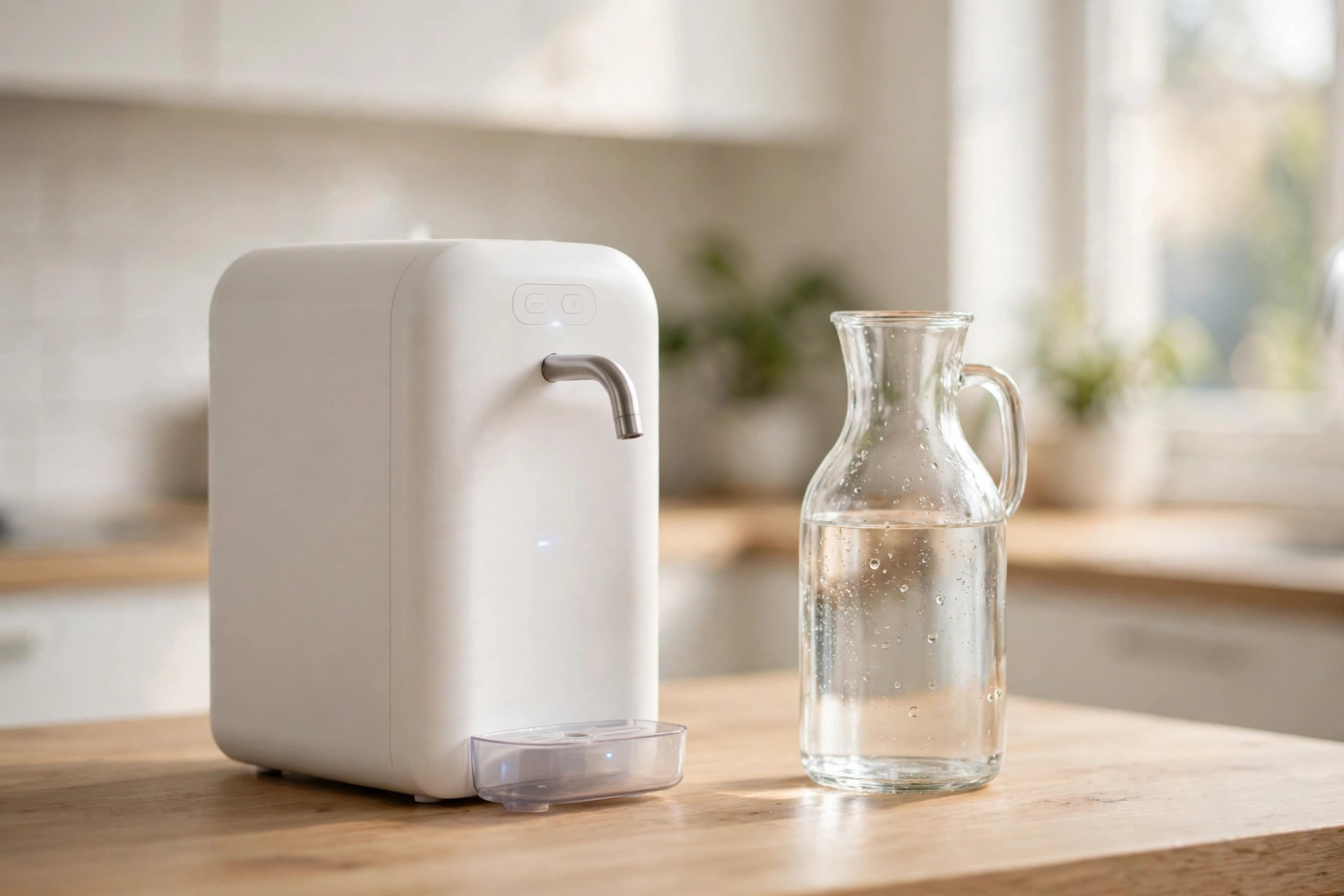
Here is the problem with reverse osmosis: it is the best home filtration you can buy for microplastics, and it usually comes with a drill, a plumber, and a conversation with your landlord. Most RO systems live under your sink, permanently plumbed in. If you rent, that is a non-starter.
Countertop RO systems fix that. You fill a tank with tap water, plug the unit into a regular outlet, and it does the rest. No drilling, no plumbing, no permission slips. When you move, it moves with you. I compared three of them in depth: what they filter, what they are certified to do, how much water they waste, what the filters cost you in hassle, and the honest downsides nobody puts in the headline.
One boundary before we start: this is only about countertop, no-installation systems. If you own your home and want a permanent under-sink setup, read my Waterdrop G3P600 review instead. That is a different project for a different living situation.
Affiliate disclosure: this post contains affiliate links. If you buy through them, I may earn a commission at no extra cost to you, which keeps this site running and never changes what I recommend.
The quick version: all three of these sit on your counter, plug into a normal outlet, and strip microplastics out of tap water with RO membranes. The Bluevua RO100ROPOT-UV is our #1 pick and the subject of our full deep-dive review: 6-stage filtration plus UV sterilization, a glass carafe, and remineralization built in. The Waterdrop M6SL is the only one that is both NSF/ANSI 58 certified and remineralized, with the biggest capacity for families. The SimPure Y7P-BW has the strongest review record of the three and wastes the least water at 4:1. If you only buy one, get the Bluevua: it is the system we would buy again. Honest trade-offs for every pick below.
Why Countertop RO Is the Best Option for Microplastics
A quick bit of science, because the numbers here are genuinely impressive. Microplastics are defined as plastic particles under 5 millimeters, and the concerning ones in drinking water are far smaller than that. A reverse osmosis membrane has pores around 0.0001 microns. That is small enough to block particles hundreds of times smaller than the finest microplastics, and a 2019 study found RO removed 99.9% of microplastics and nanoplastics from tap water (Bevi, 2025). No pitcher filter or basic carbon filter gets close to that.
Now the honest part, because that is how we do things here. RO membranes are themselves made from a thin layer of polyamide plastic, and research has shown that aging or degraded membranes can shed tiny fragments of their own. That does not cancel out the 99.9% removal, but it is why filter changes on schedule actually matter, and why certifications matter more than marketing copy. A system that is NSF/ANSI 58 certified has been independently tested to perform as claimed. “Tested to NSF standards” without the certification is not the same thing.
Two more things worth knowing before the picks. First, RO strips nearly everything from water, including the minerals that make water taste good. That flat, empty taste people complain about with RO water is real, which is why two of the three picks below add minerals back in. Second, RO makes wastewater: for every glass of purified water, some tap water goes down the drain carrying the rejected contaminants. The ratio varies a lot by system, and I list it for each pick because it is a real cost of ownership.
The 3 Systems at a Glance
| System | Certifications | Pure to drain | Filter schedule | Standout | Watch out |
|---|---|---|---|---|---|
| Bluevua RO100ROPOT-UV | No NSF/WQA claim found | Not published | Multi-filter; RO membrane every 24 mo | Our deep-dive #1 pick, UV + glass | Manual tank dumping |
| Waterdrop M6SL | NSF/ANSI 58 and 372 | 3:1 | One filter, once a year | Certified plus remineralized | Brand new, biggest footprint |
| SimPure Y7P-BW | NSF/ANSI 58 | 4:1 | Every 6 months | UV stage, best efficiency | Room temp only, plastic tank |
The 3 Countertop RO Systems, Compared in Depth
Why only three? Because a list of twelve systems with two sentences each helps nobody. Each of these got the full treatment: what it filters, what it is actually certified to do, what it costs you in filters and wastewater, and what I would warn a friend about before they bought it.
Bluevua RO100ROPOT-UV: our #1 pick, reviewed in depth
The Bluevua RO100ROPOT-UV is not just the lead pick in this article. It is the subject of our full deep-dive review, where we named it our #1 top pick for 2026. Keeping the same top Bluevua in both articles is deliberate: this is the system we would buy again.
What you get: 6-stage reverse osmosis plus a UV sterilization stage that kills 99.9% of bacteria and viruses. The purified water collects in a borosilicate glass carafe, so it never sits in plastic after filtration, which is exactly what you want to hear on a site about microplastics. A built-in remineralization stage adds calcium and magnesium back in, fixing the flat taste plain RO water is known for. And a smart display shows your TDS in real time and tells you when a filter is actually due, so you are not guessing.
Honest trade-offs. Because it is not plumbed to a drain, you manually dump the wastewater tank after each cycle: about 30 seconds of work, and the real price of the no-installation life. It also has the most filters to track of the three picks: three cartridges on a 12-month cycle, the RO membrane every 24 months, and the remineralization stage every 6 to 12 months. Filter changes themselves are a 3-second twist with no tools, but there are more of them to remember than the single-filter systems below. One more honest note: unlike the other two picks, Bluevua makes no NSF or WQA certification claims we could verify, so you are buying on the strength of our hands-on review rather than a third-party stamp.
Waterdrop M6SL: certified and remineralized
The Waterdrop M6SL is the credential pick. It is an 8-stage system that is NSF/ANSI 58 certified, which is the independent performance certification for reverse osmosis, plus NSF/ANSI 372. Of the three systems here, it has the strongest third-party proof that it does what it claims. It also adds minerals back into the water after filtration, so you get the thoroughness of RO without the flat taste.
Capacity is the other big story. The tank system holds far more than the Bluevua’s carafe, and it comes with a detachable 40-ounce glass pitcher that fits in the fridge, so there is chilled filtered water waiting for you. The pure-to-drain ratio is 3:1, and the wastewater goes into a separate tank you can reuse for plants or cleaning instead of sending it straight down the drain. It reduces PFAS, TDS, fluoride, lead, arsenic, and microplastics per Waterdrop’s testing.
Honest trade-offs, and there are several. This is a brand-new product, launched around August 2026, so its review history is thin and you are buying partly on the strength of the certifications rather than years of owner reports. It is also the biggest and heaviest of the three at around 21 pounds, so it needs serious counter space. It is designed for municipal tap water rather than well water or very hard city water, so check your water source first. And the glass pitcher is glass: lovely, but it needs a little care during the flushing cycles. One more note: the M6 family also comes in an instant-hot variant if hot water on demand matters to you.
SimPure Y7P-BW: the review favorite with UV
The SimPure Y7P-BW earned its spot the unglamorous way: it has the strongest owner record of anything in this category, around 4.3 stars across more than 3,000 ratings. When a countertop appliance has that many people reporting back, the picture you get is far more reliable than a spec sheet. It is a 5-stage RO system plus a UV sterilization stage, NSF/ANSI 58 certified, with the best water efficiency of the three at a 4:1 pure-to-drain ratio.
The UV stage deserves a plain-English explanation. It does nothing for microplastics: the RO membrane already handles particles. What UV does is sterilize microorganisms, which makes this the pick if your tap water situation makes you think about more than particles and chemicals. It also has the fastest flow of the three and a smart TDS display with auto-dispense volumes, and its slim width fits narrow rental counters well.
Honest trade-offs. This is room-temperature water only: no hot, no cold, no fridge pitcher. The filter cycle is every 6 months rather than annually, so you will be ordering and swapping filters twice as often as the other two picks, even though the yearly cost lands in a similar range. And the honest con for this site: the purified water sits in a BPA-free plastic tank, not glass. BPA-free is not the same as plastic-free, and if the whole point is keeping water away from plastic, the Bluevua and the Waterdrop win that round with their glass vessels.
Which One Should You Get?
Short version for skimmers who jumped here first:
- Want our #1 pick, the one we reviewed in depth: the Bluevua RO100ROPOT-UV. Six stages plus UV sterilization, glass carafe, remineralization, and a smart display that tells you when filters are due.
- Family, or you care most about certifications and taste: the Waterdrop M6SL. NSF/ANSI 58 certified, remineralized, biggest capacity, fridge pitcher included.
- You trust the crowd and hate wasting water: the SimPure Y7P-BW. Thousands of owner reviews, UV sterilization, best pure-to-drain ratio.
Every one of these is renter-friendly in the way that matters: fill the tank, plug it in, done. No drilling, no plumber, no landlord permission, and all three are portable enough to move with you.
Read Our Full Bluevua RO100ROPOT-UV Deep Dive
If you want every detail on our #1 pick: the full filter schedule, the noise level, how the TDS display works, and the long-term ownership picture, read the Bluevua RO100ROPOT: Does It Actually Remove Microplastics? deep-dive review. That is where we named it our top pick for 2026, and everything in this comparison is consistent with it.
Frequently Asked Questions
Does reverse osmosis actually remove microplastics?
Yes, and it is one of the most effective home methods available. RO membranes have pores around 0.0001 microns, far smaller than microplastic particles, and a 2019 study measured 99.9% removal of microplastics and nanoplastics from tap water. The honest caveat: RO membranes are made from a thin polyamide plastic layer, and aging membranes can shed fragments of their own, which is why changing filters on schedule matters.
Does RO remove the good minerals too?
It does. RO is non-selective: it strips dissolved minerals along with the contaminants, which is what causes the flat taste people complain about. That is why the Bluevua RO100ROPOT-UV and the Waterdrop M6SL both add minerals back after filtration. If you go with the SimPure, which does not remineralize, and the taste bothers you, a pinch of mineral drops in your glass solves it.
Do I need a plumber or my landlord’s permission?
No, and that is the entire point of this article. Every system here is a countertop unit: you fill its tank with tap water and plug it into a normal outlet. Nothing gets drilled, nothing gets plumbed, nothing stays behind when you move. If your lease forbids modifications, these are still fine.
How much water gets wasted?
RO always produces some wastewater carrying the rejected contaminants. The SimPure is the most efficient here at 4:1 pure to drain, and the Waterdrop runs 3:1. Bluevua does not publish a ratio for the RO100ROPOT-UV; you dump its wastewater tank manually after each cycle. The Waterdrop softens the blow with a separate wastewater tank you can reuse for plants or cleaning. None of these approach the wastefulness of old under-sink systems.
How often do I really have to change the filters?
The Waterdrop is the lowest-maintenance here: a single filter with a 12-month life. The Bluevua has more to track: three cartridges yearly, the RO membrane every 24 months, and the remineralization stage every 6 to 12 months, though its smart display tells you when each is due. The SimPure runs on a 6-month cycle, so you will be swapping twice a year. Set a phone reminder either way, because an overdue filter is how a great system quietly stops being one.
Keep Reading
- Bluevua RO100ROPOT: Does It Actually Remove Microplastics? (our full deep-dive review of our #1 pick)
- Waterdrop G3P600 review (the under-sink option, if you own your place)
- The best water filters for microplastics (the full landscape beyond RO)
- Reverse osmosis filters for PFAS and microplastics (the science explainer)