The Best Non-Toxic Bakeware for 2026: 6 Safe Picks That Skip the Coatings
This post contains affiliate links. If you buy through them, we may earn a small commission at no extra cost to you. We only recommend products we would use in our own kitchens.
If you have already swapped your frying pans, your bakeware is the natural next step. Most of us bake on the same nonstick sheets we have owned for years, and those coatings scratch, flake, and wear down with every batch of cookies. We covered what happens in the rest of the kitchen in our guide to microplastics in the kitchen, and bakeware follows the same simple rule: the fewer coatings between your food and the pan, the better.
The good news is that safe non-toxic bakeware is not expensive or hard to find. Our top pick, the OXO Good Grips 3-Quart Glass Baking Dish, costs about $25, and it is made of borosilicate glass with nothing to peel or shed. Below are six picks that cover every baking job, from sheet pans to casserole dishes, and every budget. It is one of the simple kitchen swaps that pays off every single day.
Quick Answer: The Safest Bakeware Materials
The safest bakeware is made from a single, stable material with no synthetic coating. That means glass, uncoated aluminum, stainless steel, and glazed stoneware. Platinum-grade silicone is a reasonable choice too when used within its temperature limits. The materials to move away from are traditional nonstick (PTFE) coatings, especially once they are scratched or flaking.
Our picks at a glance:
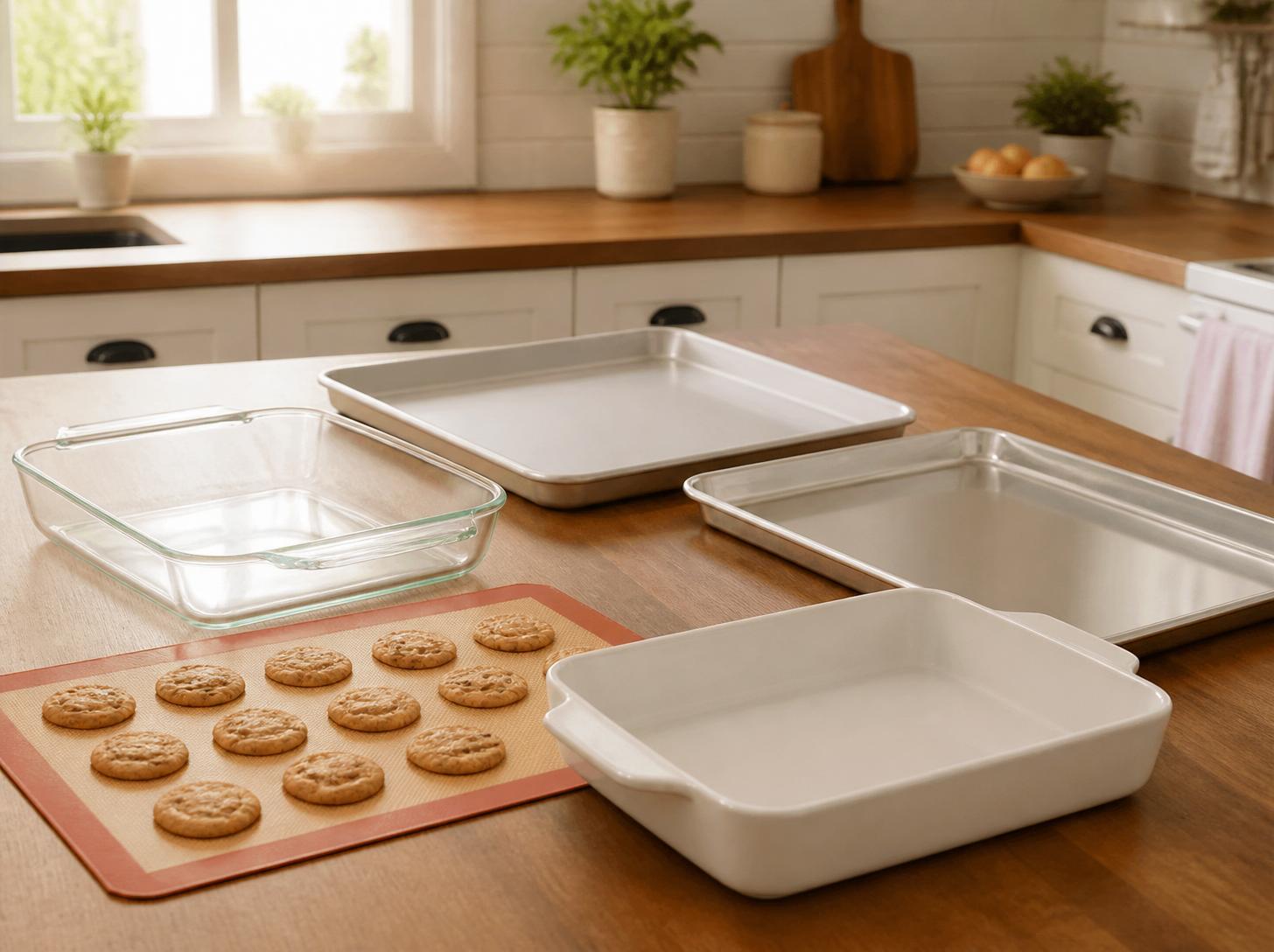
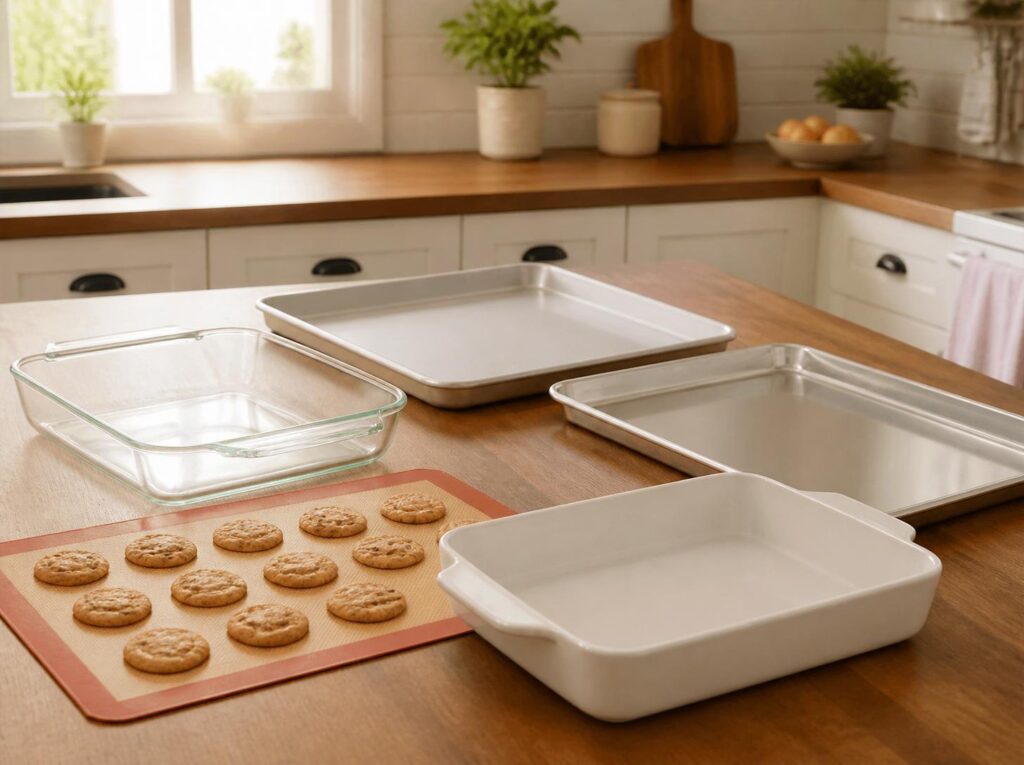
- Best overall: OXO Good Grips 3-Qt Glass Baking Dish (borosilicate glass)
- Best baking sheet: Nordic Ware Naturals Half Sheet (uncoated aluminum)
- Most inert: TeamFar Stainless Steel Sheet Set (pure stainless steel)
- Best nonstick alternative: Caraway Ceramic Baking Sheet (PFAS-free ceramic)
- Best heirloom dish: Staub Rectangular Stoneware Dish (glazed stoneware)
- Best pan liner: Silpat Premium Baking Mat (platinum silicone)
Why Your Bakeware Matters
Traditional nonstick bakeware is coated with PTFE, the same family of plastic used on nonstick frying pans. Research published in Science of the Total Environment found that damaged PTFE coatings can release microplastic and nanoplastic particles, with even small cracks and scratches shedding thousands of particles. Bakeware takes more abuse than most cookware. We scrape it with metal spatulas, cut brownies right in the pan, and run it through hot dishwasher cycles.
Ovens add one more factor: heat. Nonstick coatings are usually rated to around 400 to 500 degrees, and roasting vegetables or broiling regularly pushes pans near those limits. A 2024 review of microplastics in home kitchens points to worn cooking surfaces as one of the more direct food-contact sources. None of this is cause for panic. It is simply a good reason to choose bakeware made from materials that stay stable at oven temperatures, which is exactly what every pick below does.
What to Look For in Non-Toxic Bakeware
- Uncoated, single materials first. Glass, stainless steel, bare aluminum, and glazed stoneware have nothing to flake off. These are the safest long-term choices.
- If you want nonstick, choose PFAS-free ceramic. Ceramic coatings are free of PTFE and PFAS. They do wear out over a few years, but they wear without shedding plastic.
- Check silicone quality. Look for platinum-cured, food-grade silicone rated to at least 450 degrees. Cheap silicone bakeware can be blended with fillers.
- Skip anything scratched or flaking. Whatever you own today, a nonstick pan with visible damage is the first thing to replace.
- Buy pieces that last. Stoneware, stainless, and glass can outlive the coated pans you would replace three or four times in the same span.
Cleaner bakeware and more
From sheet pans and loaf pans to the everyday kitchen items we reach for most, we keep our favorite lower-plastic picks in one place, so you can spend less time reading labels and more time baking.
See Our Non-Toxic Picks →The 6 Best Non-Toxic Bakeware Picks for 2026
OXO Good Grips 3-Qt Glass Baking Dish — Best Overall
Best for: casseroles, lasagna, brownies, and anyone starting their bakeware swap with one piece.
Glass is the easiest yes in bakeware. Nothing to coat, nothing to shed, and you can see your crust browning through the sides. The OXO Good Grips 3-Qt Glass Baking Dish earns the top spot because it is made of borosilicate glass, which handles temperature swings better than the tempered soda-lime glass used in standard Pyrex. Wirecutter named it their budget casserole pick for the same reason, and it baked just as evenly as dishes costing four times more in their testing.
The big handles are easy to grip with oven mitts, and it comes with a lid, so leftovers go straight to the fridge without plastic wrap. If you want to spend even less, the Pyrex Deep 9×13 Baking Dish is a solid budget alternative that The Kitchn named their best budget casserole dish. Just remember that standard Pyrex is tempered glass, so avoid sudden temperature changes like moving it from freezer to hot oven.
The honest downside: glass heats slower than metal and holds heat longer, so baked goods can brown more at the edges. Drop your oven temperature by 25 degrees for delicate bakes.
Nordic Ware Naturals Half Sheet — Best Baking Sheet
Best for: cookies, roasted vegetables, sheet pan dinners, and everyday oven work.
The Nordic Ware Naturals Half Sheet is the most recommended baking sheet in America, and it earns it. It is uncoated aluminum, so there is no nonstick layer to scratch or flake. Wirecutter has named it their top baking sheet pick year after year, and it wins on pure performance too: aluminum conducts heat evenly, so cookies bake uniformly from the center of the pan to the edge. It is made in the USA, resists warping thanks to a reinforced steel rim, and the two-pack usually costs about $22.
The honest downside: bare aluminum can react with acidic foods like tomatoes and citrus, and it is not dishwasher safe. The fix is simple: line it with parchment paper or the Silpat mat below, which is how most bakers use it anyway.
TeamFar Stainless Steel Baking Sheet Set — Most Inert Material
Best for: families who want zero coatings, zero aluminum contact, and dishwasher-safe cleanup.
Stainless steel is the most inert common bakeware material. It does not react with acidic food, it has no coating, and it shrugs off metal utensils. The TeamFar Pure Stainless Steel Baking Sheet Set is the go-to budget pick in the non-toxic kitchen space, with a smooth mirror finish, rolled edges, and a one-inch rim that keeps juices contained. Unlike bare aluminum, these go straight in the dishwasher.
If you later want a buy-it-for-life upgrade, 360 Cookware makes premium American-made stainless bakeware with a lifetime warranty. For most families, though, the TeamFar set covers the same jobs for a fraction of the price.
The honest downside: stainless steel conducts heat less evenly than aluminum, and food sticks to it more readily. A sheet of parchment or a light coat of oil solves both.
Caraway Ceramic Baking Sheet — Best Nonstick Alternative
Best for: bakers who genuinely want nonstick release without PTFE or PFAS.
Some jobs are just easier with nonstick, and if that is you, the Caraway Non-Stick Ceramic Baking Sheet is the version we are comfortable recommending. The coating is a ceramic layer made without PTFE, PFOA, or any PFAS chemicals, over an aluminized steel core. Sticky things like candied nuts and cheesy potatoes release cleanly with no greasing. If you are replacing a whole cabinet of old coated pans at once, the Caraway Complete Bakeware Set covers sheets, cake pans, muffin tins, and a loaf pan in one purchase.
The honest downside: ceramic coatings wear out. Expect the slick release to fade after two to three years of regular use, faster with metal utensils or the dishwasher. When it wears, it loses its nonstick ability rather than shedding plastic, which is exactly why we prefer it to PTFE. But it is a wear item, not an heirloom.
Staub 13×9.5″ Rectangular Stoneware Dish — Best Heirloom Piece
Best for: lasagna night, holiday tables, and a dish you will pass down.
The Kitchn baked nine pounds of mac and cheese across nine casserole dishes and named the Staub Rectangular Stoneware Baking Dish the best overall, calling it an instant heirloom. Glazed stoneware heats gently and evenly, browns beautifully, and the glass-like enamel surface is completely stable at oven temperatures. There is no coating to wear away, and it is pretty enough to go straight from oven to table, which means one less serving dish to wash.
The honest downside: at around $100 it costs five times more than glass, and stoneware can chip if you knock it hard against the sink. Treat it kindly and it will outlast every other pan in this article.
Silpat Premium Baking Mat — Best Pan Liner
Best for: making any uncoated pan nonstick, and replacing rolls of parchment paper.
A good silicone mat is the bridge that makes uncoated pans effortless. The Silpat Premium Half-Sheet Baking Mat is the original and still the standard: four of the five professional bakers CNN Underscored interviewed named it their go-to. It is made of platinum-cured, food-grade silicone over a fiberglass mesh core, rated from -40 to 500 degrees, and NSF certified. High-quality cured silicone is stable at normal baking temperatures, and a well-cared-for mat lasts a decade or more. Cookies slide right off, and nothing needs greasing.
The honest downside: never cut a Silpat or bake above its 500-degree rating, since cutting exposes the fiberglass core. It also needs hand washing and can hold onto greasy residue, so give it a good soapy scrub after rich bakes.
| Product | Material | Best For | Price |
|---|---|---|---|
| OXO Good Grips 3-Qt Glass Dish ⭐ Best Overall |
Borosilicate glass | Casseroles, brownies | $ |
| Pyrex Deep 9x13 Baking Dish Budget Pick |
Tempered glass | Everyday baking dish | $ |
| Nordic Ware Naturals Half Sheet Best Baking Sheet |
Uncoated aluminum | Cookies, roasting | $ |
| TeamFar Stainless Sheet Set Most Inert |
Stainless steel | Zero-coating cooking | $ |
| Caraway Ceramic Baking Sheet Best Nonstick Alternative |
PFAS-free ceramic | Nonstick release | $$ |
| Staub Rectangular Stoneware Dish Best Heirloom Piece |
Glazed stoneware | Heirloom casseroles | $$$ |
| Silpat Premium Baking Mat Best Pan Liner |
Platinum silicone | Lining any pan | $ |
Frequently Asked Questions
Is nonstick bakeware safe to use?
Nonstick bakeware coated with PTFE is generally considered safe when it is new, undamaged, and used below its temperature rating. The concern is wear. Research shows that scratched or cracked PTFE coatings can release microplastic and nanoplastic particles, and bakeware is scratched more often than most cookware. If your nonstick pans show visible scratches or flaking, replacing them is the single most useful bakeware swap you can make.
What is the safest bakeware material?
Glass, stainless steel, and glazed stoneware are the safest common bakeware materials because they are inert single materials with no coating to wear off. Uncoated aluminum is also a good choice when lined with parchment or a silicone mat. All four stay stable at normal oven temperatures.
Does silicone bakeware leach into food?
High-quality, platinum-cured food-grade silicone is stable at normal baking temperatures and is not a known source of microplastics when used within its rating, typically 450 to 500 degrees. Quality matters, though. Very cheap silicone can contain fillers, so look for platinum-cured mats and molds from established brands, and never use silicone above its stated temperature limit.
Is aluminum bakeware safe?
Uncoated aluminum bakeware is widely used in professional kitchens and is considered safe for most baking. Aluminum can react with acidic foods like tomato sauce and citrus, which can transfer small amounts of the metal and affect flavor. The easy fix is lining the pan with parchment paper or a silicone baking mat, which puts a barrier between the food and the metal.
Do I need to replace all my bakeware at once?
No. Start with whichever coated pan is in the worst shape, since scratched nonstick is the main concern. Replace pieces as they wear out. A glass dish, one uncoated sheet pan, and a silicone mat cover the large majority of home baking for under $60 combined.
The Bottom Line
Bakeware is one of the easiest places to cut coated plastic out of your kitchen, because the uncoated options genuinely bake better. Start with the OXO Good Grips Glass Baking Dish and the Nordic Ware Naturals Half Sheet, add a Silpat mat for easy release, and you have covered nearly every recipe with about $60 of gear that will last for years. For the whole-house version of this approach, our Complete Room-by-Room Guide walks through every swap in order of impact.
Small swaps, real progress. Your Saturday morning muffins deserve a pan that adds nothing to the recipe.