NURVI LIVING Wool Rug Review: Is It Non-Toxic?
This is the deep dive on the rug that won our natural fiber rugs roundup: the NURVI LIVING 100% wool area rug. If you read that article and wondered whether this rug deserves the top spot, this is the full answer: what it is made of, why its backing matters more than you think, the honest cons nobody puts in the listing photos, and what to buy alongside it.
Short version for the impatient: this is the right wool rug for someone who wants the microplastics win of natural fibers without the hidden synthetic latex backing that most hand-tufted rugs carry. It is not certified anything, it sheds like a sheep for the first few weeks, and it weighs 41 pounds. Details below.
Affiliate disclosure: this post contains affiliate links. If you buy through them, I may earn a commission at no extra cost to you, which keeps this site running and never changes what I recommend.
The quick version: the NURVI LIVING wool rug is a hand-tufted 8×10 rug with a 100% wool pile and, crucially, a 100% cotton canvas backing with no synthetic latex. That backing is the reason it won our roundup: most hand-tufted rugs use latex adhesive that crumbles into dust as it ages. Honest cons: heavy initial shedding, 41 lbs, spot-clean only, wool attracts moths, no third-party certifications, and only one size exists. Pair it with a felt rug pad, a carpet rake, and cedar moth protection. Full breakdown below.
Why a Wool Rug Beats a Synthetic One on Microplastics
Every footstep on a synthetic rug releases plastic microfibers into your home. Researchers at Macquarie University analyzed dust in 32 Sydney homes and found that carpeted homes had nearly double the petrochemical-based fibers in their household dust compared to homes without carpet, and that vacuuming frequency was the single biggest lever on how much microplastic was in the dust (Macquarie University, 2021). You spend most of your life indoors, so the floor you walk on is one of your largest daily microplastic exposures.
Wool changes the equation. A wool fiber is keratin protein, the same stuff as your hair. When it sheds, it biodegrades. A polyester or nylon fiber shed from a synthetic rug persists for decades. So yes, a wool rug still sheds, especially at first. The difference is what that shed becomes: housekeeping nuisance versus environmental pollution.
Then there is the part of the rug nobody photographs: the backing. Most hand-tufted rugs, natural pile or not, use a synthetic latex adhesive to hold the tufts in place. That latex dries out and crumbles into dust as the rug ages, which is both an indoor air quality problem and the reason old carpet is effectively non-recyclable. A rug with a natural pile and a synthetic backing is only half the win. This is the detail that separates the NURVI LIVING rug from most of its competitors, and it is worth understanding before you buy any rug.
The Rug, Up Close
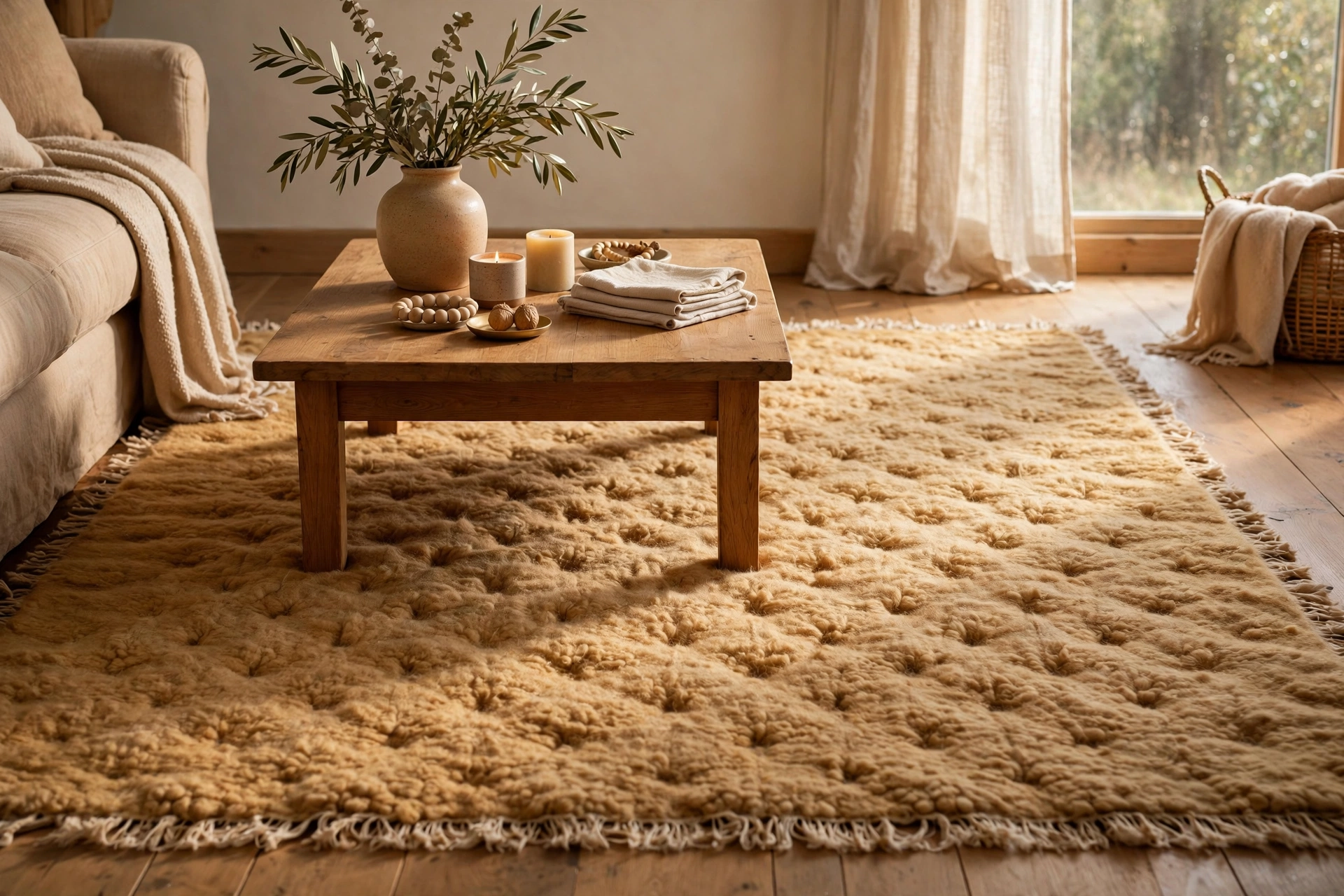
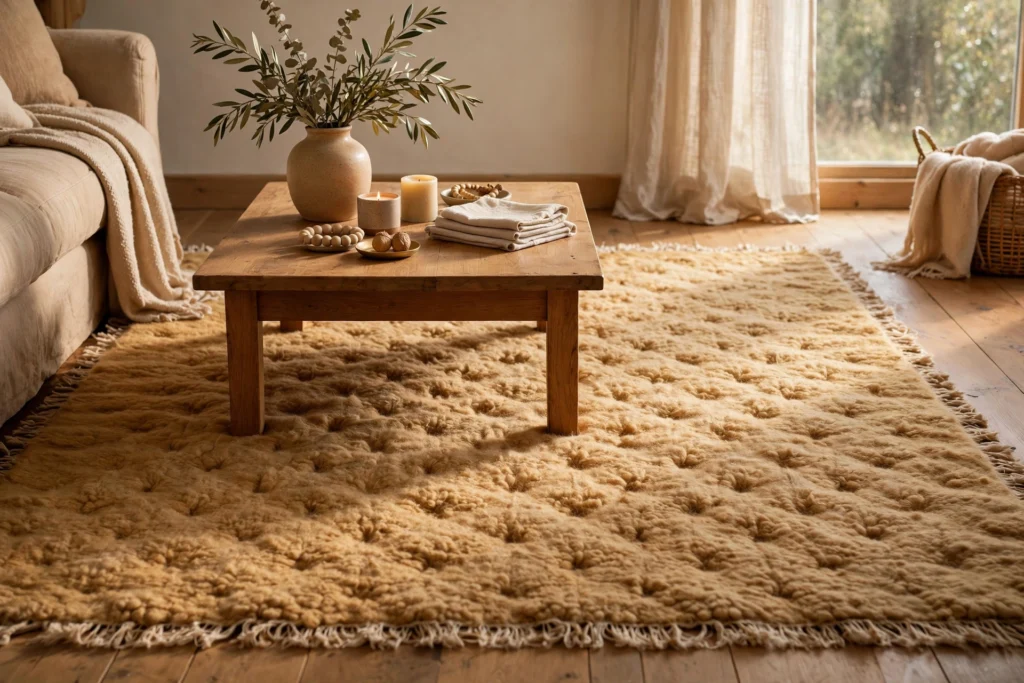
The NURVI LIVING 100% Natural Wool Area Rug is an 8×10 foot rug (the only size this model comes in) in a warm ochre beige, hand-tufted by artisans in India. The pile is a blend of Indian and New Zealand wool, dense and soft at half an inch thick. It reads as a solid, modern neutral that anchors a living room or bedroom without shouting.
The construction is the story. The backing is 100% cotton canvas, explicitly no synthetic latex. That single spec is doing most of the heavy lifting in this review: no latex to crumble into dust in five years, no synthetic adhesive aging under your feet. The rug is hand-dyed rather than undyed, which gives it that warm ochre tone, though the dye chemistry is not disclosed, so take “natural” in the marketing as referring to the fibers, not the color process. Slight color and size variation is normal for handmade rugs, and the maker discloses that upfront.
What it is not: certified. There is no GoodWeave, OEKO-TEX, or Woolmark certification on the listing or the maker’s site. The badges on the brand’s website (handmade, sustainable, natural fibers, pet friendly) are self-assertions, not third-party verification. I am not going to dress that up. The honest claim here is a verifiable construction fact, no synthetic latex backing, not a certified non-toxic label.
The Honest Cons
Every rug has them; here are this one’s, stated plainly so there are no surprises on delivery day.
It will shed, a lot, at first. The listing itself admits this. Loose wool fibers for the first few weeks is normal for hand-tufted wool. A carpet rake and regular vacuuming (suction only, no beater bar) get you through it, but do not unroll this rug the morning of a dinner party.
It weighs 41 pounds. Moving it is a two-person job, rearranging is a project, and returning it would be genuinely miserable. Measure your room twice and be sure about the 8×10 size, because it is the only size this model comes in.
Spot-clean only. No machine washing, and the maker says to keep it away from damp areas. On a light ochre rug, that means real stain risk with kids or pets. Blot spills fast, use a wool-safe detergent, and accept that this is a rug you maintain, not one you abuse.
Wool is moth food. Unlike a synthetic rug, this one needs ongoing moth prevention. Cedar and traps handle it without mothballs, and I have linked the non-toxic options below, but it is a real maintenance line item, not a footnote.
Thin review history. This is a newer listing, and I could not verify its star rating or review count (Amazon blocks automated checks). Less social proof than established rug brands. Buy it for the construction specs, which are verifiable, not for a review count I cannot confirm.
Living With It: Care and Maintenance
A wool rug is a long-term relationship, and it rewards a little routine. Vacuum regularly with suction only: beater bars tear at wool fibers and accelerate shedding. The Macquarie dust research found vacuuming frequency was the single biggest factor in household microplastic dust levels, so this is doing double duty for your floors and your air. Our HEPA vacuum guide covers which vacuums actually catch the fine stuff.
Rotate the rug every few months so wear and sunlight distribute evenly, and keep it out of direct sun and damp rooms (no bathrooms, no basements: mildew is wool’s other enemy besides moths). Blot spills immediately rather than rubbing, and use a mild wool-safe detergent for spots. For the shedding phase, a carpet rake lifts loose fibers far better than a vacuum alone, and it is oddly satisfying work.
On moths: prevention beats treatment. Cedar panels in closets near the rug and a few moth traps that specifically name wool and carpets as targets will keep the problem theoretical. What you want to avoid is reaching for traditional mothballs, which are essentially pesticide cakes off-gassing in your home: the exact kind of swap this site exists for.
What to Buy With It
A deep dive should leave you fully equipped, so here is the honest accessory list: everything this rug actually needs, nothing it does not.
RUGPADUSA Basics 8×10 Felt Rug Pad: the non-negotiable
The maker recommends a rug pad, and they are right: it adds grip, cushions the pile, protects your floors, and extends the rug’s life. The RUGPADUSA Basics pad is the natural pairing because it is 100% felt with no glues, PVC, or latex: putting a synthetic-latex pad under a latex-free rug would undo the whole point. It is made in the USA and low VOC. Budget for this with the rug, not after it.
Grandi Groom AB24 Carpet Rake: for the shedding phase
The Grandi Groom rake is the tool for those first shedding weeks and for ongoing pet hair. The wide head pulls loose wool fibers and embedded hair out of the pile and fluffs it back up, which a vacuum alone does not do well. One caution from the research: some carpet rakes explicitly say not to use them on wool, so stick with this one rather than grabbing a random rake. Your arms will get a workout; your rug will look better for it.
Cedar Fresh Cedar Panels: moth prevention, the non-toxic way
Wool rugs are moth targets, and natural red cedar panels are the classic non-toxic defense. Tuck them in closets, under furniture near the rug, anywhere moths might stage an invasion. They smell like a cedar closet instead of a pesticide factory, which is the entire point. Refresh or sand them yearly to keep the scent (and the repellent effect) active.
Clothes Moth Traps and Cedar Blocks Kit: the backup layer
Cedar repels; traps monitor. This kit pairs moth traps with cedar blocks and specifically names carpets and wool as targets, which is exactly your use case. The traps tell you early if moths have found the rug, when catching them early is the difference between a scare and a repair bill. Non-toxic, no sprays, no mothballs.
A wool-safe spot cleaner: the one I could not verify
You will want a wool-safe spot cleaner for inevitable spills, and I looked for one with a verifiable listing to recommend. I did not find one I could confirm this pass, so I am not going to link a guess. When you shop for one, look for “wool-safe” or pH-neutral on the label and skip anything with bleach or harsh solvents. I will add a verified pick to this article once I have one.
The Verdict
The NURVI LIVING wool rug keeps its top spot, with eyes open. The cotton canvas backing with no synthetic latex is a genuinely rare spec at this price tier, and it is the single strongest reason to choose this rug over the sea of latex-backed hand-tufted competitors. The wool pile gives you the microplastics win: shed fibers that biodegrade instead of persisting.
The caveats are real but manageable: heavy first shedding, 41 pounds of commitment, spot-clean only, moth prevention as a lifestyle, no certifications, and a thin review record. None of them are hidden here, which is the point of a deep dive. If you want a natural rug and you are willing to maintain it, this is the one. If you want zero maintenance, buy a synthetic rug and accept the microplastic trade: at least now you know what it is.
Frequently Asked Questions
Is the NURVI LIVING rug really non-toxic?
It has the right construction: 100% wool pile and a cotton canvas backing with no synthetic latex, which removes the two biggest chemical concerns in rugs. But it carries no third-party certifications, and the dye chemistry is undisclosed, so “non-toxic” here means clean construction, not a certified label. That is still better than most rugs at this price.
How bad is the shedding?
Expect noticeable loose fibers for the first few weeks: normal for hand-tufted wool, and the listing admits it. A carpet rake plus regular suction-only vacuuming gets you through it. If heavy shedding past two months bothers you, wool rugs as a category may not be for you.
Do I really need a rug pad?
Yes. The maker recommends one, and a pad prevents sliding, cushions the pile, and protects both the rug and your floors. Just make sure the pad is also latex-free, like the felt pad above, or you reintroduce the synthetic you just avoided.
What sizes does it come in?
Only 8×10 for this model, as far as I could verify. The brand sells other designs in other sizes, but this specific rug is one size. Measure your room before ordering: at 41 pounds, this is not a rug you casually return.
Can I use it with pets?
The brand calls it pet friendly, and wool is durable in traffic. The real considerations are stains on a light ochre rug (spot-clean only) and pet hair in a dense pile (the carpet rake earns its keep here). Claws and wool generally coexist fine; red wine does not.
Keep Reading
- Natural fiber rugs that don’t shed plastic (the roundup where this rug won)
- Do HEPA vacuums actually catch microplastics? (your rug’s best friend)
- Reduce microplastics in your kitchen (the full kitchen playbook)