Men’s Fall and Winter Clothing in Natural Fibers: A Full Outfit That Skips the Plastic
This article contains affiliate links. If you buy through our links, we may earn a small commission at no extra cost to you. We never claim to have tested products we have not used, and we check materials and listings before we link anything.
Walk into most men’s departments in October and you are looking at a wall of plastic. The default fall outfit in 2026 is a polyester fleece over an acrylic sweater over a nylon-blend pant. It is warm, it is cheap, and every wash sheds tiny plastic fibers that do not break down. Men’s fall winter clothing does not have to be built that way. Wool, organic cotton, hemp, and leather kept men warm long before plastic fibers existed, and the good versions are still made by brands you have actually heard of.
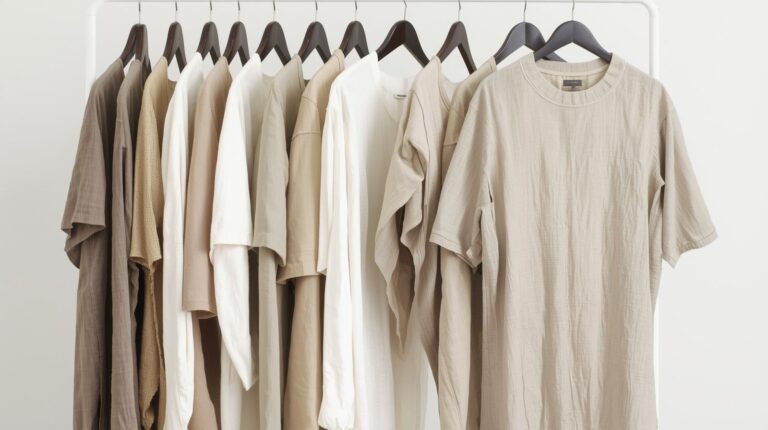
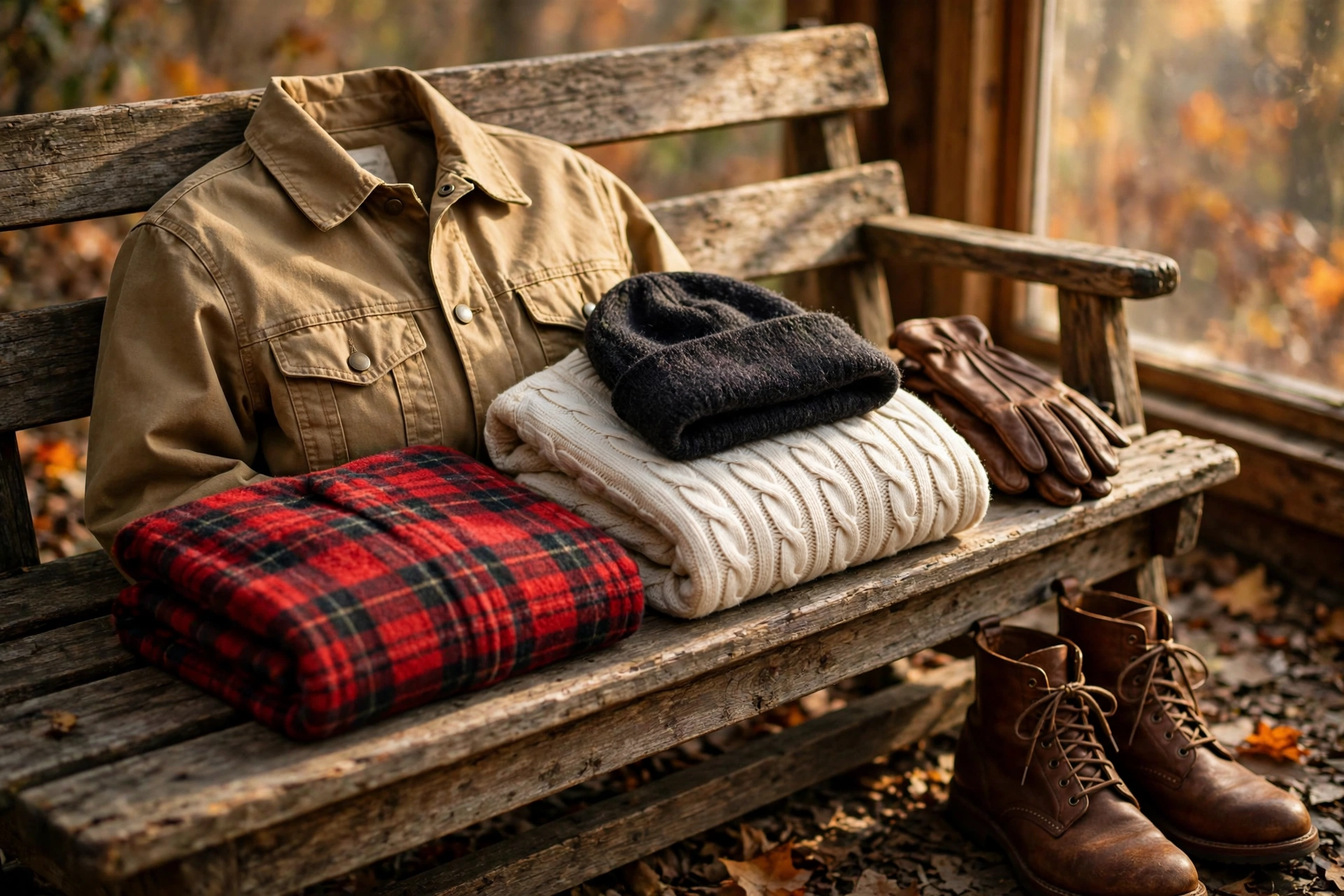
This guide builds one complete cold-weather outfit, head to toe, from natural fibers wherever a natural fiber can do the job: coat, wool shirt, sweater, layering tee, pants, merino base layer, socks, hat, gloves, and boots. Where a pick contains a synthetic part, we say so plainly in its section, because a merino sock with nylon in it is a very different purchase from an acrylic sock.
The short answer: build the outfit around fibers that were grown or raised, not extruded. If you buy only three things from this page, make it the Minus33 Chocorua merino base layer (100 percent merino wool, the layer that touches your skin all day), the Pendleton Board Shirt (100 percent virgin wool shell, warm enough to work as a light jacket), and the Flint and Tinder Waxed Trucker Jacket (a 100 percent cotton waxed sailcloth shell that shrugs off rain without a plastic membrane). Everything else on this page fills in around those three.
Get the Weekly Swaps
One short email a week: the newest microplastics studies in plain English, plus the swaps that are actually worth your money. Join free and we will send you our room-by-room microplastic checklist to get you started.
Get Our Free Room-by-Room Microplastic ChecklistJoin the newsletter and get the checklist free →
Do natural fibers shed microplastics too?
Natural fibers shed fibers, but those fibers are not microplastics, and they do not persist the way plastic does. Every textile loses fibers in the wash. The difference is what happens next. In biodegradation testing by Zambrano and colleagues at North Carolina State University, published in Marine Pollution Bulletin in 2019, cotton and rayon fibers biodegraded readily in wastewater, lake, and seawater conditions, while polyester showed no meaningful degradation. A cotton fiber that escapes your laundry is a short-lived plant fiber; a polyester fiber can stay in soil and water for decades.
The wash itself matters as much as the fiber. De Falco and colleagues, in Scientific Reports in 2019, found that a single wash of a 6 kg load of synthetic garments could release millions of fibers, with weave and cycle changing the total substantially. You can read the study at nature.com. Hernandez and colleagues found a similar pattern in Environmental Science and Technology in 2017, with fleece-style synthetics among the heaviest shedders. Natural fibers are not a free pass to wash carelessly, but they are the only choice where the fibers you shed are made of something the environment can break down.
Why wool does the heavy lifting in cold weather
Wool is the fiber this outfit leans on hardest, for a practical reason: it insulates when damp, where cotton goes cold and clammy. A wool fiber can absorb a substantial share of its own weight in moisture vapor before it feels wet, which is why merino layers feel warm the moment you put them on. Wool is also naturally odor resistant, so a merino layer can be worn several days between washes, and fewer washes means fewer shed fibers. The trade-offs are real: wool costs more, coarser grades can itch (the picks below use fine merino, 18.5 micron where the maker states it), and it wants gentler washing. Still, no synthetic has matched wool’s combination of warmth, breathability, and low wash frequency, which is why four of the ten picks below are wool or wool-majority.
The 10 picks at a glance
| Pick | Material | Rating | Best for |
|---|---|---|---|
| Flint and Tinder Waxed Trucker Jacket | 100% cotton waxed sailcloth shell | Not quoted (see pick) | The coat |
| Pendleton Board Shirt | 100% virgin wool shell | Not quoted (see pick) | Wool shirt / light jacket |
| Amazon Essentials Fisherman Cable Sweater | 100% cotton | Not quoted (see pick) | Budget cotton sweater |
| PACT Organic Softspun Tee, 5-Pack | 100% organic cotton, GOTS certified | Not quoted (see pick) | Layering tees |
| prAna Vaha Pant | Hemp blend | Not quoted (see pick) | Everyday pants |
| Minus33 Chocorua Merino Crew | 100% merino wool, 230 g/m2 | Not quoted (see pick) | Base layer top |
| Darn Tough Hiker Micro Crew | 61% merino / 36% nylon / 3% Lycra | 4.9 on the brand’s own site | Socks that last |
| Minus33 Ridge Cuff Beanie | 100% merino wool | 4.4 stars, about 8,100 ratings | The hat |
| Hestra Army Leather Heli Ski Gloves | Goat leather palm, synthetic backhand | 4.7 stars, 437 ratings | Serious winter gloves |
| Thursday Boot Company Captain | Leather upper, Goodyear welt | 4.4 stars, about 9,300 ratings | Boots |
Browse Our Full Amazon StorefrontAll our men’s natural fiber clothing picks in one place →
The picks, one by one
1. The coat: Flint and Tinder Flannel-Lined Waxed Trucker Jacket
Flint and Tinder’s Waxed Trucker is the anchor of the outfit, already deep-dived on this site because the shell is the real story: 7 oz Martexin waxed sailcloth, 100 percent cotton woven in New Jersey and cut and sewn in Los Angeles. Waxed cotton sheds rain with wax in the fiber rather than a plastic membrane or a PFAS-based coating, and it can be rewaxed at home. Men’s Journal has reported it at 4.7 stars across more than 3,300 ratings at Huckberry, its home retailer; we could not cleanly capture its Amazon star figure, so we are not printing one.
The honest con is the lining: the blanket-stripe flannel is a polyester blend per independent reviews, so this is a lower-plastic coat, not a plastic-free one, as we said in our full Waxed Trucker review. It is also a fall and mild-winter jacket, not a deep-freeze parka; on the coldest days it works as the shell over the wool layers below.
2. The wool shirt: Pendleton Board Shirt
Pendleton’s Board Shirt has been made from Umatilla wool since the 1920s, and the shell is still 100 percent virgin wool: machine washable, naturally warm, and heavy enough to wear open over a tee as a light jacket or buttoned under the trucker. It is the most versatile piece here, covering September through March in most of the country. We could not cleanly capture an Amazon rating for this listing, so none is quoted; Pendleton’s century of making this exact shirt is the track record.
Trade-offs: the listing’s spec includes a polyester and cotton lining at the yoke, so the shirt is wool where it counts, not 100 percent natural in every stitch. Wool plaid also reads outdoorsy, a weekend and casual-Friday piece rather than a dress shirt.
3. The sweater: Amazon Essentials Fisherman Cable Crewneck
Amazon Essentials’ Fisherman Cable Sweater is the budget surprise here: a cable-knit crewneck in 100 percent cotton yarn, OEKO-TEX Standard 100 certified, in a category where most affordable sweaters are acrylic blends. Cotton cable knit breathes and layers cleanly over the Pendleton or under the trucker. We verified the 100 percent cotton composition from the listing itself; an Amazon star figure we could stand behind was not capturable in this pass, so none is printed.
Trade-offs: cotton is not wool. It is less warm for its weight and holds moisture, so this is a town and office sweater, not a wet-hike layer. Cotton knits also stretch over a season, so follow the fold-don’t-hang rule in the care section.
4. The layering tee: PACT Organic Softspun Crew, 5-Pack
PACT’s Organic Softspun Tees cover the least glamorous and most worn layer: the shirt under everything. They are 100 percent organic cotton, GOTS certified, made in a fair trade certified factory, and sold as a five-pack so the per-shirt math works like a staple should. It is also the layer most men replace most often, which is why its fiber choice matters at scale.
Trade-offs: a five-pack means committing to one fit, so check PACT’s sizing notes if you are between sizes. And a cotton tee is a layer, not insulation; on cold days it goes under the merino crew below. Our organic cotton underwear guide covers the rest of the drawer basics.
5. The pants: prAna Vaha Pant
prAna’s Vaha Pant is built on hemp, one of the strongest natural fibers in clothing, in a relaxed everyday cut that works with boots and the trucker jacket alike. Hemp softens with washing, resists odor better than plain cotton, and needs far less irrigation and pesticide input than conventional cotton to grow. At REI, the Vaha Straight version is rated 4.7 stars from 245 reviews; that is an REI figure, not an Amazon one, labelled that way because the Amazon rating was not cleanly capturable in this pass.
Trade-offs: hemp blends wrinkle more than a synthetic chino, the drape is casual rather than tailored, and hemp costs more than cotton twill. Treat the Vaha as the everyday default it is designed to be, not office tailoring.
6. The base layer: Minus33 Chocorua Merino Crew
Minus33’s Chocorua Crew is the layer we would buy first in this guide: 100 percent merino wool, no synthetic content at all, in a 230 g/m2 midweight interlock knit at 18.5 micron, fine enough to wear against skin without the itch people remember from old wool. Minus33 is a New Hampshire company that has made nothing but merino for two decades, and this crew is the piece that turns the layers above it into a genuinely warm system. It anchors our merino base layers guide too.
Trade-offs: pure merino is less abrasion resistant than a nylon-blended base layer, so it is not the pick for daily wear under heavy pack straps, and it wants a gentle wash cycle. The payoff is a base layer with zero plastic in it that you can wear for days between washes.
7. The socks: Darn Tough Hiker Micro Crew
Darn Tough’s Hiker Micro Crew (style 1466) is the honest exception in this outfit. The blend is 61 percent merino wool, 36 percent nylon, and 3 percent Lycra. The nylon buys durability, and Darn Tough backs it with an unconditional lifetime guarantee: wear them out and the Vermont company replaces them. On Darn Tough’s own site this style is rated 4.9 stars from about 4,500 reviews. A guaranteed sock you never throw away can shed less over a decade than pure-wool pairs that hole out and get binned, which is the math that earns it a place here.
Trade-offs: it is not plastic-free, full stop; if your line is zero synthetics, other makers sell higher-merino socks without the same guarantee. The Micro Crew height also sits below a tall boot’s top edge for some men, and Darn Tough makes the same blend in a boot height.
8. The hat: Minus33 Ridge Cuff Beanie
Minus33’s Ridge Cuff Beanie is the simplest pick on this page: 100 percent merino wool in the same 230 g/m2 interlock as the Chocorua crew, one size, no acrylic anywhere. Most beanies sold today are 100 percent acrylic, plastic yarn knitted into the shape of warmth; this one is the actual fiber those beanies imitate. Amazon shoppers rate it 4.4 stars across about 8,100 ratings.
Trade-offs: a single-layer interlock beanie is a fall and town hat, not an expedition hat, and one size does not mean all. Paired with the Chocorua, though, it means the layers framing your skin all winter are both pure merino.
9. The gloves: Hestra Army Leather Heli Ski
Hestra’s Army Leather Heli Ski gloves come from a Swedish glove maker founded in 1936, and the working surfaces are impregnated goat leather, the palm and fingers that grip, lift, and wear. Leather blocks wind, shrugs off abrasion, and molds to your hand over a season instead of delaminating. The rating is 4.7 stars from 437 ratings, and the removable liner can be swapped and dried instead of the whole glove sitting out a day.
Trade-offs, plainly: the backhand is a synthetic polyamide and the liner includes synthetic insulation, so this is a leather-where-it-counts compromise, not an all-natural glove. It is also ski-weight, warmer than most men need for a fall commute; for mostly driving and dog walks, a simpler unlined leather glove costs less. For genuine cold and shoveling, this is the pair.
10. The boots: Thursday Boot Company Captain
Thursday’s Captain boot closes the outfit the way leather always has: a genuine leather upper on a Goodyear welt, so the sole is stitched, not just glued, and a cobbler can resole it when the tread wears down. Buy the natural material, maintain it, keep it out of the landfill for years. Amazon buyers rate the Captain 4.4 stars across about 9,300 ratings, the deepest review pool in this guide.
Trade-offs: leather boots need break-in and regular conditioning, the Captain is dress-casual rather than an insulated snow boot, and sole options vary by colorway, so check for the studded rubber sole if your winters are icy. For deep snow you still want a dedicated winter boot.
Join Our Free Facebook GroupNon-Toxic Family Living: parents sharing swaps that work →
How to choose and care for natural fiber clothing
Start where fabric touches skin and wear is hardest: base layers, socks, and hats are washed most and worn longest. Then replace by attrition, so when a fleece or sweater wears out, its replacement is the natural fiber version, rather than purging a working wardrobe in one expensive weekend. Our fleece alternatives guide and lower-plastic clothing swaps cover the rest of the closet.
Care is where natural fibers win or lose. Wash wool cold and infrequently, in full loads on a gentle cycle, since De Falco et al. (2019) found cycle type and load construction change fiber release substantially. Skip the dryer for wool and cotton knits; air drying prevents the heat and tumbling damage that loosens fibers. Fold sweaters instead of hanging them, rewax the trucker when water stops beading, condition the leather, and resole the Captains instead of replacing them. Every one of those habits is cheaper than a replacement.
Frequently asked questions
What is the best natural fiber for men’s winter clothing?
Wool, and merino wool specifically for anything worn against skin. It insulates when damp, resists odor so it needs less washing, and biodegrades at end of life. Cotton and hemp suit shirts, tees, and pants; leather suits gloves and boots.
Do wool and cotton clothes shed microplastics?
No. They shed natural fibers, which are not plastic. Zambrano et al. (Marine Pollution Bulletin, 2019) found cotton and rayon fibers biodegraded readily in water environments while polyester showed no meaningful degradation. Natural fibers still deserve careful washing, but what escapes breaks down.
Is a merino and nylon blend sock still a good choice?
It can be, if the blend buys real durability. The Darn Tough pick is 61 percent merino and 36 percent nylon, and its lifetime guarantee means one pair replaces many. Pure merino is still the better pick if zero synthetic content is your priority.
How do I wash wool without ruining it?
Cold water, gentle cycle, mild detergent, and air dry flat. Merino’s odor resistance means most pieces only need washing after several wears. Never use a hot wash or a hot dryer on wool; heat and agitation together are what felt and shrink it.
Is waxed cotton actually waterproof?
It is strongly water resistant, not seam-sealed waterproof. Waxed sailcloth sheds rain and snow for everyday wear and can be rewaxed at home, which is why it replaces a plastic membrane or PFAS-based coating. In a sustained downpour, water will eventually get through.
Why are there no fleece picks in this outfit?
Because fleece is polyester, one of the heaviest microfiber shedders in the Hernandez et al. (2017) washing research. The wool overshirt and cotton sweater here do fleece’s job in fibers that biodegrade.
Add Us as a Preferred Source on GoogleOne tap, and our guides show up first in your Google results →