Non-Toxic Mattress Pads and Protectors: The Waterproof Layer Is Plastic, So Choose It Well
Non-Toxic Mattress Pads and Protectors: The Waterproof Layer Is Plastic, So Choose It Well
Disclosure: This post contains affiliate links. If you buy through them, we may earn a commission at no extra cost to you. We never claim to have tested products ourselves; we research materials, certifications and listings, and we tell you the trade-offs plainly.
It is 2 a.m. and a small person is standing next to your bed saying one word: wet. Or it is your own bed, a glass of water, a dog with a full bladder, a feverish night of sweats. Either way, the thing standing between that liquid and a mattress you cannot put in a washing machine is a thin layer most of us bought in about ninety seconds, based on a star rating and a promise of “waterproof.”
Here is the problem with that ninety-second purchase. A waterproof mattress protector is, by definition, a plastic film with fabric around it. The only questions are which plastic, how much of it, what touches your skin, and whether the fabric story on the box is honest. Most protectors on Amazon fail at least two of those four questions. The “bamboo” best-sellers are mostly polyester. The vinyl ones are the worst option in the category. And the word “organic” on the box sometimes describes only the cotton, while the barrier doing the actual work goes unnamed.
This guide sorts it out. We will give you our verdict first, then argue against it as hard as we can, then walk through the barrier chemistry, the sleep science, and the certification fine print, so you can see exactly why the ranking falls the way it does. Non-toxic mattress protectors are not a plastic-free product category, and any guide that pretends otherwise is selling you something. What you can buy is a protector where the plastic is thin, disclosed, sandwiched away from your skin, and wrapped in certified organic cotton or real wool instead of microfiber.
The short answer: which non-toxic mattress protector would we buy?
The short answer is the Naturepedic Organic Waterproof Mattress Protector Pad. Two layers of organic cotton jersey sandwich an ultra-thin polyurethane barrier, so what touches you and what touches the mattress is cotton, and the plastic in the middle is as thin as waterproofing currently gets. It is GOTS certified as a finished product, MADE SAFE certified, and GREENGUARD Gold certified, it fits mattresses 9 to 16 inches deep, and it comes in every size from twin to California king, which makes it the one pick that works for a potty-training twin bed and an adult bed with the same logic.
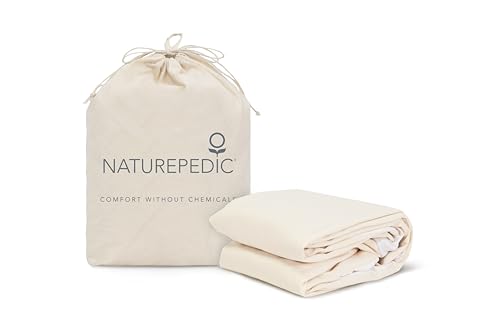
- Waterproof Mattress Pad: Protect and keep your mattress free of liquids and allergens with this organic cotton mattress pad
- Organic Cotton: Our mattress protectors are made with two layers of organic cotton jersey and a GOTS approved waterproof polyurethane layer
- Drysleep Technology: Ultra-thin waterproof barrier effectively blocks liquids from passing through while still allowing the fabric to breathe
- No Harmful Chemicals: Our mattress pads are completely non-toxic and free of vinyl/PVC, phthalates, latex, and eliminates potential allergenic concerns
- 9"-16" Deep Pocket: This fitted sheet style mattress protector has an organic cotton skirt and full elastic perimeter stretching to cover mattress depths from 9" to 16"
Get the Weekly Swaps
One short email a week: the newest microplastics studies in plain English, plus the swaps that are actually worth your money. Join free and we will send you our room-by-room microplastic checklist to get you started.
Get Our Free Room-by-Room Microplastic ChecklistJoin the newsletter and get the checklist free →
The case against it
A verdict you cannot argue with is marketing. Here are the five strongest objections to the Naturepedic protector, stated fairly.
Objection one: it still contains plastic. True, and we will not soften it. The barrier is polyurethane. If your goal is a bed with zero plastic in it, no waterproof protector on Earth qualifies, including this one. The honest choice is between a thin, disclosed polyurethane film sealed between two layers of organic cotton, and the alternatives: vinyl (PVC, the worst material in this category), polyethylene (cheap, crinkly, and prone to cracking), or a polyester microfiber protector that sheds plastic fibers in every wash. Or no waterproofing at all, which is a legitimate choice we cover below with a fully cotton pad. What we reject is pretending the trade does not exist.
Objection two: polyurethane barriers wear out. Also true. Polyurethane films degrade through hydrolysis, the slow chemical breakdown of the polymer by water and heat, and hot washes, bleach and high dryer heat all accelerate it. A waterproof protector is a consumable with a working life measured in years, not decades, and its waterproofing usually fails before its fabric does. That is an argument for buying a barrier that starts thin and well made, washing it cool, and testing it once or twice a year by pouring a glass of water on it and checking the underside after ten minutes. It is not an argument for vinyl, which brings its own plasticizer problem from day one.
Objection three: it costs more than the best-sellers. It does. The volume sellers in this category are polyester protectors sold at a fraction of the price. The gap buys you certified organic cotton on both faces, third-party certification of the finished product rather than a fabric claim, and a barrier the maker actually names. Whether that is worth it depends on how many hours a day your skin spends on it. For a guest bed used twice a year, honestly, it may not be. For the bed a toddler sleeps on for twelve hours a night, we think the math changes.
Objection four: it is a protector, not a pad. Correct. It adds almost no cushion. If what you actually want is softness or pressure relief, you want a pad or a topper, and layering is the right answer: protector against the mattress, pad above it if you want loft, sheet on top. Wool does this best, which is why a wool protector ranks second in our alternatives below. Buying a thick quilted “protector” expecting both jobs usually gets you a polyester-filled compromise that does neither well.
Objection five: the same company sells a cheaper version. Also correct, and it is called Happsy. Naturepedic’s sister brand uses the same basic construction, organic cotton jersey over a thin waterproof film, at a friendlier price. We rank it in the alternatives. The Naturepedic keeps the verdict because its certification stack and its long track record in the crib and kids market are deeper, and because its barrier is documented in more detail. If the price gap decides it for you, Happsy is the rational buy, not a lesser product.
Why does the layer under your sheet matter at all?
Because your sleeping surface is not inert, and the evidence for that has gotten specific. In a 2025 study from the University of Toronto, Vaezafshar and colleagues (Environmental Science & Technology, 2025) measured the air and sleep microenvironment of young children and found that mattresses themselves were a source of plasticizers, flame retardants and UV filters, with more compounds detected at body temperature and under body weight than at room temperature. Heat and pressure, the two things a sleeping body supplies all night, increased what came off the mattress. A protector cannot fix a mattress, but it is the one layer you choose that sits between the mattress and the sleeper, and its own material list is entirely in your control.
The second reason is finishes. In a 2022 study, Rodgers and colleagues at the Silent Spring Institute (Environmental Science & Technology, 2022) tested 93 children’s products and found targeted PFAS only in products labelled water-resistant or stain-resistant. Read that again, because it is the key to this whole category: the PFAS signal tracked the water and stain claims, not the product type. A waterproof claim is exactly where chemical finishes like to hide. That is why our standard for this guide is not “waterproof” but “waterproof by membrane, with the membrane named, and no PFAS finish doing the work.” A physical polyurethane film blocks liquid mechanically. A PFAS-based durable water repellent finish sheds it chemically, and wears off into house dust as it ages. The membrane is the better technology, full stop.
The third reason is what protectors are usually made of. The mainstream protector is a polyester or microfiber shell over a polyurethane film, with a polyester skirt. Polyester textiles shed microfibers in laundering; De Falco and colleagues (Scientific Reports, 2019) quantified microplastic release from washing synthetic clothes, and Zambrano and colleagues (Marine Pollution Bulletin, 2019) showed that cotton and rayon fibers biodegraded substantially in aquatic testing while polyester persisted. A protector gets washed often, in warm water, for years. An organic cotton shell does not eliminate the barrier film, but it removes the shedding synthetic fabric from the two largest surfaces of the product, and cotton fibers that do shed are cellulose, not plastic.
Finally, there is the mattress itself. The Ecology Center’s 2020 report, The Mattress Still Matters, lab-tested crib mattresses and found plasticizers in every PVC cover tested and total fluorine suggesting PFAS waterproofing in several covers. Covers and protectors are where the mattress industry puts its cheapest chemistry. Choosing this layer carefully is not fussiness. It is the highest-leverage bedding purchase after the mattress itself, which is why we covered mattresses in depth in our guide to non-toxic child mattresses and our non-toxic kids bedding roundup.
What is the waterproof barrier actually made of?
This is the section most protector guides skip, and it is the only section that really matters. Every waterproof protector uses one of a handful of barrier technologies. They are not equivalent.
Thermoplastic polyurethane (TPU). The best widely available option. TPU films are thin, quiet, flexible and relatively durable, and they can be laminated between cotton layers so they never touch skin. Naturepedic’s DrySleep barrier is described by the brand as a GOTS-approved polyurethane barrier, and independent reads of the listing describe the same film as TPU. When a maker says “polyurethane” without specifying, it is usually this family. TPU still hydrolyzes eventually, especially with hot washing, but it starts quieter and lasts longer than the cheaper films.
Generic polyurethane (PU) laminate. The workhorse of the category, used by Whisper Organics and BIOWEAVES among our picks. Functionally similar to TPU, often slightly less refined in feel and longevity. The honest issue is disclosure: some listings name the polymer, some say only “synthetic” or “waterproof layer.” A maker that will not name its barrier is asking you to trust the one part of the product you cannot see. We flag that wherever it happens below.
Bio-based polyurethane. A newer variant in which part of the polymer comes from plant feedstock, such as the corn-derived propanediol used in Susterra-based films. It reduces fossil content; it does not make the film biodegradable or plastic-free. Treat it as a genuine but modest improvement, not a transformation.
Polyethylene (PE). The crinkly budget film. It waterproofs, it is loud, it stiffens and cracks with age and heat, and cracked PE is where “my waterproof protector stopped working” stories come from. We did not include a PE-barrier pick.
Vinyl (PVC). The one to avoid outright. PVC protectors are waterproof and cheap, and they are plasticized with phthalates or alternative plasticizers that are not chemically bound to the material. The Ecology Center testing cited above found plasticizers in every PVC mattress cover it tested. There is no reason to choose vinyl in 2026 when TPU exists. If a listing says vinyl, or hides behind “waterproof material” at a rock-bottom price, assume the worst and move on.
PFAS and DWR finishes. Not a film at all: a chemical coating that makes fabric repel water. Per the Silent Spring findings above, water and stain resistance claims are precisely where PFAS shows up in children’s products. A finish also wears off with washing, so the protection fades while the chemistry migrates. Every pick in this guide waterproofs with a membrane, not a finish.
Silicone. Occasionally used in specialty products. Food-grade silicone is a stable polymer and a reasonable barrier material, but it is rare in protectors and usually appears in pads for medical settings. Not represented in our picks because no name-brand organic protector uses it as the main barrier.
Pad, protector, encasement: which one do you actually need?
The words are used interchangeably in listings, and they should not be. A protector is thin and defends the mattress: spills, sweat, accidents, dust mites to a degree. A pad adds material: quilted cotton or wool that changes how the bed feels and absorbs moisture without a membrane. A topper is a comfort layer, one to three inches of wool, latex or foam, which is a different purchase entirely. An encasement zips around all six sides of the mattress; it is the only format that meaningfully addresses bed bugs, because a fitted five-sided protector leaves the underside open.
Most households need a protector, and households with a new mattress warranty should know that many mattress warranties effectively require one, since a single stain can void coverage. If you run hot or want the bed to feel different, layer: protector directly on the mattress, then a wool or cotton pad above it, then the sheet. That layering order matters. The protector’s job is to be the last line for the mattress; the pad’s job is comfort and absorption; putting the pad under the protector wastes the pad and puts an unprotected absorbent layer against the mattress. Our non-toxic bedding guide covers the sheet and comforter layers that complete the stack, and our Woolino wool comforter review shows what wool does for temperature regulation on top of the bed.
What about wool? The temperature argument
Wool is the one protector material that does something besides block liquid. Wool fibers absorb water vapor into their core, up to roughly a third of their weight in the fiber-science literature, while the fiber surface, coated in natural lanolin, resists liquid wetting. That combination is why wool regulates temperature in both directions and why a wool protector feels different from a cotton one on a hot night. The trade-offs are real: wool costs more, it adds noticeable loft, and washable wool still needs gentle care. But for hot sleepers, and for kids who run warm, a wool layer is the closest thing this category has to an upgrade rather than a compromise. That is why the Woolroom protector leads our alternatives, and why wool also anchors our bedding coverage elsewhere on the site.
Join Our Free Facebook GroupNon-Toxic Family Living: parents sharing swaps that work →
How to read the certifications without getting played
Certifications are scope-limited, and the scope is where the games are. GOTS is the strongest claim in this category, but ask what it covers: a GOTS-certified finished product means the whole item was made under the standard in a certified facility; a protector made with GOTS-certified cotton fabric is a weaker claim about one input. Naturepedic and Happsy carry finished-product certification. OEKO-TEX Standard 100 tests the finished article for harmful substances; it says nothing about organic content. GREENGUARD Gold is an emissions standard: it measures what comes off the product into air, which matters for the sleep microenvironment, but it is not a materials purity test. MADE SAFE screens ingredients against a hazard database, a genuinely useful complement to the others. And when a brand says “PFAS-free,” ask whether that means “not intentionally added” or “tested, none detected.” Those are different sentences. The strongest brands publish the test. Everyone else is asking for trust.
One more label trap: “bamboo.” Bamboo fabric in bedding is almost always viscose or rayon made from bamboo pulp, a manufactured cellulose fiber, and in cheap protectors it is frequently a minority blend with polyester. The fiber itself is not the problem; rayon biodegrades. The problem is a label that leads with bamboo while the fabric is mostly plastic. Our skip pick below is the category’s best example.
If not this one, then which?
Ranked by how we would spend the money after the verdict pick. Every waterproof option below uses a polyurethane-family membrane, and we say so each time, because that honesty is the whole point of this site. One option at the end skips the membrane entirely.
1. For hot sleepers and anyone who wants the bed to feel better: Woolroom Deluxe Waterproof Mattress Protector
The Woolroom Deluxe Waterproof Mattress Protector is the only pick that improves the bed while protecting it. The fill is 100 percent traceable, washable British wool inside a 200 thread count organic cotton outer, and the waterproofing is a TPU coating tested for water vapor transmission, so it blocks liquid while still breathing better than a sealed film. It is OEKO-TEX Standard 100 certified, the skirt fits up to 18 inches, and the line runs from crib and twin through California king. The trade-offs: it is the premium-priced pick, the wool adds about half an inch of loft some people will not want under a fitted sheet on a shallow mattress, and Woolroom sells mainly direct, so check that the Amazon listing shows a live offer before you count on it. For hot sleepers, this is the one we would buy second, and on a bed where temperature is the main complaint, first.
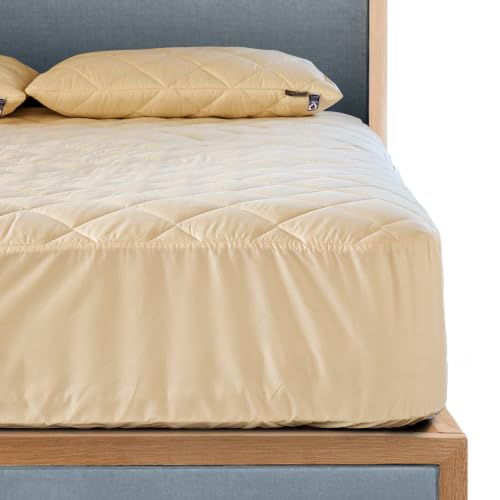
- OH SO COZY & FAMILY / PET FRIENDLY - Snuggle up on this carded traceable washable wool mattress protector in soft 200 thread count organic cotton cover...in a luxurious champagne color! The wool fibers offer durable and natural, superior temperature control, humidity reduction and high breathability, up to 70% reduction in body heat retention for deeper restorative sleep. Protects your mattress, prolongs its life and promotes good sleep hygiene.
- 100% WATERPROOF, LUXURIOUSLY SOFT & QUIET - Unlike noisy plastics, our twin size bed waterproof mattress cover offers the ultimate sleep comfort and 100% mattress protection with a noiseless and natural waterproof wool fabric constructed from 200 thread organic cotton with a TPU coating - tested to - ASTM E96: Water Vapor Transmission Rate Testing: 700g/m²/24h
- CLEAN SLEEP HYGIENE REPORT - Our wool mattress protector undergoes rigorous testing to ensure it's free from allergens and harmful substances. Unlike traditional feather and down alternative bedding, our products have acquired the seal of approval by ALLERGY UK and OEKO-TEX STANDARD100, promoting healthy sleep free from nasties
- EASY-CARE, DURABLE & TRULY MACHINE WASHABLE - Designed for effortless maintenance, our wool mattress protector is machine washable. No felting! Wash on a delicate wool cycle and use wool detergent, and line dry for best results. Avoid tumble drying to preserve its natural softness and longevity. The 18-inch deep elasticated skirt ensures a snug fit on any mattress type (memory foam, latex, etc) - with sizes ranging from twin size, twin XL, full, queen size, US king size, and California king.
- BETTER SLEEP, NATURALLY - We’re the natural sleep environment experts that passionately believe in helping people enjoy the benefits of life changing natural sleep. For anyone who wants to enjoy better sleep, Woolroom is dedicated to providing the right breed for the right need, using the incredible natural miracle qualities of British wool to help people live scientifically proven healthier, happier lives.
2. For the same idea at a friendlier price: Happsy Organic Mattress Protector Pad
The Happsy Organic Mattress Protector Pad is Naturepedic’s sister brand, and we would rather tell you that than let you discover it later and wonder what else we skipped. Same company, same basic recipe: GOTS-certified organic cotton jersey over a thin GOTS-approved waterproof film, no vinyl, no phthalates, no flame retardants, fits mattresses up to about 15 inches, in sizes from twin to California king. One honest flag: Happsy’s own Amazon listing describes the barrier as a “non-toxic waterproof barrier” without naming the polymer on the page; the TPU identification comes from independent reads of the product. The verdict pick documents its barrier better, which is part of why it wins. But if the budget is the deciding factor, this is the certified-organic waterproof protector we would buy without a second thought.

- Certified Organic Cotton Mattress Protector: Featuring certified organic cotton, the Happsy organic mattress protector pad offers a healthier and eco-friendly alternative to conventional mattress protectors.
- Non-Toxic Waterproof Barrier: Safeguard your mattress with a non-toxic waterproof barrier, effectively protecting against spills, mishaps, and accidents while keeping your sleeping environment safe and dry.
- Allergen Protection: This flexible, organic mattress protector pad creates an impenetrable barrier against allergens, ensuring a clean and healthy sleeping space.
- Comfortable and Stretchable: The organic cotton jersey fabric easily stretches, maintaining the comfort and feel of your mattress without compromising its flexibility and breathability.
- Fits Mattresses Up to 15 Inches: Designed to fit mattresses up to 15 inches thick, this durable mattress protector provides comprehensive coverage and protection, making it suitable for a wide range of mattress sizes.
3. For a quiet, soft protector with deep pockets: Whisper Organics Organic Waterproof Mattress Protector
The Whisper Organics Organic Waterproof Mattress Protector sandwiches its thin polyurethane barrier between two absorbent organic cotton layers, a pique top and a jersey bottom, both GOTS certified. That three-layer build is why owners describe it as quiet: there is no exposed film to crinkle. The deep pocket design suits thicker mattresses, and it comes in twin through king sizes. Whisper is a smaller brand than Naturepedic or Woolroom, and we will say plainly that it has the least name recognition in this ranking. What it has is a clean material list, a real GOTS certificate number on the listing, and a construction that gets the important things right. Do not confuse it with Whisper’s quilted cotton pad below; they are different products with different jobs.
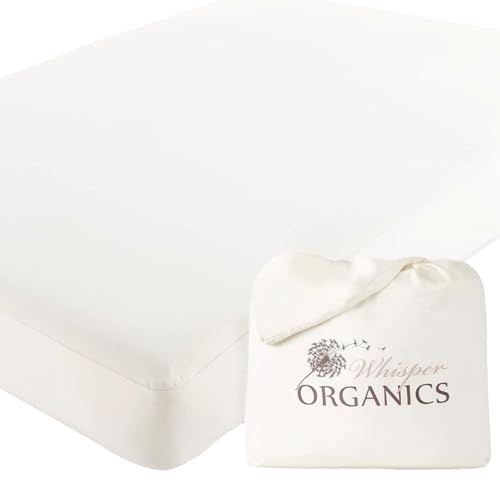
- Consciously Crafted: We're proud to offer a certified organic mattress protector waterproof design with a 180GSM pique top and 140GSM jersey bottom layer for balanced comfort and protection
- Rest in Confidence: Experience a comfortable waterproof mattress topper with super thin waterproof PU barrier sandwiched between 2 absorbent layers with an high breathability and durabiltiy
- Carefully Constructed: Our heavy duty waterproof mattress protector is machine washable and features a whisper quiet pique top layer to provide a cool breathable sleep without sacrificing hygiene
- Feel Good Materials: Rest assured with our certified organic cotton mattress protector that is GOTS Certified and made without vinyl, phthalates or latex with skin-friendly natural cotton
- Whisper Guarantee: At Whisper Organics, we’re committed to gentle care for you and the planet, ensuring your satisfaction with every purchase so get the best rest yet with our 1 year return policy
4. For thick mattresses on a budget: BIOWEAVES Organic Waterproof Mattress Protector
The BIOWEAVES Organic Waterproof Mattress Protector is the value pick of the certified set: an organic cotton pique top, organic cotton jersey pockets, a 20 inch deep pocket that swallows a thick mattress plus a topper, and a price that undercuts the brands above it. Now the flag, because there is one: BIOWEAVES describes its waterproof back layer as thin and synthetic but does not name the polymer on the listing. The product is more than 95 percent organic material, and the brand is upfront that the barrier is synthetic, which puts it ahead of the greenwashed crowd. But Naturepedic names its barrier and BIOWEAVES does not, and in a category built on an invisible layer, naming matters. Buy it for the deep pocket and the value; know what you are trading.

- 100% WATERPROOF MATTRESS PROTECTOR - Protect your bed from fluid spills, stains, dust & allergens using this water proof organic cotton mattress protector.
- KING MATTRESS PROTECTOR – Measures 76" x 80" + 20" (deep pockets) with elastic all around perfectly fitting king size mattresses up to 19 inches deep.
- THOUGHTFULLY CRAFTED - This mattress cover is made using a premium Piqué weave organic cotton top layer along with a thin (synthetic) waterproof back layer & high-quality stretchable organic cotton jersey knitted fabric pockets. More than 95% organic materials are used in the product. 100% waterproof yet completely breathable.
- ORGANIC COTTON - Made using GOTS certified organic cotton, this mattress protector is free from vinyl/phthalates & is safe to use. Shield your body from allergies & sensitivities along with feeling proud about the positive environmental impact caused by choosing organic. All our bedding products are made at Fair Trade Certified facilities, using sustainable processes & recyclable packaging materials. Switch to non-toxic & chemical free bedding that is luxurious & durable.
- SATISFACTION GUARANTEE - We rigorously test for pilling, shrinkage & durability before using any fabric. Each piece goes through 3 rigorous quality checks before being shipped so that you have a great experience. All this is also backed up with an incredible customer service making this a completely risk free & satisfactory purchase for you.
5. For no plastic at all, if you can give up waterproof: Whisper Organics Organic Cotton Quilted Mattress Pad
The Whisper Organics 100% Organic Cotton Quilted Mattress Pad is the answer to objection one. It is 100 percent GOTS-certified organic cotton, quilted with cotton wadding, with no membrane, no film and no plastic anywhere in it. It absorbs, it breathes, it softens the bed slightly, and it will not stop a full glass of water or a bedwetting accident from reaching your mattress. That is not a flaw in the product; it is the physics of the choice. For an adult bed where spills are rare and small, and where you would rather have zero plastic than waterproof insurance, this is the most honest product in the guide. For a potty-training child, it is the wrong tool, and we would pair the verdict pick there instead. It fits mattresses up to about 17 inches and comes in twin through California king.

- Year Round Comfort: Experience a cooling mattress cover with natural temperature regulation thanks to the ideal GSM and thread count for balanced breathability, softness and durability
- Upgrade your Sleep: Our 100% organic mattress pad is luxuriously smooth and incredibly soft to keep you cozy with a skin-friendly and durable design built to last
- Whisper Guarantee: At Whisper Organics, we’re committed to gentle care for you and the planet, ensuring your satisfaction with every purchase so get the best rest yet with our 1 year return policy
The one we would skip: the “bamboo” best-seller
The Utopia Bedding waterproof protector is one of the best-selling “bamboo” protectors on Amazon, and we are not linking it, because its fabric is 80 percent polyester and 20 percent viscose derived from bamboo. Bamboo is one fifth of a mostly polyester microfiber protector. The listing leads with the plant and buries the plastic, which is the exact pattern this site exists to call out. Add the recurring waterproof-failure reports in its own review summaries, liquid reaching the mattress the product exists to protect, and there is no reason to choose it over any pick above. Popular is not the same as good, and in this category the best-seller list is close to a warning list.
Browse Our Full Amazon StorefrontAll our mattress pad and protector picks in one place →
What we would actually buy
Here is the buying plan, household by household, with no prices, because prices move and the logic does not.
For a potty-training child: buy two of the Naturepedic protectors in twin. Two is not upselling; it is the system. Accident at 2 a.m., strip the bed, fit the dry protector, remake, sleep. One protector means a bare mattress for the rest of the night, which defeats the purpose. Layer the two protectors with sheets between them if you want the fastest possible midnight change.
For your own bed: one Naturepedic if you sleep fine temperature-wise, or the Woolroom if you run hot. If the budget is tight, the Happsy gets you the same certified construction for less, and that is a better use of money than stretching for the verdict pick and resenting it.
For a thick mattress or a mattress plus topper: measure first. Add the mattress depth and the topper depth, then add two inches, and buy a pocket deeper than that number. That is the BIOWEAVES at 20 inches or the Woolroom at 18. A protector that barely fits pops its corners, and a popped corner is an unprotected mattress.
What we would skip spending on: vinyl protectors at any price, “bamboo” protectors that are mostly polyester, six-sided encasements unless bed bugs are a real concern, and a second waterproof layer stacked on the first, which traps moisture and noise and protects nothing extra. Spend the savings on the second protector for the kid’s bed, where rotation actually matters.
Care, so the barrier survives: wash cool or warm, never hot; skip bleach and fabric softener, which coat and clog the membrane; tumble dry low or line dry; and run the glass-of-water test twice a year. A protector that fails the test has done its service. Replace it, and know that its replacement cycle is the honest cost of waterproofing with a thin film instead of a sheet of vinyl.
Rapid-fire answers
Are non-toxic mattress protectors plastic-free? No waterproof protector is plastic-free. Every waterproof pick in this guide uses a thin polyurethane-family membrane. The only plastic-free option here is the quilted cotton pad, and it is not waterproof. Anyone who sells you a “plastic-free waterproof protector” is mislabeling something.
Is TPU safer than vinyl? Yes, on the evidence available. TPU is a stable film that needs no plasticizers. Vinyl is PVC, and the Ecology Center’s 2020 lab testing found plasticizers in every PVC mattress cover it tested. Between the two, it is not close.
Do mattress protectors shed microplastics? The polyester and microfiber ones shed synthetic fibers in the wash, consistent with the washing research on synthetic textiles. Cotton-shelled protectors shed cellulose fibers instead, which biodegrade. The membrane itself is sealed between fabric layers, which limits direct abrasion, but no protector is shed-proof.
Can a protector make a bad mattress safe? No. A protector is a barrier against liquid and a cleaner sleep surface, not a detox device. The Toronto research found the mattress itself emits compounds, especially under heat and body weight. A cotton protector reduces direct contact; it does not seal a mattress in. If the mattress is the problem, our non-toxic mattress guide is the place to start.
How long does a waterproof protector last? Plan on years, not decades. The film degrades with heat, bleach and time. Wash cool, dry low, test it twice a year with a glass of water, and replace it when water passes through. A protector that fails quietly is worse than none, because you stop being careful.
Do I need a protector and a pad? Only if you want both jobs done. Protector for the mattress, pad for comfort and absorption, in that order from the mattress up. If you only buy one, buy the protector; comfort is optional, a stained mattress is forever.
What size and pocket depth should I get? Match the mattress size exactly, then measure the depth including any topper and add two inches. Shallow pockets on deep mattresses pop off at the corners. When in doubt, go deeper; extra skirt tucks under, short skirt does not stretch.
Is a protector worth it for a crib? Yes, with a firmness caveat. Crib mattresses must stay firm, so choose a thin fitted protector, never a plush pad, and follow the same certified-organic logic. Our child mattress guide covers the firmness standard in detail.
What does GOTS actually guarantee here? For a finished-product certification, it covers the organic fiber content and the chemical and social rules of the whole manufacturing chain for that item. It does not make a polyurethane barrier organic, and honest brands, including our verdict pick, describe the barrier as GOTS-approved rather than organic. That wording difference is a good sign, not a bad one.
Add Us as a Preferred Source on GoogleOne tap, and our guides show up first in your Google results →