Tatung TAC-11KN Review: The Stainless Steel Rice Cooker That Cooks Like a Double Boiler
Tatung TAC-11KN Review: The Stainless Steel Rice Cooker That Cooks Like a Double Boiler
As an Amazon Associate we earn from qualifying purchases. This post contains affiliate links, which means we may earn a commission if you buy through them, at no extra cost to you.
Here is the scene that starts this review in a lot of kitchens. The rice cooker you have owned for six years still works. The motor is fine, the hinge is fine, the little song it plays is fine. What is not fine is the pot. The dark nonstick surface is scratched in a spiral where the paddle lives, it is bubbling near the rim, and every time you serve rice you have a quiet thought you would rather not have: how much of that coating has already ended up in dinner, and how much more is coming?
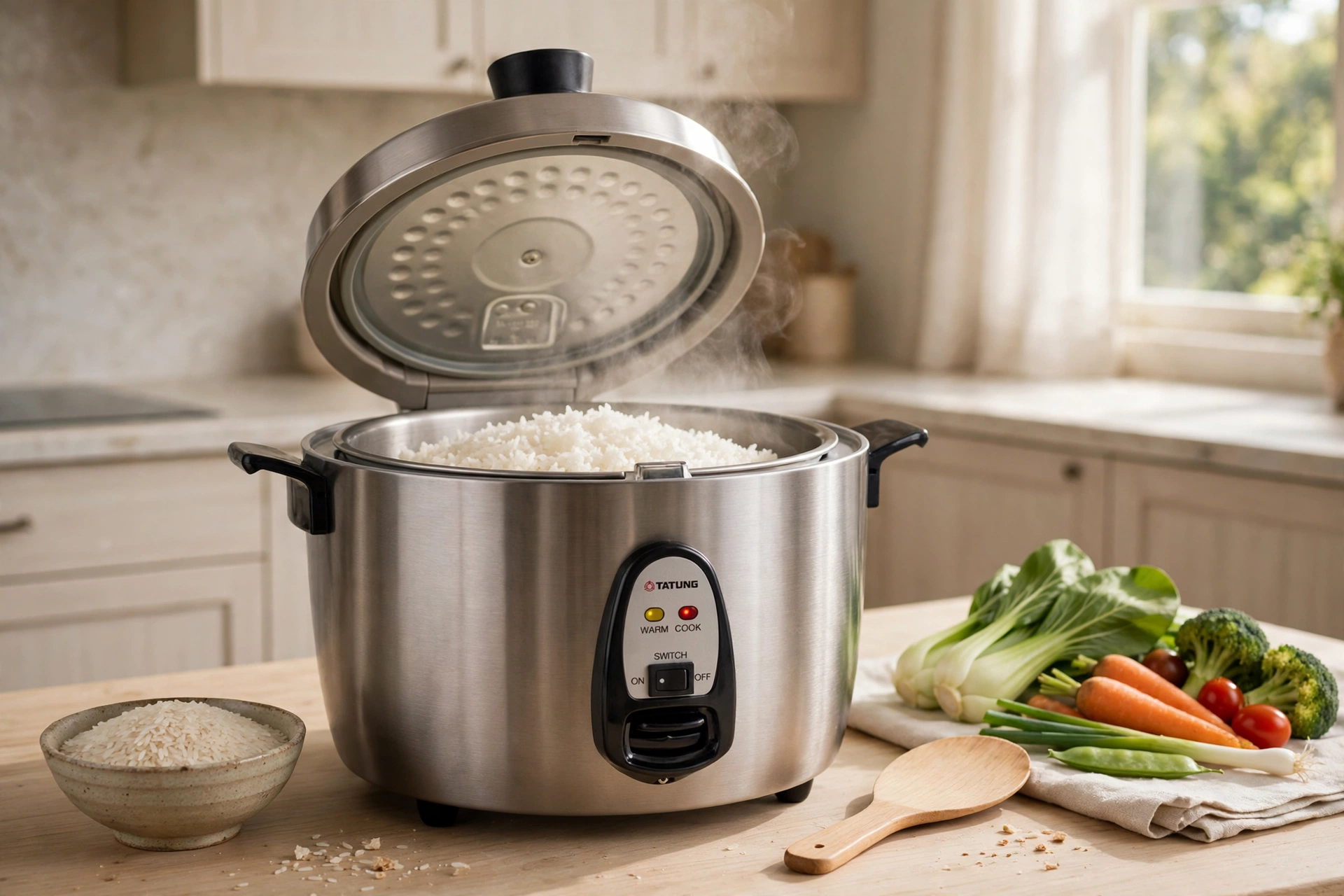
That thought is the entire reason the Tatung TAC-11KN(UL) 11-Cup Multi-Functional Stainless Steel Rice Cooker exists in this guide. It is not smarter than your old cooker. It has no app, no fuzzy logic brain, and no menu of forty grains. What it has is a pot with nothing sprayed on it, an outer pot, an inner pot, a lid, and a steaming insert that are all 18/8 stainless steel, grade SUS304, and a cooking method Tatung has used for decades: indirect heat, where steam from the outer pot cooks the inner pot the way a double boiler does. There is no coating to scratch, bubble, or flake, because there is no coating at all.
We have not tested this cooker ourselves, and nothing in this review pretends otherwise. Everything below comes from the manufacturer and distributor specifications, the Amazon listings for each product named, and the published research we cite and link as we go. Where the evidence is thin, we say so. Where this cooker loses, we say that too, starting sooner than most reviews would.
The verdict, before the argument
The plain answer: if you cook rice several times a week, feed a crowd or a big family, and want one cooker you will not replace because its pot wore out, the Tatung TAC-11KN is the strongest stainless steel rice cooker we cover on this site. Its inner pot, outer pot, lid, and steamer are uncoated SUS304 stainless steel, it cooks by gentle indirect steam heat instead of blasting the pot from below, and at 11 cups uncooked it is the batch cooker of the category. It is also big, old school in looks and operation, and priced like a serious appliance. If you cook rice for one or two people, skip down to the alternatives, because a smaller and simpler stainless cooker will serve you better for less money and less counter space.
Our picks at a glance
Every cooker below cooks in uncoated stainless steel. The Tatung leads, and the rest are ranked in the alternatives section further down, with the reasoning in prose rather than a table, because the right choice here depends on household size more than on any single specification.
Tatung TAC-11KN(UL) 11-Cup Multi-Functional Stainless Steel Rice Cooker
The verdict pick: all-stainless indirect steam cooking for big batches, steaming, and stews.
Aroma Housewares Select Stainless Rice Cooker, 14-Cup (ARC-757SG)
Best for most families: a simple one-switch cooker with a surgical grade 304 stainless pot, rated 4.3 stars across a large review pool on its family listing.

- Perfectly prepares 4 to 14 cups of any variety of cooked rice
- 100% surgical-grade 304 stainless steel cooking pot
- Simple, one-touch operation with automatic Keep-Warm
- Great for soups, jambalaya, chili and so much more!
- Easy-to-clean, removable inner pot. Power Consumption - 120V/60Hz 500W

Aroma Housewares Select Stainless Rice Cooker, 6-Cup (ARC-753SG)
Best for one to three people: the same uncoated 304 stainless design in a 3-cup uncooked size.

- COATING FREE INNER POT: The food-grade 304 stainless steel cooking pot is durable and dishwasher-safe for easy cleaning.
- ONE-TOUCH: Pour in up to 3 cups of uncooked rice, add water, and push down the lever to start. The one-touch, automated design is fool-proof. Just set it and forget it!
- AUTOMATIC COOKING: This smart rice cooker detects when your rice is ready, so you don't even have to set a timer. Then, it automatically switches modes to keep your rice warm!
- COMPACT SIZE: This powerful rice cooker is a must-have kitchen tool in a small package. The 6-cup capacity is perfect for rice, omelets, soups, oatmeal, pasta, and more.
- COMPLETE SET: We include a bonus rice spatula and measuring cup, which are BPA-free. Plus, the spatula can be held in the handle for easy storage.
Buffalo Classic Rice Cooker with Clad Stainless Steel Inner Pot (10 cups)
Best for cooks who hate stuck rice: a multi-layer clad stainless pot that heats evenly with no coating applied.
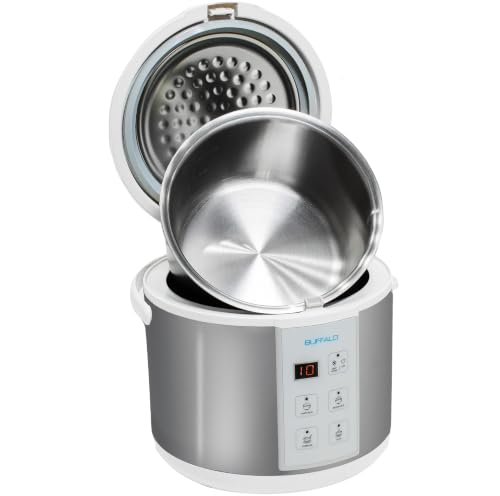
- Patented Buffalo Clad Stainless steel inner pot is scratch-resistant, non-stick, and non-toxic for healthy cooking. It does not contain an unhealthy chemical coating and does not cause adverse food reactions.
- Only Patented Buffalo Clad unibody and Multi-layer sealed construction to give you even heating and superior heating conduction for great-tasting rice. Great for white rice/ brown rice/congee/ keep warm
- Asia's Best-Selling Rice Cooker with Over 1 Million Sold!
- Movable steam vent for easy cleaning. Accessories: measuring cup, rice paddle
- Warranty Information: 1 year for the outer pot, 3 years for the inner pot 100% Quality guarantee by BUFFALO. Do not keep warm maximum 4hrs to avoid burning.
Instant Pot Duo 7-in-1, 6 Quart
Best if you want one appliance to do more jobs: an 18/8 stainless inner pot plus pressure cooking, rated 4.6 stars across a very large review pool.

- 7-IN-1 FUNCTIONALITY: Pressure cook, slow cook, rice cooker, yogurt maker, steamer, sauté pan and food warmer.. PFOA/PTFE-free cooking.
- QUICK ONE-TOUCH COOKING: 13 customizable Smart Programs for pressure cooking ribs, soups, beans, rice, poultry, yogurt, desserts and more.
- COOK FAST OR SLOW: Pressure cook delicious one-pot meals up to 70% faster than traditional cooking methods or slow cook your favorite traditional recipes – just like grandma used to make.
- QUICK AND EASY CLEAN UP: Finger-print resistant, stainless-steel sides and dishwasher-safe lid, inner pot, and accessories.
- PROVEN SAFETY FEATURES: Includes over 10 safety features, plus overheat protection and safe-locking lid
The case against it
A verdict you cannot argue with is marketing, so here is the honest argument against the Tatung TAC-11KN, stated as strongly as its critics would state it.
It is a lot of money for a cooker with almost no features. There is no fuzzy logic adjusting for brown rice, no porridge program, no timer worth the name, and no digital display. Premium Japanese cookers at similar money give you induction heating and a dozen programs. The Tatung gives you a lever, a keep warm switch you control yourself, and a design older than most of its buyers. If features are what you value, this is the wrong cooker, full stop.
It is big, in every direction. Eleven cups uncooked is 22 cups cooked, measured in the 180 ml Tatung cup rather than a US cup, and the machine that holds that much rice needs real counter and cabinet space and weighs roughly ten pounds before you add water and rice. A household of two will run it half empty most nights, and a big cooker run half empty is counter space spent for nothing.
The method asks something of you. Indirect cooking means water goes in two places: with the rice in the inner pot, and in the outer pot that generates the steam. Get the outer water wrong and the texture follows. Owners coming from a press-one-button cooker face a short learning curve, usually a few batches, and some people simply do not want homework from a rice cooker.
Rice sticks to bare steel. This is true of every uncoated pot in this article, and the Tatung is no exception. A rested pot, fluffed after the steam settles, releases far better than a pot attacked the second the lever pops, and a stuck layer soaks off in water. But if your standard is the slide-out clean release of a fresh nonstick pot, steel will feel like a step backward every single night.
The warranty is shorter than the legend. Tatung cookers have a genuine multi-decade reputation, and the design has been in production for over 60 years according to the brand’s US distributor. The written warranty on this model, though, is one year. A reputation is not a guarantee, and we would rather you bought it for the materials and the method than for a folklore promise nobody signed.
Availability comes and goes. The stainless Tatung models move in and out of stock on Amazon and at the US distributor, and the smaller stainless variants are harder to find than this 11-cup flagship. If the listing shows a long lead time or a third-party seller you do not recognize, waiting for a restock beats gambling on the wrong variant, a point we return to in the buying plan.
Every one of those objections is real. The reason the verdict stands anyway is the evidence in the next sections: what a damaged coating sheds, what bare SUS304 steel is and is not, how indirect heat changes both the rice and the pot’s working life, and the one honest complication, arsenic, where this cooker’s standard method is not the best tool and the fix is a change of technique rather than a change of cooker.
Get the Weekly Swaps
One short email a week: the newest microplastics studies in plain English, plus the swaps that are actually worth your money. Join free and we will send you our room-by-room microplastic checklist to get you started.
Get Our Free Room-by-Room Microplastic ChecklistJoin the newsletter and get the checklist free →
Does a damaged nonstick pot actually shed anything?
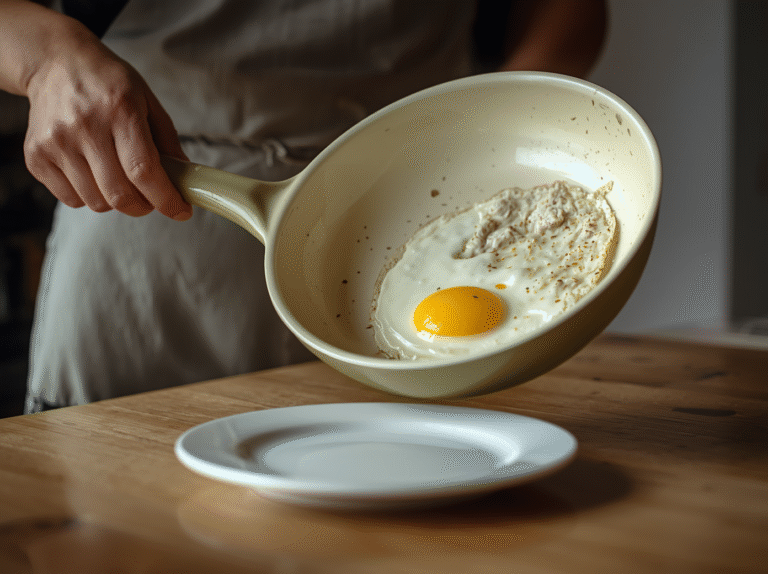
Yes, and this is the best-measured part of the whole argument. Start with what the coating is. Most nonstick rice cooker pots are aluminum covered with PTFE, the fluoropolymer best known by the Teflon brand name. PTFE coatings are authorized for food contact in the United States under 21 CFR 177.1550, the Food and Drug Administration rule for perfluorocarbon resins. That authorization covers an intact coating made to specification. It says nothing about what a scratched, bubbling, five-year-old pot releases, which is the question that actually matters in a working kitchen.
Luo and colleagues, in a 2022 study in Science of the Total Environment, used Raman imaging to count what damaged PTFE coatings release during simulated cooking. A single surface crack released an estimated 9,100 micro and nanoplastic particles. A broken coating released an estimated 2.3 million. Read those numbers with the caveat the researchers’ own method requires: this was a mimic cooking process without food, utensils moving against coated pot surfaces, so it measures what a damaged coating can shed rather than what lands in any specific meal. It was also a study of nonstick cookware generally, not of rice cookers.
That last point deserves its own sentence, because honesty here is the whole brand of this site: no peer-reviewed study has measured particle release from a rice cooker or a rice cooker pot directly. Anyone who quotes you a rice-cooker-specific particle count is inventing it. What exists is cookware evidence, and the second piece of it points the same direction. Cole and colleagues, in a 2024 study in Science of the Total Environment, prepared a food simulant using non-plastic cookware sets and plastic cookware sets that included PTFE-coated pans. The stainless steel and glass sets introduced no microplastics into the simulant. The plastic and PTFE sets did, at levels the authors estimated at roughly 2,409 to 4,964 microplastics per year for a person eating one such meal a day.
Now place that evidence in a rice cooker honestly. A rice pot runs cooler and wetter than a frying pan, which is gentler on a coating. It also works far more often in many homes, takes paddle scrapes at the same worn spots for years, and is exactly the kind of appliance people keep long past the point where the pot looks tired, because the machine still works. The failure mode is slow and ordinary: not a dramatic poisoning event, just a surface coming apart a little at a time in hot, wet food. An uncoated steel pot removes that failure mode entirely. Steel can scratch, stain, and eventually pit, and we cover all three below. What a scratch in steel releases is steel, in quantities the next section puts in perspective, not a synthetic coating fragmenting into particles.
What does SUS304 actually mean, and is stainless steel perfect?
No, stainless steel is not perfect, and a review that calls it perfect is skipping the most interesting part. SUS304 is the Japanese Industrial Standard name for the grade most of the world calls 304, or 18/8: roughly 18 percent chromium and 8 percent nickel alloyed into steel. The chromium forms an invisible chromium oxide layer on the surface, called the passive layer, which is what makes the steel stainless. Scratch it and the layer reforms in the presence of oxygen. That self-repairing skin is why a steel pot can serve for decades while a coated pot is on a countdown from its first scratch.
The grade ladder is worth knowing because listings blur it. 18/8 and 18/10 are both 304 family steels; the second number is nickel content, and 18/10 carries slightly more nickel for a slightly harder, more corrosion-resistant finish. Grade 316 adds molybdenum and resists salt and acid pitting better still, which is why it shows up in marine hardware and some premium cookware. The Tatung TAC-11KN is SUS304 throughout its food-contact parts, per its US distributor: inner pot, outer pot, inner lid, and steaming accessories, with only the measuring cup and rice paddle excepted. That is the right grade for this job. Rice, water, and steam are a mild environment, well inside what 304 handles indefinitely.
Here is the imperfection, with its study attached. Kamerud, Hobbie, and Anderson, in a 2013 study in the Journal of Agricultural and Food Chemistry, cooked tomato sauce with stainless steel and measured nickel and chromium moving into the food. After six hours, nickel rose up to 26-fold and chromium up to 7-fold compared with sauce cooked without steel, leaching was highest when the steel was new, and it fell and stabilized after about the sixth cooking cycle. At the tenth cycle, a serving of sauce still picked up measurable nickel and chromium.
Context is what keeps that finding honest rather than scary. Tomato sauce simmered for six to twenty hours is close to a worst case: acidic food, long contact, constant heat. Rice cooking in water is near-neutral, takes well under an hour, and the Tatung’s inner pot is not even in direct contact with the heating element, since steam does the work. The study’s real lessons for a Tatung buyer are narrower and genuinely useful. First, new stainless leaches the most, so the old advice to cook a few throwaway batches or simply wash a new pot thoroughly before its first real use has evidence behind it. Second, the readers for whom this matters most are people with a known nickel sensitivity, for whom dietary nickel is a documented concern, and they should weigh steel cookware with their clinician rather than with a blog. For everyone else, the trade is a small, declining, well-characterized metal exposure against a coating whose particle shedding grows as it ages. We take that trade, and we think the studies support taking it.
Why does indirect heat matter?
Because it changes two things at once: the texture of the rice, and the lifespan of the pot. In a conventional cooker, a heating plate sits directly under a thin pot, which creates a hot floor, cooler walls, and a ring of rice at the bottom that cooks harder than the rice at the top. In the Tatung TAC-11KN, you add water to the outer pot, set the inner pot inside it, and the machine boils that outer water. Steam surrounds the inner pot on all sides, so the inner pot heats evenly at steam temperature, the way a double boiler melts chocolate without scorching it. Tatung’s own description of the method, carried by its distributors for decades, is indirect heating, and owners use the same setup to steam, stew, and braise, not just to cook rice.
The practical consequences follow from the physics. There is no hot spot to scorch a bottom layer, which is one reason Tatung rice is famous for an even texture from top to bottom of a very large batch. Gentle, even heat is also kind to the pot itself: no thermal shock from a blazing plate, no localized overheating degrading a surface, because there is no applied surface to degrade. And the two-pot system doubles as equipment. The inner pot lifts out and works as a serving vessel or a stovetop pot in a pinch, the steaming insert cooks vegetables, dumplings, or fish above the rice, and the outer pot on its own is a steamer for anything that fits. This is why the Tatung’s owner base talks about it less like a rice cooker and more like a general-purpose steam kitchen. If your cooking is rice only, twice a month, that versatility is wasted on you, and the alternatives below are the smarter spend. If you steam and stew weekly, the Tatung stops being an expensive rice cooker and becomes the appliance that replaced three others.
The costs of the method are the ones named in the case against it. Outer-pot water is a second variable: too little and the cycle ends early with firmer rice, too much and you wait longer for a softer result. The relationship is consistent once learned, and generations of owners measure it with the included cup and lines rather than apps, but the first few batches are calibration, not dinner theatre. There is also no mid-cycle forgiveness. A fuzzy logic cooker quietly compensates for your measuring errors. The Tatung cooks exactly what you set up, which purists love and busy weeknight cooks occasionally curse.
The arsenic problem, and the honest limit of this cooker
Rice carries inorganic arsenic from soil and irrigation water more readily than other grains, and no cooker material changes what is in the grain. What changes the dose is the cooking method, and here this review has to give the Tatung a demerit in plain sight. The United States Food and Drug Administration set an action level of 100 parts per billion for inorganic arsenic in infant rice cereals in its final guidance of August 2020. Note exactly what that is: a level for infant rice cereal specifically, not a general limit for table rice. It tells you regulators take rice arsenic seriously for the youngest eaters. It does not grade your dinner.
The method evidence is stronger and more useful. Menon and colleagues at the University of Sheffield, in a 2021 study in Science of the Total Environment, tested home-friendly cooking methods and found that parboiling with absorption removed 54 percent of inorganic arsenic from brown rice and 73 percent from white rice, while largely preserving nutrient elements. The method is simple: parboil the rice in pre-boiled water for about five minutes, drain and replace the water, then finish cooking by absorption. Excess-water cooking, where rice boils in a large volume of water that is drained away, also removes a substantial share, because arsenic leaves the grain into water that you then throw away.
Now the demerit. Absorption cooking, which is what the Tatung and nearly every rice cooker does by default, keeps the water and therefore keeps most of the arsenic that migrated into it. Indirect steam heat does not fix that; the inner pot is still an absorption environment. So the honest instruction for arsenic-conscious households is a technique, not a purchase: rinse the rice, parboil it briefly in a separate pot of water on the stove, drain it, and only then load it into the Tatung with fresh water to finish. The stainless inner pot handles that workflow without complaint, and the result keeps the Tatung’s even texture while adopting the Sheffield method’s removal rates. Households that cook rice daily, and especially households serving infants and young children, should also rotate grains, because varying the menu lowers reliance on any single exposure route. A review that sold you this cooker as an arsenic solution would be lying to you. It is a materials solution. Arsenic is a method problem, and the method fix is free.
How do you keep a stainless pot working for decades?
Care is where steel quietly wins the argument it started. A coated pot asks for soft utensils, gentle sponges, and lowered expectations. The Tatung TAC-11KN inner pot asks for water, a soak when rice sticks, and a scrub pad you are actually allowed to use. The failure modes are three, and each has a plain fix.
Sticking and the crust. Rice starch bonds to hot steel as it dries. Letting the pot rest with the lid on after the cycle ends, so steam loosens the bottom layer, then fluffing, prevents most of it. What remains soaks off in warm water in the time it takes to eat dinner. A stuck crust is an inconvenience measured in minutes, not damage.
Mineral scale and rainbow staining. Hard water leaves chalky scale, worst in the outer pot where water boils away every cycle, and heat can leave a harmless blue-gold tint on steel called heat tint. Both are cosmetic, both come from minerals rather than the steel failing, and a periodic boil with diluted vinegar or citric acid clears the scale. How often depends on your water: monthly for hard water, a few times a year for soft. The outer pot deserves the same descale, because scale on a heating surface insulates it and lengthens cycles.
Pitting, the one real enemy. Chlorides, meaning salt left sitting in a damp pot and concentrated bleach cleaners, can pit 304 steel over time. The habits that prevent it are trivial: salt the rice water as you cook rather than leaving salted water standing in the pot overnight, rinse after cooking, and skip bleach-based cleaners entirely. Follow those and the pot’s working life is measured in decades, which matches the owner reports that made this design famous. Add the simplicity dividend: there is almost nothing electronic to fail. A lever, a heating element, and a warm switch are repairable, diagnosable parts, in a category where a dead control board usually means a landfill.
Join Our Free Facebook GroupNon-Toxic Family Living: parents sharing swaps that work →
If not this one, then which?
Ranked by who should buy them, not by a spec sheet. Every pick here cooks in uncoated stainless steel, and every one appeared in our wider guide to non-toxic rice cookers, where the full category is laid out. This ranking is the short version for readers whose real question is whether the Tatung’s size and price are justified for their kitchen.
Second, and first for most families: the Aroma Housewares Select Stainless Rice Cooker, 14-Cup (ARC-757SG). If the Tatung is a steam kitchen, the Aroma is an appliance in the best sense: one switch, cook and warm, and a pot made completely of surgical grade 304 stainless steel in Aroma’s own listing words. It cooks 7 cups uncooked, 14 cups cooked, which is the size most family kitchens actually land on. Its family listing carries a 4.3 star rating across roughly seventeen thousand ratings, the largest proof of everyday use among the dedicated stainless rice cookers here. The trade-offs are direct heating, so a firmer bottom layer than the Tatung’s even steam, no steaming-outer-pot versatility, and the same sticking reality as any bare steel pot. For a household that wants the coating gone without learning a new method, this is the buy, and it is not close.
Third, for small households: the Aroma Housewares Select Stainless Rice Cooker, 6-Cup (ARC-753SG). This is the ARC-757SG’s design at 3 cups uncooked and 6 cups cooked, for one to three people. Small stainless cookers are rarer than they should be, because most small cookers chase a low price with a coated pot. This one keeps the uncoated 304 pot and drops the size and the spend. Buy it instead of the big Aroma if your rice cooking is weeknight dinners for two, and instead of the Tatung unless you regularly cook for a crowd or steam whole meals.
Fourth, for cooks who hate the steel learning curve: the Buffalo Classic Rice Cooker with Clad Stainless Steel Inner Pot (10 cups). Buffalo bonds stainless steel around a conductive core, a clad construction borrowed from premium cookware, so the pot heats more evenly than a thin single-layer steel pot and, owners consistently report, releases rice more easily while still having no applied nonstick coating. That last claim is the one to read carefully on any listing: clad stainless is a material, not a coating, which is exactly the distinction this site cares about. Two honest flags. Capacity descriptions for this model vary between listings and manuals, so confirm the exact size on the listing before ordering. And we could not capture a trustworthy rating for this specific model during this review, so we are not quoting one; the pick rests on the construction and the brand’s long specialty in stainless rice pots, not on a star figure.
Fifth, if you want one machine to do seven jobs: the Instant Pot Duo 7-in-1, 6 Quart. Its inner pot is 18/8 stainless steel with a tri-ply base, it pressure cooks rice faster than any dedicated cooker here, and its 4.6 star rating across a very large review pool reflects how many kitchens already run one. As a rice cooker it is very good rather than great: pressure rice has a slightly different texture, the keep warm habits of a multi-cooker need watching, and the sealing ring holds odors in a way a simple steel pot never will. Buy it when counter space forces one appliance to cover rice, beans, stews, and yogurt. Buy a dedicated cooker when rice is a near-daily staple and texture is the point. Readers comparing it with slow cooking should also see our non-toxic slow cookers guide, which covers the stainless and ceramic options in that category.
The one we would skip: the famous fuzzy logic cookers with coated pots. The best-known Japanese rice cookers make genuinely wonderful rice, and their top models are engineering marvels. Their inner pans are also, almost without exception, nonstick coated, which means the exact wear-and-replace cycle this entire guide exists to exit. Naming no villain here is deliberate, because those brands are honest about their materials. But if you arrived at this review because a scratched pot bothered you, buying a more expensive scratched pot in five years is not a solution. Skip the category, not just a model.
Browse Our Full Amazon StorefrontAll our rice cooker and stainless kitchen picks in one place →
What would we actually buy?
Here is the buying plan, household by household, with no prices because listings move and the logic does not.
Households of five or more, meal preppers, and anyone who steams or stews weekly: buy the Tatung TAC-11KN, once, and be done with rice cooker shopping. Verify the listing says TAC-11KN and stainless before ordering, because Tatung also sells aluminum-pot and smaller models whose names differ by a letter or two, and the stainless construction is the entire point. Skip the extended warranty pitch at checkout; a lever-and-element machine with a one-year manufacturer warranty is a poor candidate for a paid plan. Do buy a spare inner pot only if you cook rice daily and entertain often; for everyone else the included pot, lid, and steamer insert are the whole kit.
Households of three or four who want simple: buy the Aroma Select Stainless ARC-757SG. You give up the Tatung’s even steam and second-pot versatility and gain a machine anyone in the house can run half asleep. Households of one or two: the Aroma ARC-753SG, same reasoning, smaller footprint. Texture perfectionists on a dedicated-cooker budget: the Buffalo Classic, after confirming the capacity on the listing. One-appliance kitchens: the Instant Pot Duo 6 Quart, accepting good rice in exchange for six other jobs.
What we would skip spending on, across the board: replacement nonstick pots for a cooker you already dislike, which restart the wear clock at nearly the cost difference toward steel; premium rice cooker accessories in plastic, when the steel steamer inserts above already do the work; and any cooker, however marketed, whose listing will not state the inner pot material in plain words. That last rule, learned across our plastic-free kettles and silicone safety research as well, has never steered this site wrong: if the food-contact material is a secret, treat it as coated until proven bare.
Rapid-fire questions
Is the Tatung TAC-11KN completely plastic free?
No. Its food-contact cooking parts, inner pot, outer pot, lid, and steaming accessories, are SUS304 stainless steel, but the measuring cup and rice paddle are excepted in the distributor’s own specification, and the housing includes non-food-contact parts. The honest claim is narrower and still strong: nothing coated or plastic touches your food while it cooks.
Does stainless steel rice taste different?
Slightly, at first. Steel has no coating flavor and no seasoning layer, and the Tatung’s steam method gives an even, separate-grain texture many owners prefer. The bigger difference is technique: rested, fluffed rice from steel beats rice scraped out of any pot the second it finishes.
Will rice stick every time?
A thin layer can, especially with short-grain rice and no rest. Resting with the lid on, fluffing, and soaking the pot afterward reduce it to a minor chore. If zero sticking is your top priority, the clad Buffalo pot is the closest steel gets, and a coating is the only full answer, with the wear trade-off that brings.
Can the Tatung cook brown rice and other grains?
Yes, with more water and a longer soak or cycle than white rice, and without a dedicated program to lean on. It also steams vegetables and dumplings, and works as a stew and braise pot, which is how many owners use it most. For the arsenic-conscious brown rice routine, use the parboil and drain method described above before the final cook.
Is stainless steel safer than nonstick?
On the evidence available, for a long-lived pot, yes. Damaged PTFE coatings shed measurable micro and nanoplastic particles in the Luo and colleagues 2022 study, and stainless sets shed none into food simulant in the Cole and colleagues 2024 study. Stainless leaches small amounts of nickel and chromium, most when new and most in long acidic cooking, per Kamerud and colleagues 2013. Neither material is zero. Steel’s exposure is smaller, declining, and does not depend on a fragile surface staying perfect.
How long will a Tatung actually last?
The design has been produced for over 60 years and multi-decade owner stories are common, because there is little to wear out beyond a heating element and a switch. The written warranty is one year, so buy it for the construction, not a promise. Keep salt water from standing in the pot, descale the outer pot, and the steel itself should outlast several coated cookers.
What size should I buy?
Match uncooked capacity to your biggest regular batch, remembering Tatung cups are 180 ml. The 11-cup TAC-11KN suits five or more people, batch cooking, and steaming whole meals. Most three and four person homes land on a 7-cup uncooked machine like the Aroma ARC-757SG, and one and two person homes on its 3-cup sibling.
Does a rice cooker remove arsenic from rice?
No cooker does by default, because absorption cooking keeps the water. The verified fix is method: Menon and colleagues 2021 showed parboiling then draining before the absorption cook removed 54 percent of inorganic arsenic from brown rice and 73 percent from white. Do the parboil on the stove, then finish in whichever stainless cooker you own.
Why is there no rating quoted for the Tatung or the Buffalo?
Because we could not capture a trustworthy figure for those exact models from their listings during this review, and this site does not print numbers it cannot stand behind. The Aroma and Instant Pot ratings quoted above come from their live family and product listings. Judge the Tatung on its materials, method, and owner history, which are documented, rather than on a star count we could not verify.
Add Us as a Preferred Source on GoogleOne tap, and our guides show up first in your Google results →
Keep reading
Start with our full non-toxic rice cookers guide for the whole category, then the non-toxic slow cookers guide for the other countertop workhorse, our plastic-free kettles guide for the same materials logic applied to boiling water, and our explainer on whether silicone is actually safe for the honest version of another material swap.