Best Compost Bins: 7 Plastic-Free and Low-Plastic Picks
As an Amazon Associate I earn from qualifying purchases. This post contains affiliate links, which means I may earn a commission if you buy through them, at no extra cost to you.
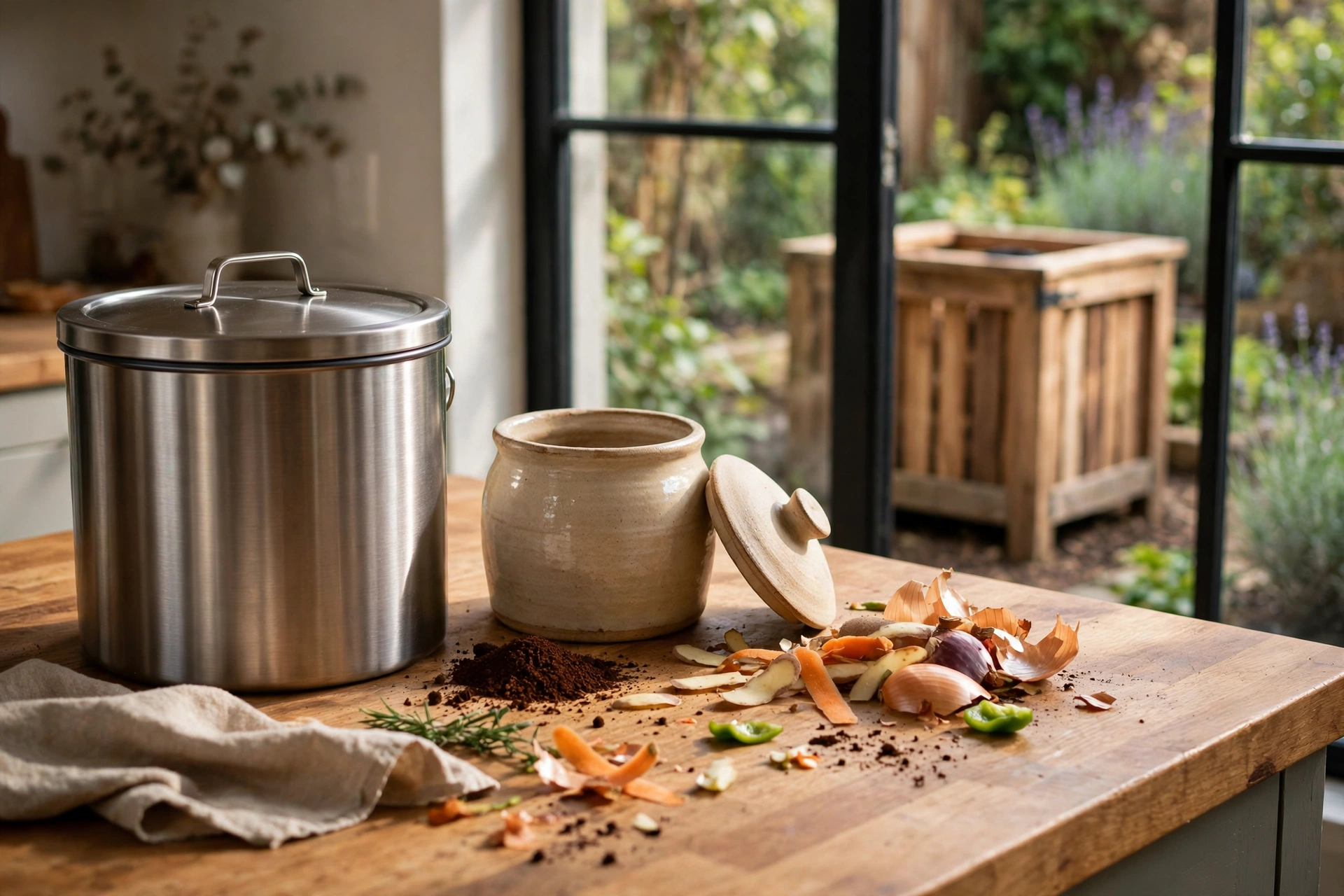
The quick version: The best compost bins are the ones that are not plastic in the first place. For most kitchens that means a stainless steel countertop bin like the EPICA Countertop Compost Bin (4.7 stars, about 19,000 ratings) for collecting scraps, paired with a cedar, steel or ceramic bin that fits your space for the actual composting. Four of the seven picks below are plastic-free in the body. Three are honest compromises, and we label exactly where the plastic is in each one, because a bin you have to replace every couple of years is not the low-waste win it looks like.
New to cutting plastic in the kitchen? Start with our guide to reducing microplastics in your kitchen.
Why Does the Material of a Compost Bin Matter?
It matters for two simple reasons. First, food scraps are wet and acidic, and they sit in the bin for days, so a plastic pail is the container most likely to get scratched, stained and thrown out. Second, composting only helps if the scraps actually leave the trash. The U.S. Environmental Protection Agency, in its 2023 report Quantifying Methane Emissions from Landfilled Food Waste, estimates that food makes up about 24 percent of what goes into U.S. landfills but accounts for about 58 percent of the fugitive methane emissions from those landfills. A bin that is pleasant to use, easy to clean and built to last is the difference between scraps that get composted and scraps that quietly go back in the garbage.
Steel, ceramic, cedar and galvanized metal all handle that job without shedding plastic, and they tend to outlast a thin plastic caddy by years. Where a pick below does contain plastic, in insulation, a binder or an outer shell, we say so in its section and in the table, so you can decide with your eyes open.
Get the Weekly Swaps
One short email a week: the newest microplastics studies in plain English, plus the swaps that are actually worth your money. Join free and we will send you our room-by-room microplastic checklist to get you started.
Get Our Free Room-by-Room Microplastic ChecklistJoin the newsletter and get the checklist free →
What Should You Look For in a Compost Bin?
Look first at where the scraps will actually finish. A countertop bin is only a collection point: it holds a few days of peels and coffee grounds until you carry them to an outdoor bin, a tumbler, a community drop-off or a freezer. Outdoor bins do the real composting, and the EPA home composting guidance is blunt about what they need: a mix of browns like dry leaves and greens like vegetable scraps, plus moisture and air. Size follows from that. A 1 to 1.3 gallon countertop bin suits most households that empty it every few days. A yard bin needs real volume, 30 gallons and up, because fall leaves alone will fill a small bin in one weekend.
Then check the lid and the clean-out. A charcoal filter in the lid is what keeps a countertop bin from smelling up the kitchen, and filters need replacing, so factor that in. Smooth, one-piece bodies rinse clean and do not trap grime in seams. For outdoor bins, think about critters before you buy: open and slatted designs breathe well but do not keep rats or raccoons out on their own, while a sealed steel tumbler does. We weighted all of that, plus Amazon ratings and review counts, in the picks below. The EPA’s own starting guide is here if you want the basics from the source: EPA, Composting at Home.
The Best Countertop Pick
EPICA Countertop Compost Bin, 1.3 Gallon Stainless Steel
The EPICA countertop bin is the classic answer for a reason. It is molded from a single piece of stainless steel, so there are no welded seams to leak or rust, it holds 1.3 gallons of scraps, and a thick charcoal filter in the tight lid keeps odors down for days at a time. It holds a 4.7 star rating across about 19,000 Amazon ratings, the strongest record in this guide. Steel does not hold onto smells the way plastic does, and when the bin gets grimy you remove the filter and wash the whole thing with warm soapy water. The honest trade-offs: the filter needs replacing about every six months, 1.3 gallons fills fast if you cook for a crowd every night, and fingerprints show on the finish if that sort of thing bothers you. For a first compost bin that will still be on your counter in ten years, this is the one we would hand a friend first.
The Budget Stainless Twin
Utopia Kitchen Indoor Compost Bin, 1.3 Gallon Stainless Steel
The Utopia Kitchen bin is the same proven idea in a lighter package: 1.3 gallons of stainless steel, a charcoal filter in the lid, and a spare filter in the box, which is a thoughtful touch because the first filter change is the one everyone forgets to buy. It holds a 4.5 star rating across about 20,000 Amazon ratings, so plenty of kitchens have put it through its paces. The trade-offs are the flip side of the lighter build: at about two pounds it feels less substantial than the EPICA, and some reviewers call the handle flimsy, so carry a full bin with a little care. If the EPICA is out of stock or over budget on the day you look, this is the stainless alternative we would pick without hesitation.
The Prettiest Pick for Small Kitchens
Norpro Ceramic Compost Keeper, 1 Gallon
The Norpro Ceramic Compost Keeper is for anyone who has resisted composting because they did not want a trash pail living on the counter. It is a glazed ceramic crock with a stainless steel handle and a charcoal filter in the lid, and it looks like a canister, not a bin. Glazed ceramic does not absorb odors, and the one gallon size is right for a small household or an apartment that uses a drop-off service. We could not cleanly capture its current Amazon star rating in our research pass, so we are not printing one rather than borrowing a number we cannot stand behind; check the live rating on the listing when you look. The trade-offs are what you would expect from ceramic: it is heavy, it can break if dropped on a tile floor, and it wants hand washing rather than the dishwasher. Pretty and plastic-free has a price, and this is it.
The Design-Led Low-Plastic Compromise
Bamboozle Kitchen Compost Bin, Bamboo Fiber
The Bamboozle compost bin is the one pick in this guide where the marketing needs a footnote, so here it is up front. Bamboo fiber bins are made from bamboo fiber bound with a melamine resin, which is a plastic family material. That makes this bin low-plastic, not plastic-free, and we are including it because it is lightweight, genuinely handsome, dishwasher safe on the top rack, and holds a 4.5 star rating across more than 5,000 reviews. If your household will actually compost only when the bin looks like decor, this is a reasonable trade. The honest downsides: the resin-bound body can crack if dropped, the lid is surprisingly heavy, and if plastic-free is a hard line for you, the steel and ceramic picks above are the right call instead.
The Apartment Answer With No Outdoor Space
Vitamix FoodCycler FC-50
The Vitamix FoodCycler FC-50 is not a compost bin in the traditional sense, and we will not pretend otherwise. It is an electric recycler: it dries and grinds scraps in its cast aluminum bucket over a few hours and leaves a dry, odor-free material you can mix into soil. For an apartment with no yard, no drop-off and no freezer space, that can be the difference between composting and not composting at all. It holds a 4.5 star rating across 2,353 Amazon ratings. Now the compromises, plainly: the outer shell is plastic even though the food-contact bucket is metal, the bucket holds only about 2 liters per cycle, it uses electricity, and what comes out is a dehydrated food compound, not finished living compost. It is also the highest ticket pick in this guide by a wide margin. If a countertop bin plus a drop-off works for you, save the money. If nothing else will work in your space, this is the electric option with a real brand and a real rating behind it.
The Big Backyard Bin
Greenes Fence Premium Cedar Composter, 174 Gallon
The Greenes Fence cedar composter is the outdoor workhorse: untreated North American cedar, about 174 gallons of capacity, and a slatted design that gives a pile the airflow the EPA guidance calls for. Cedar resists rot and insects on its own, the boards assemble without tools, and the system expands with add-on kits if you want a second or third bay for turning. This is the bin for fall leaves, grass clippings and a garden that actually uses finished compost. We could not cleanly capture its current Amazon star rating in our research pass, so none is printed here; check the live listing. The trade-offs: an open, slatted bin does not keep rats or raccoons out by itself, so a layer of hardware cloth underneath is a smart add-on where critters are bold, and a pile this size gets turned by hand with a fork. That is real work a few times a season, and it is also the whole point of a backyard bin.
The Sealed Tumbler for Cold Climates and Critters
Jora Compost Tumbler JK125, 33 Gallon Steel
The Jora JK125 tumbler solves the two problems the cedar bin cannot. It is a sealed, dual chamber galvanized steel tumbler, so one side can cure while the other takes fresh scraps, critters cannot get in, and turning the pile means rotating the drum instead of forking it. The walls are insulated, which helps a pile stay hot enough to keep working through winter in cold climates. Two honest flags. First, that insulation is polyethylene, a plastic, so this is a mostly plastic-free steel bin, not a fully plastic-free one. Second, we could not cleanly capture its current Amazon rating or confirm a featured offer in our research pass, so no rating is printed here and it is worth checking the live listing for availability before you plan around it. It is heavy, assembly takes some patience, and it is a premium pick. For a cold climate yard with determined raccoons, it earns that place.
Best Compost Bins at a Glance
| Pick | Best for | Made of | Capacity | Plastic-free? |
|---|---|---|---|---|
| EPICA Countertop Bin | Most kitchens | Stainless steel | 1.3 gal | Yes, body |
| Utopia Kitchen Bin | Budget stainless | Stainless steel | 1.3 gal | Yes, body |
| Norpro Ceramic Keeper | Small kitchens | Ceramic, steel handle | 1 gal | Yes, body |
| Bamboozle Bin | Design-led kitchens | Bamboo fiber, melamine binder | About 1.25 gal | No, low-plastic |
| Vitamix FoodCycler FC-50 | Apartments, no yard | Aluminum bucket, plastic shell | 2 L per cycle | No, compromise |
| Greenes Fence Cedar Composter | Big yards, fall leaves | North American cedar | 174 gal | Yes |
| Jora Tumbler JK125 | Cold climates, critters | Galvanized steel, polyethylene insulation | 33 gal | Mostly |
Want everything in one place, including the filters and accessories?
Browse Our Full Amazon StorefrontAll our compost bin picks in one place →
How Do You Keep a Countertop Bin From Smelling?
Three habits do almost all of the work. Keep the charcoal filter fresh, because a spent filter is the number one cause of a smelly bin. Empty the bin every two to four days, to the outdoor pile, a drop-off or a bag in the freezer if your trip out is weekly. And rinse and dry the bin each time you empty it, because a dry steel or ceramic bin does not grow the slime that makes a plastic pail smell even when it is empty. Meat, dairy and oils do not belong in a home pile at all, per the EPA guidance, and keeping them out removes most odor and pest problems before they start.
What Can and Cannot Go in a Home Compost Bin?
Fruit and vegetable scraps, coffee grounds and filters, eggshells, plain bread and grains, dry leaves, grass clippings and shredded plain paper are the everyday greens and browns a home bin handles well. Meat, seafood, dairy, greasy foods, pet waste and treated wood stay out: they attract pests, smell, and can carry pathogens a cool home pile will not kill. When in doubt, the EPA composting guide linked above has the plain list, and it is worth a bookmark before your first pile.
Talking compost in a house full of skeptics? You are not alone, and the swap stories help.
Join Our Free Facebook GroupNon-Toxic Family Living: parents sharing swaps that work →
Frequently Asked Questions
Are stainless steel compost bins really better than plastic?
For a countertop collection bin, yes, in the ways that matter day to day. Stainless steel does not absorb odors, does not stain the way plastic does, rinses clean, and lasts for years instead of cracking or warping. It costs more up front and lasts long enough to be the cheaper bin over time.
Is a bamboo fiber compost bin plastic-free?
No. Bamboo fiber bins are bamboo fiber bound with melamine resin, a plastic family material. They are a low-plastic, lightweight option, not a plastic-free one, which is why the Bamboozle pick in this guide is labeled a compromise.
Does an electric food recycler make real compost?
No. Machines like the Vitamix FoodCycler dry and grind scraps into a dehydrated material you mix into soil, where it then breaks down. It is a useful apartment solution, but it is not the same as finished compost from a living pile.
How big should a backyard compost bin be?
Big enough for your leaves. A household that only composts kitchen scraps can manage with a 30 gallon tumbler. A yard with trees will fill that in one fall weekend, which is why high capacity bins like the 174 gallon cedar composter exist.
Will composting attract rats?
It can if meat, dairy or oils go in, or if food sits exposed. A sealed steel tumbler, burying fresh scraps under browns, and hardware cloth under an open bin are the standard fixes, and they work.
Add Us as a Preferred Source on GoogleOne tap, and our guides show up first in your Google results →
Keep Reading
More kitchen swaps that cut plastic where it counts: our guide to the best glass food storage containers, the plastic-free dish soap roundup for the sink next to your new bin, and a lower-plastic Thanksgiving plan for the biggest scrap week of the year.