Yoga Mats That Don’t Shed Microplastics: Natural Rubber and Cork Picks
As an Amazon Associate, we earn from qualifying purchases. If you buy through our links, we may earn a commission at no extra cost to you.
Quick overview: Most yoga mats are PVC vinyl or synthetic foam, and they flake and crumble as they wear. Natural rubber and cork mats do the same job without being plastic in the first place. Start with the JadeYoga Harmony mat for the grippiest natural rubber option, or the Gaiam cork yoga mat if hot yoga grip that improves with sweat is your priority. Seven picks below, with the honest material caveats stated plainly, including which cork mats still use a synthetic backing.
Your yoga mat is the one fitness product you press your face into. It is also, in most gym bags, a sheet of plastic. The standard cheap mat is PVC, sometimes sold as vinyl, and the step-up foam mats are usually TPE, EVA, or a similar synthetic. None of that makes a mat unusable. But plastic mats wear the way plastic things wear: the surface powders, the edges flake, and the little bits that come off are microplastics by definition. They go down the drain when you wash the mat, into household dust, and eventually out into the environment, and the mat itself will sit in a landfill long after your practice moves on.
The good news is that yoga is one of the easiest categories to fix, because the pre-plastic materials never left. Natural rubber and cork were yoga mat materials before PVC took over on price, and the best known brands in yoga still make them. This guide covers the mats that are not made of conventional plastic at all, plus honest middle-ground options, and tells you exactly where each one compromises.
What Yoga Mats Are Made Of, and Why It Matters
Three material families dominate the market. PVC mats are the cheapest and the most durable, but PVC is a plastic with a rough production and disposal record, and older PVC can contain plasticizers you would rather not breathe over in a hot studio. Foam mats labeled TPE or EVA are lighter and often marketed as eco-friendly, but they are still synthetic polymers, and TPE in particular breaks down into small particles as it ages. Neither family biodegrades in any useful timeframe.
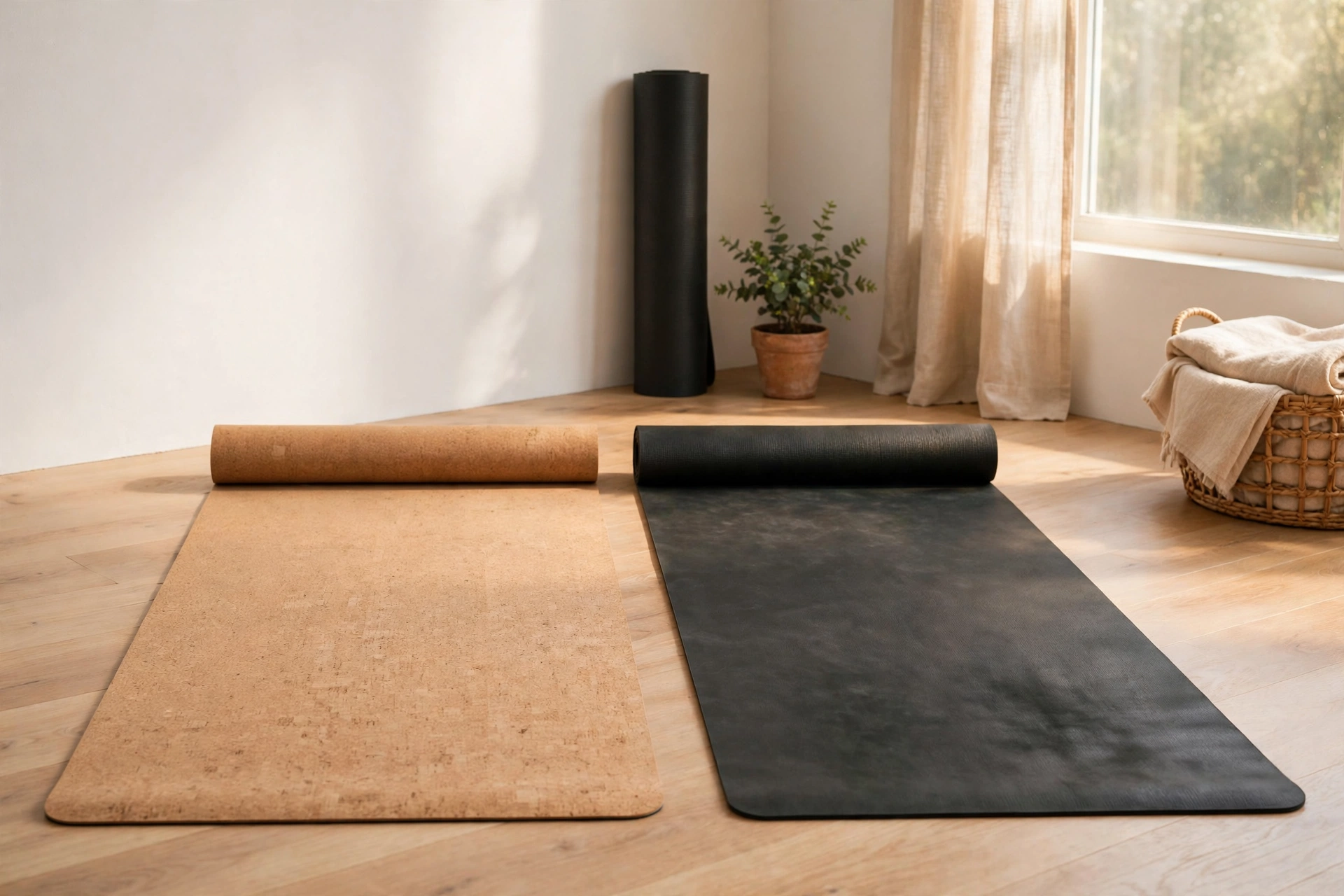
Natural rubber is tapped from rubber trees, much like cork is harvested from bark without cutting the tree down. A rubber or cork mat that wears out sheds natural material that can break down, rather than plastic fragments that persist. That is the core of the swap, and it is the same logic behind the natural fiber rugs we recommend for the floor underneath your mat.
Two honest complications before the picks. First, cork mats need a backing, and some brands back cork with TPE, a synthetic. We flag every pick where that happens, so you can decide whether a cork top with a synthetic base is enough, or whether you want natural rubber all the way through. Second, one premium pick uses an eco-polyurethane top. Polyurethane is technically a plastic, even when formulated to be biodegradable and free of PVC and latex. We label it clearly as the compromise pick, not a plastic-free one. Independent roundups like EcoCult’s non-toxic yoga mat testing reach similar conclusions: natural rubber and cork lead, and every synthetic has fine print.
The Best Natural Rubber Yoga Mats
If you want one material, no fine print, start here. Natural rubber grips better than almost anything synthetic, cushions well, and these two brands are the established names in the category.
JadeYoga Harmony Yoga Mat, 3/16 Inch Natural Rubber
The JadeYoga Harmony mat is the pick we would hand a friend first. It is made in the USA from natural rubber tapped from rubber trees, with no PVC, EVA, or other synthetic rubber content, and at 3/16 of an inch (about 5mm) it cushions knees and elbows without feeling wobbly in standing poses. Grip is the reason this mat has such a loyal following: natural rubber is naturally tacky, dry or damp, in a way foam mats work hard to imitate. JadeYoga also plants a tree for every mat sold, which is a real program, not a vague offset claim. It is one of the highest rated natural mats on Amazon, and its review pool runs into the thousands.
The honest trade-offs: natural rubber smells like rubber for the first days, and it is heavier than a foam mat. It contains latex, so skip it if you have a latex allergy, and keep it out of direct sun, because real rubber degrades in sunlight. Its open-cell surface also drinks sweat, so hot yoga devotees need to clean it more often.
Manduka eKO Yoga Mat, 5mm Natural Rubber
Manduka is the studio standard brand, and the Manduka eKO yoga mat is its natural rubber flagship: 5mm of natural tree rubber, no PVC, no plasticizers, made with non-toxic foaming agents and non-AZO dyes under what the brand describes as a zero-waste process. Unlike the Jade above, the eKO has a closed-cell surface, so sweat and grime sit on top instead of soaking in, which makes it easier to wipe down and a better fit for sweaty practices. The extra-long versions are a genuine help if you are tall and tired of running out of mat.
The honest trade-offs: it is a heavy mat, around seven pounds in the standard size, and the sealed surface can feel slick in the first sessions before it breaks in. Ratings vary noticeably by size and color variant on Amazon, with the long versions drawing more mixed reviews than the standard, so read the reviews for the exact variant in your cart. And like all natural rubber, it is not a latex-free product in the way a synthetic mat is.
Manduka eKO Lite Yoga Mat, 4mm Natural Rubber
The Manduka eKO Lite mat is the same natural rubber idea in a 4mm build that weighs noticeably less, which makes it the version for people who actually walk or bike to class. You keep the PVC-free, plasticizer-free construction and the grippy rippled texture, and you give up some of the joint padding of the 5mm original. For most vinyasa and floor work, 4mm over a studio floor is plenty.
The honest trade-off: less cushion is less cushion. If your knees complain in tabletop or your practice is mostly restorative work on hard floors, the full eKO above or the thicker cork options below will treat you better. The rubber smell on opening is also present here, as it is with every real rubber mat on this list.
Hugger Mugger Para Rubber Yoga Mat, 6mm
The Hugger Mugger Para Rubber yoga mat is the quiet veteran of this list. Hugger Mugger has been making yoga props in the United States for decades, and the Para Rubber is its natural rubber workhorse: a dense 1/4 inch (6mm) mat with grip on both sides, so you can flip it over and use whichever face suits your practice. It is rated 4.5 stars, one of the highest scores on this list, though its pool of ratings is smaller than the big names above, so read that as a loyal following rather than a landslide.
That extra thickness is the whole point. Where the slimmer mats above trade a little cushion for an easier carry, the Para Rubber goes the other way: serious padding for knees, hips, and elbows, and a planted, floor-hugging feel in standing poses. The streaked black and white pattern hides scuffs and studio grime better than a pale solid mat does, too.
The honest trade-offs: all that rubber makes it a heavy, stay-at-home mat, not one you will want to carry across town, and like every natural rubber mat it arrives with a rubber smell that needs a few days of airing out. It is latex based like the other rubber picks, so skip it if latex bothers you.
Cork Yoga Mats: Grip That Gets Better With Sweat
Cork has one party trick no rubber can match: it grips better wet than dry, because cork’s natural texture opens up with moisture. That makes cork the hot yoga material. The catch, covered in the material section above, is the backing. Read each pick’s backing before you buy.
Yoga Design Lab Cork Yoga Mat, Natural Rubber Base
The Yoga Design Lab cork yoga mat is the cork mat for purists: a natural cork surface over a natural rubber base, so the whole mat stays in the natural material family instead of hiding a synthetic layer underneath. It is about 5mm thick, the grip in a heated room is excellent once the cork gets damp, and the Mandala design is printed on the cork itself rather than applied as a plastic film.
The honest trade-offs: cork grips best when it is slightly damp, so the first dry minutes of practice can feel slick until your hands warm up, and the printed design can fade with heavy use. Its review pool is smaller than the big brands here, in the mid hundreds, so there is less crowd wisdom behind it. You are paying for the all-natural construction.
Gaiam Cork Yoga Mat, 5mm
Gaiam is the name most beginners meet first, and the Gaiam cork yoga mat is the budget-friendly way into a cork surface from a brand with real distribution and easy returns. It is 5mm thick, lightweight at roughly two pounds, and the cork top resists odor naturally, which matters in a mat that lives in a closet. For gentle, restorative, and beginner practice, it does everything asked of it.
The honest trade-offs: the backing is TPE, so this is a lower-plastic step rather than a plastic-free mat, and the build quality reflects the price. Serious daily practitioners tend to wear through budget mats faster, and a handful of reviewers note the edges curling. Treat it as a first cork mat, not a forever mat.
The Premium Compromise Pick
Liforme Original Yoga Mat, With Alignment System and Bag
The Liforme Original yoga mat is the mat serious practitioners recommend to each other, and it earns the praise: a natural rubber base, an etched alignment system that genuinely helps with foot and hand placement, a surface that grips hard in sweaty flows, and a carry bag included. It is longer and wider than a standard mat and holds a very strong rating across a deep review pool. If performance were the only question, this would be the top pick.
The honest trade-off is the material itself. The top layer is an eco-polyurethane, formulated to be biodegradable and free of PVC, latex, and toxic glues, which is meaningfully better than a standard synthetic top. But polyurethane is still a plastic family material, so we cannot call this mat plastic-free, and we will not. Buy it with eyes open if the alignment guides and wet grip are worth the compromise. It is also the highest priced mat here by a clear margin.
What Did Not Make the List
The Manduka PRO, for all its durability, is PVC, so it is out on this site’s terms. The flood of no-name TPE and EVA foam mats is out for the same reason. Jute and organic cotton mats are genuinely plastic-free and lovely for meditation, but offer almost no cushion or grip as full practice mats, so they stay a niche note rather than a pick. And if your current mat still has life in it, use it until it wears out, then replace it from this list. Pair your next mat with lower-shedding layers from our fleece alternatives guide.
Yoga Mats at a Glance
| Pick | Material | The honest caveat |
|---|---|---|
| JadeYoga Harmony Yoga Mat | Natural rubber, about 5mm | Contains latex. Heavy, rubber smell at first, keep out of sun. |
| Manduka eKO Yoga Mat | Natural rubber, 5mm, closed-cell | Heavy. Needs a break-in period, ratings vary by variant. |
| Manduka eKO Lite Yoga Mat | Natural rubber, 4mm | Thinner cushion. Not the pick for sore knees on hard floors. |
| Hugger Mugger Para Rubber Yoga Mat | Natural rubber, 6mm | Fully natural rubber. Thick, heavy, stays at home. |
| Yoga Design Lab Cork Yoga Mat | Cork top, natural rubber base, about 5mm | Grip needs a little moisture to activate. Smaller review pool. |
| Gaiam Cork Yoga Mat | Cork top, TPE base, 5mm | Budget build with a synthetic backing. A first mat, not a forever mat. |
| Liforme Original Yoga Mat | Eco-polyurethane top, natural rubber base, 4.2mm | Top layer is still a plastic family material. Highest price here. |
Frequently Asked Questions
Do plastic yoga mats really shed microplastics?
Yes, in the ordinary wear sense. PVC and foam mats abrade with use: the surface powders, corners flake, and washing carries those particles away. A natural rubber or solid cork surface wears too, but what comes off is natural material that can break down, rather than persistent plastic fragments. No mat lasts forever, and that is exactly why the material matters.
Which is better, a natural rubber or a cork yoga mat?
For all-round grip and cushion, natural rubber, especially if you practice at room temperature. For hot yoga, cork has the edge because its grip improves as it gets wet. If you choose cork, check the backing: cork over natural rubber keeps the mat fully natural, while cork over TPE is a lower-plastic compromise at a friendlier price.
Are natural rubber yoga mats safe if I have a latex allergy?
No. Natural rubber is latex, and even mats described as mostly latex free are not a safe bet for a true latex allergy. If latex is a concern, look at cork-topped mats and read the backing and full material list carefully, or talk to your allergist before buying. This article is shopping guidance, not medical advice.
How long does a natural rubber or cork mat last?
Expect a few years of regular practice from the premium rubber mats here, less from budget builds. Keep rubber mats out of direct sunlight, clean cork gently and let it dry flat, and store mats rolled loosely. A plastic mat may outlast them, and it will also outlast everyone in a landfill, which is the trade this whole list is about.
Can I just keep using my old PVC mat?
Honestly, yes, for now. Throwing away a working mat to buy a greener one creates waste today for a benefit spread over years. Use what you have until it starts flaking or losing grip, then replace it with a natural option from this list. That sequencing is better than a guilt purchase, every time.
Get the Weekly Swaps
One short email a week: the newest microplastics studies in plain English, plus the swaps that are actually worth your money. Join free and we will send you our room-by-room microplastic checklist to get you started.
Get Our Free Room-by-Room Microplastic ChecklistJoin the newsletter and get the checklist free →
Browse Our Full Amazon StorefrontAll our natural rubber and cork yoga mat picks in one place →
Keep Reading
If you are lowering the plastic in your movement and home routine, these go well together:
- Fleece Alternatives: Low-Shed Layers for Fall – what to wear over the mat without shedding synthetic fibers.
- Natural Fiber Rugs That Don’t Shed Plastic – the floor under your home practice, sorted.
- 5 Bedroom Swaps to Reduce Microplastics While You Sleep – the room where most of us spend the most hours.