Levoit Core 300S Review: Does the Viral Purifier Catch Microplastics?
Short on time? Here’s the gist:
The Levoit Core 300S is the best-selling HEPA air purifier on Amazon for a reason: it is quiet, cheap to run, and genuinely effective in bedrooms and small rooms. Its H13 True HEPA filter traps 99.97% of particles down to 0.3 microns, which covers the size range of most airborne microplastics. It is not magic, and it will not clean your whole living room, but for a bedroom or nursery it is the easiest recommendation I can make.
Price: lists at $150, regularly on sale
Best for: bedrooms, nurseries, and home offices up to about 219 sq ft
Skip it if: you need to clean a large open living space
Affiliate disclosure: We may earn a small commission when you buy through the links on this page, at no extra cost to you. We only recommend products we would tell a friend about.
This Levoit Core 300S review started with a simple question from a reader: everyone online seems to own this little white cylinder, but does it actually do anything about microplastics, or is it just good marketing? Fair question. The Core 300 line is Amazon’s #1 best-selling HEPA purifier family: the base model alone carries over 108,000 reviews at 4.7 stars, with some 40,000 units selling in a single recent month. The 300S is the smart version of that same machine. When a product sells like that, it deserves a closer look instead of a shrug.
So I dug into the independent test data, the filter specifications, and the actual research on airborne microplastics to figure out what this purifier can and cannot do. Here is the honest version.
Why the Levoit Core 300S went viral
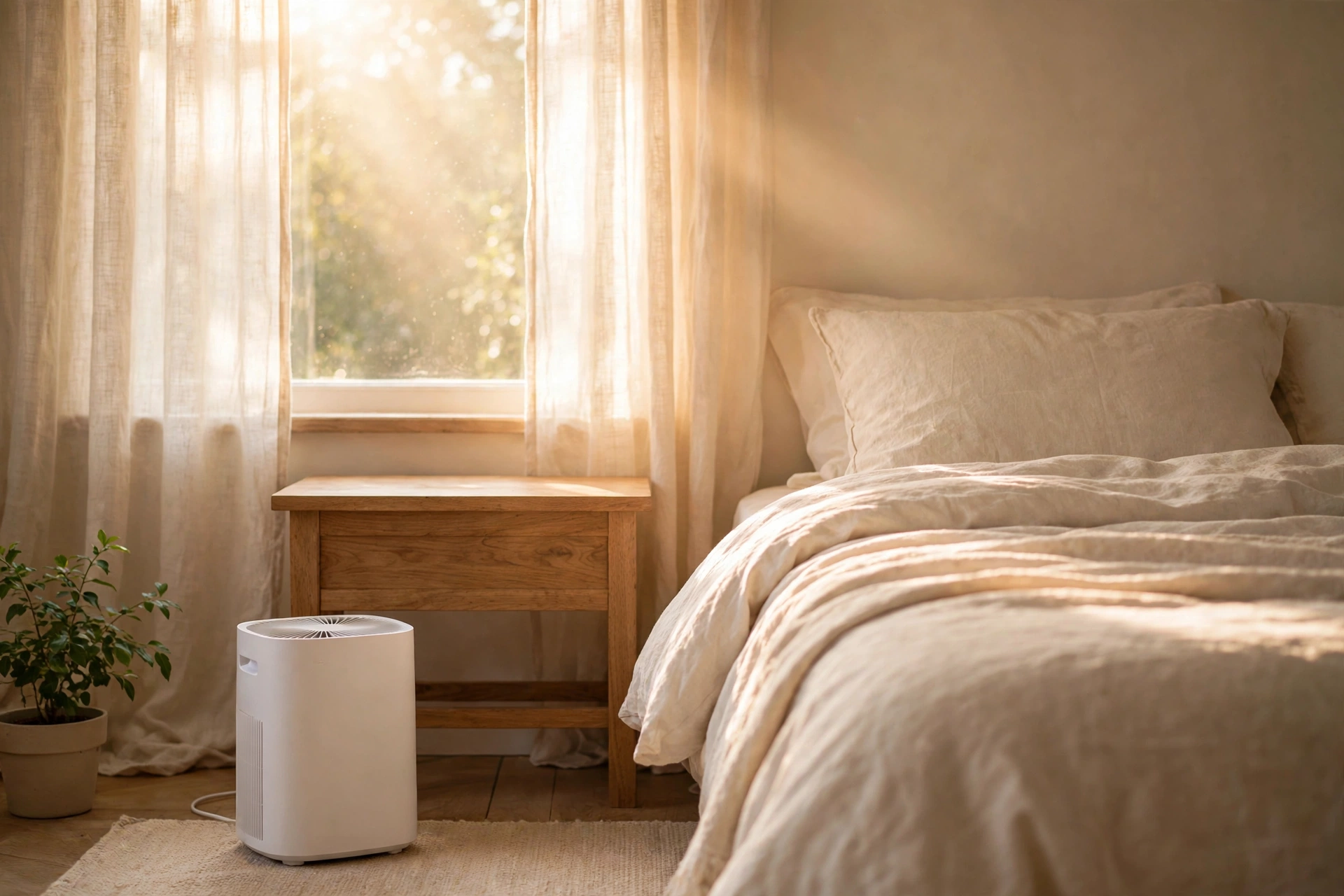
It is not hard to see why this one took off. It costs about half what the critic-favorite Coway Mighty costs, it is small enough to disappear next to a nightstand, and the sleep mode runs at 24 decibels, which is quieter than a whisper. For most people buying their first air purifier, the decision basically makes itself: the affordable one with 100,000 five-star reviews wins.
But popularity is not performance. Let us look at what it actually does.
Levoit Core 300S specs that matter
Marketing sheets love big numbers, so here are the ones that actually tell you something:
- CADR (smoke/dust/pollen): 141 / 156 / 175 CFM, independently verified by AHAM. This is the honest measure of cleaning power, and these are solid numbers for the size.
- Realistic room size: about 219 sq ft at five air changes per hour. The box claims over 1,000 sq ft, but that is at a much slower air exchange rate. For a bedroom or office, 219 sq ft is the number to trust.
- Filter: 3-stage H13 True HEPA, rated to trap 99.97% of particles down to 0.3 microns, plus an activated carbon layer for odors.
- Noise: 24 dB on sleep mode, up to around 50 dB on high. Sleep mode is genuinely silent. High is not.
- Smart features: VeSync app control, Alexa and Google Assistant voice control, a laser dust sensor with a PM2.5 display, and an auto mode that ramps the fan up and down on its own.
- Power: rated around 26 to 39 watts. Running it all day costs pennies.
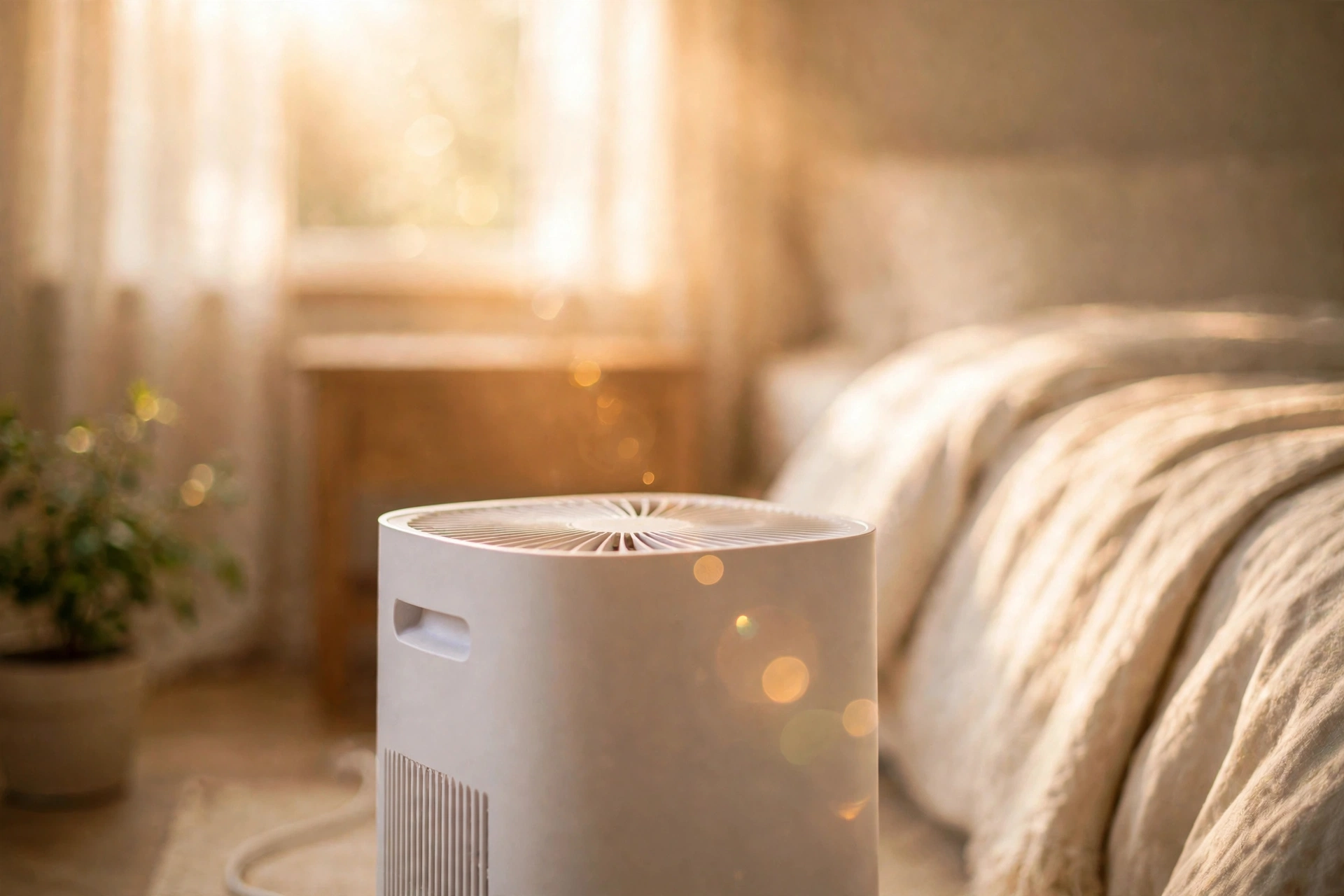
- Size: 8.7 x 8.7 x 14.2 inches, under 8 pounds. Easy to move room to room.
Does the Levoit Core 300S catch microplastics?
This is the question that matters for this site, so let us be precise.
First, the air in your home is full of microplastics. A Griffith University study published in Environmental Science and Technology used active air sampling and found airborne microplastic concentrations 1 to 28 times higher indoors than outdoors, estimating the average person inhales around 2,675 airborne microplastic particles per year. You can read the university’s summary of the research here. You spend about 90% of your time indoors, so your bedroom air matters more than the air on your street.
Second, the size math works in the filter’s favor. Microplastics are defined as plastic particles from 5 millimeters down to 1 micron, and a True HEPA filter traps 99.97% of particles at 0.3 microns and larger. That means the vast majority of airborne microplastics fall squarely inside what the filter catches. Researchers testing portable purifiers specifically against microplastics found that filtration effectively removed particles in the 0.10 to 0.53 micron range, as summarized in this 2024 review of indoor airborne microplastics. Below 0.3 microns, into nanoplastic territory, capture gets less certain, and no honest reviewer should tell you otherwise.
Third, real-world purifier studies back this up for particles generally. A peer-reviewed study of portable HEPA air cleaners in homes found they cut indoor PM2.5 roughly in half. Microplastics ride along in that same particle mix.
The bottom line: the Core 300S will meaningfully reduce the microplastics floating in a bedroom-sized room. It will not eliminate them, and anyone selling you zero-microplastic air is lying, but cutting your exposure roughly in half while you sleep eight hours a night is a genuine win.
What independent tests found
I have not run a lab in my living room, so here is what people who test these for a living measured:
- HouseFresh filled a 728-cubic-foot test room with incense smoke and timed how long the 300S took to clear it: 45 minutes. That beat the standard Core 300 by nine minutes and beat purifiers costing three times as much. You can read their full Core 300S test here. The Coway Mighty cleared the same room in 26 minutes, but it is a bigger, more expensive machine.
- Wirecutter tested the base Core 300 (the non-smart sibling) and found it cut particulates by more than 97% on high in 30 minutes, naming it their small-space pick.
- Tom’s Guide ran the 300S through kitchen, bedroom, and living room testing and found it consistently brought their air quality readings down to the best possible score, with the auto mode responding to smoke in about 30 seconds.
The pattern is consistent: for its size and price, it cleans well. It is not the most powerful purifier you can buy. It is the most powerful purifier most people need for a bedroom.
What I like about it
The sleep mode is the standout. At 24 decibels it is truly silent, and the display shuts off, so it can sit three feet from your pillow without bothering you. That matters because an air purifier only works if you actually leave it running, and most people turn loud ones off at night, which is exactly when you want it working.
The app is genuinely useful rather than a gimmick. Schedules mean it can run on high while you are at work and drop to sleep mode before bed without you touching it. Filter life tracking means you replace the filter when it is actually spent, not on a guess.
And the price is honest. Around $150 at list, frequently discounted, with replacement filters running about $20 to $25 every six to eight months. The total cost of ownership is low enough that buying two, one for the bedroom and one for the office, costs less than one premium purifier.
The honest drawbacks
Nothing this popular is perfect, and you deserve the full picture:
It is a small-room machine. The realistic coverage is about 219 sq ft. Put it in an open-plan living room and it will run constantly without ever catching up. If your main room is big, the Coway Airmega Mighty or the Winix 5510 from our air purifier guide are the better fit.
The carbon filter is thin. It is a sheet of activated carbon, not a deep pellet bed, so it takes the edge off cooking smells and mild odors but will not erase them. If odor removal is your priority, a unit with a serious carbon filter like the Austin Air will do more.
The body is plastic. Yes, the irony is not lost on me. The housing is plastic, and like every purifier maker, Levoit publishes no data on whether the unit itself sheds microplastics. The filter catches far more than the housing could ever shed, but I would rather name it than pretend it is not there.
The app asks for a lot. The VeSync app wants more permissions than a fan with a filter should need. You can run the purifier without the app, but then you lose the scheduling and air quality history that make the S model worth buying over the base 300.
On high, it is loud. Around 50 decibels is the sound of a normal conversation. Fine during the day, not something you want running while you sleep. Auto mode handles this well, but it is worth knowing.
Who should buy it, and who should not
Buy it if you want cleaner air in a bedroom, nursery, or home office, you are sensitive to noise at night, and you would like smart scheduling without paying a premium. This is the best value in small-room purification right now, and it is not close.
Skip it if you need to clean a large open space, if strong odor or VOC removal is the job, or if you refuse to install another app on principle. In those cases, spend the extra money on the right tool instead of being disappointed by the wrong one.
Does the Levoit Core 300S remove microplastics from the air?
Its H13 True HEPA filter traps 99.97% of particles at 0.3 microns and larger, and most airborne microplastics are 1 micron or bigger, so yes, it captures the large majority of them. Nanoplastics below 0.3 microns are captured less reliably.
What is the difference between the Core 300S and the regular Core 300?
The 300S adds VeSync app control, voice assistant support, a laser dust sensor with PM2.5 display, and auto mode. The filtration and cleaning power are nearly identical. Buy the S if you will use the scheduling and smart features; save the money if you want a simple one-button machine.
How often do you replace the filter, and what does it cost?
Levoit recommends every six to eight months depending on your air quality, and the app tracks filter life for you. Genuine replacement filters run about $20 to $25. Vacuum the outer pre-filter layer every few weeks to stretch its life.
Is the Core 300S big enough for a living room?
Not a large one. Its realistic coverage is about 219 sq ft at five air changes per hour. For open living areas, step up to the Coway Airmega Mighty or Winix 5510.
The bottom line
The Levoit Core 300S earned its viral fame. It is quiet, effective, cheap to run, and it meaningfully cuts the microplastics in the air of the room where you sleep. It is not the most powerful purifier on the market, and it will not fix a big living room or a serious odor problem, but for a bedroom or office it is the easiest recommendation in its price range.
Pair it with the bigger picture: purifiers catch what is already airborne, but the real wins come from producing less of it in the first place. Our home guide walks through the highest-impact swaps room by room, and if laundry is your nemesis, these five laundry swaps cut microplastics at one of their biggest sources.