Vitamix FoodCycler FC-50 Review: Is This Electric Food Recycler Worth It?
As an Amazon Associate I earn from qualifying purchases. This post contains affiliate links, which means I may earn a commission if you buy through them, at no extra cost to you.
The quick version: The Vitamix FoodCycler FC-50 is worth it if you want food scraps out of your trash the same day, with no outdoor space, no smell, and no pile to turn. It dries and grinds a small bucket of scraps into a dry soil amendment in about 4 to 8 hours. It is not a true composter, and it is not plastic-free: the food-contact bucket is metal, but the outer shell is ABS plastic, and we say so plainly below. On Amazon it holds 4.5 stars across 2,353 ratings (Amazon listing, checked October 2026). It was the highest-ticket pick in our best compost bins guide, which is exactly why it gets its own deep dive.
If you would rather start simple and fully plastic-free, a stainless countertop bin plus an outdoor cedar bin costs far less. Those picks are in the comparison table further down.
Get the Weekly Swaps
One short email a week: the newest microplastics studies in plain English, plus the swaps that are actually worth your money. Join free and we will send you our room-by-room microplastic checklist to get you started.
Get Our Free Room-by-Room Microplastic ChecklistJoin the newsletter and get the checklist free →
What Is the Vitamix FoodCycler FC-50, Exactly?
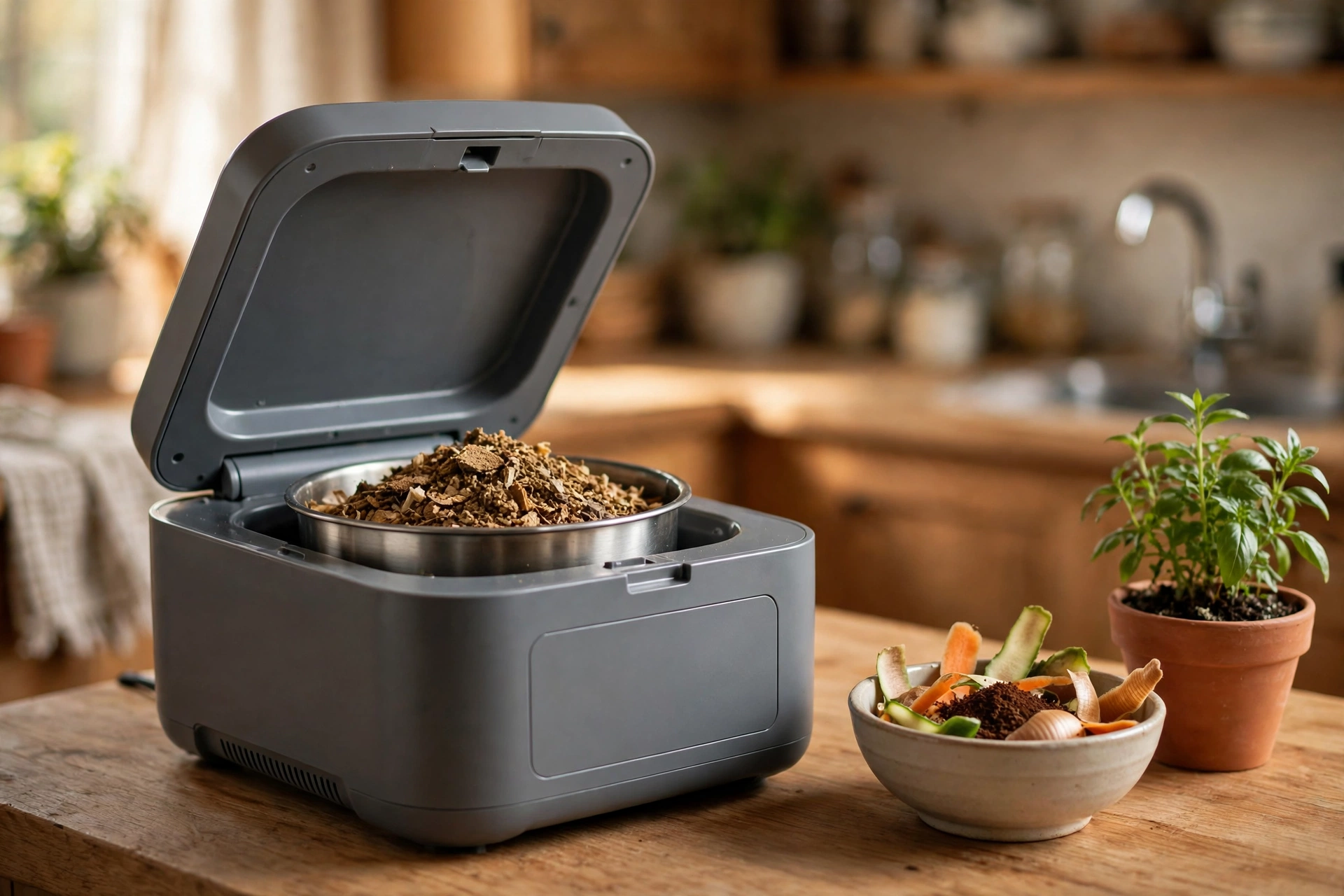
It is an electric food recycler, not a living compost bin. You collect scraps in a removable metal bucket, drop the bucket into the unit, press one button, and the machine runs three phases the FC-50 manual names Dry, Grind, and Cool. A few hours later the scraps come out dry, crumbly, and much smaller in volume. Vitamix says the process uses intense aeration, heating, and pulverization, and that the unit fits in about one cubic foot of space with an outlet (Vitamix.com, checked October 2026).
That distinction matters, and it is the honest core of this review. A cedar bin or a worm bin hosts microbes that turn scraps into finished compost over weeks or months. The Vitamix FoodCycler FC-50 skips the biology and does the shrinking mechanically, in hours. What you get is best thought of as a soil amendment that still needs soil, time, and microbes to finish the job. Used that way, it works well: the FC-50 manual directs mixing the output at about 11 parts soil to 1 part recycled food compound, and says output containing animal protein should not be incorporated into soil. Sprinkled thick on top of a pot like finished compost, it can mold or draw flies, because it is concentrated dried food, not compost yet.
Why bother at all? Because the scraps it diverts are the heavy, wet part of household trash. The U.S. Environmental Protection Agency, in its 2023 report Quantifying Methane Emissions from Landfilled Food Waste, estimates food is about 24 percent of what goes into U.S. landfills but about 58 percent of the fugitive methane those landfills release. Any system that reliably keeps scraps out of the trash, including an electric one, is aiming at a real problem.
How Big Is It, and How Long Does a Cycle Take?
Per the FC-50 manual, the unit measures about 11 inches wide, 12.6 inches deep, and 14.2 inches tall, weighs about 20 pounds, and holds about 2.5 litres (10.5 cups) per cycle. A full cycle runs about 4 to 8 hours depending on how wet the load is, drawing up to 500 watts at 120 volts. In practice that means an overnight or workday run for most households, and a family that cooks a lot will fill that small bucket fast, sometimes daily.
The size cuts both ways. It genuinely fits an apartment kitchen, a pantry, or a garage corner, which is the whole point for readers with no yard. It is also the machine’s biggest limitation: this is a small-batch recycler for one to three people, not a solution for a big family that produces a bucket of scraps at every meal. Be honest with yourself about your scrap volume before you buy, because a unit that cannot keep up becomes expensive counter clutter.
What Can Go in the FoodCycler, and What Cannot?
Most everyday scraps can go in. Vitamix’s own guidance (Vitamix.com, checked October 2026) lists fruit and vegetable scraps, coffee grounds with filters, tea bags, eggs and eggshells, cheese, cereals and grains, meat, fish and poultry scraps, pet food, and chicken and fish bones. That meat and small-bone tolerance is a genuine advantage over most backyard piles, which struggle with exactly those items and can attract animals.
The manual is equally clear about what stays out: large bones, hard pits, nuts and hard shells, candy, gum, cooking oil, and excess water can damage the bucket or overload the motor. Fibrous items like corn husks do better cut small. None of this is unusual for the category, but it does mean the FoodCycler is not a garbage disposal. You will still have a small amount of true trash, and that is fine.
Is the FoodCycler Plastic-Free?
No, and this site will not pretend otherwise. The bucket that actually touches your food is metal, and it is dishwasher safe, which is the part that matters most for food contact. The outer shell, though, is ABS plastic, the same honest compromise we flagged when this machine appeared in our compost bins roundup. The carbon filters are also a recurring consumable: Vitamix says each set lasts about three to four months with daily use (Vitamix.com, checked October 2026), and they need replacing to keep the odor control working.
So how should a low-plastic household think about it? The trade is this: a durable appliance with a plastic shell that you keep for years, versus scraps sealed in plastic trash bags and sent to landfill every week, indefinitely. Reasonable people land on both sides of that. If plastic-free is non-negotiable for you, skip this machine and use the steel and cedar picks in the table below. If your sticking point was that you have no outdoor space and your scraps were going in the trash, the FoodCycler is a defensible compromise, bought with open eyes.
What Does It Cost to Run?
Beyond the purchase, budget for two things. First, electricity: at up to 500 watts across a multi-hour cycle, each run uses roughly a few kilowatt-hours at most, so the per-cycle cost is small, but a daily habit adds up over a year and is worth counting honestly. Second, the carbon filters, replaced about every three to four months at daily use per Vitamix. Neither cost is hidden, but both belong in the decision, because the cheapest compost system on this site is still a steel bucket and a cedar bin that run on nothing.
The machine does come with a 3-year limited warranty from Vitamix (Vitamix.com, checked October 2026), which matters at this price. A budget appliance with a one-year warranty and a premium appliance with three years of coverage are different bets, and the longer coverage is part of what you are paying for.
How Does the FoodCycler Compare With Simpler Options?
It depends what job you need done. The FoodCycler finishes the shrinking step indoors, today. The simpler picks below either just collect scraps on the counter (the steel bins) or compost properly outdoors over weeks (the cedar bin). Many households pair them: a steel countertop bin for collection plus one real destination, electric or outdoor, for processing.
| Option | What it does | Material | Best for |
|---|---|---|---|
| Vitamix FoodCycler FC-50 | Dries and grinds scraps in 4 to 8 hours | Metal bucket, ABS plastic shell | Apartments, no outdoor space |
| EPICA Countertop Compost Bin | Collects scraps odor-free until you empty it | Stainless steel | Pairing with any outdoor bin or pickup |
| Utopia Kitchen Compost Bin | Collects scraps, spare charcoal filter included | Stainless steel | Budget steel collection |
| Greenes Fence Cedar Composter | Real outdoor composting, about 174 gallons | North American cedar | Houses with a yard, fully plastic-free |
The simple steel collectors
The EPICA Countertop Compost Bin (4.7 stars, about 19,000 ratings) is a one-piece stainless bin with a charcoal filter lid. It does not compost anything by itself, and that honesty is its charm: it holds scraps without smell for days until they reach a real destination. The Utopia Kitchen Compost Bin (4.5 stars, 20,115 ratings) is the same proven 1.3 gallon format with a spare filter in the box and a lighter build. Either one pairs with a FoodCycler, a cedar bin, or a municipal pickup.
The fully plastic-free outdoor option
The Greenes Fence Cedar Composter is untreated North American cedar, about 174 gallons, assembled without tools. It makes real compost the slow way, needs a yard and a garden fork, and does not keep determined raccoons out on its own. If you have the space, it is the pick most aligned with everything this site stands for, and it costs a fraction of the electric route over its life.
Browse Our Full Amazon StorefrontAll our compost and kitchen picks in one place →
Who Is the FoodCycler FC-50 Worth It For?
It is worth it for apartment and condo households with no outdoor composting option, for anyone whose city lacks a scraps pickup, and for cooks whose scraps include meat and small bones that a backyard pile handles badly. It is also a fair pick if smell and fruit flies are the reason every previous compost attempt quietly ended.
It is not worth it if you have a yard and garden beds, where a cedar bin makes finished compost for far less. It is not worth it for large families whose daily scraps would need multiple small cycles. And it is not worth it if your goal is finished compost rather than diverted scraps: this machine starts the process, it does not complete it. We never tested this unit firsthand, and we will not pretend otherwise; this review is built from the manufacturer’s specifications, the Amazon listing data, and the same verified research behind our compost bins guide.
Join Our Free Facebook GroupNon-Toxic Family Living: parents sharing swaps that work →
Frequently Asked Questions
Is the Vitamix FoodCycler FC-50 real composting?
No. It dries and grinds scraps into a soil amendment in about 4 to 8 hours. The output still needs soil and time to become finished compost.
How long does a FoodCycler cycle take?
About 4 to 8 hours per the FC-50 manual, depending on how wet the load is. The phases are Dry, Grind, and Cool.
Does the FoodCycler smell?
It uses activated carbon filters to control odor during collection and processing. Vitamix says the filters last about three to four months with daily use, and odor returns as they wear out.
Can the FoodCycler handle bones?
Chicken and fish bones, yes, per Vitamix’s guidance. Large bones, hard pits, and hard shells, no. Those stay out per the manual.
Is the FoodCycler plastic-free?
No. The food-contact bucket is metal, but the outer shell is ABS plastic. It is a lower-plastic compromise, not a plastic-free product.
How much food fits in the FC-50?
About 2.5 litres (10.5 cups) per cycle per the manual. That suits one to three people; larger households will run it often.
Add Us as a Preferred Source on GoogleOne tap, and our guides show up first in your Google results →