7 Bathroom Swaps to Reduce Microplastics
This post contains affiliate links. If you buy through them, I may earn a commission at no extra cost to you. I only recommend products I would use myself.
The quick version
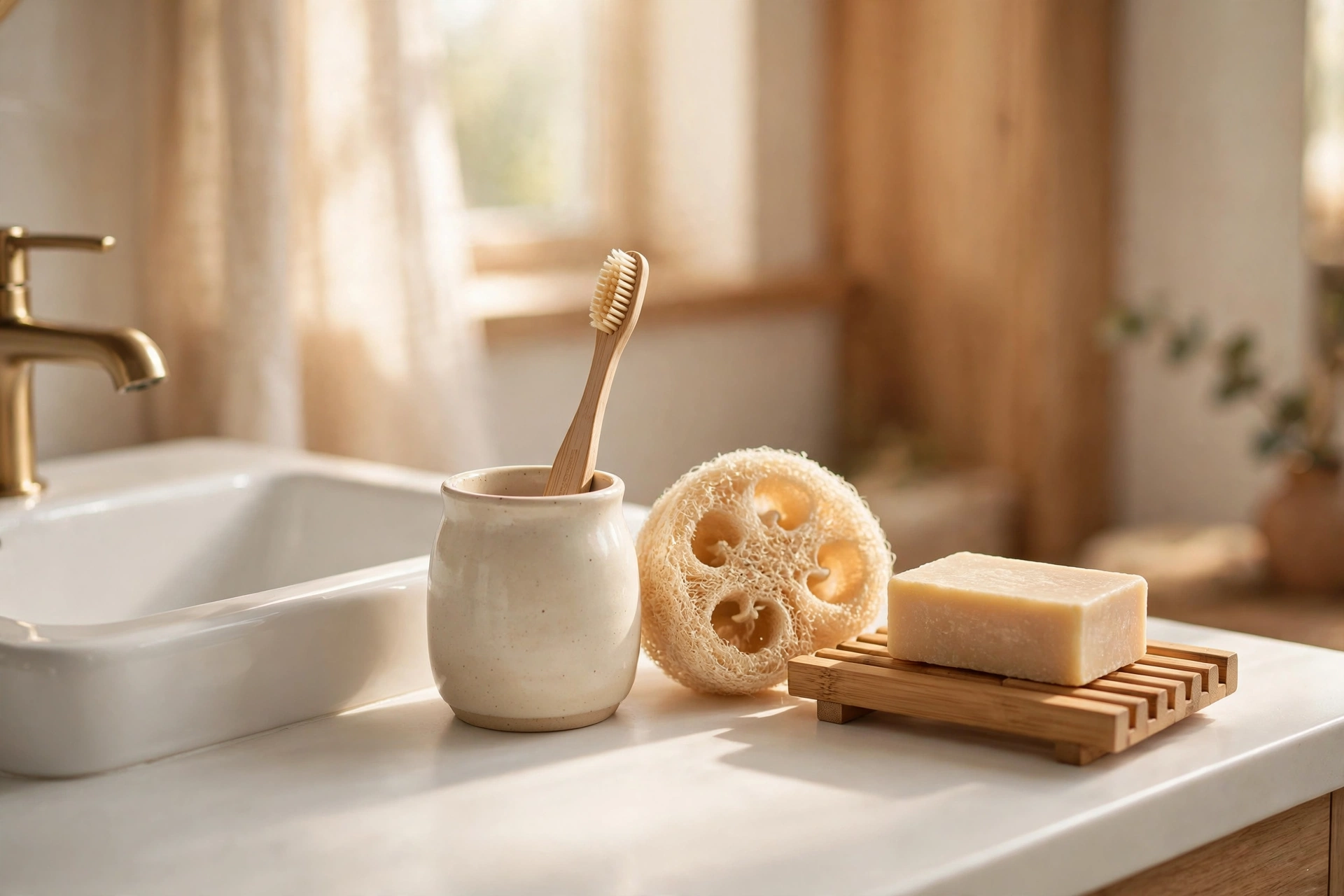
Your bathroom is full of plastic you touch every single day: the toothbrush, the pouf, the disposable razor, the toothpaste tube. These seven swaps trade them for bamboo, metal, glass, and real plant fiber. My two favorites to start with: the bamboo toothbrush and the toothpaste bits in a glass jar.
If you want to reduce microplastics in your bathroom, start with the stuff you touch every day. The bathroom is sneaky. It looks clean and simple, but almost everything in it is plastic: the toothbrush handle, the mesh pouf, the disposable razor, the toothpaste tube, the shampoo bottle, the body wash bottle, the soap dish. And a lot of it goes straight down the drain or into the trash within weeks.
There is real history here. Back in 2015, the US passed the Microbead-Free Waters Act after researchers found that rinse-off cosmetics were flushing plastic microbeads straight into waterways. One widely cited study by Napper and colleagues (2015) estimated that a single use of an exfoliating scrub could release anywhere from about 4,600 to 94,500 polyethylene microbeads. The beads got banned, but the plastic packaging and plastic tools stuck around. These seven swaps go after what is left.
1. Swap the plastic toothbrush for bamboo
Dentists say to replace your toothbrush every three months. That is four plastic handles a year, per person, headed for a landfill where they will sit for centuries. A bamboo toothbrush does the same job with a handle that comes from a fast-growing plant instead of petroleum.
The Brush with Bamboo 4-pack is the one I keep coming back to. The handles are bamboo, and the bristles are plant-based rather than standard nylon. One honest note: the bristles are not compostable, so at the end of the brush’s life you pull them out with pliers and compost just the handle. It is not a perfectly plastic-free product, but it is a big step down in plastic from a conventional brush.
2. Swap the plastic pouf for a real loofah
Those colorful mesh poufs are made of synthetic netting, and they shed tiny plastic fibers every time you scrub. A real loofah is the dried fiber of a gourd. It is a plant. When it wears out, it composts instead of shedding.
The ZhouBoat 6-pack gives you natural loofahs for under what most people pay for a single fancy pouf. Two honest notes: they arrive compressed and need a good soak to open up, and like any natural sponge they need to dry out fully between uses or they can get musty. Hang it somewhere with airflow and replace it regularly.
3. Swap disposable razors for a safety razor
Disposable razors are one of the worst bathroom plastics: a plastic handle fused to metal blades, impossible to recycle, tossed every week or two. A safety razor is a solid metal handle that lasts for decades. You only replace the thin steel blade.
The Bambaw double-edge safety razor is a well-reviewed entry point, with thousands of positive ratings on Amazon. The honest trade-off is the learning curve. Use the light pressure you would use with a cartridge razor and you will nick yourself. Short strokes, almost no pressure, and within a week it feels normal. The blades themselves cost far less than cartridges, so it pays for itself.
4. Swap the toothpaste tube for toothpaste bits
Toothpaste tubes are multi-layer plastic that curbside recycling programs will not take. Billions of them pile up in landfills. Toothpaste bits skip the tube entirely: you chew a small tablet, brush with the paste it forms, and spit.
Bite Toothpaste Bits come in a refillable glass jar and use nano-hydroxyapatite, a fluoride-free ingredient that supports enamel. Two honest notes: the tablet texture takes a few days to get used to, and because the formula is fluoride-free, it is worth a conversation with your dentist if you are prone to cavities. For the plastic footprint, though, there is no contest.
5. Swap liquid shampoo for a shampoo bar
Liquid shampoo is mostly water shipped in a plastic bottle. A shampoo bar is the concentrated cleansers pressed into a bar with no bottle at all. This is the swap I recommend most often, and it is the top pick from my full shampoo bar guide.
HiBAR Maintain is the bar I point beginners to. It is pH-balanced for hair, lathers like a normal shampoo, and comes in plastic-free packaging. The honest drawback: the Maintain scent is citrusy from essential oils, so if you are sensitive to fragrance, look at their fragrance-free options instead. Pair it with a draining soap dish and one bar lasts a surprisingly long time.
6. Swap body wash for a real bar of soap
Body wash is the same story as shampoo: water and cleansers in a plastic pump bottle you throw away every month or two. A good bar of soap does the same job wrapped in paper.
Dr. Bronner’s pure castile bar soap is the classic for a reason. It is made from plant oils, comes wrapped in recycled paper, and one bar lasts ages. The honest note: it is a true soap with a higher pH, so if your skin runs dry or sensitive, it can feel a bit stripping compared to a syndet cleanser. The citrus 6-pack is the economical way to buy it if your whole household makes the switch.
7. Swap the plastic soap dish for bamboo
This one is small but it makes the other swaps work. Bar soap and shampoo bars melt into mush if they sit in a puddle, which is why people give up on them. A slatted bamboo dish lets water drain so your bars dry out and last.
The AmazerBath bamboo 2-pack is simple and does the job: slats for drainage, little feet to keep it off the counter. The honest note is that bamboo and constant water are not best friends. If it sits in a puddle it can stain or swell, so give it the same airflow you give your loofah. Two in the pack means one for the shower and one for the sink.
Where to start
You do not need to do all seven at once. If I were starting over, I would do the toothbrush and the toothpaste bits first because you use them twice a day, then the shampoo bar the next time your bottle runs out. Small swaps, done consistently, are what actually move the needle.
Frequently asked questions
Do bamboo toothbrushes work as well as plastic ones?
Yes. The cleaning is done by the bristles and your technique, not the handle material. Replace it on the same three-month schedule your dentist already recommends.
Are toothpaste bits as effective as regular toothpaste?
They clean the same way once the tablet turns to paste in your mouth. The main difference is packaging and format, not cleaning power. Bite uses nano-hydroxyapatite for enamel support instead of fluoride, so check with your dentist if you have specific cavity concerns.
How long does a shampoo bar last compared to a bottle?
It varies by hair length and how often you wash, but a single bar typically outlasts a standard bottle because it is concentrated with no water. Storing it on a draining dish makes a real difference.
Is a safety razor hard to switch to?
There is a short learning curve, usually about a week. The key is light pressure and short strokes. Most people who switch say they get a closer shave with less irritation once the technique clicks.
What was the Microbead-Free Waters Act?
A 2015 US law that banned plastic microbeads in rinse-off cosmetics like scrubs and toothpaste after scientists showed the beads were washing straight into waterways. It is a good reminder that the products we rinse down the drain do not disappear.