Microplastics in Tea Bags: What the Research Says and What to Use Instead (2026)
This article contains affiliate links. If you purchase through our links, we may earn a small commission at no extra cost to you. Full disclosure here.
Tea is one of the most comforting parts of the day for a lot of us. So it is a little unsettling to learn that the bag itself may be adding plastic to your cup. Many tea bags, especially the pyramid-shaped ones, are made from plastic, and hot water pulls tiny particles out of them while they steep.
We are not here to create alarm about that. But we do think it is worth knowing, because the fix is genuinely simple. Switching from plastic tea bags to loose leaf tea brewed in a stainless steel infuser removes the bag, which is the single biggest source, from the equation. If you want to get started right away, the OXO Brew Tea Infuser Basket is our top recommendation. It is well made, dishwasher safe, and works with any mug. More on that below.
This article covers what the research actually shows about microplastics in tea bags, which bag types are the biggest concern, the plastic-free tea bag brands we trust if you want to keep the convenience of bags, why a plastic kettle can add to the problem, and exactly what to use instead.
Quick Answer: Microplastics in Tea Bags
Yes, most conventional tea bags release microplastics into your cup when brewed. Plastic tea bags, including pyramid-style nylon and polypropylene bags, are the biggest source. Paper tea bags sealed with a plastic adhesive also release particles, though at lower levels. The safest option is loose leaf tea brewed in a stainless steel infuser, which puts no plastic in the brew path at any point.
The top swaps:
- OXO Brew Tea Infuser Basket — best for most people, fits any mug
- OXO Brew Twisting Ball Tea Infuser — classic ball style, budget pick
- Teabloom Classica Glass Teapot with Stainless Steel Infuser — best for making multiple cups
- Rishi Tea Organic English Breakfast — our top loose leaf pick for everyday black tea
- Rishi Tea Organic Jasmine Green Tea — best for green tea drinkers
- Prefer bags? Choose plastic-free brands like Traditional Medicinals, Numi Organic, or Bigelow
Why Tea Bags Are a Microplastics Concern
Tea is one of the most widely consumed beverages in the world. For daily drinkers, that means a cup of hot water is passing through a plastic bag, often more than once a day, every day.
The concern comes down to materials and heat. Many commercial tea bags, particularly the pyramid-shaped ones marketed as premium, are made from nylon-6 or polypropylene. Both are plastics. When hot water meets these materials, it speeds up the breakdown of the polymer and causes particles to shed into the liquid.
Paper tea bags are generally a lower concern, but most are sealed with a plastic adhesive or contain a small amount of plastic fiber to hold their shape. They are not fully plastic-free in the way loose leaf tea is.
Tea bags are just one exposure point in the kitchen. If you want the bigger picture, our guide to microplastics in the kitchen walks through the rest of the room.
What the Tea Bags Microplastics Study Findings Actually Say
The first big alarm came from a 2019 McGill University study published in Environmental Science and Technology. Researchers found that steeping a single plastic tea bag at brewing temperature released billions of plastic particles into one cup. That headline number drove a lot of search interest, and it is fair to say later work suggests the original count was likely on the high side, partly because of how the samples were prepared.
A more careful 2024 study from the Autonomous University of Barcelona, summarized here by Food Safety Magazine, tested three common bag materials and measured how many particles each released per milliliter of water. Polypropylene shed the most by far, followed by cellulose, then nylon-6. The same team showed, for the first time, that these particles can be taken up by human intestinal cells.
Here is the honest truth. We know tea bags can release plastic particles, and we know those particles can interact with our cells. What we do not yet fully know is how much this matters for long-term health. The science is still developing, so we are not going to overstate it. But this is one of the easiest exposure points to remove, which is why we think it is worth doing.
Why a Plastic Kettle Can Make It Worse
There is a second piece many people miss. If you heat your water in a plastic electric kettle, the boiling water sits against plastic before it ever reaches your tea. Searches for microplastics in plastic kettles have climbed sharply, and the logic is the same as the tea bag: hot water plus plastic equals shed particles.
The simple fix is to boil water in a stainless steel or glass kettle. We cover specific kettle picks in our non-toxic coffee makers and kettles guide, so we will not repeat the full lineup here. Pairing a stainless kettle with loose leaf tea and a steel infuser gives you a fully plastic-free brew path from start to finish.
What to Use Instead: Our Tea Gear and Loose Leaf Picks
OXO Brew Tea Infuser Basket (Best Overall)
Best for: anyone who wants the simplest way to leave tea bags behind for good.
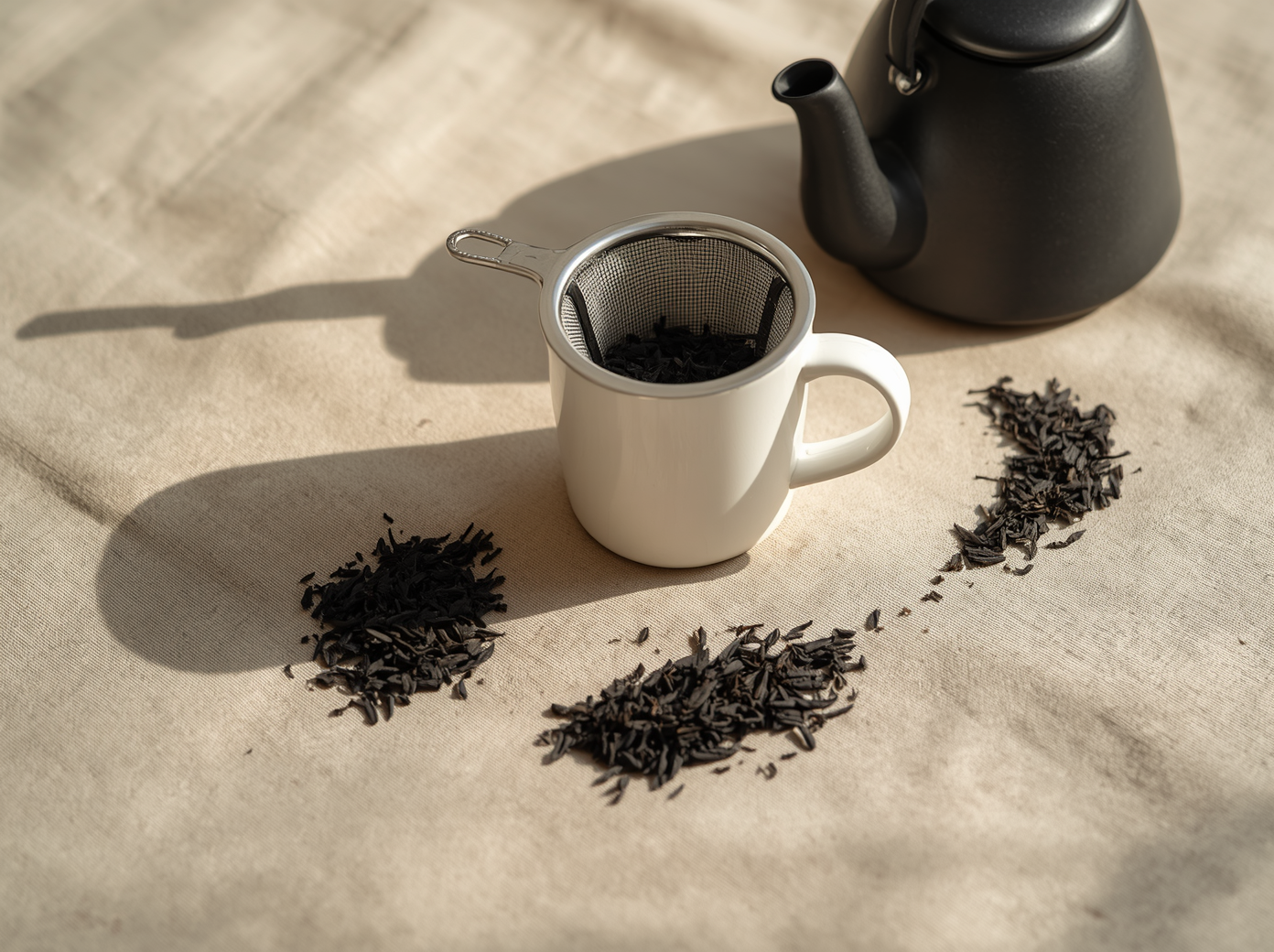
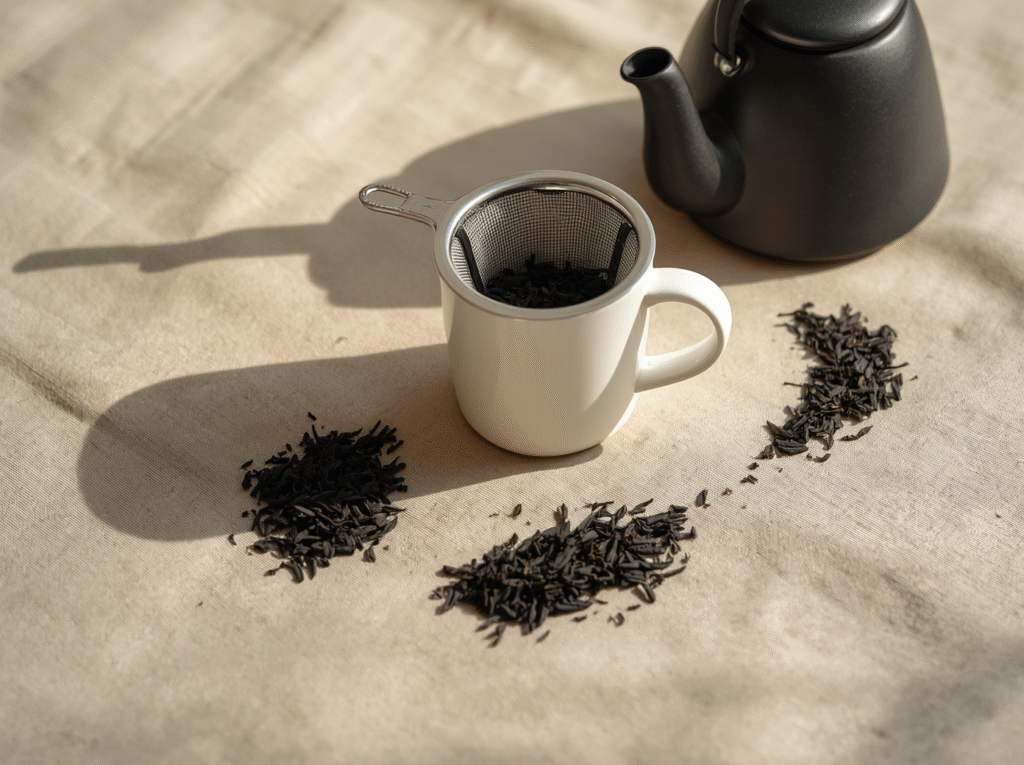
This is the swap we point most people to first. It is a large stainless steel basket with very fine mesh that drops into a standard mug, so the leaves have room to open up and the tea tastes fuller. The lid keeps heat in while it steeps, then flips over to catch drips when you lift the basket out. It is also dishwasher safe.
Pros: roomy basket for better flavor, fine mesh that holds back small particles, and no plastic touching the hot water.
Honest con: you will need to buy loose leaf tea separately, which is a small change of habit at first.
OXO Brew Twisting Ball Tea Infuser (Budget Pick)
Best for: tea drinkers who want a simple, low-cost way to brew loose leaf.
If the basket feels like more than you need, this classic ball-style infuser does the job for less. You twist it open, add your loose leaf, and drop it in your mug. It is stainless steel, easy to rinse, and takes up almost no drawer space.
Pros: inexpensive, compact, and stainless steel with no plastic in the brew path.
Honest con: the smaller chamber gives leaves less room to expand, so the brew is a touch less full than a basket.
Teabloom Classica Glass Teapot with Stainless Steel Infuser (Best for Multiple Cups)
Best for: families or anyone brewing more than one cup at a time.
This is a borosilicate glass teapot with a removable stainless steel infuser, so the whole brew path is glass and steel. It is lovely for serving, holds several cups, and the clear glass lets you watch the tea steep to your liking.
Pros: glass and stainless construction, makes several cups at once, and doubles as a nice serving pot.
Honest con: glass needs gentle handling, and it is more of a sit-down brew than a grab-and-go option.
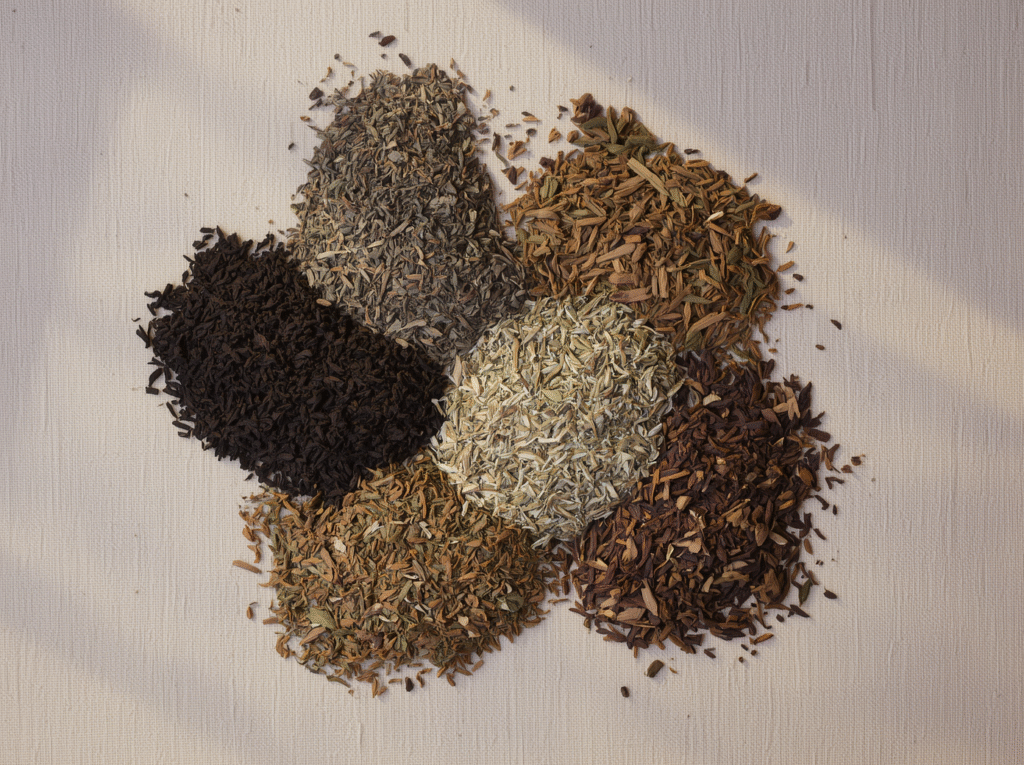
Rishi Tea Organic English Breakfast (Best Everyday Loose Leaf)
Best for: everyday black tea drinkers making the switch from bags.
If you are leaving tea bags behind, you need something to actually brew, and Rishi is a clean, well-sourced place to start. Their organic English Breakfast is a smooth, full everyday black tea that holds up to milk, and the loose leaf format means no bag and no plastic.
Pros: certified organic, direct-sourced, and a reliable everyday flavor with no bag involved.
Honest con: loose leaf costs a little more up front than grocery bags, though it often goes further per cup.
Rishi Tea Organic Jasmine Green Tea (Best for Green Tea Drinkers)
Best for: green tea drinkers who want a fragrant, clean cup.
For green tea fans, Rishi’s organic Jasmine Green is a fragrant, mellow option that brews beautifully in a steel infuser. Like the rest of their loose leaf range, it skips the bag entirely, so there is nothing plastic in the cup.
Pros: certified organic, naturally scented with real jasmine, and an easy, forgiving green tea to brew.
Honest con: green tea is sensitive to water that is too hot, so let a boil cool for a minute before pouring.
Prefer to Keep Using Tea Bags? The Plastic-Free Brands We Trust
Loose leaf is the cleanest option, but we know bags are simply easier on a busy morning. The good news is that some brands have done the work and make their bags without plastic. Look for plain unbleached paper with no shiny seal strip, and skip pyramid or silken mesh bags, which are usually nylon or PET.
Traditional Medicinals (Best Overall Plastic-Free Bags)
Best for: herbal and wellness tea drinkers who want a trusted, plastic-free bag.
Traditional Medicinals has used unbleached paper bags for decades, long before microplastics were in the news. The bags are sealed without a plastic heat-strip, and the company is certified organic and non-GMO. If you reach for Throat Coat or a nighttime blend, this is a brand that takes both the herbs and the packaging seriously.
Pros: plain unbleached paper, no plastic seal, certified organic, and great value.
Honest con: the lineup leans heavily herbal, so it is not the place to shop for a bold everyday black tea.
Numi Organic Tea (Best Premium Plastic-Free Bags)
Best for: tea lovers who want fuller flavor from a bag without the plastic.
Numi uses Manila hemp fiber for its bags, with no polypropylene heat-seal, and the outer wrappers are plant-based rather than foil and plastic. They were early to put full leaves into flat bags, which gives a richer brew than the fine dust in most grocery tea. The range runs from bold blacks to delicate whites and turmeric blends.
Pros: clean Manila hemp bags, plant-based wrappers, USDA Organic and Fair Trade, and noticeably better flavor.
Honest con: the outer wrappers are only compostable in industrial facilities, and the price is higher than standard grocery tea.
Bigelow (Best Budget Grocery Option)
Best for: families who want a plastic-free bag at a normal grocery price.
Bigelow makes its tea bags from a blend of wood pulp and abaca fiber, with no plastic mesh and no polypropylene heat-seal in the bag, and the company states this plainly on its packaging. It is a family-owned American brand that is easy to find almost anywhere, which makes it one of the most accessible plastic-free options on the shelf.
Pros: widely available, affordable, plastic-free bag construction, and a brand that discloses its materials.
Honest con: most blends are conventional rather than certified organic, so check the box if organic matters to you.
Pukka Herbs (Best Organic Variety)
Best for: organic herbal drinkers who want a wide range of blends.
Pukka was the first brand to seal its bags with an organic cotton string instead of a staple or a plastic heat-seal, and the bag itself is a blend of natural plant fibers with no polypropylene. The blends are certified organic and cover everything from everyday herbal to Ayurvedic-inspired mixes.
Pros: no plastic seal, organic cotton string, certified organic blends, and a large variety to choose from.
Honest con: Pukka lost its B Corp certification in 2024 after becoming part of the larger Lipton tea business, which some buyers like to know.
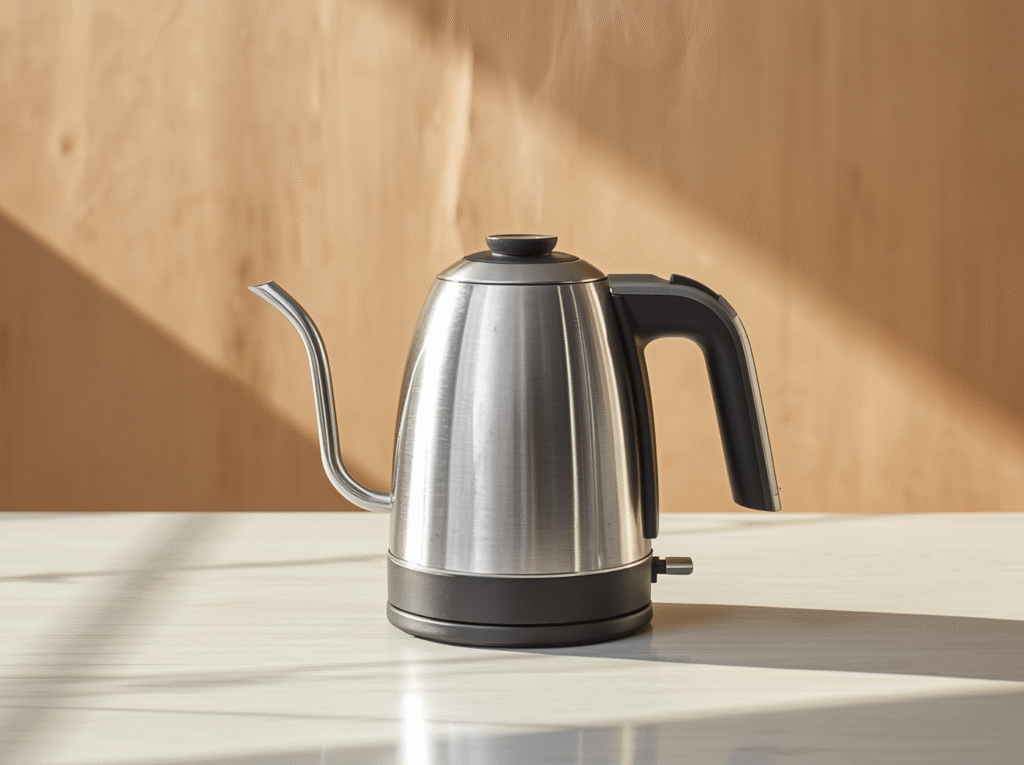
Plastic-Free Kettles to Finish the Swap
If you heat your water in a plastic kettle, swapping it out completes the plastic-free brew path. These are the three we recommend, and we cover them in more depth in our coffee makers and kettles guide.
Fellow Stagg EKG Pro Electric Kettle (Best Overall)
Best for: tea drinkers who want precise temperature control and a stainless interior.
The Stagg EKG Pro is a stainless steel gooseneck kettle with to-the-degree temperature control, which matters for tea since green and white teas brew best below a full boil. The water contacts stainless steel, not plastic, and the pour is slow and controlled.
Pros: stainless water path, precise temperature settings, and a steady gooseneck pour.
Honest con: it is the priciest option here, so it is more of an upgrade than a budget swap.
COSORI Gooseneck Electric Kettle (Best Budget Electric)
Best for: anyone who wants an electric stainless kettle without the premium price.
The COSORI gooseneck gives you a stainless steel interior and handy temperature presets at a far friendlier price than the Stagg. It heats quickly, holds a set temperature, and pours cleanly for both tea and pour-over coffee.
Pros: stainless interior, useful temperature presets, fast heating, and great value.
Honest con: some outer trim and the lid hardware are plastic, so check that you are comfortable with the parts that do not contact the water.
Hario Buono Stovetop Kettle (Best Stovetop Option)
Best for: people who would rather skip electronics and boil on the stove.
The Hario Buono is a simple stainless steel stovetop gooseneck kettle with no electronics to worry about. It is a long-time favorite among pour-over fans, and the narrow spout gives you a slow, controlled pour for tea as well.
Pros: all stainless steel, no electronics to fail, and a precise gooseneck pour.
Honest con: no built-in temperature control, so you will judge the heat yourself or let a boil rest a minute.
Primula Stewart Whistling Stovetop Kettle (Cheapest Option)
Best for: anyone who wants a simple, low-cost stainless kettle without any electronics.
If you just want to get off a plastic kettle without spending much, this is the easy answer. The Stewart is made from food-grade stainless steel, holds 1.5 quarts, and uses a classic whistling spout to let you know when the water is ready. The cool-touch handle folds down for storage, so it works well in smaller kitchens too.
Pros: food-grade stainless steel, an affordable price, a whistle so you never forget it, and a folding handle that stores flat.
Honest con: there is no temperature control, so for green tea you will want to let the boil rest a minute before pouring.
| Product | Type | Material | Best for | Price |
|---|---|---|---|---|
| OXO Brew Infuser Basket | Infuser | Stainless steel | Everyday loose leaf | $ |
| OXO Twisting Ball | Infuser | Stainless steel | Budget brewing | $ |
| Teabloom Classica Teapot | Teapot + infuser | Glass + stainless | Multiple cups | $$ |
| Rishi English Breakfast | Loose leaf tea | Organic black tea | Everyday black | $ |
| Rishi Jasmine Green | Loose leaf tea | Organic green tea | Green tea drinkers | $ |
| Fellow Stagg EKG Pro | Electric kettle | Stainless steel | Temp control / upgrade | $$$ |
| COSORI Gooseneck | Electric kettle | Stainless interior | Budget electric | $$ |
| Hario Buono | Stovetop kettle | Stainless steel | Stovetop / no electronics | $ |
| Primula Stewart Kettle | Stovetop kettle | Stainless steel | Cheapest, whistling | $ |
| Traditional Medicinals | Tea bags | Unbleached paper | Herbal, plastic-free | $ |
| Numi Organic | Tea bags | Manila hemp fiber | Premium plastic-free | $$ |
| Bigelow | Tea bags | Wood pulp + abaca | Budget plastic-free | $ |
| Pukka Herbs | Tea bags | Plant fiber + cotton | Organic variety | $ |
Frequently Asked Questions
Do all tea bags contain plastic?
No, but many do. Pyramid and mesh “silken” bags are usually nylon or polypropylene plastic, and many paper-looking bags use a thin plastic adhesive to seal them. Plain unbleached paper bags are a lower concern, and loose leaf tea in a stainless steel infuser avoids the bag entirely.
Does boiling water release microplastics?
Hot water is the trigger that pulls particles out of plastic tea bags, and it can do the same with a plastic electric kettle. Boiling water in a stainless steel or glass kettle, then brewing loose leaf in a steel infuser, keeps plastic out of the brew path from start to finish.
Are paper tea bags plastic-free?
Not always. Some paper tea bags are sealed with a thin plastic adhesive rather than glue or a fold. If you want to be sure, loose leaf tea removes the question completely, since there is no bag at all.
Does loose leaf tea avoid microplastics from bags?
Yes. Brewing loose leaf tea in a stainless steel or glass infuser removes the bag from the equation, so there is no bag material shedding into your tea. It is the most reliable way to avoid tea-bag microplastics, and many people find the tea tastes better too.
Which tea bag brands are plastic-free?
Several brands make tea bags without plastic. Traditional Medicinals, Numi Organic, Bigelow, and Pukka Herbs all use plant-fiber bags sealed without a polypropylene heat-strip. Look for plain unbleached paper and avoid pyramid or silken mesh bags, which are usually nylon or PET plastic.
Is it still safe to drink tea?
Tea itself is fine, and a cup of tea is not something to fear. The research on tea-bag microplastics is still developing, and we do not yet know the long-term effects. Because switching to loose leaf and a steel infuser is so easy, it is a low-effort swap worth making, with no need to worry about the tea you have already enjoyed.
The Bottom Line
Leaving plastic tea bags behind is one of the easiest microplastic swaps you can make, and in most cases your tea will taste better for it.
For the simplest start, pair the OXO Brew Tea Infuser Basket with a loose leaf you love, like Rishi Organic English Breakfast. If you brew for the whole family, the Teabloom Classica glass teapot covers several cups at once. Boil your water in a stainless or glass kettle, like the Fellow Stagg EKG Pro or the budget-friendly COSORI gooseneck, and the whole brew path stays plastic-free.
Small swap, real difference. Tea is a daily ritual worth getting right, and this one is easy to fix.