
How to Reduce Your Child’s Microplastic Exposure: 10 Practical Swaps (2026)
This article contains affiliate links. If you purchase through our links, we may earn a small commission at no extra cost to you. Full disclosure here.
This is why we started this blog. A few years ago, we sat down and really looked at all the things our own kids touch, eat from, drink from, and sleep on every single day, and we realized how much of it was plastic. The cups, the plates, the lunch gear, the toys, even the sheets. Once you see it, you cannot unsee it, and the number of exposure points can feel like a lot.
Here is the reassuring part. You do not have to fix everything at once, and you do not have to panic. A handful of simple swaps, made over time, takes care of most of it. That is the whole idea behind this site, and it is the whole idea behind this guide.
We put together this article as a quick overview of the ten swaps that make the biggest difference for children specifically. Think of it as the map, not the whole journey. Each section is short on purpose. Where we have written a deeper article on a topic, like sippy cups or lunch boxes, we link to it so you can read more when you are ready. Click the links throughout to go deeper on whatever matters most for your family right now.
If you want one easy place to start today, a plastic-free stainless steel sippy cup is the single highest-impact swap for most young children, because they drink from it all day long. More on that below, along with nine others.
Quick Answer: The 10 Swaps
Here are the ten swaps that reduce a child’s microplastic exposure the most, in plain order. Each links to our top pick for that swap:
- Swap plastic sippy cups for a stainless steel sippy cup with a silicone spout
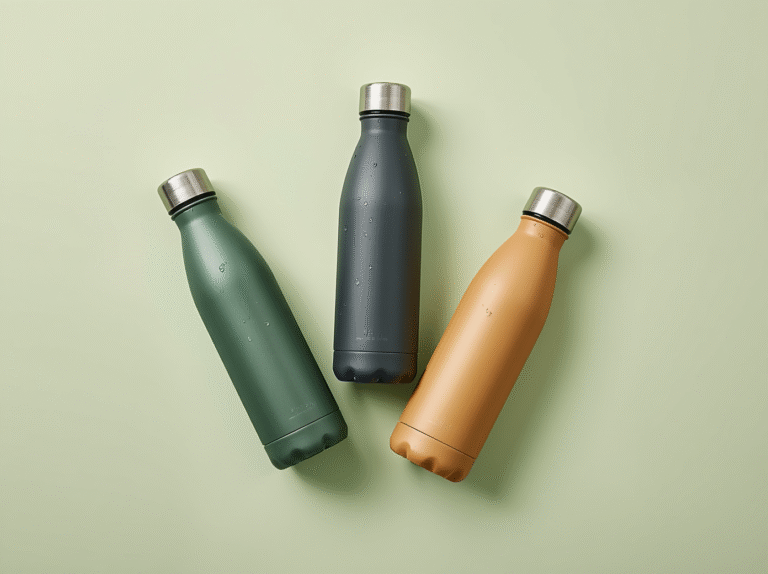
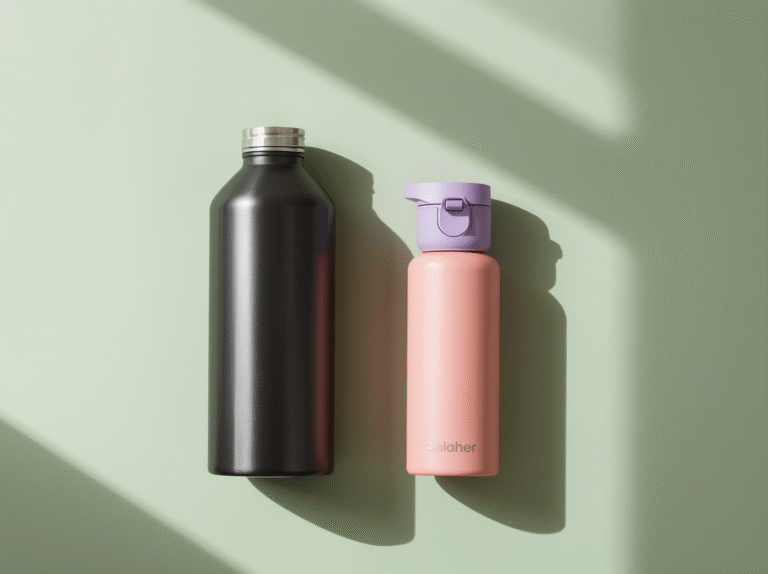
- Swap plastic water bottles for an insulated stainless steel bottle
- Swap plastic lunch boxes for a stainless steel lunch box
- Swap plastic snack bags for platinum silicone bags
- Swap plastic plates and bowls for stainless steel plates
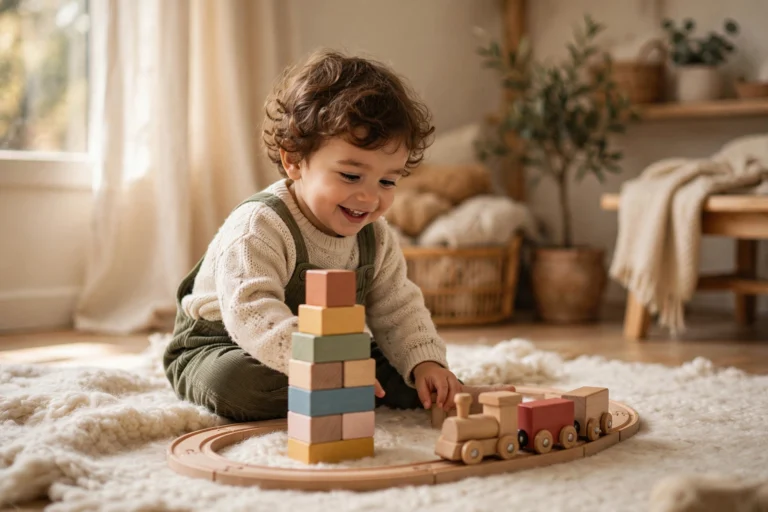
- Swap plastic toys for wooden toys
- Swap synthetic clothing for organic cotton basics
- Swap synthetic bedding for an organic cotton crib sheet
- Swap plastic teethers for a natural rubber teether
- Swap plastic bath toys for solid no-hole bath toys
None of these need to happen overnight. Start with the ones your child uses most, and let the rest follow.
Want all our non-toxic kids picks in one place?
We keep every product from this guide in our Amazon storefront, updated as we test new ones.
Why It Matters: How to Reduce Your Child’s Microplastic Exposure
Children are not just small adults. Their bodies take in more relative to their size, and their habits put them in closer contact with plastic than we are.
Pound for pound, a child eats, drinks, and breathes more than an adult, so any exposure from food, water, or air is proportionally higher. Young children also spend much of the day with their hands, and whatever is on them, in their mouths. The Nationwide Children’s Hospital notes that children take in more air, food, and water relative to their size, which is exactly why reducing their exposure is worth a little attention.
Research on the topic is still developing, and we want to be honest about that. Scientists have confirmed that microplastics are present in the human body, including in placenta and infant stool samples, but the long-term health effects in children are not yet fully understood. What we can say plainly is that reducing avoidable exposure is sensible, and the swaps below are easy, lasting, and low-risk. Small swap, real difference.
Swap 1: Plastic Sippy Cups for Stainless Steel
This is the one we would do first. A toddler drinks from a sippy cup throughout the entire day, often with warm liquid, and warm liquid in soft plastic is exactly the situation where particles are most likely to migrate into the drink.
Our top pick is the Pura Kiki stainless steel cup, which has no plastic anywhere in the drink path and grows with your child through different lid stages. The Klean Kanteen Kid Cup is another excellent option with a stainless body and a silicone spout. One honest caveat worth knowing: a stainless body alone does not make a cup plastic-free, since many still use polypropylene valves and spouts, so always check what the spout and valve are made from.
We compared eight of the best options, including straw cups and 360 cups, in our full guide to the best non-toxic sippy cups for toddlers. It is one of our most-read articles, and worth a few minutes if you are choosing a cup.
Swap 2: Plastic Water Bottles for Insulated Stainless Steel
As kids move past the sippy cup stage, the water bottle becomes the everyday drinking vessel, and the same rule applies. A quality stainless steel bottle is inert. It does not leach, degrade, or shed particles into the water.
For school-aged children, the Klean Kanteen Kid Kanteen is our go-to. The body is recycled stainless steel, the spout is food-grade silicone, and it is built to survive a school bag. The YETI Rambler Jr. is the most durable option if your child is hard on their gear. The honest trade-off with both is price, since they cost more than a conventional plastic bottle, but they last for years.
Swap 3: Plastic Lunch Boxes for Stainless Steel
Food sits in a lunch box for hours, sometimes warm, sometimes acidic, before a child eats it. A stainless steel lunch box removes the plastic from that equation entirely.
The PlanetBox Rover is the premium pick, a single piece of stainless steel with built-in compartments and no plastic tray. For a lighter, lower-cost option, LunchBots stainless steel containers do the same job in a simpler form. One honest note: most stainless lunch boxes are not fully leakproof for wet foods, so pack soups and sauces in a separate sealed container.
We reviewed the full lineup in our guide to the best non-toxic lunch boxes for kids, including accessories that keep the rest of the lunch plastic-free.
Swap 4: Plastic Snack Bags for Platinum Silicone
If your household goes through a box of zip-top plastic bags every month, this swap pays for itself and removes a daily plastic contact point from your child’s snacks.
We recommend Stasher reusable silicone bags. They are made from platinum food-grade silicone with no BPA, PVC, or phthalates, and unlike plastic, food-grade silicone does not shed microplastics under normal use. They seal tightly, go in the dishwasher, and a single bag replaces hundreds of disposable ones. The honest flaw is that the inside of the seal does not fully dry on its own, so leave them open on the rack overnight.
Swap 5: Plastic Plates and Bowls for Stainless Steel or Glass
Plastic plates and bowls take a beating. They get scratched by forks, heated in microwaves, and run through hot dishwashers, and all three of those wear down the surface over time. Stainless steel and tempered glass do not have that problem.
Stainless steel divided plates are nearly indestructible and perfect for younger children, while tempered glass works well once kids are a little older and more careful. The honest trade-off is obvious: stainless cannot go in the microwave, and glass can break, so match the material to your child’s age and routine.
We cover specific brands, sizes, and the safest materials in our ultimate guide to non-toxic kids plates and bowls.
Swap 6: Plastic Toys for Wood and Natural Rubber
Kids put toys in their mouths. That is just what they do. So the toy bin is one of the most direct contact points a child has with plastic all day, and many conventional toys are made from soft plastics that can shed particles with normal wear and chewing.
The good news is that the switch here is easy, and the options are lovely. Our favorite is the Grimm’s Wooden Rainbow Stacker, made from lindenwood finished with plant-based, water-soluble color. It is the kind of open-ended toy a child plays with for years. If the price gives you pause, the Melissa & Doug Wooden Rainbow Stacker does the same job for around ten dollars. For sorting and grasping toys, PlanToys makes theirs from chemical-free rubberwood with formaldehyde-free glue, which is about as clean as a toy gets.
One honest note: wooden toys cost more up front, and you will not replace plastic overnight. You do not need to. Start with the toys your child actually reaches for, and let the rest age out naturally.
Swap 7: Synthetic Clothing for Natural Fibers
Here is something most parents never think about. More than half of all clothing today is made from synthetic, plastic-based fabrics like polyester, nylon, and acrylic. Those fabrics shed tiny microfibers with wear and washing, and your child wears them against their skin for ten or more hours a day.
You do not need to replace a whole wardrobe. The simplest move is to favor natural fibers for the clothes worn closest to the skin, especially pajamas and bodysuits. For that, Burt’s Bees Baby is our easy first pick, with bodysuits and sleepwear made from GOTS-certified organic cotton in affordable multipacks. For older kids, Mightly makes Fair Trade organic cotton tees, leggings, and pajamas in larger sizes.
When reading a label, the rule is simple. Look for cotton, organic cotton, merino wool, or linen, and try to avoid polyester, nylon, acrylic, and fleece, especially for sleepwear. One honest caveat: natural fibers wrinkle more and cost a little more, which is a fair trade for what touches your child’s skin all day.
Swap 8: Synthetic Bedding for Organic Cotton
A child spends ten to twelve hours a night with their face pressed against their sheets. Yet most conventional crib and toddler bedding is made from polyester or poly-cotton blends, often with chemical finishes. That is a lot of overnight contact for a fabric you may never have thought to check.
Switching to organic cotton sheets is a simple, lasting fix. The Burt’s Bees Baby Organic Cotton Fitted Crib Sheet is GOTS-certified, breathable, and keeps brand consistency if you already chose their clothing. Look for the GOTS or OEKO-TEX label to confirm the fabric and dyes have been tested. The honest trade-off is that organic cotton wrinkles and costs a bit more, but it is gentler on sensitive skin and free of the synthetic finishes found on many conventional sheets.
Swap 9: Plastic Teethers and Pacifiers for Silicone or Natural Rubber
Teethers are designed to be chewed, hard, for long stretches, by the youngest and most vulnerable children. That makes the material they are made from worth getting right.
Look for teethers made from food-grade silicone or natural rubber rather than soft PVC plastic. Our lead pick is a 100% natural rubber Hevea-tree teether, a single piece of natural material with no seams or holes, which means nothing to trap bacteria and no plastic to shed. If you prefer silicone, the Haakaa silicone teether is a well-made, one-piece, food-grade option. The honest note here is that natural rubber should not be boiled or left in direct sun, since heat breaks it down faster, so clean it gently and replace it when it shows wear.
Swap 10: Plastic Bath Toys for Silicone or Wood
Bath toys are a quiet problem. The classic squirty rubber duck has a hole in the bottom, which means warm water gets trapped inside, mold grows, and the soft plastic sits in warm water again and again. It is the worst-case combination of heat, moisture, and a chewable surface.
The fix is to choose solid toys with no holes for water to hide in. Our lead pick is the PlanToys natural rubberwood boat, made from solid rubberwood and water-based dyes, with no hole to trap water, which keeps brand consistency with the wooden toys above. For floating and squeezing play, a sealed no-hole silicone bath toy set gives you food-grade silicone with none of the trapped-water problem. The honest trade-off is that hole-free toys do not squirt, which some toddlers miss at first, but they stay mold-free and that is the point.
| Swap | Switch From → To | Why It Helps |
|---|---|---|
| Sippy cups | Plastic → stainless + silicone | All-day drinking, often warm liquid |
| Water bottles | Plastic → insulated stainless | Daily use, inert material |
| Lunch boxes | Plastic → stainless steel | Food sits for hours before eating |
| Snack bags | Plastic → platinum silicone | Silicone does not shed microplastics |
| Plates and bowls | Plastic → stainless or glass | No scratching or microwave wear |
| Toys | Plastic → wood, natural rubber | Kids chew and mouth their toys |
| Clothing | Synthetic → natural fibers | Worn against skin 10+ hours a day |
| Bedding | Synthetic → organic cotton | Face-to-fabric contact all night |
| Teethers | Plastic → silicone, rubber | Designed to be chewed hard |
| Bath toys | Plastic → silicone, wood | Heat, moisture, and mold combine |
Frequently Asked Questions
What is the single most important swap for reducing my child’s microplastic exposure?
For most young children, switching from a plastic sippy cup or water bottle to stainless steel is the highest-impact swap. Children drink from these vessels throughout the day, often with warm liquid, which is the situation where particles are most likely to migrate. It is also one of the easiest and most affordable changes to make.
Are microplastics in children actually harmful?
Researchers have confirmed that microplastics are present in the human body, including in infants, but the long-term health effects are still being studied and are not yet fully understood. We do not exaggerate this. What is reasonable is to reduce avoidable exposure where the swaps are simple and low-risk, which is exactly what this guide focuses on.
Is silicone safe for kids, or is it just another plastic?
Food-grade silicone is not a plastic. It is made from silica, a component of sand, and does not shed microplastics under normal use, including heat. Look for platinum or food-grade silicone specifically. It is a genuinely good material for snack bags, teethers, and bath toys.
Do I need to replace everything at once?
No, and we would not recommend it. The smartest approach is to start with the items your child uses most every day, such as their cup, bottle, and plate, then replace other items naturally as they wear out. Small swaps, made over time, add up to a big difference without the cost or stress of an overnight overhaul.
Does BPA-free mean plastic-free?
No. BPA-free means one specific chemical is absent. It does not mean the item is free of plastic. A BPA-free plastic plate is still plastic and can still scratch and wear over time. For the lowest exposure, choose non-plastic materials like stainless steel, glass, wood, or food-grade silicone.
Want all our non-toxic kids picks in one place?
We keep every product from this guide in our Amazon storefront, updated as we test new ones.
The Bottom Line
Reducing your child’s microplastic exposure is not about fear or about getting everything perfect. It is about a series of small, sensible swaps that you make once and benefit from for years.
If you do nothing else this week, start with the cup. A plastic-free stainless steel sippy cup or water bottle is the swap that touches your child’s day most directly, and it is an easy place to begin. From there, work through the list at whatever pace fits your family. You have got this, one small swap at a time.


2 Comments
Comments are closed.