Naturepedic 2-in-1 Organic Kids Mattress Review: The Waterproof Twin, In Depth
Naturepedic 2-in-1 Organic Kids Mattress Review: The Waterproof Twin, In Depth
Disclosure: This post contains affiliate links. If you buy through them, we may earn a commission at no extra cost to you. We never claim to have tested a product hands-on unless we say so plainly; this review is built from the manufacturer’s published specifications, certifications, and the peer-reviewed research cited throughout.
The short answer: is the Naturepedic 2-in-1 worth it?
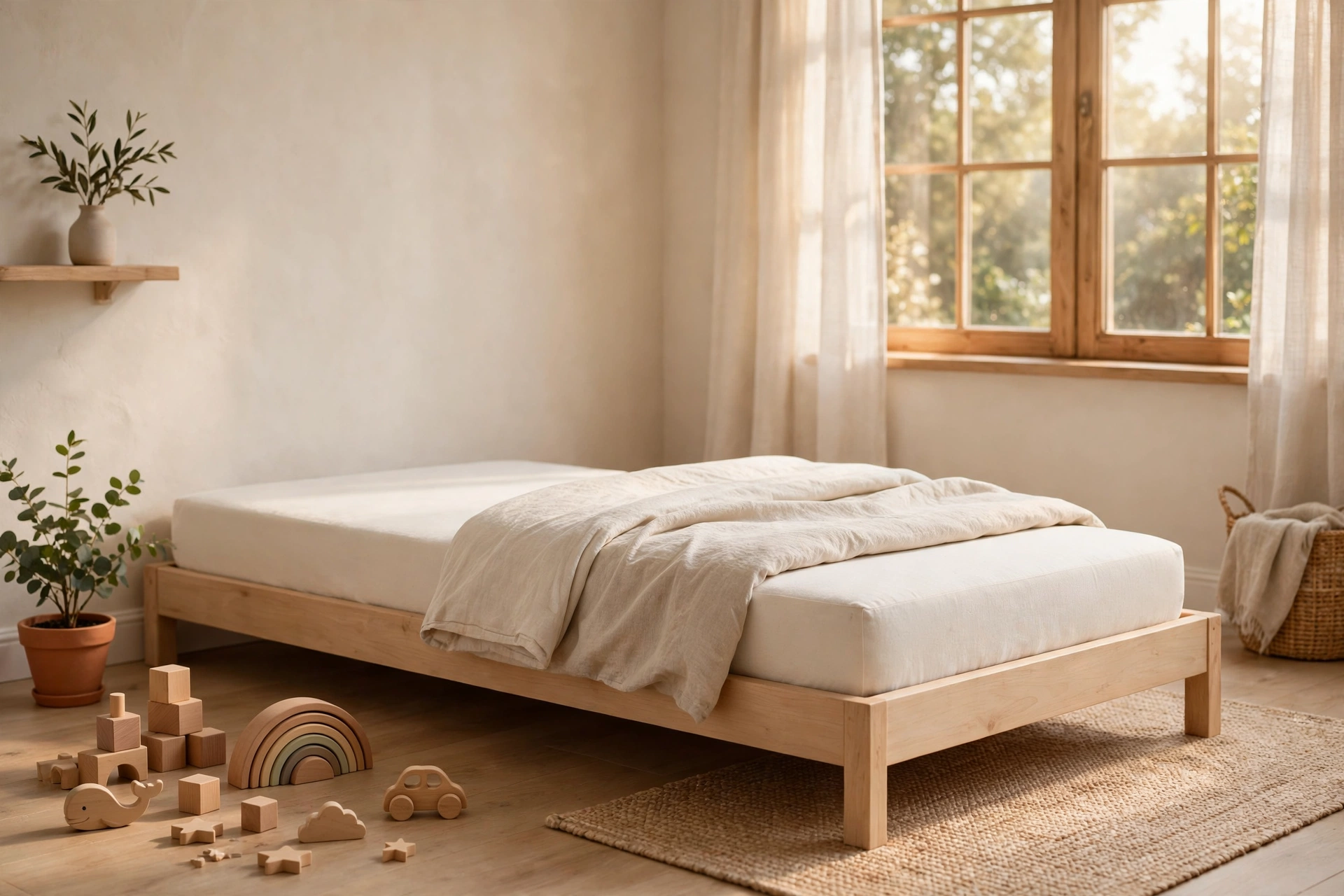
Yes, for a specific job. The Naturepedic 2-in-1 Organic Kids Mattress is a firm, innerspring twin built for the years when a child has left the crib but has not left the accident years behind. One side is waterproof, with a food-grade polyethylene layer made from non-GMO sugarcane sealed into organic cotton. Flip it over and the other side is quilted, softer in feel, and made for the older child who no longer needs the waterproof surface on top. It contains no polyurethane foam, no memory foam, no vinyl, no latex, no wool, no fiberglass, and no chemical flame retardants. It is GOTS certified organic, MADE SAFE certified, GREENGUARD Gold certified, and EWG Verified, and it carries UL validations for formaldehyde-free construction and non-detectable PFAS. If your child is potty training, moving to a first big-kid bed, or sleeping in a bunk or trundle, this is the most completely certified kids twin we have found. If your child is a teenager, a committed side sleeper who wants a plush surface, or you need a cover you can unzip and wash, skip to the honest limits section below, because this mattress was not built for that job.
Quick overview. The plain answer: a 38 by 75 by 7 inch firm twin, 624 coils in the support and comfort layers combined on the manufacturer’s listing, with a waterproof little-kid side and a quilted big-kid side. Start here: Naturepedic 2-in-1 Organic Kids Mattress, Twin. Still in the crib stage instead? Start with its sibling: Naturepedic Organic Classic 2-Stage Crib Mattress.

- VERSATILE NATURAL MATTRESS: These 100% GOTS certified mattresses feature two sides to suit your child's development; a waterproof side and a luxurious quilted side
- NON-TOXIC: Our mattresses pass all government flammability requirements while maintaining UL/GREENGUARD certifications for low chemical emissions
- BREATHABLE: Premium organic cotton filling over steel coils allows more airflow for a cooler, less sweaty sleep.
- 7" THICK MATTRESS: This natural mattress is free of harsh chemicals and adhesives and measures 38" x 75" x 7"
- HANDCRAFTED: All Naturepedic mattresses are made in the USA with domestic and imported components
What does “2-in-1” actually mean on this mattress?
It means the two faces of the mattress do two different jobs, and the flip between them is the whole design. The little-kid side has the waterproof layer at the surface. A spilled cup, a failed overnight diaper, or a stomach bug at 2 a.m. lands on a sealed surface you can wipe clean with a damp cloth and mild soap, and the liquid never reaches the inside of the mattress. That matters more than it sounds: once urine or vomit soaks into a foam or batting core, you cannot wash it out, and a damp core is where mould takes hold. The big-kid side is quilted organic cotton and plant-based PLA batting over a thin microcoil comfort layer. It feels more like a conventional mattress top, with a little more give and a softer first impression, while the support underneath stays the same firm innerspring.
One point most short reviews get wrong: both sides are firm. The 2-in-1 does not have a soft side and a firm side the way a 2-stage crib mattress has an infant side and a toddler side. Naturepedic rates the whole mattress as firm, and describes the feel as extra firm support for growing bodies. The difference you are flipping for is surface and waterproofing, not firmness grade. A parent who buys it expecting a plush side for an older child will be disappointed, and we would rather say that here than have you learn it from the return process.
The flip also has a practical second life. Plenty of families flip back to the waterproof side temporarily during illness, after a bedwetting regression, or when a younger sibling inherits the bed and starts the cycle again. The design assumes childhood is not a straight line, which, in our reading of it, is the most honest thing about the product.
Get the Weekly Swaps
One short email a week: the newest microplastics studies in plain English, plus the swaps that are actually worth your money. Join free and we will send you our room-by-room microplastic checklist to get you started.
Get Our Free Room-by-Room Microplastic ChecklistJoin the newsletter and get the checklist free →
What is inside it, layer by layer?
Most kids mattress listings give you a marketing sentence where the construction should be. Naturepedic publishes a layer diagram and a full materials line, so here is the stack as the manufacturer lists it, from the quilted side down to the waterproof side:
- Organic cotton and plant-based PLA quilt. The comfort surface of the big-kid side. The PLA batting is a polylactic acid fiber made from non-GMO sugarcane, used here in place of polyester or foam quilting.
- 1.5 inch microcoil comfort layer. A thin layer of small steel coils that sits only on the big-kid side. Microcoils contour more finely than a single innerspring unit and move air better than a foam comfort layer, which is the job they are doing here: a little surface give and airflow without a foam layer on top of the support core.
- Organic cotton batting and a polyester spring insulator. Cushioning above the coils, plus an insulator pad that keeps the batting from working down into the spring unit. Note the polyester here; we come back to it in the honest remainder section below.
- 5 inch premium innerspring unit. The firm support core, steel coils made in-house by Naturepedic from recycled American steel. The coils are assembled without glues or adhesives, using a proprietary method the company describes as removing the need for adhesive bonding, and the encasements are heat-sealed.
- Organic cotton and plant-based PLA batting below the spring unit, then the organic cotton encasement.
- Non-GMO sugarcane polyethylene waterproofing. The sealed waterproof layer on the little-kid side, made from food-grade polyethylene derived from sugarcane rather than petroleum.
What is not in the stack is the point of the product. There is no polyurethane foam anywhere in it, which removes the largest single source of mattress chemical emissions in the research below. There is no memory foam, no vinyl or PVC waterproof cover, no latex, no wool, no soy foam, no fiberglass fire barrier, and no chemical flame retardant treatment. Flammability compliance is achieved through the construction itself rather than an added retardant, the same approach the better organic brands use. It is made in the USA at Naturepedic’s Ohio factory, with domestic and global materials, which the company states plainly instead of implying every input is American.
Is sugarcane waterproofing still plastic? Yes, and here is why it is the right plastic
We will not dress this up: polyethylene is a plastic, whether the carbon in it came from sugarcane or from oil. If your goal is a mattress with zero plastic of any kind, a built-in waterproof side cannot give you that, and any review that implies otherwise is misleading you. The honest question is which waterproofing chemistry you are choosing between, because a mattress for a potty-training child will be waterproofed somehow, and the options differ a great deal.
The conventional option is vinyl, also called PVC, plasticized to make it flexible. That flexibility historically comes from phthalate plasticizers, the family of chemicals the crib mattress research below keeps finding in covers at remarkable concentrations. The other conventional options are petroleum polyethylene and polyurethane laminate films. Naturepedic’s layer is polyethylene made from non-GMO sugarcane, described by the company as food-grade, with no vinyl, no phthalates, and no PFAS, and the finished mattress carries a UL Non-Detectable PFAS validation. Polyethylene is also one of the more chemically inert plastics: it is a simple, stable polymer that does not need plasticizers to flex, which is precisely why food storage and medical tubing use it. It is heat-sealed into the organic cotton surface rather than glued, which keeps adhesives out of the waterproof layer entirely.
So the trade-off, stated plainly: you accept a thin, stable, plasticizer-free polyethylene film on one face of the mattress, and in exchange you get a waterproof surface that is not vinyl, cannot soak through into the core, and wipes clean instead of harbouring whatever soaked in. For the potty-training years we think that is the right trade. For an older child who no longer needs it, you flip the mattress and sleep on quilted cotton, and the layer sits unused on the bottom, which is the correct place for a compromise you no longer need.
The honest remainder: what in this mattress is not organic?
Here is a section we have not seen in any other review of this mattress, and it is the section that tells you whether a review is doing its job. The 2-in-1 is GOTS certified, but GOTS certification of a finished mattress does not mean every component is organic. Naturepedic’s own materials line lists, alongside the GOTS-certified organic cotton fabric and fill: plant-based PLA fiber batting, polypropylene interlinings, polyester thread, and a polyester coil insulator, plus steel fasteners and the steel innerspring. GOTS permits a defined set of accessory materials in a certified finished product, and this mattress uses that allowance. The organic claim is real, audited, and specific: it covers the cotton. It does not cover the thread.
Does that matter? For chemical exposure, very little: polyester thread and a polypropylene interlining are small, stable, non-foam components, not emission sources of the kind the research below measures. For honesty in marketing, it matters a lot, and it is why we read the materials line instead of the badge. It also frames the PLA correctly. PLA is a plant-derived plastic, and plant-derived is not the same as plastic-free; recent laboratory work on PLA microplastics is a reminder that biodegradable claims depend entirely on conditions a landfill or a bedroom does not provide. In this mattress the PLA is a batting fiber inside a sealed encasement, not a food-contact surface, and we rate it as a reasonable foam substitute. We are naming it so you can rate it yourself.
What do the certifications actually cover?
Certification logos are usually printed as a blob, as if five badges meant one vague thing called safe. They do not. Each of the certifications on this mattress answers a different question, and knowing which question each one answers is how you compare it against a mattress carrying only one or two of them.
- GOTS (Global Organic Textile Standard), certified by Control Union. Answers: is the cotton genuinely organic, and was the finished product made under audited organic and social criteria? Scope limit: the cotton fabric and fill, with GOTS-allowed accessory materials permitted for the rest, as covered above. A listing that says “made with organic cotton” without GOTS is making a much weaker claim than this one.
- MADE SAFE. Answers: have the ingredients been screened against a hazard list? Naturepedic describes the screening as covering more than 15,000 potentially harmful chemicals, including flame retardants and PFAS. This is an ingredient screen, not an emissions test.
- GREENGUARD Gold. Answers: what comes out of the finished mattress into indoor air? Gold is the stricter tier of the GREENGUARD emissions standard, with lower total VOC limits set for use in schools and healthcare settings. It is an emissions threshold, not an ingredient ban: a product can in principle pass an emissions test while containing a material you would rather avoid, which is why pairing it with MADE SAFE matters.
- EWG Verified. Answers: does the product meet the Environmental Working Group’s ingredient and transparency criteria for its category? The 2-in-1 is listed as EWG Verified on the manufacturer’s standards page.
- UL Formaldehyde Free Validated and UL Non-Detectable PFAS Validated. Answers: two narrow, testable claims, validated by UL rather than asserted by the brand. Naturepedic states this is the only kids mattress on the market with the non-detectable PFAS validation; that is the company’s claim, attributed as such.
- What is NOT on the list: GOLS. GOLS certifies organic latex. This mattress contains no latex, so a GOLS logo on a review of this model is an error copied from a different Naturepedic product. If you see it, discount the review accordingly.
The combination is the story. Ingredient screening (MADE SAFE, EWG), audited organic fiber (GOTS), finished-product emissions (GREENGUARD Gold), and two single-claim validations (UL) cover each other’s blind spots. No single badge does all four jobs, on this mattress or any other.
What does the research actually find in children’s mattresses?
This is the evidence base the whole category stands on, and it is stronger and more specific than most reviews let on. Four findings matter for judging any kids mattress, this one included.
Start with the most recent. Vaezafshar et al. 2025, from the University of Toronto and published in Environmental Science and Technology, tested 16 new children’s mattresses and measured semi-volatile organic compounds, the plasticizers, flame retardants, and UV filters that migrate out of mattress materials. At room temperature the team detected 12 of these compounds coming off the mattresses. Under simulated body heat that rose to 20, and with simulated body weight added, 21. In plain terms: a sleeping child is not a passive bystander to the mattress. The child’s own heat and weight increase what the mattress releases, exactly where the child is breathing. The companion in-home study from the same group, Vaezafshar et al. 2025 in Environmental Science and Technology Letters, measured 25 bedrooms of children aged 6 months to 4 years in Toronto and Ottawa, found 28 to 31 compounds across the air, the sleep microenvironment, and the mattresses, and confirmed the mattresses themselves as a source, with older mattresses showing higher levels of some phthalates.
The mechanism was mapped a decade earlier at the University of Texas at Austin. Boor et al. 2014 tested 20 new and used crib mattresses and found that every one of them emitted volatile organic compounds. The mean total VOC emission rate was 56 micrograms per square metre per hour at 23 degrees Celsius, roughly room temperature, and 139 at 36 degrees, roughly body temperature: about two and a half times higher against a warm body. Concentrations in the infant breathing zone, the few inches above the sleep surface, ran 1.8 to 2.4 times higher than in the room air generally. The follow-up, Boor et al. 2015, took the mattresses apart chemically: 17 of 20 covers contained at least one plasticizer, at 1 percent to more than 35 percent of the cover’s weight, 9 covers contained DEHP or DINP, and the polyurethane foam models contained flame retardants and unreacted isocyanates.
The third piece is about labels. The Ecology Center’s 2020 report, The Mattress Still Matters, reviewed 227 product pages from 37 brands and lab-tested 13 mattresses bought in 2018 and 2019. All 6 PVC covers tested contained plasticizers, 3 covers showed total fluorine suggesting PFAS waterproofing, antimony appeared in 5 products, and only 4 of the 13 fully matched what their own disclosures said. That last number is why this review leans on third-party certifications with defined scopes instead of brand self-description, including Naturepedic’s.
Now apply it. The emissions in these studies come overwhelmingly from polyurethane foam, vinyl covers, and their plasticizers and flame retardants. The 2-in-1 contains none of those materials: its support is steel and cotton, its comfort layer is cotton, PLA batting, and microcoils, and its waterproof layer is polyethylene, which was not the plasticizer source in any of the cover testing above. That is a materials argument, not a test of this specific mattress, and we present it as one. No independent lab has published an emissions workup of this exact model that we could find, and a review that implies otherwise is overstating. What can be said accurately is that the product removes the material categories the research flags, and submits the finished product to an emissions standard, GREENGUARD Gold, that the foam mattresses in the studies were not built to meet.
For the full category picture, including crib mattresses and the federal crib firmness rule, see our guide to non-toxic child mattresses, which this deep dive builds on.
How firm should a kids mattress be, and for whom?
Firm is correct for this age range, and it is worth understanding why rather than taking it as a style choice. A child moving out of a crib has been sleeping on a surface regulated for infant firmness, and a sudden drop to a soft, sinking mattress changes spinal support at exactly the age when body weight is climbing fast. Paediatric sleep guidance consistently favours a firm to medium-firm surface for young children: enough support that the body stays aligned, enough surface comfort that the child actually stays asleep. The 2-in-1 sits at the firm end of that range on both sides, with the microcoil layer on the quilted side taking the hard edge off without changing the support underneath.
Where firm stops being a virtue is later. An older, heavier side sleeper puts a shoulder and a hip into the mattress and needs pressure relief a firm innerspring does not give. Naturepedic’s own line acknowledges the handoff: its Verse model, quilted with organic wool and built with encased coils for longer-term comfort, is the company’s big-kid and teen mattress, and the 2-in-1 is positioned for the younger years. Our buying advice matches the manufacturer’s own map: the 2-in-1 for the toddler-to-pre-teen span it was designed for, and a planned graduation rather than an expectation that one twin serves from age 3 to college. One independent review also reports the surface feeling firmer for toddlers and closer to medium-firm for grown children on the quilted side, and notes sagging concerns at adult weights; the Twin’s stated weight limit is 325 pounds, so treat adult co-sleeping as an occasional event, not the design case.
Will it fit? Twin, trundle, and bunk math
The 2-in-1 comes in four sizes, and choosing the right one is mostly a thickness decision. The standard Twin is 38 by 75 inches and 7 inches thick, rated to 325 pounds. The Twin Trundle version is the same footprint at 6 inches thick, rated to 200 pounds. The Twin Trundle Short is 38 by 71 inches at 6 inches, also 200 pounds, for the shorter trundle frames that a standard twin overhangs. The Full is 53 by 75 inches at 7 inches, rated to 450 pounds. The Amazon listing for the Twin gives the mattress weight as 54 pounds, which the manufacturer does not publish; treat that as a retailer figure, and plan on two adults for the flip either way, because a 7 inch innerspring twin is an awkward lift regardless of the exact number.
For a bunk, do the guardrail math before you buy, not after. The top of the guardrail must extend at least 5 inches above the top of the mattress on a bunk bed. On a frame whose guardrail was sized for a 10 or 12 inch adult mattress, a 7 inch kids mattress is an easy fit. On a low-profile frame, measure the rail height above the mattress support, subtract 7 inches for this mattress, and confirm at least 5 inches of rail remains above the sleeping surface. The 6 inch trundle versions buy you an extra inch of clearance and are the correct pick for trundles for a simpler reason: a 7 inch mattress in a trundle built for 6 will not slide under the bed. Check your trundle clearance first. On foundations, Naturepedic specifies a platform, a slatted base with slats close enough to prevent sagging, or a box spring in good condition. A mattress this firm also works directly on a low platform frame, which is how many first big-kid beds are set up.
Sheet fit is the small detail that trips people up: a 7 inch profile is shallower than most modern twins, so deep-pocket sheets sized for 14 to 18 inch mattresses will bunch. Standard-depth fitted sheets fit properly. If you are setting up the whole bed at once, our guide to non-toxic kids bedding covers the organic cotton options that fit this profile.
How does it compare with the alternatives?
The honest comparison for a deep dive is not a list of other twins in the abstract. It is the small set of mattresses a parent reading this far is actually choosing between: staying inside the Naturepedic system, the certified latex alternative, and the washable alternative. Here is how they line up on the things that differ.
| Mattress | Construction | Waterproofing | Certifications | Best for |
|---|---|---|---|---|
| Naturepedic 2-in-1 Organic Kids Twin | Innerspring plus microcoil, organic cotton, no foam, no latex | Built-in sugarcane polyethylene side | GOTS, MADE SAFE, GREENGUARD Gold, EWG Verified, UL PFAS and formaldehyde validations | Potty training through pre-teen, bunks and trundles, latex or wool allergy |
| Newton Baby Kids Twin | Wovenaire core, 90 percent air and 10 percent food-grade polymer, no foam or springs | Fully washable core and cover instead of a waterproof layer | GREENGUARD Gold | Families who value washability over organic materials |
| Naturepedic Organic Classic 2-Stage Crib | 144 coil innerspring, organic cotton, infant and toddler sides | Built-in sugarcane waterproof surface | GOTS, MADE SAFE, GREENGUARD Gold | The crib years, before the twin |
| Babyletto x Avocado Organic Crib Mattress | Organic latex, coconut fiber, wool, and pocketed coils, 2-stage | No built-in waterproof side; needs a protector | GOTS, GOLS, MADE SAFE, GREENGUARD Gold | Families who prefer latex and want a crib mattress only |
Browse Our Full Amazon StorefrontAll our kids mattress and bedding picks in one place →
The supporting picks, in depth
Still in the crib? Naturepedic Organic Classic 2-Stage Crib Mattress
The 2-in-1 twin has a direct ancestor, and if your child is not yet out of the crib, it is the one to buy first. The Classic 2-Stage is a 144 coil innerspring crib mattress, about 51.6 by 27.25 by 6 inches, with a firmer infant side and a slightly softer toddler side, and the same sugarcane-based waterproof surface sealed into organic cotton. The logic is identical to the twin: steel and cotton instead of foam and vinyl, no flame retardants, no phthalates, and certifications that cover both ingredients and emissions. Buying the crib version and then the twin is not duplication; the crib mattress passes down to a sibling or holds its resale value precisely because the core cannot absorb accidents the way foam does.
The honest con is the same one the twin carries: it is firm, deliberately, and parents used to plush adult mattresses sometimes read that as a flaw in the first week. For infants, firm is the safety standard, not a preference. Weight is the other practical note; at about 20 pounds it is heavier than a foam crib mattress, which matters for sheet changes at arm’s length over a crib rail.
The latex route: Babyletto x Avocado Organic Crib Mattress
The strongest certified alternative in the crib category takes the opposite material bet: organic latex and coconut fiber over pocketed coils, with wool in the construction, certified GOTS and GOLS as well as MADE SAFE and GREENGUARD Gold. Latex gives a more responsive, slightly bouncier feel than cotton batting over coils, and families who already sleep on latex often prefer it. It is a crib mattress only, at about 52 by 28.25 by 5.5 inches, so it does not follow the child to a twin bed the way the Naturepedic sequence does.
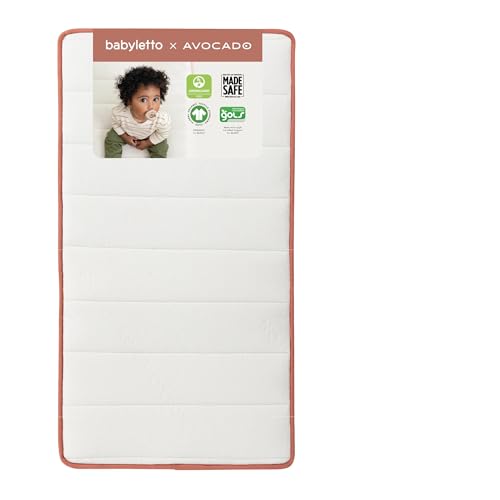
- GREENGUARD GOLD CERTIFIED: Tested by UL Environment to meet some of the world's most rigorous emissions standards for chemical exposure and pollutants.
- 2-STAGE: This is a 2-stage dual-sided mattress that has a firm supportive side for infants that can be flipped to a softer side for toddlers. The toddler side features our signature terracotta color piping.
- NONTOXIC MATERIALS: A soft, organic cotton mattress cover and wool batting is gentle on baby's sensitive skin while firm and breathable coconut husk fibers and individually wrapped coil springs provide ample support.
- ORGANIC: Rest assured that the mattress is certified by the Global Organic Textile Standard, and the latex used meets the Global Organic Latex Standard. Organic latex is used as a bonding material for the coconut fiber support.
- STANDARD CRIB SIZE: Universally designed to fit a standard size crib.

Two honest trade-offs decide between this and the Naturepedic design. First, latex and wool are allergens for some children, and the 2-in-1’s latex-free, wool-free construction exists precisely for those families. Second, this mattress has no built-in waterproof side, so its real cost and real system include a good waterproof protector from day one, and a soaked-through accident reaches a latex and coir core that is harder to clean than a sealed surface. Neither is a reason to dismiss it; both are reasons to choose with your eyes open.
The washable route: Newton Baby Kids Twin Mattress
Newton answers the accident problem in the opposite direction: instead of sealing liquid out, it builds a mattress you can wash. The Kids Twin, 38 by 75 by 5.5 inches, uses the company’s Wovenaire core, which the brand describes as 90 percent air and 10 percent food-grade polymer, with no foam, latex, springs, or glue, and both the cover and the core are washable. It is GREENGUARD Gold certified, and for a child with severe night-time reflux or a medical condition that means frequent full bedding changes, washability can outweigh everything else in this review.
Now the framing this site owes you: Wovenaire is a plastic polymer core. It is not organic, it is not plastic-free, and Newton does not claim otherwise. What it offers is a different risk profile, very low emissions under a respected certification, no foam, and total washability, in exchange for a mattress made of polymer instead of cotton and steel. We include it because pretending the trade does not exist would not help you decide. If your priority ranking starts with organic materials, the Naturepedic is your mattress. If it starts with being able to hose down the entire bed, this is.
Protect the quilted side: Naturepedic Organic Waterproof Mattress Protector Pad, Twin
The one accessory this mattress genuinely needs. Once you flip to the quilted side, that side has no waterproofing, and Naturepedic itself recommends adding a waterproof protector over it. The matching protector is two layers of organic cotton jersey with an ultra-thin waterproof barrier between them, fitted like a sheet, washable and reusable, and sized for the Twin at 75 by 38 inches with depth for mattresses in the 9 to 16 inch range, so it will sit slightly loose on the 7 inch 2-in-1; a snug tuck under the mattress handles that. It is also the right layer during the waterproof-side years if you prefer a softer, absorbent surface over the sealed side, as long as you wash it promptly after an accident so liquid does not sit against the mattress.
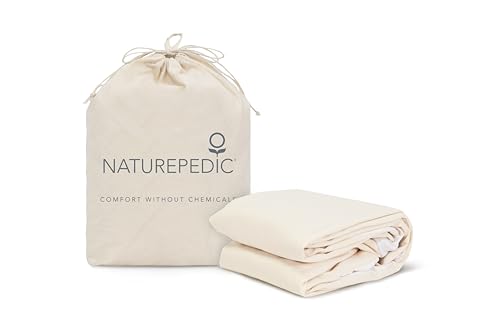
- Waterproof Mattress Pad: Protect and keep your mattress free of liquids and allergens with this organic cotton mattress pad
- Organic Cotton: Our mattress protectors are made with two layers of organic cotton jersey and a GOTS approved waterproof polyurethane layer
- Drysleep Technology: Ultra-thin waterproof barrier effectively blocks liquids from passing through while still allowing the fabric to breathe
- No Harmful Chemicals: Our mattress pads are completely non-toxic and free of vinyl/PVC, phthalates, latex, and eliminates potential allergenic concerns
- 9"-16" Deep Pocket: This fitted sheet style mattress protector has an organic cotton skirt and full elastic perimeter stretching to cover mattress depths from 9" to 16"
For the wider protector picture, including wool puddle pads and what to avoid, see our guide to non-toxic mattress pads and protectors. The con here is simple: it is one more thing to buy for a mattress that already sits at a premium level, and the barrier layer means it is a functional protector, not a plastic-free one. Same trade as the mattress itself, made for the same reason.
Join Our Free Facebook GroupNon-Toxic Family Living: parents sharing swaps that work →
Care, longevity, and the second-child question
Care is asymmetric, by design. The waterproof side wipes down with a damp cloth and mild soap; do not soak it, skip bleach and harsh cleaners, and let it dry fully before the sheet goes back on. The quilted side is spot clean only, and the instruction that matters is to keep moisture to a minimum, because the batting and microcoil layer beneath it have no waterproof defence. That asymmetry is the strongest practical argument for adding the protector the day you flip: one unprotected accident on the quilted side can reach the core, and a core you cannot wash is a mattress whose remaining years you have just shortened.
On longevity, separate the warranty from the lifespan. The warranty is a 25-year limited warranty, structured the way most long mattress warranties are: full component repair coverage in the first 10 years, then a prorated credit that starts at 60 percent in year 11 and declines from there. Read that as a 10-year full-coverage warranty with a long prorated tail, not 25 years of free replacement. The realistic lifespan of an innerspring kids mattress in daily use is in the 8 to 10 year range that the better roundups cite for the category, which comfortably covers one child from toddler bed to pre-teen, or two children in sequence if the first child’s years on it were gentle. Naturepedic backs the purchase with a 100-night trial with free shipping and free returns, which is the number that actually de-risks the decision: a child who cannot settle on a firm surface tells you so well inside 100 nights.
For a second child, the hygiene case is unusually good for this design. The waterproof years mean the core was never soaked, the surface wipes clean, and there is no foam to have absorbed years of spills. Inspect the encasement for tears, check for any mould smell after storage, store it flat or on its side in a dry room rather than folded in a damp garage, and it is one of the few mattresses we are comfortable describing as genuinely hand-down-able. Rotate it head to foot every few months in use, which is a rotation, not a flip; the flip is reserved for the stage change.
And a note on the adult end of the Naturepedic range, since parents often ask while they are here: the construction philosophy carries up unchanged, and our Naturepedic Serenade review covers the adult organic mattress in the same depth, while the non-toxic bedding guide covers what goes on top of either.
Who should skip it? The honest limits
Every deep dive on this site carries this section, because a review that cannot name its product’s failure modes is an advertisement. Here are this one’s. It is heavy and awkward to flip; the retailer-listed weight for the Twin is 54 pounds, and even allowing for that figure being approximate, flipping it is a two-adult job, which matters if you planned to flip it back and forth weekly rather than by stage. The cover is not removable and not washable; if washability is your top requirement, the Newton above is built for you and this is not. Only one side is waterproof, so the quilted years depend on a protector you buy separately. There is no reinforced edge, so the perimeter is not a sitting edge for bedtime stories the way a foam-encased edge would be, and perching adults should sit gently. It is not a co-sleeping mattress for an adult and child every night; the firm surface and the 325 pound Twin limit make occasional co-sleeping fine and nightly co-sleeping the wrong use. It contains no latex and no wool, which is a feature for allergy families and a genuine loss for families who wanted wool’s natural temperature regulation and moisture handling. And it is a premium purchase in a category full of cheap foam twins; the value case rests on years of use, hand-down potential, and materials, not on being the least expensive way to fill a bed frame. If none of that is your situation and your child is in the potty-training to pre-teen window, the limits above are the whole list, and we could not find others in the specifications, the certifications, or the independent coverage.
Add Us as a Preferred Source on GoogleOne tap, and our guides show up first in your Google results →
Frequently asked questions
Is the Naturepedic 2-in-1 mattress fully organic?
Its cotton fabric and fill are GOTS-certified organic, and the finished mattress is GOTS certified with GOTS-allowed accessory materials. The steel coils, PLA batting, polypropylene interlinings, polyester thread and insulator, and sugarcane polyethylene waterproofing are not organic. No finished mattress on the market is 100 percent organic; this one is unusually transparent about which parts are.
Is the waterproof side safe? It is still plastic, right?
It is polyethylene made from non-GMO sugarcane, a plastic, chosen over the alternatives. It contains no vinyl or PVC, no phthalate plasticizers, and no PFAS, and the mattress carries a UL Non-Detectable PFAS validation. Polyethylene does not need plasticizers to flex, which is the property that made vinyl covers the problem in the cover research cited above.
When should I flip it to the quilted side?
When night-time accidents have stopped for a sustained stretch, not after one dry week. Most families flip somewhere in the year after potty training is fully established, and many flip back temporarily for illness or a regression. Add the waterproof protector over the quilted side when you flip.
Does it fit a bunk bed or a trundle?
Yes, with the right version. The standard Twin is 7 inches thick; check that your guardrail still extends at least 5 inches above the mattress top. For trundles, buy the 6 inch Trundle or Trundle Short version, and measure your trundle clearance and length first, since the Short exists for 71 inch frames.
How firm is it for an older child or a teenager?
Firm on both sides. That suits toddlers through pre-teens. For a teenager, especially a side sleeper, Naturepedic’s own Verse model is the intended step up, with a more comfort-focused quilted construction.
Does it have latex or wool? My child has allergies.
Neither. The 2-in-1 is made without latex and without wool, which is one of its clearest advantages over latex-based organic competitors such as the Babyletto x Avocado. It is also PETA-Approved Vegan for the same reason.
What does the warranty actually cover?
A 25-year limited warranty: full component repair coverage for the first 10 years, then a prorated credit beginning at 60 percent in year 11 and declining after that. There is also a 100-night trial with free shipping and free returns.
Can I put it directly on the floor?
Naturepedic specifies a supportive base: a platform, a slatted foundation with closely spaced slats, or a box spring in good condition. Follow the manufacturer’s foundation guidance to keep the warranty intact, and keep any mattress off a cold floor where condensation can collect beneath it.
How is this different from the crib mattress version?
Size, stage logic, and job. The Naturepedic Organic Classic 2-Stage is a crib-sized mattress with infant and toddler firmness sides. The 2-in-1 is a twin with waterproof and quilted surfaces at the same firmness, built for the years after the crib. Our Burt’s Bees Baby crib sheet deep dive covers the crib bedding layer in the same spirit.
The verdict
Buy the Naturepedic 2-in-1 Organic Kids Mattress if your child is leaving the crib, still in or near the accident years, sleeping in a bunk or trundle, or managing a latex or wool allergy, and you want the most completely certified kids twin available: organic cotton and steel instead of foam and vinyl, ingredient screening and emissions certification covering each other, and a waterproof system honest enough to name its own plastic. Add the Naturepedic Organic Waterproof Protector Pad for the day you flip it. Skip it if washability outranks materials, if the sleeper is a teenager, or if a two-adult flip sounds like a dealbreaker. Within the job it was built for, we have not found a better-evidenced option.