Marine Microplastics and Cancer Rates: What the Coastal County Study Actually Found
Marine Microplastics and Cancer Rates: What the Coastal County Study Actually Found
This article contains affiliate links. If you buy through our links, we may earn a small commission at no extra cost to you. We never claim to have tested products we have not used, and we check materials, listings and the published research before we link anything.
The headline travelled faster than the study did. You may have seen some version of it in October: microplastics in the ocean, linked to higher cancer rates in coastal counties. It is the kind of headline that makes you look at the beach differently, and then, if you are like most of us, wonder whether you should be worried, and how worried, and about what exactly.
Here is the honest answer up front. The study behind that headline is real, it is carefully done for what it is, and it is also much smaller and much more tentative than the headline suggests. It counted counties, not people. It found a modest pattern, not a proven cause. And its own authors use words like preliminary, exploratory and hypothesis-generating, which in research language means: this is a reason to do the next, harder study, not a reason to change your life in fear.
So this article does the slow version. We read the full paper, checked every number against the published tables, and set it next to what the wider science actually says about microplastics and cancer in 2026. Then, because worry without a plan helps nobody, we end with the small number of exposure cuts that are defensible on the evidence we have today, ranked, with the trade-offs printed plainly.
The short answer, before the long one
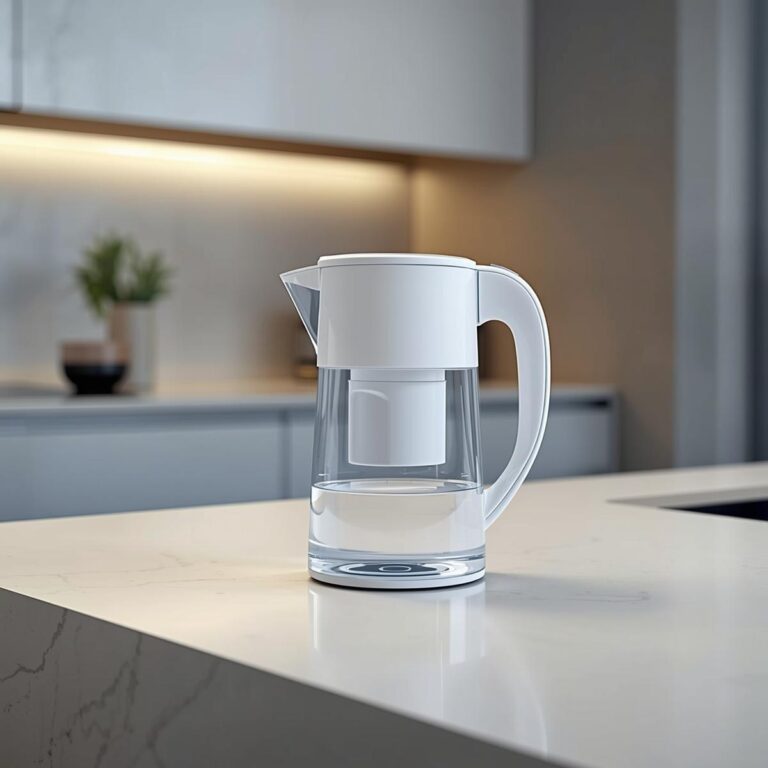
Our verdict: the coastal county study found that counties scoring one point higher on a 1 to 5 marine microplastic pollution scale had about 1 percent higher overall cancer incidence rates between 2013 and 2021. That is a small, county-level association from an ecological study that cannot show cause. It does not mean microplastics gave anyone cancer, and no major body classifies microplastics as a carcinogen today. If it moves you to act at all, let it move you toward the boring, well-supported cuts: filter your drinking water and stop storing food in plastic. For drinking water, the strongest pitcher we could verify is the Clearly Filtered No.1 Filtered Water Pitcher, independently lab-tested across a long contaminant list that includes microplastics.
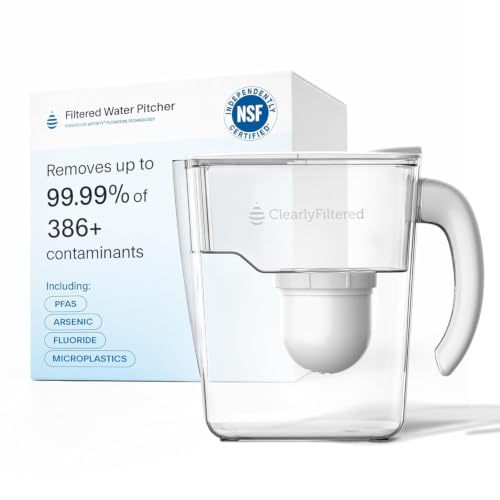
- Unmatched Contaminant Protection: Your tap water faces threats most filters never address; the Clearly Filtered pitcher is backed by NSF certification and targets 386+ contaminants at up to 99.99% removal, including fluoride, lead, PFAS/PFOA, arsenic, microplastics, chlorine, and perchlorate. Our proprietary Affinity Filtration Technology uses ionic binding to capture contaminants while preserving beneficial minerals your body needs, targeting up to 73x more contaminants than typical store-bought filters.
- Family-Sized 80 Fl Oz Capacity: Stop refilling constantly; this large pitcher holds 80 fl oz (approximately 10 cups / 2.4 L), delivering enough filtered water for your entire family in a single fill. Designed to fit on standard refrigerator shelves, it features a spill-resistant water dam, a redesigned ergonomic comfort handle for confident pouring, and an easy hinge fill lid so refilling takes seconds, not effort
- Premium Medical-Grade Materials: The pitcher filtering your water should be as clean as the water itself; that is why Clearly Filtered uses medical-grade Tritan plastic that is BPA-free, BPS-free, non-leaching, and free from endocrine disruptors.
- Long-Lasting 100-Gallon Filter Life: Each filter handles up to 100 gallons, approximately 200 refills or roughly 4 months of daily use, so you spend less time thinking about replacements and more time drinking clean water. When it is time to swap, replacing the filter is simple and available with convenient, recurring ordering through Clearly Filtered.
- Independently Tested and Fully Transparent: Independently tested by a third-party lab and NSF certified to NSF/ANSI 43 and 372. Removal rates for fluoride, lead, chlorine, heavy metals, pharmaceuticals, PFAS, phthalates, microplastics, and VOCs are all publicly available, making this the top-rated choice for health-conscious parents, wellness-focused adults, and anyone with tap water quality concerns
That verdict needs its caveats immediately, which is why the next section exists. A recommendation that cannot survive its own objections is not worth much.
The case against taking this study, or our verdict pick, at face value
First objection: the study cannot show what the headline implies. True, and we will not pretend otherwise. This is an ecological analysis. The unit it measured was the county. Nobody in it had their own microplastic exposure tested, and nobody’s cancer was linked to their own exposure. A pattern across counties can exist even when the people most exposed are not the people who got sick. That is not a flaw in the researchers’ honesty; they state it themselves. It is a limit on what anyone, including us, can claim from it.
Second objection: coastal counties differ in a hundred other ways. Also true, and the paper’s own numbers show it. In the study data, the highest-pollution counties were also poorer, had higher air pollution (PM2.5), higher smoking rates and higher obesity rates than the lowest-pollution counties. The researchers adjusted for county averages of several of those factors, which is the right move, and they still write that leftover confounding may remain and that the pattern may reflect broader environmental or socioeconomic patterns rather than microplastics themselves. Anyone who quotes this study without that sentence is selling you something.
Third objection: the timing does not line up the way a cause needs it to. Correct again. Cancers in the study were counted from 2013 to 2021, while the ocean measurements were gathered across overlapping years, and solid tumours typically develop quietly for a decade or more before diagnosis. Only 7 of the 89 counties had all of their ocean samples collected before 2013. The authors are explicit that their pollution score describes today’s contamination gradient, and that the analysis assumes counties that are high today were relatively high in past decades too. That assumption may be reasonable. It is still an assumption.
Fourth objection, aimed at us: why recommend a water pitcher off the back of an ocean study? Fair question. The pitcher is not in this article because the county study tested pitchers. It did not test any product, any food, or any person. The pitcher is here because drinking water is one of the few exposure routes where the measurement science is solid today, where an independent lab test can tell you what a filter removes, and where the swap costs you nothing in health terms if the cancer question stays unresolved for another decade. We would rather give you one defensible action than ten dramatic ones.
Fifth objection: the verdict pitcher is not perfect. It is not. The Clearly Filtered pitcher sits at 4.2 stars in the ratings we could verify, below the 4.3 line we usually hold picks to, and we are printing that rather than rounding it up. Owners report slow filling as the filter ages, and replacement filters are a real ongoing cost. Its formal certifications are narrower than its lab testing: describe it, as we do, as independently lab-tested, with NSF/ANSI 42 and 372 certification, not as certified for every contaminant on its test sheet. It is still the strongest verified pitcher option we found for this job. Best available is not the same as flawless, and you deserve to hear both halves.
What did the researchers actually do?
The paper is Gentile and colleagues, Marine microplastic pollution and cancer incidence from 2013 to 2021 in US coastal counties, published in the International Journal of Hygiene and Environmental Health in 2026. The senior author, Shiwen Li, is at the University of Hawai’i at Manoa, with co-authors from the University of Hawaii Cancer Center and the University of Southern California, which is why you will see it described as the University of Hawaii study. The university’s own summary, published on 12 October 2026, is here: the University of Hawai’i news release on the marine microplastics and cancer findings. In that release, Li calls the findings preliminary evidence that requires further investigation. Hold onto that sentence. It is the authors’ own framing, and everything below should be read inside it.
The design, step by step, was this. Cancer counts came from the National Cancer Institute SEER programme, covering 2013 to 2021, invasive cancers only, across 89 coastal counties with a combined average population of about 54 million people. Ocean pollution came from the NOAA National Centers for Environmental Information Marine Microplastics Database, a large archive of in-situ particle counts from surface water, deeper water, sediment, beaches and rivers, contributed over the years by academic teams, government programmes and citizen science projects such as Nurdle Patrol.
Each sampling point was linked to its nearest county, with points within 20 kilometres of a county boundary counted in. Concentrations were grouped from very low to very high and converted into a single score from 1 to 5 for each county, averaged across all of its linked samples and years. Then the team ran Poisson regression models, one per cancer type, asking whether counties with higher scores had higher incidence rates, after adjusting for county-level percentages of people of colour, education, unemployment, age structure, urban or rural status, obesity, smoking, and PM2.5 air pollution. They controlled the false discovery rate at 5 percent, which is a statistical guard against the obvious problem of testing dozens of cancer types at once: run enough tests and some will look positive by chance. They also reran the analysis with smaller 10 and 15 kilometre buffers, split north versus south, and split counties by beach density. The main pattern held in direction and size across those checks, and was stronger in counties with more beaches. That consistency is a point in the study’s favour. It does not remove the design limits above, and the authors do not claim it does.
Two details in the methods matter more than most coverage mentioned. The first is that the pollution archive counts every particle under 5 millimetres as a microplastic and contains no nanoplastics at all. The smallest particles, the ones most able to cross biological barriers, are simply not in this dataset. The second is that a particle count cannot separate the physical particle from the chemistry riding with it: plastic additives such as plasticisers and flame retardants, plus pollutants the plastic has picked up from seawater, including persistent organic pollutants, heavy metals and endocrine-disrupting compounds. If there is a real signal here, this study cannot tell us which part of that bundle it belongs to.
How big was the association, in plain numbers?
Small. That is the plain answer, and here are the published figures so you can judge for yourself. For each 1-point step up the 5-point pollution score, the incidence rate ratio for all cancers combined was 1.01, with a 95 percent confidence interval of 1.01 to 1.02. In ordinary language: about 1 percent higher county-level incidence per step. Even comparing the cleanest-scoring counties to the dirtiest-scoring ones, the compounded difference is a few percent at county level. It is not a doubling. It is not close to a doubling.
By body system, the adjusted results that survived the false-discovery check were: digestive system 1.02, endocrine system 1.04, oral cavity and pharynx 1.05, respiratory system 1.03, and male genital system 1.03. Breast cancer, at 1.01, did not remain significant after the false-discovery correction. There was no significant association for cancers of the brain and nervous system, the female genital system overall, leukaemia overall, lymphoma overall, myeloma, skin, the urinary system overall, or soft tissue.
Now the part selective coverage tends to leave out. Inside the individual cancer sites, the results point in both directions. A few sites came out higher, including oesophagus at 1.20, acute myeloid leukaemia at 1.20, and the rectosigmoid junction at 1.32. Others came out lower in higher-pollution counties, including cervix at 0.42, larynx at 0.35, testicular cancer at 0.84 and tonsil at 0.71. Pancreas, stomach and caecum were essentially null. The authors attribute that mixed pattern to possible differences in how these cancers develop, small case counts, differences in screening, or leftover confounding. We agree with their caution, and we would put it more bluntly: an article that quotes you the 1.32 and hides the 0.42 is not informing you. It is recruiting your fear.
Get the Weekly Swaps
One short email a week: the newest microplastics studies in plain English, plus the swaps that are actually worth your money. Join free and we will send you our room-by-room microplastic checklist to get you started.
Get Our Free Room-by-Room Microplastic ChecklistJoin the newsletter and get the checklist free →
If counties are not people, why publish this at all?
Because ecological studies are how environmental health often gets its first map. They are cheap relative to following millions of people for decades, they use data that already exists, and they tell researchers where to point the expensive, individual-level work next. The history of environmental health is full of county and regional patterns that turned out to be early, blurry photographs of something real, and also full of patterns that dissolved once better studies measured people directly. Both outcomes are normal. Neither justifies panic, and neither justifies dismissal.
What this study adds, specifically, is scale and discipline. It is, as its authors note, one of the earliest human studies to connect microplastics and cancer at national level. It covers about 54 million people worth of county data, it adjusts for the obvious social and pollution confounders rather than ignoring them, it corrects for multiple testing, and its sensitivity checks behave the way you would hope. What it cannot add, by design, is a single measurement of microplastics inside a single human being. The next step the team itself points to is measuring micro and nanoplastics in biological samples such as blood, inside studies that follow individuals. Until that work exists, every honest sentence about microplastics and cancer in humans has to end with some version of: associated at group level, cause not shown.
What does the rest of the science say about microplastics and cancer?
Three separate bodies of evidence get folded into one scary sentence in most coverage. Separating them is the whole job, so let us separate them.
First, the official position. Microplastics are not classified as carcinogens by the International Agency for Research on Cancer. That point is made plainly in Bailey and Hofseth, Microplastics in early-onset carcinogenesis, published in Carcinogenesis in 2026, a review that argues the question deserves serious study while stating that causality has not been established. The standing assessment from the World Health Organization, the WHO 2022 report on dietary and inhalation exposure to nano and microplastic particles, reviewed the evidence available to the end of 2021 and concluded the data were too limited to settle human health risk, then set out the research still needed. A 2026 county study does not overturn that position on its own. It adds one preliminary data point to a file that the official reviews describe as thin.
Second, the laboratory mechanisms. Here the picture is genuinely more developed, and also easier to overread. The review Mishra and colleagues, Microplastics as emerging carcinogens, published in Molecular Cancer in 2025, screened the literature and summarised the proposed pathways: chronic inflammation, oxidative stress, genotoxicity, disrupted lipid metabolism and changes to the tumour immune microenvironment, involving signalling pathways with names like NF-kB, PI3K/Akt/mTOR, Wnt/beta-catenin and p53. In plain terms, tiny plastic particles can irritate tissue, generate reactive oxygen species, and in some experiments damage DNA. That is biological plausibility, and it matters. What it is not is human proof. Most of that work is in cells and animals, often at particle concentrations above what researchers estimate people actually encounter, a gap the Hawaii paper itself flags in its introduction. A mechanism that works in a dish at high dose tells you a question is worth asking in people. It does not tell you the answer.
Third, the particles-in-tissue studies. Researchers have now found microplastics inside human tumours, and the finding is real and worth understanding precisely. In Pan and colleagues, a 2025 Scientific Reports study of colorectal cancer tissue, tumour samples from 10 patients showed a greater variety and distribution of microplastics, including PVC and PE, than the patients’ own adjacent non-cancerous tissue. A wider survey, Zhao and colleagues in 2024, detected microplastics in 26 of 61 tumour samples across cancer types, with the highest detection rates in lung and pancreatic tissue. Presence, though, is not causation, and there is a specific reason for caution here that rarely makes the headlines: cancerous tissue may simply collect and retain more particles. The colorectal paper itself notes that cancer specimens show high expression of clathrin, part of the machinery cells use to pull particles inside. A tumour that traps more plastic will test positive more often even if plastic had nothing to do with starting it. That is reverse causation, and with small, cross-sectional samples like 10 patients, nobody can rule it in or out yet.
Where would exposure even come from? The routes, graded honestly
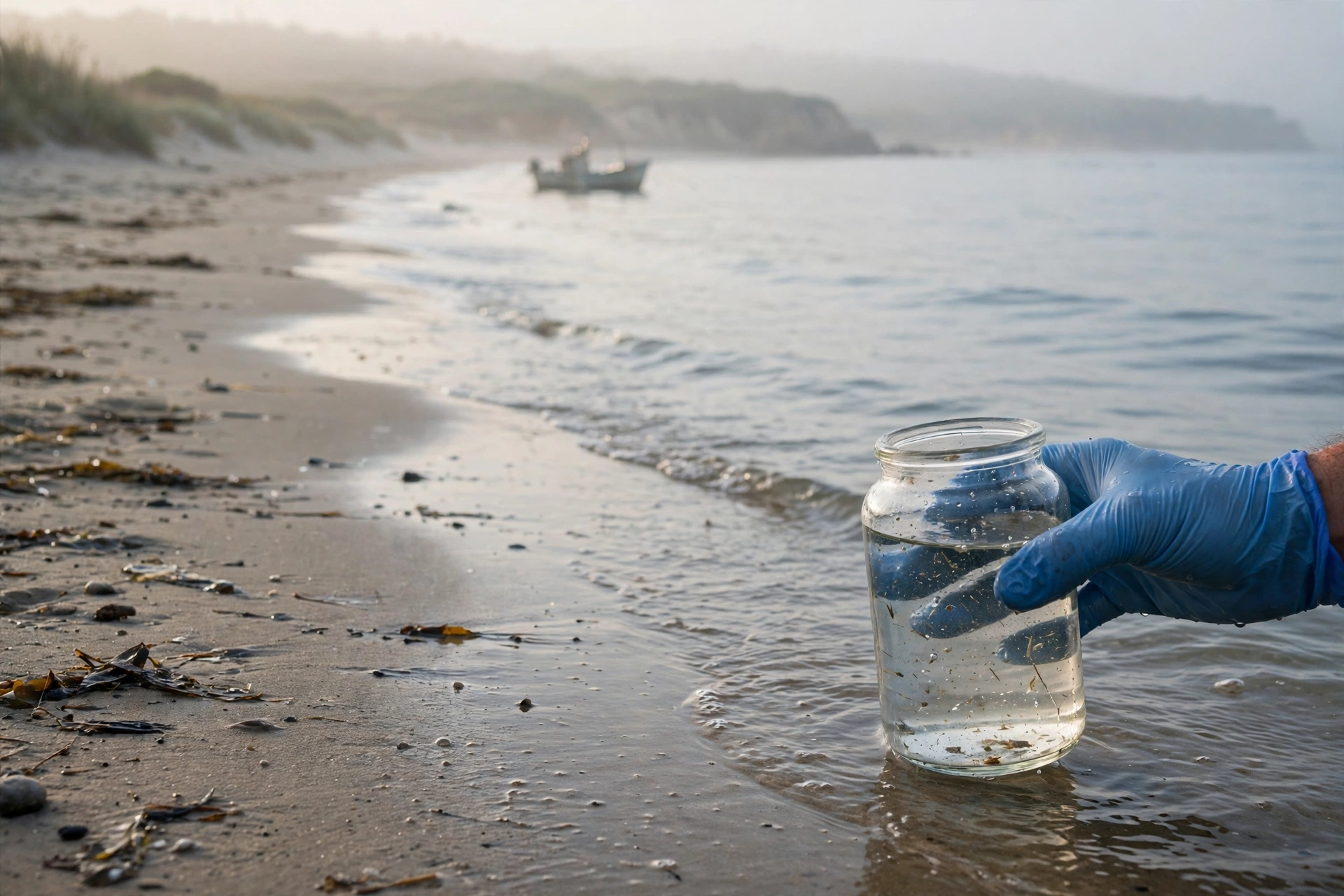
The Hawaii paper names three hypothesised routes from ocean to person, and is clear that it measured none of them: seafood consumption, sea-spray aerosols carried inland on the breeze, and seawater intrusion into coastal aquifers used for drinking water. Grading each route on today’s evidence keeps the practical section honest.
Seafood: a real ingestion route, an unmeasured dose. The review Arisekar and colleagues, on microplastic contamination in seafood, published in Marine Pollution Bulletin in 2025, confirms that marine organisms take up microplastics and accumulate them in organs, which makes seafood a genuine route into people, while flagging that toxicology, regional data and consistent detection methods are all still lacking. Filter feeders eaten whole, such as mussels and oysters, logically carry more of the animal’s gut contents than a fillet does. What nobody can currently give you is a trustworthy personal dose number, or any evidence tying a specific person’s seafood intake to a specific cancer outcome. Eat seafood for the reasons nutrition science supports. Handle it in glass and steel because that part is easy. Do not let a county study talk you out of fish, and do not let anyone talk you into a detox over it.
Drinking water: the best-measured route. Water is where particle counting has become genuinely precise. Using stimulated Raman scattering microscopy, Qian and colleagues at Columbia and Rutgers, published in PNAS in 2024, estimated roughly 240,000 plastic particles per litre in bottled water from three brands, about 90 percent of them nanoplastics. That is an exposure measurement, not a health finding, and tap water profiles differ from bottled. But it explains our ranking below: the one route where you can measure what goes in, and measurably reduce it with a tested filter, goes first.
Sea air and aquifers: plausible, largely unmeasured. Sea-spray aerosol transport is physically sensible and supported by atmospheric microplastic research generally, but the county study measured no air at all, and there is no personal action item hiding in it beyond the general indoor-air habits we cover elsewhere on this site. Aquifer intrusion is a local water-quality question that belongs to your utility’s testing reports, not to a shopping list.
Join Our Free Facebook GroupNon-Toxic Family Living: parents sharing swaps that work →
If not just the pitcher, then which? The supporting swaps, ranked
Everything below follows one rule: it reduces a measured or mechanically obvious plastic contact, it is a name brand we verified on Amazon, and its downside is printed with it. None of it is cancer prevention. Anyone who sells you a colander as cancer prevention is lying to you. These are exposure cuts with independent reasons to exist.
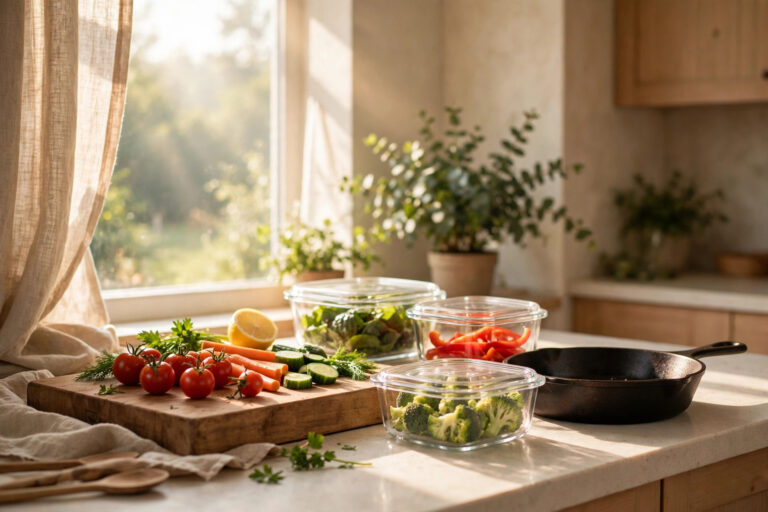
Second, store seafood and leftovers in glass. The Pyrex Simply Store 18-Piece Glass Food Storage Set, at 4.6 stars across tens of thousands of reviews, is the workhorse: non-porous tempered glass that does not absorb odours, flavours or stains, and never puts a plastic wall against fatty food, which is exactly the contact food chemists worry about most. The trade-off is the lids: they are BPA-free plastic, they sit on top rather than soaking in the food, and the snap-on design is not leakproof for soup in a bag. For the fridge and pantry, it is the right tool. If leakproof matters more, the glass set with latching lids already verified on this site is the alternative we point readers to in our food storage guide.
Third, prep seafood on steel, not plastic. The OXO Good Grips Stainless Steel Colander, 5 quart, at 4.8 stars, is solid stainless steel with raised feet and non-slip handles, dishwasher safe, and built for exactly the rinsing work seafood asks for: shrimp, shellfish and vegetables, drained fast, with no plastic surface shedding into food and no plastic mesh to trap smells. Its downside is minor and honest: it is a single-purpose, cupboard-hungry object, and perforated steel will never drain rice or fine grains the way a mesh strainer does.
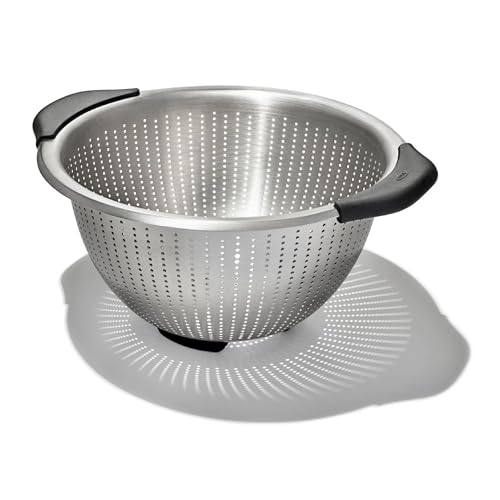
- COMFORTABLE, SECURE GRIP: Elevated, non-slip handles make lifting and shaking easy even with wet hands. This stainless steel colander keeps straining safe and comfortable
- FAST, THOROUGH STRAINING: All-over perforated design allows water to flow quickly and evenly, making this stainless steel colander ideal for draining pasta, vegetables, fruit and more
- DESIGNED FOR EASY STORAGE: Nests neatly inside mixing bowls for convenient rinsing, straining and compact storage, helping save valuable kitchen space
- STABLE WHEN IN USE: Three raised feet keep the colander steady in the sink or on the countertop, allowing it to stay upright while rinsing, draining or resting between uses
- FLEXIBLE SIZE OPTIONS: Available in 3 qt. and 5 qt. capacities to handle anything from small servings to family-size batches. Choose the right colander for straining pasta, vegetables or fruit

Fourth, carry the filtered water with you. A filter only helps if the filtered water is the water you actually drink, which is why the Hydro Flask 32 oz Wide Mouth bottle, at 4.7 stars, earns its place: 18/8 stainless steel, vacuum insulation that keeps drinks cold for 24 hours, no flavour carryover, and a leakproof cap. Fill it from the pitcher and the bottled-water habit, with its quarter-million particles per litre, loses its reason to exist. The trade-offs: it is heavy when full, it will not fit most car cup holders, and the powder coat can chip if you treat it roughly.
Fifth, cover cooked food without cling film. Bee’s Wrap, the assorted 3-pack in the honeycomb print, is GOTS-certified organic cotton infused with beeswax, jojoba oil and tree resin, reusable for about a year and compostable at the end, from the original brand in the category. Two limits matter and we will state them as plainly as the maker does: never use it on raw meat or raw fish, because it washes in cool water only, and never use it with heat. It is for covering bowls of cooked leftovers, cheese and produce. Inside those limits, it retires a lot of single-use film.
Sixth, wash up without a plastic brush. The Full Circle Bubble Up Bamboo Dish Brush, at 4.6 stars, pairs a bamboo handle with a ceramic soap dispenser system from a certified B Corp. We will be precise about its one compromise, because precision is the point of this site: its bristles are recycled plastic, not plant fibre. It is a large reduction in plastic, honestly labelled, not a claim of zero. The brush head is also not recyclable at end of life.
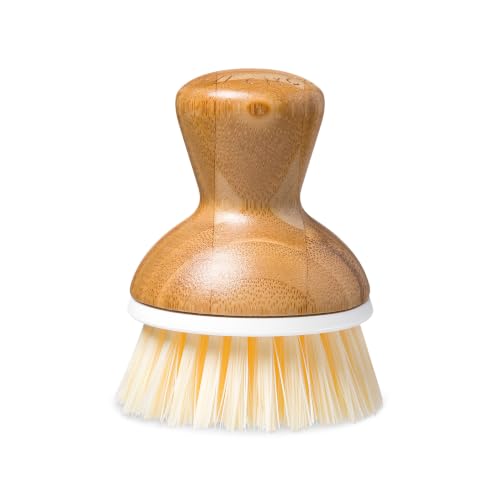
- COMFORT MEETS CLEANING POWER: boasts an ergonomic design that fits comfortably in the palm of your hand, for serious scrubbing power, and efficient cleaning without the strain..
- VERSATILE KITCHEN SCRUBBER: it's not just for dishes; it's also perfect for scrubbing nonstick cookware, cast iron pots, vegetables and sinks, making it a versatile tool for all your cleaning tasks..
- PAIRS WITH THE FULL CIRCLE BUBBLE UP: perfect compatibility with the Full Circle Bubble Up Soap Dispenser for a matching ceramic holder and beautiful on countertops..
- EASY TO MAINTAIN: simple to care for; Hand wash in warm, soapy water and let dry thoroughly. For the bamboo components , avoid prolonged soaking and maintain its beauty with a natural cream or oil..
- EARTH FRIENDLY MATERIALS: Constructed with sustainable bamboo and recycled plastic, the serious scrubbing power, Bubble Up Bamboo Dish Brush is an environmentally conscious choice for your kitchen cleaning needs..
The one we would skip: bottled water as a daily habit. It is the most plastic-intensive way to drink the most basic thing you consume, its particle counts are the best documented in the literature, and every alternative above exists to make it unnecessary. Save it for travel and emergencies, which is what it is for.
Browse Our Full Amazon StorefrontAll our water and seafood-prep picks in one place →
So what would we actually do? The buying plan
Start with the water, because it is daily, measurable and finished in one purchase. Buy the Clearly Filtered pitcher, put a note in your calendar for its roughly 100-gallon filter life, and accept the slow fill as the cost of the finest filtration we could verify in a pitcher. If your household drinks a lot of water, price the multi-filter bundle of the same pitcher rather than a second, weaker filter for another room. One good filter, maintained, beats three forgotten ones.
Second, fix storage once. One Pyrex Simply Store set covers the fridge for most households. Move seafood, fatty foods and anything you reheat out of plastic containers first, because heat and fat are the two conditions that drive migration. Keep the plastic tubs for dry pantry goods if replacing everything at once feels wasteful. Perfection is not the plan. Contact reduction where it counts is the plan.
Third, add the two cheap, permanent tools when you next need them anyway: the OXO stainless colander when your plastic one cracks or stains, and the Full Circle brush when your current brush wears out. Buy the Hydro Flask only if bottled water is a real habit in your house; if it is not, your existing bottle is already the right answer. Add Bee’s Wrap when the cling film runs out, not before, and keep it away from raw fish.
What we would skip spending on: any supplement, detox tea, cleanse or test kit marketed off the back of this study. None of them is supported by it, most are supported by nothing at all, and the study’s own authors are asking for better measurement, not selling a remedy. Save the money. If new individual-level evidence arrives, we will update this article, and the plan may change with it. That is how this is supposed to work.
Rapid-fire questions, straight answers
Did the Hawaii study prove microplastics cause cancer? No. It found a small county-level association and its authors call it preliminary and exploratory. Cause was not shown and could not be shown by this design.
How large was the finding? About 1 percent higher overall cancer incidence per 1-point step on a 5-point county pollution score, after adjustment. Modest is the accurate word.
Should I stop eating seafood? No. Seafood is a confirmed route for microplastic ingestion and also a nutritious food with strong evidence behind it. Nothing in this study measures seafood intake or justifies cutting fish. Prep and store it in steel and glass and eat it with a clear conscience.
Are microplastics classified as carcinogens? No. The International Agency for Research on Cancer has not classified them as carcinogens, and the WHO’s 2022 assessment found the human health evidence too limited for a firm conclusion.
Have microplastics been found in human tumours? Yes, in small studies, including colorectal tumour tissue in 2025. Finding particles in a tumour does not show they caused it, and tumour tissue may retain particles more readily. The studies show presence, not origin.
What is the single most defensible swap from all of this? Filter your drinking water and store food in glass. Both cut measured plastic contact, both are cheap over time, and neither depends on the cancer question resolving in any particular direction.
I live inland. Does any of this apply to me? The county finding is about coastal counties specifically. The general exposure cuts apply anywhere, because bottled water, plastic storage and plastic prep tools are not coastal inventions.
What research would actually settle this? Studies that measure micro and nanoplastics in people’s blood or tissue and then follow those same people over time. The Hawaii team names that as the next step. Until it exists, treat every strong claim, in either direction, as ahead of the evidence.
Add Us as a Preferred Source on GoogleOne tap, and our guides show up first in your Google results →
Keep reading
If the water route is the part you want to go deeper on, start with our guide to whole-house water filters and what they do that reverse osmosis does not, and our comparison of countertop reverse osmosis systems. For the kitchen side, our non-toxic salt and spices guide covers what the ocean leaves in sea salt, and our explainer on whether protein shaker bottles shed microplastics shows the same evidence-first approach applied to a product you use daily. For the wider picture, the DINCH pregnancy study explainer is our model for reading a plastic-chemical headline without either dismissing it or drowning in it.
The coastal county study deserves to be taken seriously, which is exactly why it deserves to be described accurately: 89 counties, about 54 million people, a 1 percent per step association, no individual exposure measured, and authors asking for the harder study to be done next. When that study arrives, you will read about it here, with the numbers checked the same way.