Mold-Free Coffee: Organic Coffee Brands That Actually Test for Mycotoxins
Mold-Free Coffee: Organic Coffee Brands That Actually Test for Mycotoxins
As an Amazon Associate we earn from qualifying purchases. This guide contains affiliate links; if you buy through them we may earn a commission at no extra cost to you.
Coffee is the one habit most of us refuse to give up, and honestly, we are not asking you to. But if you drink it every single day, the beans themselves deserve the same scrutiny we give our water, our cookware, and our food storage. The short answer to the question in this guide is simple: no coffee can honestly promise to be completely mold free, because mold spores are everywhere coffee is grown, dried, and shipped. What the best organic coffee brands can promise, and prove, is testing. They test green and roasted beans for ochratoxin A and other mycotoxins, publish or share the results, and source in ways that keep contamination low in the first place. That is the standard we used here.
In a 2024 systematic review by Massahi and colleagues, researchers pulled together 40 studies covering 3,256 coffee samples worldwide and detected ochratoxin A, usually shortened to OTA, in 54.6 percent of them. A separate 2024 meta-analysis by Fakhri and colleagues put overall OTA prevalence at about 58 percent. Those numbers sound alarming until you read the next line in both papers: most samples sat well below the limits Europe enforces, and the Massahi review concluded that OTA levels in coffee are not considered toxic to consumers worldwide at typical intakes. So this is not a panic guide. It is a daily-habit guide. When you drink something twice a day for decades, choosing beans that are tested, organic, and handled well is a calm, reasonable upgrade, and it usually tastes better too.
The quick answer
The plain answer: pick a USDA organic whole bean coffee from a brand that third-party tests for mycotoxins and can show you a certificate of analysis, grind it yourself, and store it dry. Our top pick for most readers is Purity Coffee FLOW, a specialty-grade organic medium roast tested for mold, mycotoxins, and pesticides. If your stomach is the main issue, the low-acid Java Planet Colombian, which its listing describes as independently tested for mold and heavy metals, is the gentler starting point. Every pick below is organic, sold on Amazon, and chosen because the brand tests, certifies, or sources transparently, not because of a marketing slogan.
What does mold in coffee actually mean?
Mold in coffee usually means mycotoxins, not visible fuzz on your beans. The two that matter are ochratoxin A and aflatoxin B1. OTA is produced mainly by Aspergillus and Penicillium species that can grow on coffee cherries and green beans when drying is slow or storage is humid. Aflatoxin B1, produced by Aspergillus flavus and related species, is the more potent of the two and is classified as a known human carcinogen at sufficient exposure, while OTA is treated by regulators as a possible carcinogen and a kidney toxicant. In coffee, OTA is by far the more commonly detected one, which is why almost every testing program in this guide leads with it.
Here is the part the scary headlines leave out. Detection is not the same as danger. Modern lab methods detect OTA at parts per billion, and the European Union sets its limit for roasted and ground coffee at 3 micrograms per kilogram. The United States Food and Drug Administration has set no specific OTA limit for coffee, which is exactly why brand-level testing matters more in the US market: there is no federal backstop doing the checking for you. A brand that tests every harvest, names its lab, and states its detection limit is giving you the assurance the regulation does not.
Mold risk is built at origin. Coffee cherries are fruit, and fruit molds when it dries slowly in humid air. Traditional sun drying on patios, wet processing, and long warehouse storage in tropical ports all raise the odds. Specialty-grade sourcing helps because defect beans, the cracked and insect-damaged beans where mold concentrates, are sorted out. Fast, controlled drying on raised beds, hermetic storage bags, and shipping in sealed liners all lower risk before a bean ever reaches a roaster. When a brand talks about specialty grade, raised beds, and hermetic transport, it is not just coffee snobbery. It is mold prevention described in coffee language.
Does roasting kill the mold and the mycotoxins?
Roasting helps, but it does not finish the job. Roasting kills living mold, yes. The mycotoxins the mold already produced are tougher. OTA is heat stable, and studies of roasting show reductions that swing widely, roughly from a small fraction to over 90 percent depending on temperature, time, and how contaminated the green coffee was to start with. That variability is the whole point: you cannot roast a dirty bean clean and count on it. Testing the green coffee, before roasting, is what separates a serious program from a hopeful one. The strongest brands in this guide test at both stages, or test green coffee rigorously and roast in small batches so lots stay traceable.
Is organic coffee automatically mold free?
No, and this is the most common misunderstanding in the whole category. USDA Organic certification controls what is sprayed on the crop and how the farm is managed. It says nothing about mycotoxin testing. An organic bean can still dry slowly and pick up OTA, and a conventional bean can test clean. Organic matters here for a different reason: coffee is one of the most heavily sprayed crops in the world, and organic certification is your simplest screen against pesticide residues. The ideal pick, and the standard for this guide, is both: certified organic for the growing, and third-party mycotoxin testing for the mold question. One claim never substitutes for the other.
The same logic applies to the words on the bag. There is no legal certification called mold free. Any brand can print it. What you can verify is the machinery behind the claim: a published certificate of analysis, a named independent laboratory, a detection limit stated in parts per billion, and testing that repeats by harvest or batch rather than once for a brochure years ago. In the pick sections below we tell you, brand by brand, how transparent each one actually is, including where the paperwork is thinner than the marketing.
Get the Weekly Swaps
One short email a week: the newest microplastics studies in plain English, plus the swaps that are actually worth your money. Join free and we will send you our room-by-room microplastic checklist to get you started.
Get Our Free Room-by-Room Microplastic ChecklistJoin the newsletter and get the checklist free →
The 7 picks at a glance
| Coffee | Best for | Roast and format | Testing and certification notes |
|---|---|---|---|
| Purity Coffee FLOW | Most readers, best all-round testing story | Medium roast, whole bean, 12 oz | USDA Organic, specialty grade, third-party tested for mold, mycotoxins and pesticides |
| Java Planet Colombian | Sensitive stomachs, low acid | Medium dark roast, whole bean, 1 lb | USDA Organic, Bird Friendly, listing states independent testing for mold and heavy metals |
| Kion Coffee | Clean-label shoppers who want toxin screening | Medium roast, whole bean, 12 oz | USDA Organic, marketed as tested for toxins including mycotoxins |
| Death Wish Coffee Organic Dark Roast | Strong coffee drinkers, mainstream and easy to find | Dark roast, whole bean, 16 oz | USDA Organic and Fair Trade; appeared in independent premium coffee lab roundups |
| Allegro Organic Espresso Sierra | Espresso drinkers, everyday organic value | Medium roast whole bean, 12 oz | USDA Organic and Rainforest Alliance; no published mycotoxin panel, honest everyday pick |
| Tiny Footprint Nicaragua Segovia | Buying in bulk, carbon-negative coffee | Dark roast, whole bean, 3 lb | USDA Organic and Fair Trade, carbon negative; testing is sourcing-led rather than panel-led |
| Peak Performance High Altitude Organic | Low-acid medium roast on a smaller budget of attention | Medium roast, whole bean, 12 oz | USDA Organic and Fair Trade, high-altitude single origin, marketed as mold free |
1. Purity Coffee FLOW: the testing benchmark
If you only change one thing, change to a coffee whose testing you can read. Purity Coffee FLOW is a specialty-grade, USDA organic medium roast whole bean, and its listing states plainly what it is tested for: mold, mycotoxins, and pesticides, by third parties. That breadth matters. A panel that covers OTA and aflatoxins, plus pesticide screening, answers both halves of the clean coffee question at once, the growing and the drying.
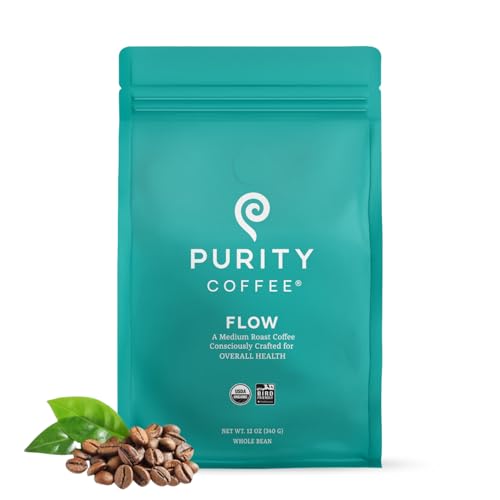
- OUR ORIGINAL HEALTHY COFFEE BLEND – Through relentless research, we've created a specialty-grade, antioxidant-rich organic medium roast specfically formulated to support your overall health and wellness. Rich in coffee's naturally protective polyphenols like chlorogenic acid, FLOW brings you all the benefits coffee has to offer with a rich, full-bodied flavor profile.
- CLEAN & PURE – Our USDA Certified organic coffee is defect-free specialty-grade, which is a standard of bean used in only 1% of the green coffee produced worldwide: regeneratively farmed, Rainforest Alliance, Smithsonian Bird Friendly, and third-party lab tested for harmful contaminants like mold, mycotoxins, pesticides, and heavy metals.
- TRULY HEALTHY COFFEE – Every batch of Purity Coffee boasts optimal levels of antioxidants, and is easy on the stomache. We are committed to maximizing wellness benefits throughout every step of the coffee production process. That's why we control our production chain from farming, sourcing, processing, roasting, and packaging.
- FRESHESS YOU CAN TASTE – When you receive your Purity Coffee, it will taste as fresh as the day it was roasted. To preserve freshness, we flush coffee bags with nitrogen and get oxygen levels down to 1-2% to prevent oxidation and staleness.
- SUSTAINABLY FARMED, RESPONSIBLY ROASTED – As a Certified B corp, our coffee is regeneratively farmed, Rainforest Alliance Certified & Smithsonian Bird Friendly. We are committed to using renewable and sustainable materials and processes wherever possible.
Purity built its reputation on exactly this paperwork, and FLOW is its original, everyday blend: smooth, low in bitterness, and roasted to sit in the middle of the road where most drip and pour-over drinkers live. Because the beans are specialty grade, the defective beans where mold concentrates are sorted out before testing even starts, which is prevention and verification working together. The honest trade-offs: it is a premium coffee with a premium habit cost, the bag is a modest 12 ounces, and some of the brand’s most publicised lab data is older than we would like, a weakness reviewers have flagged before. The testing program is ongoing, but we would love to see a fresh, dated certificate for every lot, front and center. Even with that caveat, no other pick in this guide combines organic certification, specialty sourcing, and a named multi-contaminant testing program as completely.
2. Java Planet Colombian: the low-acid, stomach-friendly pick
For a lot of readers the coffee problem is not theoretical at all, it is heartburn by 9 AM. Java Planet Colombian is a USDA organic, single-origin medium dark whole bean whose listing describes it as low acid, mold free, and independently tested for mold and heavy metals. That heavy-metal line is unusual and welcome: coffee can carry cadmium and lead from soil, and almost no brand at this size even mentions testing for them.
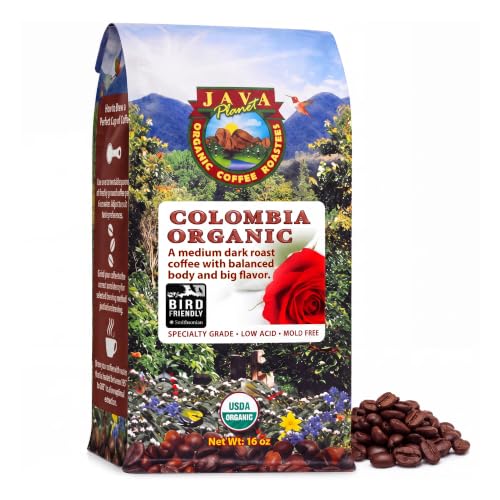
- LOW ACID ORGANIC COFFEE WITH FULL FLAVOR : Many coffee drinkers look for low acid organic coffee because traditional coffee can taste harsh or overly bitter. This whole bean organic coffee delivers a smooth, balanced cup and a clean finish.
- ETHICALLY SOURCED ORGANIC WHOLE BEAN COFFEE : Java Planet organic whole bean coffee is crafted from carefully selected Colombian beans with a naturally smooth, low acid profile and rich flavor. Small batch roasted for consistency and care in every bag.
- CERTIFIED MOLD FREE & USDA ORGANIC COFFEE : This certified mold free organic coffee is USDA Organic certified and independently third party tested for mold, mycotoxins, and heavy metals. A trusted organic mold free coffee beans option for quality-focused coffee drinkers.
- SHADE GROWN & BIRD FRIENDLY CERTIFIED : These organic coffee beans are grown at high altitude under natural shade canopy. Certified by the Smithsonian Bird Friendly program, supporting biodiversity while allowing slower bean development and deeper flavor complexity.
- FAMILY OWNED, QUALITY-FOCUSED BRAND : Java Planet organic coffee comes from a family-owned company founded in 2009. Crafted for drip coffee, espresso, French press, and pour over, it gives daily coffee drinkers a cleaner, more intentional cup.

Java Planet also carries Smithsonian Bird Friendly certification on this coffee, the strictest shade-grown standard in coffee, which means the farm keeps forest canopy intact. Environment aside, shade farms with careful picking tend to handle cherries gently, and gentle handling is mold prevention. In the cup it is smooth and full rather than bright, which is what low-acid drinkers are actually asking for. Trade-offs: medium dark will taste flat to drinkers who love a light, fruity roast, the testing claim lives on the listing rather than in a published panel you can download, and low acid is a comfort claim, not a medical one. If reflux is your issue, this is still the most direct answer in the guide, and its 4.4 star rating across a large review pool says the gentleness does not come at the cost of flavour.
3. Kion Coffee: tested for toxins, roasted for everyday drinking
Kion Coffee is a USDA organic medium roast whole bean sold on a simple promise: ethically sourced beans, tested for toxins. Kion screens for mycotoxins including OTA and aflatoxin, plus heavy metals and pesticide residues, and nitrogen-flushes its bags shortly after roasting, which slows the staling and the storage conditions that let quality slide.
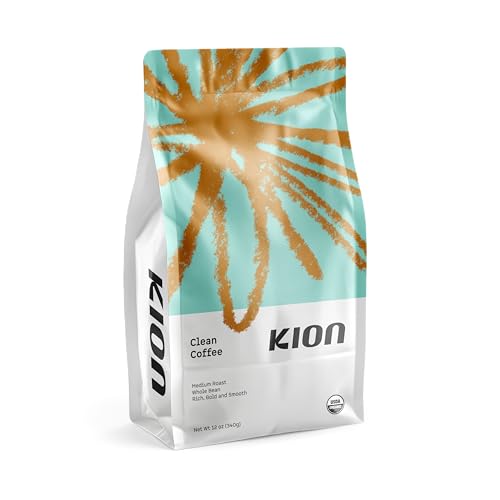
- CERTIFIED ORGANIC: Kion Clean Coffee is grown in a manner that supports your health and the planet’s.
- SPECIALTY GRADE: Kion Coffee is in the top 3% of all coffees worldwide that are classified as “speciality grade,” the highest quality coffee available with near zero defects.
- TESTED FOR TOXINS: Our coffee beans are regularly tested for mold, mycotoxins, and pesticides.
- ETHICALLY SOURCED: We only source beans from farms that meet the highest standards for ethical and sustainable farming practices.
- ALWAYS FRESH: Kion Clean Coffee is expertly roasted using an environmentally-friendly smokeless roaster, and sealed in nitrogen-flushed bags to maintain freshness.
The flavour brief is rich, bold, and smooth, a crowd-pleasing medium that works in a drip machine, a French press, or a moka pot without demanding a hobbyist’s technique. Trade-offs, honestly stated: Kion’s results are summarised by the brand rather than published as downloadable certificates, so you are trusting a stated program more than reading raw lab output, and the 12 ounce bag disappears quickly in a two-drinker house. Its 4.4 star showing on Amazon reflects a coffee people reorder for taste, with the testing as the reason they started. For readers who want a toxin-screened organic coffee without a lecture, this is the easy middle path.
4. Death Wish Coffee Organic Dark Roast: the strong, mainstream option
Not everyone wants a boutique bean, and not every clean coffee has to be one. Death Wish Coffee is USDA organic and Fair Trade certified, a dark roast whole bean built from arabica and robusta for serious caffeine, and it holds a 4.6 star rating with a review count in the tens of thousands, the largest proof of everyday drinkability in this guide. Death Wish’s organic line has also appeared in the best tier of independent premium coffee lab roundups that screened for mycotoxins, mold, and pesticides, which is a meaningful third-party signal for a brand this big.
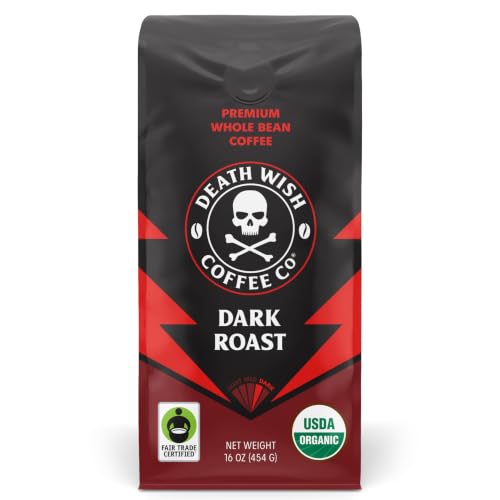
- DARKER ROAST FOR BOLDER DAYS: Meet the yin to your yang. This bold, intense dark roast is a balanced blend of arabica beans for smooth flavor and robusta for natural strength—crafted to kick the midday crash to the curb and fuel you through whatever the day has in store.
- USDA ORGANIC & FAIR TRADE CERTIFIED: Every bag is USDA Certified Organic and Fair Trade Certified, sourced from Peru, India, Guatemala, Honduras, and Ethiopia. Bold coffee that tastes good and does good—for you and for the farmers who grow it.
- HIGH-CAFFEINE ARABICA + ROBUSTA BLEND: ~180 mg caffeine per 6 oz cup (2.5 tbsp per 6 oz water). Our arabica and robusta blend is dark roasted for maximum bold flavor — rich, full-bodied, never bitter. Natural variability applies.
- GRIND FRESH FOR PEAK FLAVOR: Whole bean coffee stays fresh longer and lets you dial in the perfect grind for your brewer—French press, pour-over, drip, espresso, or cold brew. Grind it your way.
- THE DEATH WISH PROMISE: We stand behind every bag, 100%. If you are not completely satisfied with your bold dark roast, we will make it right—no questions asked. Real coffee, real strength, real guarantee.
The trade-offs are the flip side of its strengths. Robusta raises caffeine and bitterness, dark roasting covers a multitude of bean sins as well as virtues, and Death Wish does not publish a per-lot mycotoxin certificate the way Purity does. Its case rests on organic certification, scale, and that independent roundup performance rather than on paperwork you can download. If you drink strong coffee daily and want the organic upgrade without changing the ritual, this is the lowest-friction swap in the guide, and the 16 ounce bag is the most generous standard size here.
Browse Our Full Amazon StorefrontAll our mold-free coffee picks in one place →
5. Allegro Organic Espresso Sierra: the everyday espresso pick
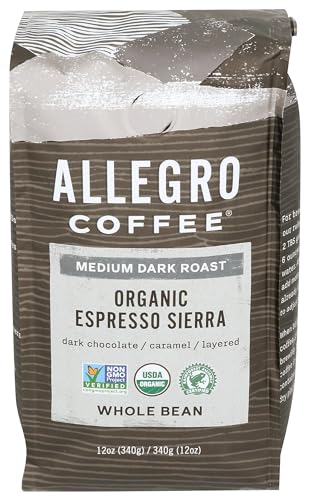
Allegro Coffee Organic Espresso Sierra is Whole Foods’ own coffee brand: USDA organic, Rainforest Alliance certified, 100 percent arabica whole bean in a 12 ounce bag, rated 4.5 stars on Amazon. It is here as the honest everyday pick, the coffee a busy household can grab on a normal grocery run and pull a genuinely good espresso or moka pot from.
- Amazing products, exceptional ingredients, no compromises
- Specialty whole bean coffee
- Medium dark roast
- Dark chocolate, caramel, layered
We are straight about its limit: Allegro does not publish a mycotoxin panel, so its place in this guide rests on certified organic sourcing and a large, accountable supply chain, not on mold testing. That still beats an uncertified conventional espresso blend on the pesticide half of the question, and its freshness turnover in stores is high, which quietly matters for mold, because beans that move fast do not sit in humid warehouses. Trade-offs: espresso purists will want a fresher, smaller roaster, and anyone whose top priority is a downloadable lab report should stay with the first three picks. As a certified organic daily driver, it earns its place.
6. Tiny Footprint Nicaragua Segovia: the bulk buy with a carbon-negative twist
Tiny Footprint Coffee sells its Nicaragua Segovia dark roast as a 3 pound bag of USDA organic, Fair Trade whole bean, and the company plants trees for every pound sold, enough that it describes the coffee as carbon negative. For a household that drinks coffee daily, the big bag is the practical story: fewer orders, a steadier supply, and a 4.5 star rating behind it.
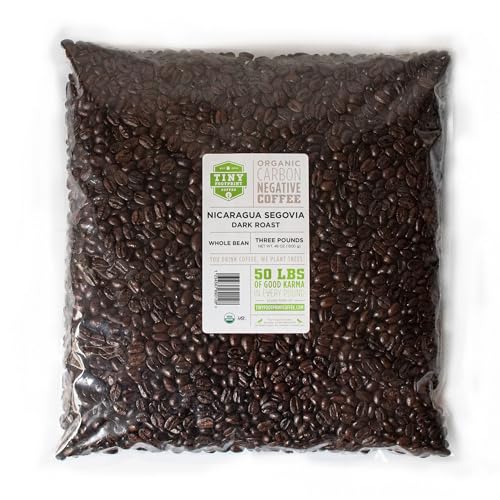
- ORGANIC COFFEE BEANS: USDA Organic, Fair Trade & Shade-Grown Arabica Coffee.
- FLAVOR PROFILE: Sultry, bold dark roast tones with notes of chocolate roasted leaving traditional Nicaraguan flavors of bright apricot, fig, and spice
- FAIR TRADE & SINGLE ORIGIN: PRODECOOP uses its proceeds to bring improved living standards to its growing membership and fund programs in medical care, education and environmental sustainability
- SMALL BATCH ROASTED: Craft roasted in our vintage 90 kilo German-built Probat drum roaster retrofitted with modern fuel-efficient ribbon burners, delivering perfectly roasted coffee every time.
- CARBON NEGATIVE: Tiny Footprint Coffee is the world’s first carbon negative coffee. For every pound that’s sold, we donate a portion of the proceeds to fund reforestation in Ecuador’s Mindo Cloud Forest. Over time, these trees will remove 54 lbs. of CO2 from the atmosphere as well as provide habitat for hundreds of native plant and animal species
The mold angle here is sourcing-led rather than panel-led. Tiny Footprint buys from smallholder cooperatives in Segovia and roasts in Minneapolis, and it does not headline a published mycotoxin certificate, so, like Allegro, it is an organic-and-sourcing pick, not a lab-report pick. The bulk format cuts both ways: a 3 pound bag only stays fresh if you store it right, in an airtight container, in portions, which is why the storage section below matters. Trade-offs: dark roast only in this listing, and slow drinkers should split the bag and freeze a portion in sealed weekly amounts rather than leaving it open for two months. For committed daily drinkers who want organic at household scale, it is the guide’s value anchor, without us naming a price.
7. Peak Performance High Altitude Organic: the quiet overachiever
Peak Performance sources a USDA organic, Fair Trade medium roast from high-altitude farms in the Guatemalan highlands and markets the beans as mold free and low acid. Altitude is not marketing fluff: beans grown high mature slowly and densely, and the brand leans on antioxidant content and clean sourcing as its identity. It carries a 4.3 star rating, the floor of our target range, across a smaller review pool, and we flag that honestly rather than rounding it up.
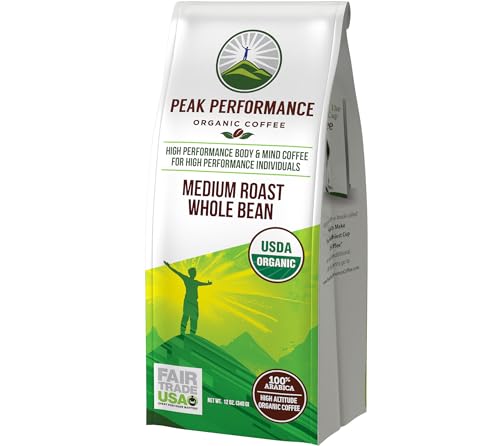
- Fair Trade - Low Acid - USDA Certified Organic - Single Origin - High Altitude. If We Could Make This Coffee Any Healthier We Would. Medium Roast. Also Comes With Free Special Report Called "How To Make The Healthiest Cup Of Coffee"
- Healthy Coffee Rule #1) Always Go Organic. Why - Because conventional coffee is one of the most heavily treated crops. One of the many health risks is that they can act as "xenoestrogens" in your body causing unwanted effects for both men and women.
- Healthy Coffee Rule #2) Coffee Grown At High Altitude Is Better. Why - Because the higher the altitude the coffee is grown at, the denser the bean. You may have heard the term "Strictly Hard Bean" (SHB) which denotes an especially dense, high-altitude coffee. This Peak Performance Organic Coffee grown in the Guatemalan Highlands is a perfect example of this. This higher elevation bean is more dense and thus of a higher quality grade. High Altitude Coffee also tends to have more antioxidants.
- Healthy Coffee Rule #3) Single Origin Coffee Is Better. Why - Because while "Blended" Coffee like a "Breakfast Blend" might sound cool. there's a much higher likelihood that at least one of the bean varieties that went into that blend was contaminated meaning the entire batch is now contaminated.
- 1-For-1 Donation Match Program - Through our 1-for-1 partnership with the nonprofit Vitamin Angels, every purchase provides a child at risk of malnutrition with vitamins for a full year. To date we have helped over 3 million children through this partnership, so thank you for supporting this mission.
Trade-offs: the review pool is the smallest among our top picks, the mold-free claim is stated by the brand without a published panel we could read, and availability can run through other sellers rather than a neat featured offer. What earns it the final slot is the combination of organic and Fair Trade certification, high-altitude single origin sourcing, and a low-acid medium profile that suits the same sensitive stomachs as Java Planet, at a different flavour angle. Think of it as the guide’s informed gamble: strong credentials, thinner paperwork, priced in attention accordingly.
What about the famous mold-free brands we left out?
Three names come up in every reader question, so here is the honest accounting. Lifeboost is a genuine mycotoxin-tested brand and a favourite in this niche, but the Amazon listing we verified for its medium roast whole bean sits at 4.2 stars, below the 4.3 floor we hold every roundup to, so it did not make the pick list this time. Bulletproof and Fabula are also widely recommended elsewhere, but we could not verify a live US Amazon listing for the exact products at listing level during this run, and we never build a pick on a search snippet. If you buy either direct from the brand, apply the same certificate test we use throughout this guide. A popular name is not a substitute for a verified listing.
Join Our Free Facebook GroupNon-Toxic Family Living: parents sharing swaps that work →
The microplastics side of your coffee, because this is us
Beans are only half the exposure story, and it is the half most coffee guides, written by coffee people, stop at. In a 2026 study by Gune and colleagues in Food Chemistry, researchers measured microplastics in the coffee itself and found an average of 1.433 particles per gram in instant coffee against 0.343 particles per gram in ground coffee, identifying twelve polymer types and estimating roughly 422 particles a year from coffee at typical intakes. Instant coffee, with its industrial processing and packaging chain, carried about four times the particle load of ground. That is one more reason every pick in this guide is whole bean: the least processed format is also the lowest in measured particles.
Your brew path matters just as much. In a 2023 study by Wang and colleagues, pouring hot water through plastic drip coffee bags released thousands of microplastic particles into the cup, rising with temperature and brewing time. And in a 2025 University of Birmingham study by Al-Mansoori and colleagues, hot and cold drinks across the UK market all carried synthetic particles, with coffee drinks among them and machine components and pods among the traced sources. The practical fixes are the ones this site keeps returning to: brew in glass, stainless steel, or ceramic rather than plastic, skip plastic pods and drip bags where you can, and use a maker whose water path is not plastic. Our guide to non-toxic coffee makers walks through the machines, and our plastic-free kettles guide covers the water side. Beans, brewer, and cup are one system. Fix them in that order.
How brewing changes what ends up in the cup
Brewing is an extraction, and it extracts more than flavour. OTA is water soluble enough that a share of whatever is in the grounds moves into the cup, and longer, hotter contact generally moves more of it. A French press, where grounds steep in hot water for minutes, and Turkish coffee, where the grounds stay in the drink, sit at the high-contact end. Paper-filtered drip sits lower: the filter holds back fine particles and some compounds along with them. Espresso is a short, pressurised shot, brief contact but total extraction pressure. Cold brew steeps longest of all, though at low temperature, which slows extraction of many compounds even as time stretches.
None of this means giving up your favourite method. It means the bean quality matters more for high-contact methods: if you love French press, a tested bean like Purity or Java Planet is doing more work for you than it would in a paper-filtered machine. And paper filters earn a small promotion in this guide: a plain paper filter is a physical barrier, cheap and plastic free, between the grounds and your cup. If you use a pod machine, know that pods combine the two weakest points in this whole article, untested commodity coffee and a hot plastic brew path, and consider a reusable stainless pod filled with one of the whole bean picks above, ground fresh.
Decaf drinkers: the solvent question nobody warns you about
Decaf deserves its own paragraph because the mold and chemical stories both change. Caffeine is a natural antifungal, so decaffeinated beans can be more vulnerable in storage, which makes tested sourcing more important, not less, for decaf. The bigger issue is how the caffeine came out. The traditional European method uses methylene chloride as a solvent. Regulators allow it within strict residue limits, and the US Environmental Protection Agency banned most uses of methylene chloride in 2024 while food uses under the Food and Drug Administration were left in place, a split that consumer groups have petitioned to close. You do not need to resolve that regulatory argument at your kitchen counter. You just need the label words that sidestep it: Swiss Water Process and Mountain Water Process both remove caffeine with water and carbon filtration, no solvent, and brands that use them print it proudly. When you shop decaf, shop for those words first and organic second, and treat a decaf that names no process as a question to ask the roaster.
How to keep coffee mold free at home: storage, grinders, and your maker
Even a perfectly tested bean can be ruined in a bad kitchen month, and no competitor guide we read treats home storage as the system it is. Start with the rule that whole bean beats ground for freshness and for mold: grinding exposes enormous surface area to air and humidity, so buy whole bean, as every pick here is, and grind what you brew. Store the open bag in an airtight glass or stainless steel container in a cool, dark cupboard, never on top of the fridge where heat rises, and never in the steamy spot beside the kettle.
Freezing works if you do it right and backfires if you do not. Freeze in sealed weekly portions, so the main supply is not thawing and refreezing, and let a portion come to room temperature before opening the container, because opening a cold container in humid kitchen air condenses moisture straight onto the beans, which is the exact condition mold wants. Buy at the rate you drink: a bag finished in two to three weeks never becomes a storage problem. And no, you cannot smell or taste OTA. At parts per billion it is odourless and tasteless, which is why testing, not sniffing, is the control, and why home mycotoxin test kits, which are not validated for coffee at these levels, are not a substitute for a brand certificate.
Finally, clean the equipment. Coffee makers and grinders grow biofilm and mold in reservoirs, tubes, and burr chambers that stay warm and wet, and a sparkling bean brewed through a slimy reservoir is a wasted upgrade. Run the descaling cycle your maker specifies, wash removable parts weekly, leave the reservoir lid open to dry, and brush out the grinder. Our salt and spices guide makes the same point for pantry staples: the container and the habit matter as much as the product.
Acrylamide and heavy metals, in one honest section
Two more words follow coffee around, so let us place them calmly. Acrylamide forms during roasting, more in lighter roasts in some analyses, less as roasting continues, and coffee is one of many roasted foods that contain it. Regulators monitor it, typical coffee intakes are a modest share of total dietary exposure, and no pick in this guide claims to solve it, because roast level, not brand virtue, drives it. Heavy metals are the quieter issue: cadmium and lead enter beans from soil and can concentrate in some origins, which is why Java Planet’s stated heavy-metal testing and Kion’s screening stood out in our research. If a brand tests for metals and publishes the panel, that is a genuine differentiator. If it only says pure, that is a poem, not a panel.
Certifications, decoded: what each label actually proves
Labels crowd a coffee bag, and each one answers a different question, so here is the translation we use when we shop. USDA Organic answers the spray question: the farm used no prohibited synthetic pesticides or fertilisers and is audited. It does not answer the mold question. Fair Trade answers the pay question: farmers received a minimum price and a community premium, which indirectly supports better drying infrastructure, but it is not a food safety test. Rainforest Alliance answers the land question: forest protection, farm management, and some climate practices, again not a mycotoxin panel. Smithsonian Bird Friendly is the strictest habitat label, requiring organic certification plus real forest canopy, and its careful farms tend to handle cherries well. Specialty Grade, from the Specialty Coffee Association scoring system at 80 points and above, answers the defect question: fewer defective beans, and since mold concentrates in defects, a high specialty score is quiet mold prevention. Demeter Biodynamic, rare in coffee, certifies a whole-farm system. And then there is the label that is not a label at all: a published certificate of analysis. That document, with a lab name, a date, a lot, the compounds tested, and the detection limits, is the only piece of paper that answers the mold question directly. When a bag shows you five seals and no certificate, you know a lot about the farm and nothing about the toxin. When it shows you a certificate, the seals become supporting evidence instead of the whole argument.
How transparent is each pick, really?
Because transparency is the theme of this guide, here is the same judgment applied evenly to our own list. Purity sits at the top: a named testing program covering mold, mycotoxins, and pesticides, with specialty sourcing underneath it, held back only by our wish for fresher public data on every lot. Kion is next: a broad stated screen covering mycotoxins, metals, and pesticides, summarised rather than published raw. Java Planet states independent mold and heavy-metal testing on the listing itself, a claim you can read before you buy, though the underlying report is not attached. Death Wish rests on organic and Fair Trade certification plus independent roundup testing of its organic line, strong signals without a house certificate. Peak Performance states a mold-free position with organic and Fair Trade certification behind it. Allegro and Tiny Footprint make no mycotoxin claim at all and are in this guide as certified organic sourcing picks, a different and lesser kind of assurance, labelled as such in their sections rather than dressed up. That spread is deliberate. A guide that pretends every pick is equally tested would be lying to you in the exact way this category’s marketing usually does. Pick your comfort level on that ladder, and know which rung you are standing on.
It is also worth naming what would move a brand up the ladder, because readers ask us this in the group all the time. Publish the certificate. Date it. Name the laboratory and its accreditation. State the detection limit in parts per billion, because a non-detect at a loose limit proves far less than a non-detect at a tight one. Test by harvest or lot, not once. And test the roasted product as well as the green, since roasting changes the number. Brands that do most of that exist, and as more readers ask for the paperwork by name, more brands will. That is how this category improves: not by panic, and not by slogans, but by customers who have learned which document to ask for.
How to choose your coffee from this list
Start with your real problem. If it is trust, buy the paperwork: Purity first, Kion second. If it is your stomach, buy low acid: Java Planet first, Peak Performance second. If it is strength and habit, buy the organic version of what you already love: Death Wish. If it is espresso on a normal shop, Allegro. If it is volume for a house of daily drinkers, Tiny Footprint, stored properly. Then set the system around it: whole bean, ground fresh, stored airtight and dry, brewed through glass, steel, ceramic, or paper rather than plastic, in a maker you actually clean. That sequence, bean, storage, brewer, is the entire guide in one sentence, and it is why a tested bean in a dirty plastic machine is only a third of a solution.
One last piece of honesty about worth. Most commercial coffee, including ordinary supermarket coffee, tests below European OTA limits most of the time, and the reviews cited at the top of this guide do not claim coffee is poisoning anyone. What tested organic coffee buys you is margin: a lower starting load, a verified check instead of a hope, fewer pesticide residues, and, in our experience of this category, better-tasting beans, because the sourcing that prevents mold is the same sourcing that tastes good. For a twice-a-day, decades-long habit, margin is a sensible thing to buy.
Frequently asked questions
Is any coffee truly 100 percent mold free?
No. Mold free means not detected above a stated lab limit, not a proven absolute zero. Buy the brand that states its limit and shows its testing.
Does organic coffee guarantee no mycotoxins?
No. Organic certifies growing practices, not mold testing. The strongest picks are organic and independently mycotoxin tested.
Is Starbucks or supermarket coffee moldy?
Large brands do not publish per-lot mycotoxin certificates, so nobody can honestly certify them either way. Most commercial coffee tests below European limits most of the time.
Does roasting or brewing remove ochratoxin A?
Partly and unpredictably. Roasting reduces OTA by widely varying amounts and brewing transfers a share into the cup, so prevention and testing at origin matter more.
Is instant coffee worse than whole bean?
On measured microplastics, yes in the 2026 Food Chemistry study: instant averaged about four times the particles per gram of ground coffee. It is also rarely sold with mycotoxin paperwork.
Are coffee pods a problem?
Pods combine untested commodity coffee with a hot plastic brew path. A reusable stainless pod filled with a tested whole bean pick is the simple fix.
How long do opened beans stay good?
For flavour, two to three weeks airtight and dry. For safety, keep them dry above all: moisture, not time alone, is what mold needs.
Does freezing coffee kill mold or mycotoxins?
No. Freezing pauses growth but destroys neither mold nor OTA. Freeze in sealed portions for freshness only, and avoid condensation when thawing.
What should decaf drinkers look for?
Swiss Water or Mountain Water process on the label, organic certification, and a brand that tests, since decaf beans lose caffeine’s natural antifungal protection.
Can I test my coffee at home?
Not reliably. Home kits are not validated for coffee at parts-per-billion levels. A brand certificate of analysis from a named lab is the real test.
Add Us as a Preferred Source on GoogleOne tap, and our guides show up first in your Google results →
Keep reading
Build the rest of the morning routine: start with our non-toxic coffee makers guide, then the plastic-free kettles guide for the water, and our tea bags investigation if the afternoon cup is tea. For the pantry side, the non-toxic salt and spices guide applies the same testing logic to the spice rack.