PFAS in Food Packaging: The Federal Ban That Is Not Law Yet, Explained
As an Amazon Associate I earn from qualifying purchases. This post contains affiliate links, which means I may earn a commission if you buy through them, at no extra cost to you.
The quick version: PFAS in food packaging is not banned nationwide in the United States, not yet. A bipartisan bill reintroduced in 2026, the Keep Food Containers Safe from PFAS Act (Senate bill S.5516 and House bill H.R.9593), would ban food packaging with intentionally added PFAS in interstate commerce starting January 1, 2028, if it becomes law. In the meantime, the FDA already ended the biggest paper-packaging use: PFAS grease-proofing agents for wrappers and takeout paper are no longer sold for that use in the US (FDA, February 2024), 12 states have their own phase-out laws (Safer States), and the European Union has had hard numeric PFAS limits for food packaging since August 12, 2026. The practical move today is simple: store and reheat food in glass, and treat grease-resistant paper as an occasional convenience, not your everyday food contact surface.
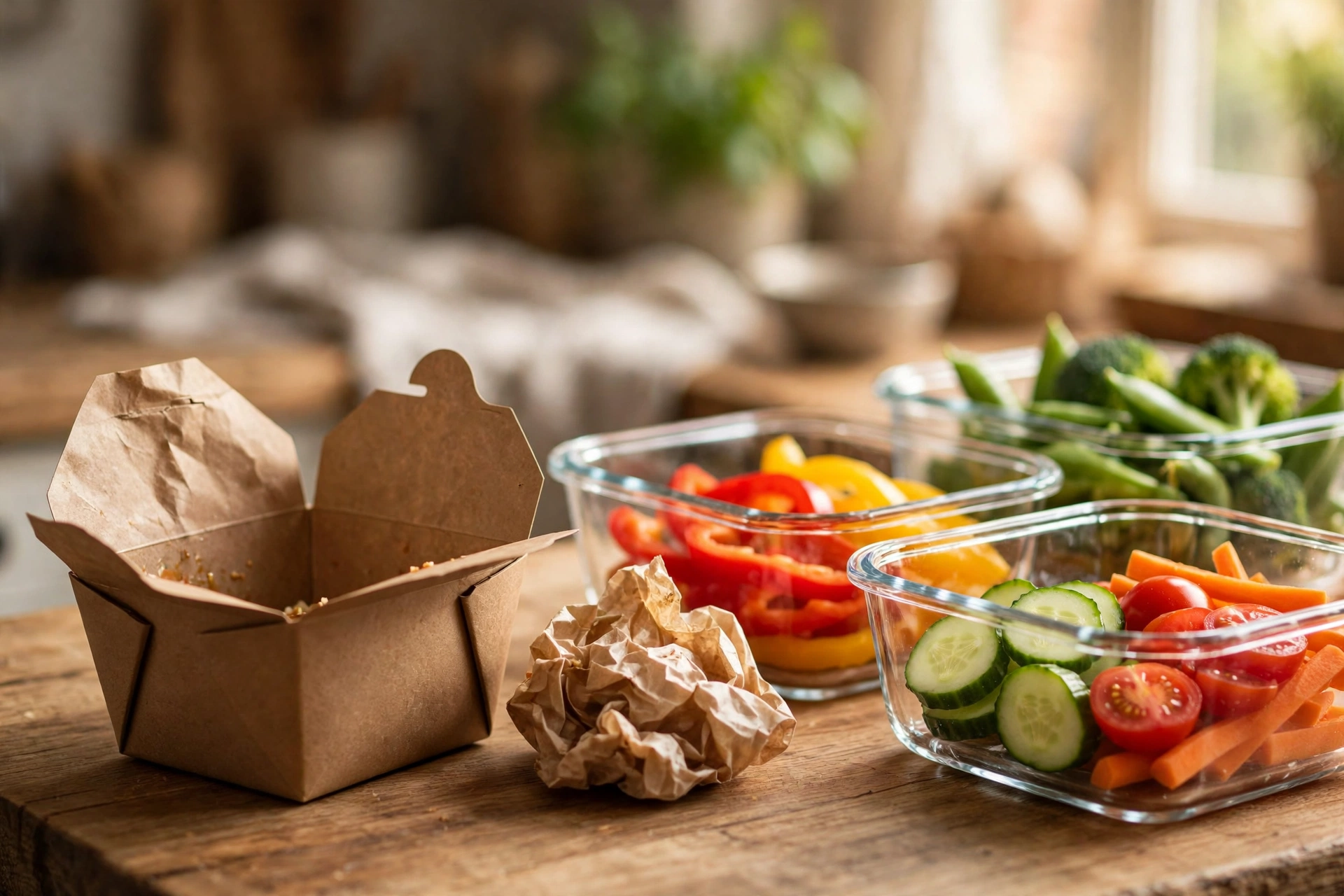
Start with the swap that covers most takeout leftovers: the Pyrex Simply Store 18-Piece Set for the fridge, or the Rubbermaid Brilliance Glass 18-Piece Set if you need lids that actually seal for a commute.
Is PFAS in Food Packaging Banned in the US?
No. As of October 2026 there is no federal ban on PFAS in food packaging in the United States. Packaging Dive reported the same plain fact on September 29, 2026, in its coverage of the new bill: no federal restrictions on PFAS in food packaging currently exist.
That surprises a lot of people, because headlines in 2024 made it sound finished. What happened in 2024 was real, but narrower. It was a voluntary phase-out of one category of PFAS use, grease-proofers on paper, and we will walk through exactly what it covered below. Other authorized food-contact uses of PFAS, like nonstick cookware coatings and sealing gaskets on food-processing equipment, remain authorized, and the FDA says it assesses migration from those uses as negligible.
So the honest picture has three layers: a voluntary federal phase-out that ended the worst paper use, a patchwork of state laws, and a new federal bill that would finish the job in 2028 if Congress passes it. Here is each layer, with dates.
What Would the Keep Food Containers Safe from PFAS Act Actually Ban?
It would ban the sale in interstate commerce of any food packaging that contains intentionally added PFAS, starting January 1, 2028. That is the whole operative idea, and it is written plainly in the bill text.
The Senate version, S.5516, was introduced on September 24, 2026 by Senator Maggie Hassan of New Hampshire with Senator Tommy Tuberville of Alabama, and announced in a Hassan press release dated September 26, 2026. A House companion, H.R.9593, was introduced in July 2026 by Representative Debbie Dingell of Michigan with Representative Brian Fitzpatrick of Pennsylvania. Hassan first introduced a version of this act back in 2021, and an earlier version passed a Senate committee in 2022 as part of a larger FDA bill before stalling.
Two details in the text matter for readers. First, the ban targets intentionally added PFAS: a maker who deliberately adds a PFAS coating for grease resistance is covered, which is the main way PFAS gets into wrappers, microwave popcorn bags, takeout containers and pet food bags, the product list the FDA itself names for grease-proofing uses. Second, the bill defines PFAS as a man-made substance with at least one fully fluorinated carbon atom, and it adds the ban as a new prohibited act under Section 301 of the Federal Food, Drug, and Cosmetic Act. The text says the amendment applies beginning on January 1, 2028.
What it is not: it is not law today, it has not passed either chamber in this Congress, and it would not pull products off shelves tomorrow. If you read a headline saying a federal ban is here, that headline is ahead of the facts.
What Did the FDA Already Do About PFAS in Food Packaging?
The FDA ended PFAS grease-proofing agents on paper and paperboard food packaging in the US market, without a ban. In February 2024 the FDA announced that PFAS substances used as grease-proofers on paper food packaging were no longer being sold by manufacturers into the US market, and in January 2025 the agency determined that the 35 food contact notifications for those grease-proofers were no longer effective.
The backstory, from the FDA page on authorized PFAS uses in food contact applications, is worth knowing because it explains the word voluntary. After a spring 2020 safety review raised questions about a grease-proofing chemical called 6:2 FTOH, the FDA reached voluntary market phase-out agreements with manufacturers, and the makers of the remaining authorized grease-proofers also stopped selling them voluntarily. The FDA says this eliminates the primary source of exposure to PFAS from authorized food contact uses.
That is a genuine win, and it is also a limited one. It covers grease-proofers on paper. It does not, by itself, create a general federal rule against intentionally added PFAS in every kind of food packaging, which is exactly the gap the 2026 bill is aimed at. It also relies on the market staying phased out, rather than on a statute that makes the practice illegal.
How Many States Have Their Own PFAS Food Packaging Laws?
Twelve states have enacted laws phasing out PFAS in food packaging, according to Safer States, the alliance tracked by Toxic-Free Future: California, Colorado, Connecticut, Hawaii, Maine, Maryland, Minnesota, New York, Oregon, Rhode Island, Vermont and Washington.
You will see other counts, and they are not necessarily wrong. Some guides count 11 states with laws passed and 10 already in effect, because effective dates differ and a few laws phase in over the next few years. Others say more than a dozen, counting laws that take effect soon. Scope differs too: some state laws cover plant-fiber-based packaging only, while others cover all food packaging. The useful takeaway for a shopper is not the exact count. It is that where you live changes what is on the shelf, and a national shopper cannot assume a wrapper bought in one state follows the same rules as a wrapper bought in another. That patchwork is the practical argument supporters make for a single federal date.
What Has the European Union Done Differently?
The EU set hard numeric limits instead of a voluntary phase-out. Under the Packaging and Packaging Waste Regulation, Regulation (EU) 2025/40, Article 5(5), food-contact packaging may not be placed on the EU market from August 12, 2026 if it contains PFAS at or above any of three limits: 25 parts per billion for any individual PFAS in targeted analysis, 250 parts per billion for the sum of PFAS in targeted analysis, or 50 parts per million for PFAS including polymeric PFAS.
Two honest notes on those numbers. They are limits, not a zero standard, so EU packaging is better described as PFAS-restricted than PFAS-free. And they apply whether or not the PFAS was intentionally added, which is stricter in that respect than the US bill’s intentionally-added test. If you buy imported European packaged foods, this is one reason their packaging rules may already be tighter than what US law requires.
Which Food Packaging Should You Worry About Most?
The grease-resistant paper category is the one with the documented PFAS history: fast-food wrappers, microwave popcorn bags, takeout paperboard containers and pet food bags. Those are the uses the FDA named when it announced the grease-proofer phase-out, and grease resistance is the job PFAS coatings were hired to do.
The sensible priority order is frequency and heat, not panic. A wrapper that touches a hot burger for twenty minutes on a road trip is a different exposure pattern from a box that holds dry cereal for months. Hot, greasy food held in coated paper, often, is the pattern worth changing first. An occasional takeout night is not a crisis, and nothing in the FDA actions or the new bill says otherwise.
If you want the deeper water side of this story, our guide to whole-house water filters explains what carbon filtration does and does not catch, and our plastic-free Thanksgiving guide covers the holiday table version of these same swaps.
What Can You Use Instead of PFAS-Treated Packaging?
Glass for storage and reheating, beeswax wrap for covering, silicone bags for the freezer, and unbleached paper where a disposable is genuinely needed. None of these needs a PFAS grease-proof coating to do its job, and each one below replaces a specific packaging habit.
| Swap | Best for | Honest trade-off |
|---|---|---|
| Pyrex Simply Store 18-Piece Set | Everyday leftovers and fridge storage | Lids are plastic, keep them off hot food and out of the microwave |
| Rubbermaid Brilliance Glass 18-Piece Set | Meal prep and leak-prone commutes | Costs more than basic sets, lids are plastic |
| Bee’s Wrap Assorted 3-Pack | Covering bowls, wrapping cheese and produce | Not for hot food or raw meat, wears out in about a year |
| Stasher Stand-Up Mega Bag | Freezer bags and sous-vide style storage | Silicone, not glass, pinch seal takes practice |
| If You Care Parchment Baking Paper | Lining pans instead of coated sheets | Silicone-coated paper, still a disposable |
| If You Care Sandwich Bags | Lunch bags and dry snacks on the go | Paper, so not for wet or very greasy food for long |
For leftovers: glass first
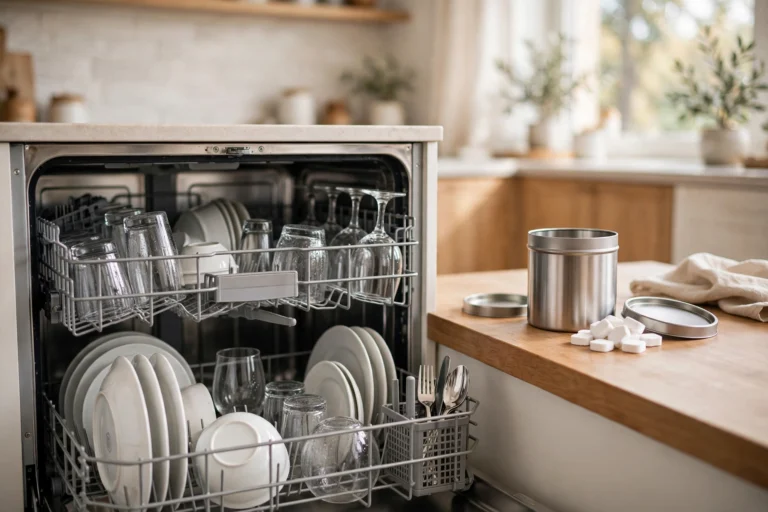
The Pyrex Simply Store 18-Piece Set is the boring, correct answer for most kitchens. Glass does not need a grease-proof coating, it reheats without the container joining the meal, and the set covers the sizes a family actually uses. The honest con is the lids: they are plastic, so let food cool a little before lidding and never microwave the lid.
If your leftovers travel, the Rubbermaid Brilliance Glass 18-Piece Set earns its keep with latching lids that seal properly. It costs more than a basic set, and the lids are plastic too, with the same cool-before-lidding rule. Our full comparison lives in the guide to the best glass food storage containers.
For covering and wrapping: beeswax and silicone
Bee’s Wrap Assorted 3-Pack wraps are cotton coated in beeswax, the old-fashioned grease barrier that predates PFAS coatings. They shine on cheese, produce and bowl tops. They are not for hot food or raw meat, they need a cool-water wash, and they wear out in about a year of steady use. That is a fair trade for a wrap with no forever-chemical coating.
For the freezer-bag job, the Stasher Stand-Up Mega Bag is platinum silicone, which is a different material family from plastic and carries no PFAS coating. We covered the honest silicone questions, including what the research does and does not show, in is silicone actually safe? The pinch seal takes a little practice, and silicone is not glass, but for a reusable freezer bag it is a solid step away from single-use plastic and coated paper. More options are in our plastic-free food storage guide.
When a disposable is the honest choice: unbleached paper
Sometimes paper is the right tool: lining a pan, or packing a school lunch you know will not come home. If You Care Parchment Baking Paper is unbleached and chlorine-free, and the brand states it is silicone-coated rather than coated with the chrome-based Quilon used on much conventional parchment. Read that honestly: silicone-coated is not coating-free, it is a different, better-documented coating choice, and the sheet is still a disposable.
If You Care Sandwich Bags are unbleached paper bags that get their grease resistance from the paper itself, with no wax treatment, according to the brand. They handle sandwiches, cookies and dry snacks well. They will not stand up to a very wet or greasy lunch for hours, and that limit is worth knowing before you pack a saucy one.
Frequently Asked Questions
Is PFAS in food packaging banned in the US?
No. There is no federal ban as of October 2026. The FDA ended PFAS grease-proofers on paper packaging through a voluntary phase-out (February 2024, with 35 authorizations declared no longer effective in January 2025), and 12 states have their own laws, but a nationwide ban would need the 2026 bill, or a future one, to pass.
What would the Keep Food Containers Safe from PFAS Act do?
Senate bill S.5516 and House bill H.R.9593 would ban food packaging with intentionally added PFAS in interstate commerce, applying beginning January 1, 2028. The Senate bill was introduced September 24, 2026 by Senators Hassan and Tuberville; the House bill was introduced in July 2026 by Representatives Dingell and Fitzpatrick.
Are microwave popcorn bags still made with PFAS?
Microwave popcorn bags were one of the FDA-named uses for PFAS grease-proofers, and that grease-proofer category is the one the FDA says is no longer sold into the US market as of February 2024. That covers the authorized grease-proofing use; it is not the same as a law banning every possible PFAS use in every bag.
What does intentionally added PFAS mean?
It means a manufacturer deliberately added PFAS to the packaging, usually for grease or water resistance. The 2026 bill uses that test. The EU limits, in force since August 12, 2026, are different: they cap total PFAS concentration (25 ppb individual, 250 ppb sum, 50 ppm including polymeric) whether it was added on purpose or not.
What is the easiest swap I can make today?
Move leftovers and reheating into glass. A set like the Pyrex Simply Store or Rubbermaid Brilliance Glass removes the container question from the hottest, greasiest meals, which is where coated packaging mattered most.
Sources: FDA, Authorized Uses of PFAS in Food Contact Applications, at fda.gov; Hassan press release, September 26, 2026, at hassan.senate.gov; Regulation (EU) 2025/40, Article 5(5), at eur-lex.europa.eu; Safer States PFAS state law tracker.
Get the Weekly Swaps
One short email a week: the newest microplastics studies in plain English, plus the swaps that are actually worth your money. Join free and we will send you our room-by-room microplastic checklist to get you started.
Get Our Free Room-by-Room Microplastic ChecklistJoin the newsletter and get the checklist free →
Browse Our Full Amazon StorefrontAll our glass storage and paper swap picks in one place →
Join Our Free Facebook GroupNon-Toxic Family Living: parents sharing swaps that work →
Add Us as a Preferred Source on GoogleOne tap, and our guides show up first in your Google results →