Fake Snow and Flocking Spray: What Is Actually in the Can (and on the Tree)
As an Amazon Associate I earn from qualifying purchases. This post contains affiliate links, which means I may earn a commission if you buy through them, at no extra cost to you.
Stand in the Christmas aisle in November and you will find three different products all promising you snow: a shaker can of powder that erupts into drifts when you add water, a bag of white fluff that gets glued onto tree branches, and an aerosol can that frosts windows and wreaths. They share a shelf and a name, “fake snow,” but they are three different chemistries with three different answers to the questions that matter: what is it made of, where does it go when January comes, and what is it doing in the air and dust of your living room in between? We read the safety data sheets and the manufacturers’ own pages to separate them. The short version: one of them is a plastic, one of them is mostly paper, and the aerosol can is the one we would skip outright.
The quick version: “Instant snow” powder is sodium polyacrylate, the same super-absorbent plastic polymer that fills diapers. Tree flocking powder is more surprising: it is mostly cellulose (paper pulp) fiber held on with a starch-based adhesive, so the honest objection is not the fiber, it is that a flocked tree can no longer be mulched or composted and goes to landfill instead. Aerosol snow spray is the harshest of the three: a solvent coating (one manufacturer’s data sheet lists acetone and xylene) pushed out by propane and butane propellants. Dried flocking is low in acute toxicity, and the snow look is easy to get from lights, batting and decor that never touch the tree. Details and sources are below.
Three Products, One Confusing Name
Quick decoder before we go deeper. Instant snow is a dry powder, sold for tabletops, village displays and sensory play, that swells into fluffy white drifts on contact with water. Flocking is a fiber coating applied to the tree itself, blown on by tree lots or sifted on at home from a bag, and it stays on the branches all season. Snow spray is an aerosol: a thin white coating for glass, wreaths and branch tips that goes on wet and dries fast.
Instant Snow: The Diaper Polymer in a Shaker Can
Instant snow is the easiest label of the three to decode, because the safety data sheet for the best-known classroom brand, Insta-Snow, says it plainly: the powder is made by cross-linking sodium polyacrylate, “the material that gives disposable diapers their super absorbent quality.” Sodium polyacrylate is a super-absorbent polymer, a synthetic plastic that soaks up astonishing amounts of water: the data sheet puts it at up to 500 times the powder’s own mass in pure water, as the tight coils of polymer unfold and trap the water in a gel. That gel is your snowdrift.
Here is the part where we stay honest, because the scare version of this story writes itself and it is not accurate. The same data sheet rates the material non-hazardous. It is not poison, and a kid who touches it is having a normal Tuesday. The cautions are about dust: do not inhale it, do not eat it, rinse skin, keep it out of eyes, the standard rules for any fine powder. Our objection is a materials objection, not a toxicity one. Real snow melts and becomes water. This does not melt, ever. It dries back into powder, gets vacuumed up and wiped off the village houses, and every gram of it is still sodium polyacrylate afterwards. Which is why sensible disposal is the trash can: not the sink, where a swelling gel has no business being, and not scattered over garden soil as if it were a soil amendment.
Get the Weekly Swaps
One short email a week: the newest microplastics studies in plain English, plus the swaps that are actually worth your money. Join free and we will send you our room-by-room microplastic checklist to get you started.
Get Our Free Room-by-Room Microplastic ChecklistJoin the newsletter and get the checklist free →
Tree Flocking: Mostly Paper, Glued On
Now the surprise. The white coating on a flocked tree is, in its classic form, mostly paper. Mental Floss asked Peak Seasons, the largest flock manufacturer in the US and Europe, what is in the recipe: paper pulp as the fiber, corn starch as the adhesive, and boron as a flame retardant. The raw material starts as a giant roll of paper fed into a grinder until it comes out as a powder like baby powder. The leading home brand, SnoFlock, describes its powder the same way: a cellulose fiber blend with a water-activated adhesive mixed in, non-toxic and resin free by the brand’s account. Colored flock is the exception that proves the fiber rule: bright colors use cotton fibers instead of paper, because cotton holds dye better.
So no, powder flocking is not shredded plastic, and we are not going to pretend otherwise. What it is, is a glued-on coating, and coatings come off. Every flocked-tree owner knows the drift of white flecks on the floor under the tree, in the vacuum, on small hands. The fiber itself is cellulose, but it spends December migrating from the branches into house dust and wash water, carrying its adhesive and flame retardant with it.
The aerosol can is a different story, and it is the version most worth avoiding. Read the safety data sheet for a typical snow spray (the Dutch manufacturer Kaemingk publishes theirs) and the ingredients run: acetone, n-butyl acetate, 2-methoxy-1-methylethyl acetate, ethanol, 2-propanol, titanium dioxide for the white, and xylene, pushed out by propane, butane and isobutane propellants. The hazard lines are not decorative: “Extremely flammable aerosol,” “Causes serious eye irritation,” “May cause drowsiness or dizziness,” and the European warning EUH211, “Spraying may produce hazardous respirable droplets. Do not breathe aerosol or mist.” The US EPA’s indoor air guidance makes the general point behind those labels: volatile organic compound levels climb sharply indoors while products like these are used, with short-term effects matching the can, irritated eyes, nose and throat, headaches and dizziness. A still December living room with the windows shut is the worst place to spray it.
One more flocking fact, because it decides the next section: most flocked trees people buy are artificial, which means a PVC plastic tree wearing the coating. We ran the numbers on the tree itself in our guide to real vs artificial Christmas trees.
Where It All Ends Up
Ask where fake snow goes in January and the honest map has three stops. Stop one is your floor: a month of shedding, swept and vacuumed into household trash and dust. Stop two is the drain: hands washed, trays rinsed, mop buckets emptied, carrying gel particles and flock fibers into wastewater. Treatment plants catch much of the solid material, but they were never designed with Christmas in mind. Stop three is the big one, and it is about the tree.
An unflocked real tree has a second life in most cities: chipped into mulch or composted, free, at the curb. A flocked real tree does not. Los Angeles sanitation says it outright: “‘flocked’ (snow-covered) trees and artificial trees cannot be recycled. Please cut these up and put them in your Black (trash) bin.” Houston’s tree recycling program refuses trees that are flocked, painted or artificial. Recology, which runs curbside composting across parts of the West, explains why: “Flocked trees are considered garbage, and are not accepted at tree recycling facilities,” because the flocking “can often contain non-compostable materials including adhesives, flame retardant, or additives.” Berkeley and Sacramento run the same rule. So the flocking decision is really a January decision: the coating that makes a tree look snowy for four weeks also converts it from a mulchable plant into landfill, permanently.
Put in proportion: flocking one real tree is not the biggest environmental choice of your year, and a pre-flocked artificial tree kept for a decade is a different ledger. But the recycling loss is total and certain, which is more than can be said for most worries here. It deserves to be the deciding factor for most people.
Kids and Pets: The Calm Version
The question every parent actually types into Google is whether the white stuff can hurt their toddler or their dog, so here is the calm, sourced version. Once flocking is dry, veterinary guidance is reassuring: eaten wet in quantity it may cause vomiting or diarrhea, but dried flock is not considered toxic, and pets rarely eat much of it because it does not taste like food. The bigger practical risk is boring: any bulky, fibrous material eaten in quantity can upset a stomach or, in a small animal, obstruct one, so a pet actively chewing branches needs a barrier or a different tree plan.
The animal-welfare organization FOUR PAWS adds a sharper warning for the spray version: pets like licking snow spray off window panes and branches, and they flag that as a poisoning risk, which matches the solvent list on the data sheet above. Our practical rules, all boring, all sufficient: apply any powder flock outdoors (SnoFlock’s own instructions say to work outside and recommend a dust mask, gloves and eye protection), keep kids and pets out until everything is dry, never spray aerosol snow in a closed room or anywhere a cat patrols the windowsill, and sweep up shed flecks as you go. If a pet eats a real quantity or seems unwell, that is a vet call, and the ASPCA Poison Control line, (888) 426-4435, is the specialist backup.
Join Our Free Facebook GroupNon-Toxic Family Living: parents sharing swaps that work →
The Snow Look Without the Coating
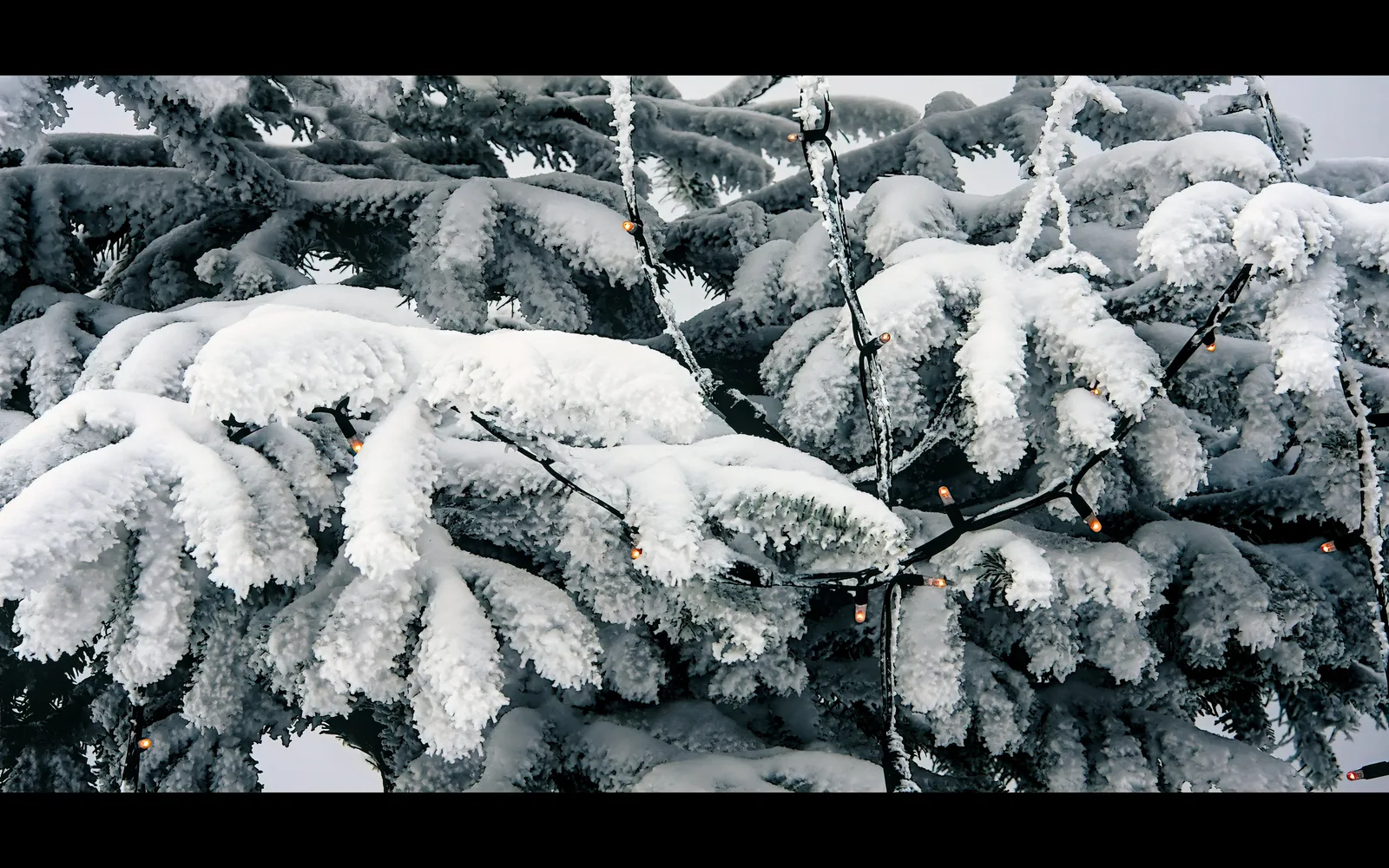
Most of what people love about a flocked tree is contrast: white against deep green, with warm light on it. You can keep all of that and lose the coating. An unflocked tree reads as winter the moment the lights go on; our safer Christmas lights and ornaments guide is built around exactly that look. Put the snow under the tree instead of on it: a cotton batting blanket unrolled as the tree skirt and village base gives you drifts where drifts actually sit, and it comes back out of the box next year instead of going to landfill. Paper snowflakes and the wood, wool and paper pieces in our plastic-free Christmas decorations guide finish the scene.
And if you have read all of this and still want a flocked tree, because it is beautiful and it is your grandmother’s look and once a year matters to you, then do it the lower-impact way: powder over aerosol, cellulose over solvent. The one product we would point you to is SnoFlock Premium Self-Adhesive Snow Flock Powder. It is the cellulose fiber blend described above, made in the USA by Seasons Reflection, with the adhesive already mixed in and activated by a spray bottle of water, so there are no propellants and no solvents involved in putting it on.
The honest cons, because there are three. First, it sheds, like all flocking, so the dust section above still applies. Second, it ends your real tree’s recyclability just the same; flock with it knowing January means the trash bin. Third, this premium version adds what the brand calls ShimmerSpec glitter crystals for sparkle, and we have a whole article on why we skip glitter, so know the shimmer is in there. What it does not have is the aerosol can’s solvent load, and on materials, paper fiber beats a propellant-driven coating every time.
Browse Our Full Amazon StorefrontOur Christmas picks that skip the spray can in one place →
Fake Snow Questions, Answered
Is Christmas tree flocking made of plastic? The powder usually is not. Classic and home flocking is cellulose (paper pulp) fiber with a starch-based adhesive and a boron flame retardant; colored versions use cotton fiber. The plastic in the picture is the aerosol spray’s synthetic coating and solvents, the PVC branches of most pre-flocked artificial trees, and instant snow powder, a true plastic polymer.
Can a flocked Christmas tree be recycled or composted? No. City programs across the US, including Los Angeles, Houston and Sacramento, refuse flocked trees for mulching and composting because the coating contaminates the stream. A flocked real tree goes in the trash. An unflocked tree can almost always be chipped for mulch instead.
Is instant snow the same thing as flocking? No. Instant snow is sodium polyacrylate, the super-absorbent polymer from diapers, sitting on surfaces as loose drifts for displays. Flocking is fiber glued onto the branches themselves. They share a name and a shelf, not a chemistry.
Is fake snow safe around toddlers and pets? Dried flocking is considered low in toxicity, and small tastes are a stomach-upset risk rather than a poisoning emergency. The real cautions are quantity (fibrous material can obstruct a small pet), wet product (keep everyone away during application), and aerosol sprays (solvents and propellants, and pets lick them off glass). When in doubt, call your vet or ASPCA Poison Control at (888) 426-4435.
What is the lowest-impact way to get the snowy look? Skip the coating: an unflocked tree, warm lights, and snow placed under the tree as cotton batting and paper decor. You keep the look, the tree keeps its January second life, and nothing gets sprayed into the room’s air.
Sources
Insta-Snow safety data sheet (Steve Spangler Science, via ASM International): instant snow polymer is cross-linked sodium polyacrylate, “the material that gives disposable diapers their super absorbent quality,” absorbing up to 500 times its mass in water; rated non-hazardous, with dust precautions. asminternational.org (PDF)
Fleet Science Center (2019). “Anatomy of Instant Snow”: sodium polyacrylate absorbs about 300 times its own weight in water. fleetscience.org
Mental Floss. “What Exactly Is Christmas Tree Flocking?”: Peak Seasons, the largest US and European flock manufacturer, uses paper pulp fiber, corn starch adhesive and boron flame retardant. mentalfloss.com
Kaemingk B.V. Snow spray safety data sheet (150 ml): ingredients include acetone, butyl acetate, 2-methoxy-1-methylethyl acetate, ethanol, 2-propanol, titanium dioxide and xylene, with propane, butane and isobutane propellants; hazards H222, H319, H336, EUH211. floristik24.ie (PDF)
US Environmental Protection Agency. “Technical Overview of Volatile Organic Compounds”: VOCs are emitted from household products including aerosols; indoor levels rise during use, with effects including irritation, headaches and dizziness. epa.gov
Los Angeles Sanitation and Environment. “Christmas Tree Recycling”: “flocked (snow-covered) trees and artificial trees cannot be recycled” and go in the black trash bin. sanitation.lacity.gov
Recology. Christmas tree collection FAQ: “Flocked trees are considered garbage, and are not accepted at tree recycling facilities,” because flocking can contain non-compostable adhesives, flame retardant and additives. recology.com
City of Houston Solid Waste Management Department (2025). Holiday tree recycling announcement: trees must not be “flocked, painted, or artificial” to be recycled. houstontx.gov
FOUR PAWS. “Christmas with Pets”: warns that pets lick snow spray off trees and window panes and flags it as a poisoning risk. fourpawsusa.org
SnoFlock (Seasons Reflection). Product information and Amazon listing: cellulose fiber blend with water-activated adhesive; brand states non-toxic and resin free; recommends applying outdoors with a dust mask, gloves and eye protection. amazon.com/dp/B0149OH4F6
Add Us as a Preferred Source on GoogleOne tap, and our guides show up first in your Google results →
Keep Reading
- Real vs. Artificial Christmas Tree: Which Is the Lower-Toxin Choice?
- Plastic-Free Christmas Decorations: Wood, Wool, Paper and Glass for the Whole House
- Safer Christmas Lights and Ornaments: Lead in Light Cords, and What to Buy Instead
- Glitter Is a Microplastic: The Christmas Sparkle Problem, Explained