Non-Toxic Paint: Zero-VOC Paints and Primers, and the Tinting Loophole Nobody Mentions
Disclosure: this post contains affiliate links. If you buy through them, we may earn a commission at no extra cost to you. That is how this site stays independent.
The can said zero VOC. So why did the room still smell like a chemistry set?
Here is the scene a lot of parents know. You research for a week. You pick the paint with the friendliest label in the store, the one that says zero VOC in big letters. You paint the nursery on Saturday, close the door feeling virtuous, and on Sunday morning you open it and get hit with that sharp, sweet paint smell anyway. Then the questions start. If it is zero, what are you smelling? Is the smell the dangerous part, or is the dangerous part the stuff you cannot smell at all? And did the tint you chose at the counter quietly undo the whole zero VOC promise before the can even left the store?
The short answer is that zero VOC is a real and useful standard, but it is a narrower promise than most people think. It describes the untinted base paint in the can, measured one specific way, under one specific set of rules. It does not automatically describe the tinted paint on your wall, the primer under it, the sealer over it, or the air in the room during the week the paint is curing. Once you understand exactly where the gaps are, paint shopping gets much simpler, because you stop hunting for a perfect can and start building a sensible system: the right base, the right colorant, the right primer, and a re-entry plan that respects cure time instead of just dry time.
There is also an angle almost no paint guide mentions, and it is the reason this topic belongs on a microplastics site. Most modern wall paint is acrylic latex, and acrylic is a plastic. A painted wall is, in a very literal sense, a thin plastic film spread over your drywall. That film is stable while it is intact, which is the good news. The plastic questions start at the edges: sanding old paint, scraping and flaking, washing brushes in the sink, and disposing of leftover paint. We will cover those honestly, without pretending that a milk paint made from casein and lime is the right answer for every wall in your house. It is not, and pretending otherwise helps nobody.
So what would we actually buy?
The verdict: for a normal bedroom, nursery, or living room painted through Amazon, start with PRESTIGE Paints Interior Paint and Primer in One. It is a 100 percent acrylic latex paint and primer in one gallon, listed at less than 5 grams per liter of VOCs before tinting, which is the threshold the industry uses for zero VOC. It comes in flat, eggshell, satin, and semi-gloss, in hundreds of colors, and it behaves like the mainstream paint a painter would expect, which matters more than people admit. If the truly natural route is the point of the project, skip ahead to the milk paints in the ranked section below. They are genuinely different products, with genuinely different trade-offs.
That verdict comes with one condition we will repeat until it sticks: order the lightest tint you can live with, or ask hard questions about the colorant. The base is only half the can. The colorant is the other half, and it is where zero VOC claims go to get complicated.
Get Our Free Room-by-Room Microplastic ChecklistJoin the newsletter and get the checklist free →
The full short list, up front
Every pick we recommend is in this section, each with its own box, so you do not have to read to the bottom to shop. The detailed evidence, the objections, and the buying plan follow after.
PRESTIGE Paints Interior Paint and Primer in One, 1 Gallon - best for most walls, most rooms, most people.
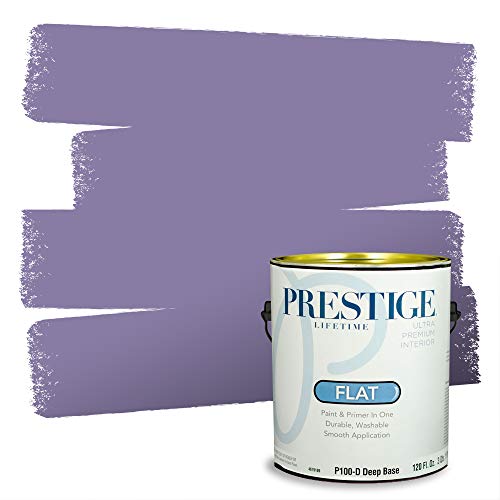
- Ultra Premium Paint and Primer In One - Formulated for Superior Hide and Coverage
- Smooth Application Ideal for Formal Living Rooms, Dining Rooms, Accent Walls, and Ceilings
- 100% Acrylic Latex Paint for Easy Soap and Water Clean-up
- Stain and Fade Resistant - Color Lasts Even When Exposed to Sunlight
- Low VOC: Less than 5 g/l prior to tinting

Glidden Total Interior Paint and Primer, 1 Gallon - best big brand budget gallon, with a colorant caveat printed on its own listing.
Real Milk Paint, 1 Pint - best true natural paint for furniture, cribs, and small wall projects.
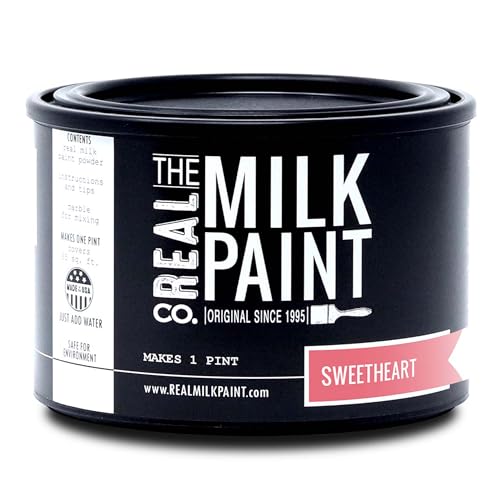
- MATTE FINISH PAINT- This Real Milk Paint has a beautiful matte finish in Sweetheart, a romantic color to reminisce. Our matte paint is easy to distress for an antique look. Dries fast as quick as 30 minutes to 4 hours depending on ambient temperature
- NO PRIMER NEEDED - Powder paint works on existing finishes for a peele, chippy or crackled surface. No primer is needed on raw wood and porous surfaces. Simply add our Ultra Bond to paint on latex
- MULTIPLE USES - Sticks to raw wood, plaster, drywall, stone, unsealed brick, and concrete. This organic paint is great for painting furniture and wooden home accessories. It is recommended to seal your project with a Real Milk Paint wax, oil, or finishes to complete your project
- EASY TO USE - Just add water for an instant weathered paint look for distressed DIY home furniture. The water-based formula is ultra-smooth and does not blob
- NO VOC PAINT- A distressed paint that’s fast drying, children safe, virtually odorless, and does not contain radioactive Kaolin Clays. Our paint formula is 100% organic
Old Fashioned Milk Paint, Gallon - best traditional milk paint in a full gallon size.
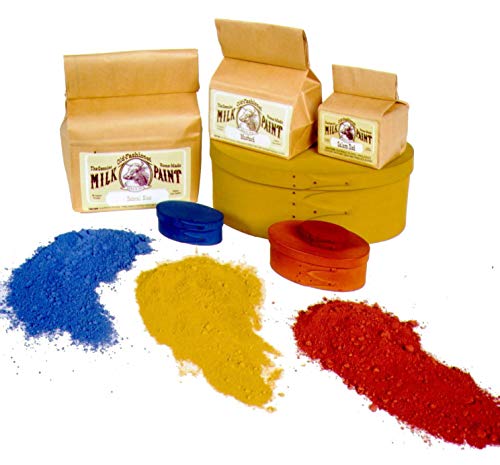
- TRUE MILK PAINT IN POWDER FORM: Made from milk protein (casein), lime, clay and earth pigments, like the paint found on early American and Shaker furniture. Mix with warm water and it is ready to brush on.
- AUTHENTIC MATTE FINISH: Dries to a flat, velvety finish with the natural color variation only real milk paint gives. Over old finishes it can chip or crackle for a genuinely timeworn look.
- MIX IT YOUR WAY: Mix it thin for a wash or stain, standard for full cover, or thick for texture. Blend the 32 colors, or add white to lighten and black to darken, for your own custom shades.
- COVERAGE: Pint (6 oz powder) covers about 36 sq ft, Quart (12 oz) about 72 sq ft, Gallon (48 oz) about 288 sq ft. Coverage varies with how thick you mix it, the number of coats and the surface.
- ZERO VOC, MADE IN THE USA: No added preservatives, USDA Certified Biobased, odorless once dry. Best on bare or porous wood; add Extra-Bond over finished surfaces and topcoat for water resistance. Made by The Old Fashioned Milk Paint Company since 1974.
Country Chic All-in-One Chalk Paint, Pint - best furniture and crib-adjacent pick, ultra low VOC including its pigments.
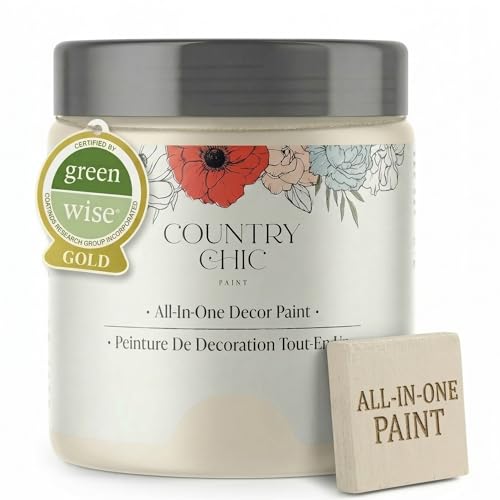
- All-in-One Formula: This furniture paint includes a built-in primer and top coat, providing seamless application on wood, metal, laminate, and more surfaces for a hassle-free painting experience.
- Durable & Long-Lasting: Backed by 80 years of experience, our paint delivers a tough, long-lasting finish with excellent adhesion. It provides vibrant, full coverage with minimal prep, ensuring a reliable surface that withstands everyday wear and tear.
- Quick-Drying, Chalky Matte Finish - Dries within 30 minutes to a chalky matte finish that’s easy to distress if desired, yet highly durable. The self-leveling formula ensures a flawlessly smooth finish, making it perfect for blending colors and achieving a custom look.
- Perfect for Furniture Transformations - Ideal for giving a fresh, new look to furniture, cabinets, upholstery, and creative crafts. Whether tackling large furniture pieces or small DIY projects, our paint delivers consistent, professional results every time.
- Eco-Friendly & Safe: Certified Green Wise Gold, no harsh chemicals such as phthalates, formaldehyde, heavy metals, or solvents; ultra-low VOC including pigments; low odor; certified safe as per European Toy Safety Standards
Beyond Paint All-in-One Refinishing Paint, Gallon - best for cabinets and furniture you do not want to sand or prime.
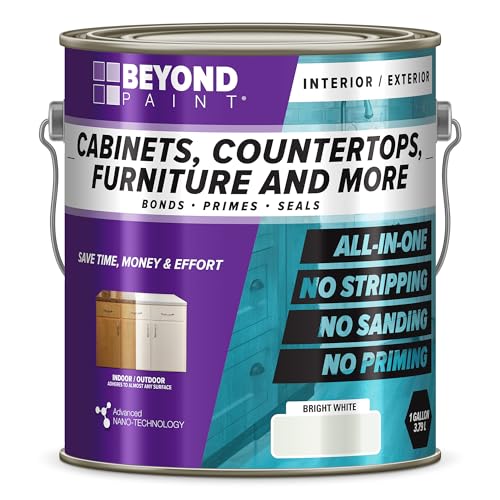
- Beyond Paint furniture, cabinets and more all-in-one refinishing paint -gallon- color: Bright white
- No stripping, no sanding and no priming needed
- Gallon covers 400 square feet
- Item Package Dimensions: 9.0" L x 9.0" W x 9.0" H
AFM Safecoat Hard Seal, 32 oz - best verified Amazon entry point from AFM Safecoat, the brand chemically sensitive households ask about most; this one is a sealer, not a wall paint, and we label it that way on purpose.
The one we would skip as a zero VOC pick: Rust-Oleum Chalked. It is a perfectly decent low odor furniture paint, and it is everywhere, but the brand does not claim zero VOC for it. If zero is your standard, a low odor claim is not the same thing, and we are not going to blur that line just because the can is easy to find. We name it here, deliberately unlinked as a pick, so you know we saw it and made a choice.
The DTC name you will see everywhere else: ECOS Paints, including its Lullaby nursery line, is the brand most competitor guides lead with, and its transparency is genuinely strong, with zero VOC colorants and chamber emissions testing. It sells direct from its own site, not through an Amazon listing we could verify, so it carries no Amazon box here. If you are buying direct anyway, it belongs on your list. We will not invent a listing link that does not exist.
Browse Our Full Amazon StorefrontAll our non-toxic paint picks in one place →
The case against our own verdict
A verdict that cannot survive its own objections is just an ad. Here are the strongest ones against the PRESTIGE pick, stated fairly.
Objection one: it is still an acrylic plastic paint
True, and we will not dress it up. A 100 percent acrylic latex paint dries into an acrylic polymer film. If your goal is a wall with no plastic in it at all, this pick fails your goal by definition, and the milk paints below are your real options, with all their limits. Our reasoning for still leading with it is practical: for large interior walls, durability, scrubbability, coverage, and availability decide whether a project actually gets finished, and an unfinished low tox project protects nobody. Choose your priority honestly and the right pick follows.
Objection two: less than 5 grams per liter is not zero
Also true, and worth understanding rather than fearing. Zero VOC in paint labeling means the product measures below 5 grams per liter, not that a laboratory found literally nothing. That threshold exists because trace amounts are functionally unavoidable and measurement has limits. The honest comparison is against the alternatives: federal limits allow 250 grams per liter for flat paint and 380 for non-flat, and California caps flat paint at 50. A base under 5 is not marketing fog. It is roughly one fiftieth of the federal flat limit. That is a real difference, stated in numbers instead of adjectives.
Objection three: the tint can undo it
This is the objection we take most seriously, because it is the one shoppers cannot see. Paint is tinted at the point of sale with colorant, and conventional universal colorants carry their own VOCs. Deep, saturated colors need more colorant, so a deep navy in a zero VOC base can end up carrying meaningfully more VOCs than a pale tint in the same base. Some brands solve this with zero VOC colorant systems. Many do not say. Our practical answer is in the buying plan: favor lighter tints for nurseries and bedrooms, and treat any brand that will not discuss its colorants as a brand that has answered you.
Objection four: paint and primer in one is a compromise
Fair. A combined product is convenient for previously painted walls in good condition, which is most repaint projects. It is not the right tool over bare drywall, stained wood, water damage, or old oil based paint, where a dedicated primer earns its keep. That is why primers get their own section below instead of a footnote. Convenience products are fine when you know exactly which job they are skipping.
Objection five: you cannot verify everything from a listing
Correct, and this applies to every pick in this article, not just the verdict. Listings change, variants differ, and a claim on one sheen or size does not automatically transfer to another. We verified each product above from a real Amazon listing we actually saw. Where a rating was not cleanly capturable, we simply did not quote one, in this article or anywhere else on this site. That restraint is deliberate. A guide that invents precision it does not have is worse than a guide that admits a gap.
What does zero VOC actually mean, in grams?
Zero VOC means the paint measures under 5 grams of volatile organic compounds per liter. Low VOC generally means 50 grams per liter or less for flat paint, and under 100 to 150 for non-flat finishes depending on the program. Those numbers come from Green Seal and California guidance, and California's CARB architectural coatings rule caps flat paint at 50 grams per liter and non-flat at 100. For scale, the US Environmental Protection Agency notes on its indoor air pages that indoor levels of many organic chemicals average two to five times higher than outdoor levels, and the EPA regulates VOCs largely because of their role in forming ground level ozone outdoors. That regulatory origin matters: a compound can be exempt from the legal VOC definition for smog purposes and still be something you would rather not breathe in a closed nursery. Legal VOC and biological effect are related questions. They are not the same question.
Why can a zero VOC room still smell?
Because smell, VOC content, and emissions are three different measurements. The grams per liter figure is a content measurement of the liquid in the can. What you breathe is an emissions measurement, what leaves the dried or drying film into the room air over days and weeks. Some ingredients that contribute odor and irritation are exempt solvents under the rules, meaning they do not count toward the headline number even though your nose finds them easily. Propylene glycol is the classic example, common in paint and personal care products alike. In Choi and colleagues, published in PLoS ONE in 2010, summed concentrations of propylene glycol and glycol ethers in preschool children's bedroom air were associated with higher odds of asthma, rhinitis, eczema, and IgE sensitization. That is an association in an observational study, not proof that a painted room causes asthma, and we present it that way. It is, however, a good reason to care about emissions and ventilation rather than only about the number printed on the can.
What did the paint and asthma study actually find?
In Saif and colleagues, published in the International Journal of Environmental Research and Public Health in 2021, researchers examined home paint exposure and asthma attacks in children. The adjusted odds ratio for an asthma attack in the paint exposed group was 10.49, which sounds alarming until you read the confidence interval, 1.16 to 94.85, which is very wide because the sample was small, at 163 children. A wide interval means the true effect could be modest or large; the study cannot tell you which. The authors themselves recommended zero VOC water based paint and avoiding exposure, which is a reasonable, low cost precaution. What the study does not do is prove that painting a room causes attacks, and any guide that quotes the 10.49 without the interval and the sample size is selling you a headline, not informing you. We would rather give you the whole picture and let the precaution speak for itself: ventilate, respect cure time, and keep sensitive kids out of fresh paint air. Those steps cost nothing.
Join Our Free Facebook GroupNon-Toxic Family Living: parents sharing swaps that work →
Is acrylic paint a microplastics problem?
Here is the honest version. An intact, cured acrylic paint film on an interior wall is not shedding clouds of particles into your living room. Paint becomes a particle issue at specific moments. Sanding old paint creates dust, which is why the lead section below matters so much in older homes. Scraping, peeling, and flaking exterior paint weathers into soil and stormwater. Washing brushes and rollers in the sink sends diluted acrylic solids toward wastewater treatment, which captures much but not all of that load. And leftover paint poured out or trashed badly is a disposal problem with a simple fix: most US states run PaintCare drop off programs that take leftover architectural paint for recycling or safe disposal, so there is rarely a good excuse for the drain or the landfill. Interior wall paint is not in the same league as tire wear or synthetic clothing as a microplastics source, and we will not pretend it is to make this article feel more dramatic. It is a modest, manageable route, and modest and manageable is exactly what a home project should be.
What about milk paint, the genuinely plastic free option?
Milk paint is one of the oldest paints humans have, made from casein, the protein in milk, plus hydrated lime, natural fillers, and iron oxide pigments. Real Milk Paint lists casein, hydrated lime, plant derived filler, iron oxides, and silica, arrives as a powder you mix with water, and carries no VOC claim problem because there is essentially nothing volatile in it to begin with. Old Fashioned Milk Paint works the same traditional way in a full gallon size. The trade-offs are real, so let us name them. Milk paint has a short working life once mixed, typically a day or so. It can look mottled on nonporous surfaces and often wants a bonding agent or a raw, porous surface to grip. It is not scrubbable the way an acrylic film is, and on a wall that gets wiped down weekly, that matters. Its natural home is furniture, cribs, cabinets, brick, plaster, and accent walls, where its flat, chalky, genuinely old looking finish is the whole point. A sealer over milk paint can reintroduce the very chemistry you were avoiding, so check the sealer as carefully as the paint. That is exactly why the AFM Safecoat Hard Seal above is in this article: AFM built its name on sealers and paints formulated for chemically sensitive people, with published ingredient lists, which is the standard every sealer should meet.
And chalk and mineral paints for furniture?
Country Chic All-in-One Chalk Paint makes the claim we wish every tinted paint made: ultra low VOC including its pigments, not just its base. Its listing also states no phthalates, no formaldehyde, no heavy metals, and no solvents, with Green Wise Gold and European Toy Safety certification, a built in primer and top coat, and a clay and mineral base. Toy safety certification is not a decorative badge for a crib or a toddler bed; it speaks directly to the mouthing question parents actually have. Beyond Paint All-in-One Refinishing Paint takes a different trade: it bonds, primes, and finishes in one product with no sanding or stripping, which is why cabinet painters love it, but its claim is a general non toxic positioning rather than a stated zero grams per liter figure, and its coverage runs lower, around 200 square feet per gallon, so a kitchen takes more paint than you might budget. Both are honest products. They are honest about different things, and your job is to match the claim to the project.
Primers: the layer everyone forgets to check
Queue entry for this article specified primers for a reason: a zero VOC topcoat over a conventional primer is a half finished job. Primer is also where the hard problems live. Bare drywall drinks paint unevenly without it. Water stains, tannin bleed from wood knots, smoke odor, and old oil based paint all need a primer chosen for that specific failure, and the strongest stain and odor blocking primers have historically been solvent heavy. The practical order of operations is this. First, ask whether you need a specialty primer at all; sound, previously painted walls in a repaint usually do not. Second, if you do, choose the water based, lowest VOC primer that is rated for your specific problem, and accept that a severe stain problem may justify one conventional primer coat sealed under two low emission topcoats, ventilated properly, rather than a failed zero VOC primer that lets the stain bleed through and gets painted over three more times. Third, never sand old paint of unknown age to prep it before you read the next section.
Stop: is your home older than 1978?
Then lead comes before VOCs, full stop. No competitor guide we benchmarked for this article mentioned this, which genuinely surprised us. Paint in pre-1978 US housing may contain lead, and sanding, scraping, or heat stripping it creates lead dust and chips that are a documented hazard, especially for young children. The EPA Renovation, Repair, and Painting rule requires certified firms and lead safe work practices for paid work in pre-1978 homes and child occupied facilities. Test before you disturb, do not dry sand suspect paint, and if a test is positive, treat the project as a lead project first and a color project second. A fresh coat of zero VOC paint encapsulating sound, intact old paint is generally a reasonable approach. A sander on flaking 1960s paint is not, no matter what paint goes on afterward.
Dry to touch is not cured, and a HEPA filter will not save you
Two practical facts that change how you schedule a nursery project. First, paint dries in hours but cures over days to weeks, and emissions fall along that curing curve, not along the dry to touch timeline on the can. Chamber testing programs such as the California Department of Public Health Standard Method, known as CDPH Section 01350, measure emissions at around 11 to 14 days for exactly this reason. GREENGUARD Gold certification, under UL 2818, chamber tests products for more than 360 individual VOCs, with a total VOC limit of 0.22 milligrams per cubic meter and a formaldehyde limit of 9 micrograms per cubic meter, and it was designed for schools, healthcare, and nurseries. If a paint carries GREENGUARD Gold for the exact product and sheen you are buying, that is emissions evidence, which is stronger than a content claim. Second, ventilation during and after painting does more than any gadget, and if you run an air purifier, know that a HEPA filter captures particles, not gases. VOCs need activated carbon, and a lot of it, to be adsorbed meaningfully. A small purifier with a thin carbon sheet is not a license to sleep in a freshly painted room on night one.
Sheen, coverage, and how much to actually buy
Flat hides wall flaws and suits ceilings and low traffic rooms. Eggshell and satin survive wiping and suit bedrooms, hallways, and nurseries. Semi-gloss handles moisture and trim and shows every dent you own. Coverage on most of these gallons runs 250 to 400 square feet per gallon per coat, and two coats is the honest plan for a color change, so a standard 12 by 12 foot bedroom with 8 foot ceilings is roughly 380 square feet of wall, or about two gallons for two coats with trim paint left over. Deep colors over a light base can take a third coat. Tinted paint is usually not returnable, which is the expensive version of the colorant lesson: buy the sample, paint a large swatch, and live with it through a full day of changing light before you commit to gallons.
If we were buying, this is the plan
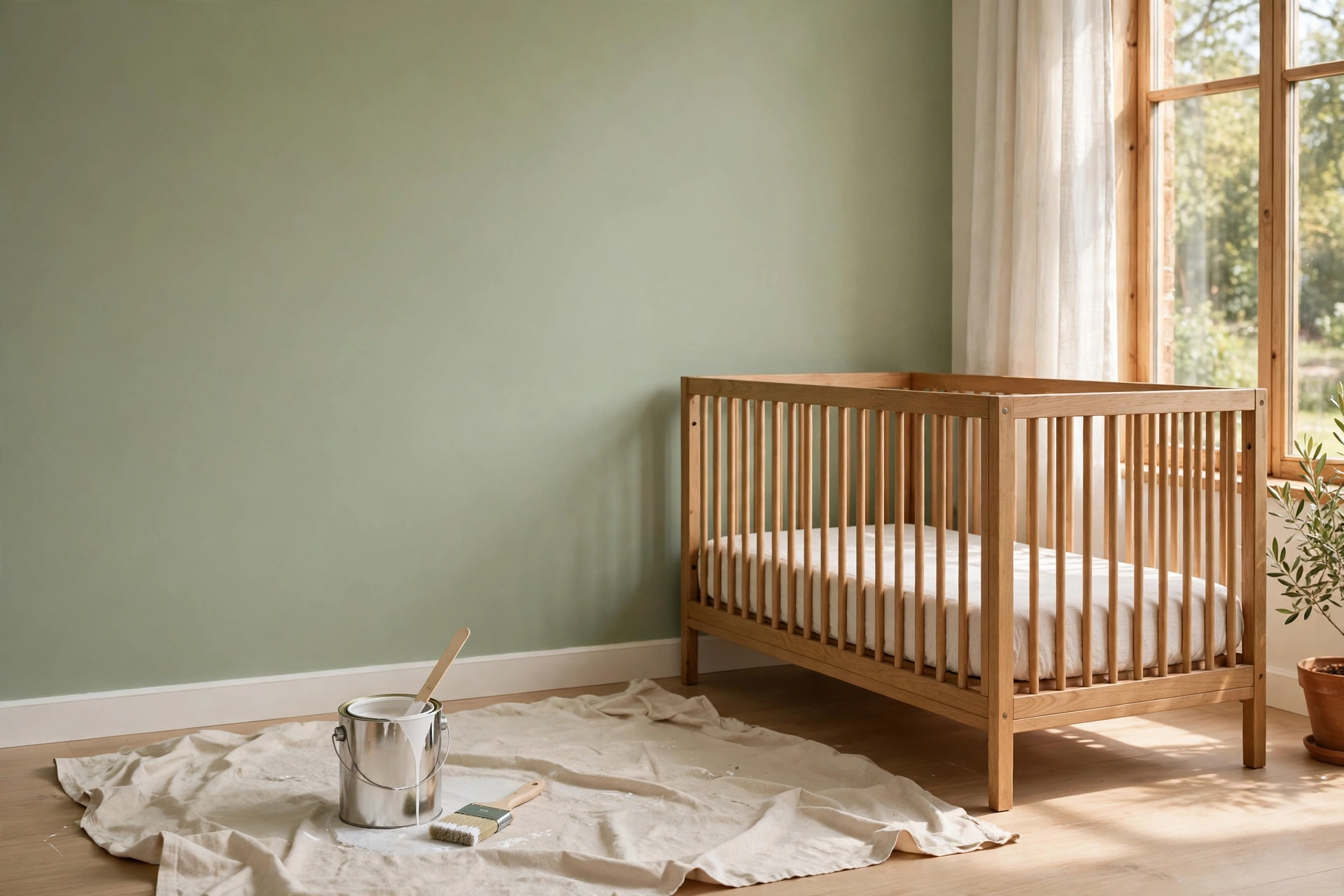
For a nursery or child's bedroom repaint: one to two gallons of PRESTIGE Paints Interior Paint and Primer in One in eggshell, in the lightest tint that still reads as the color you want, plus a dedicated low VOC primer only if the walls are bare, stained, or previously oil based. Paint at least two weeks before the room needs to be slept in if you can, ventilate during and for several days after, and keep the crib out until the cure window has passed and the smell is genuinely gone, not merely fainter.
For a crib, toddler bed, or dresser: Country Chic All-in-One Chalk Paint for a colored finish with its toy safety certification, or Real Milk Paint if you want the traditional, genuinely natural finish and accept its working style. For a whole furniture set or a gallon scale milk paint project, step up to Old Fashioned Milk Paint.
For kitchen cabinets you are not willing to sand: Beyond Paint All-in-One Refinishing Paint, budgeting for its lower coverage, and a sealer chosen with the same care as the paint if the surface will be scrubbed hard. Chemically sensitive household, or sealing in an older finish: look at AFM Safecoat Hard Seal and the wider AFM system on the brand's own site.
For a tight budget whole room: Glidden Total Interior Paint and Primer in a light color, having read its own colorant footnote and chosen accordingly. What we would skip spending on: premium priced tint in a deep color for a nursery, a specialty primer nobody diagnosed a need for, and any gadget sold as a substitute for an open window and a few patient days.
Add Us as a Preferred Source on GoogleOne tap, and our guides show up first in your Google results →
Rapid-fire answers
Is zero VOC paint actually zero?
No. It means under 5 grams per liter in the untinted base. That is still roughly one fiftieth of the federal limit for flat paint, so it is a meaningful standard, just not a literal zero.
Does tinting zero VOC paint add VOCs?
It can. Conventional colorants carry VOCs, and deep colors need more colorant. Brands with zero VOC colorant systems avoid this. Light tints minimize it. When a brand will not discuss its colorants, treat that silence as information.
How long should a baby stay out of a painted nursery?
Longer than the dry time. Ventilate well and allow at least several days, ideally one to two weeks of curing, before a baby sleeps in a freshly painted room. If it still smells like paint, it is still emitting.
Is milk paint safe for a crib?
Milk paint made from casein, lime, and mineral pigments has no VOCs to emit once dry, which is why it is a traditional crib finish. Check any sealer used over it separately, and look for toy safety certification on furniture paints, as Country Chic carries.
What is GREENGUARD Gold and does it matter?
It is a chamber emissions certification under UL 2818 covering more than 360 VOCs, with strict total VOC and formaldehyde limits, designed for schools and nurseries. It tests what a product emits, not just what it contains, which makes it stronger evidence than a content claim alone.
Can a HEPA air purifier remove paint fumes?
No. HEPA filters capture particles, not gases. VOCs require activated carbon in meaningful quantity. Ventilation with outside air is the most effective and cheapest tool you have.
Do I need a primer with zero VOC paint?
Only for a specific job: bare drywall, stains, tannin bleed, odor, or old oil based paint. Sound previously painted walls usually do not. Match the primer to the diagnosed problem rather than buying one by default.
Is acrylic paint a source of microplastics?
An intact cured film is not a meaningful indoor source. The particle moments are sanding, scraping, flaking exterior paint, washing tools in the sink, and poor disposal. Use PaintCare drop off for leftovers and never pour paint down a drain.
My home was built before 1978. What changes?
Everything about prep. Test for lead before sanding or scraping, follow lead safe practices, and treat a positive result as a lead project first. Painting over sound, intact old paint is a different matter from disturbing it.
Keep reading
Painting a room is usually one project inside a bigger one. Our guide to reducing microplastics at home, room by room puts paint in context, our roundup of the best non-toxic cleaning products covers what you will clean those walls with afterward, and our non-toxic baby clothes guide continues the nursery thread. If the crib itself is the next purchase, start with our mattress and nursery coverage linked from the home guide above.