Children’s Fall and Winter Clothing in Natural Fibers: Start With the Layer They Live In
Children’s Fall and Winter Clothing in Natural Fibers: Start With the Layer They Live In
Disclosure: this post contains affiliate links. If you buy through them, we may earn a commission at no extra cost to you. We never claim to have tested products in our own home unless we say so plainly, and we have not tested these clothes. What follows is a close read of the listings, the fiber contents, and the research.
Here is the scene nobody puts in a kids clothing guide. It is a school morning in November, it is dark outside, and your kid is standing in front of an open drawer wearing exactly one sock. Everything in that drawer is technically “warm.” Almost all of it is also plastic: the fleece pullover, the polyester leggings, the acrylic sweater with the cute bear on it. By February, that drawer will have been washed forty times, and every wash is where the plastic quietly leaves.
So the question for children’s fall winter clothing is not really “what is warm?” Plenty of things are warm. The question is: what is warm, survives a growth spurt and a mud puddle, and is not made of the fibers that shed the most in the wash? That list starts in a different place than most guides start. Not with the coat. With the layer against the skin.
The short answer: if you buy one thing, buy the merino base layer crew
The one pick is the Smartwool Kids Classic Thermal Merino Base Layer Crew. It is 100 percent merino wool in a 250 weight interlock knit, the warmest true base layer on this list, from the biggest name brand in kids merino, with flatlock seams so it does not rub under a sweater. A child wears this layer more hours than every other piece combined: under school clothes, under pajamas on cold nights, as a top on its own in October. Fix the layer they live in first, and the rest of the outfit gets easier to get right.
Get the Weekly Swaps
One short email a week: the newest microplastics studies in plain English, plus the swaps that are actually worth your money. Join free and we will send you our room-by-room microplastic checklist to get you started.
Get Our Free Room-by-Room Microplastic ChecklistJoin the newsletter and get the checklist free →
The case against it
A verdict you cannot argue with is just an ad, so here is the honest argument against building a kids winter wardrobe this way, taken seriously.
“Merino costs too much for a kid who outgrows it by March.” This is the strongest objection and it is partly right. A 100 percent merino crew costs several times what a polyester thermal costs. The answer is not to pretend otherwise. It is to buy merino only in the one or two pieces worn daily, size up so it spans two winters, and let it hand down: wool does not hold odor or fall apart in the wash. The rest of this outfit, the tees, cords and pajamas below, is organic cotton at ordinary prices.
“Wool is itchy. My kid will refuse it.” Some wool is. The base layers here are fine merino, the soft grade used for next-to-skin baby clothing, not sweater wool. But sensory kids are real, and a refused layer insulates nobody. If your child rejects texture, start with the organic cotton picks below and treat merino as a one-piece experiment.
“Wool needs special washing, and I do not have time.” Fair. Merino wants a gentle cycle and no tumble dryer, and a busy parent will eventually shrink one. What softens it: wool needs washing far less often because it resists odor in a way polyester does not, so the total laundry burden often evens out. But if your household runs everything on hot with a dryer, be honest with yourself and buy the cotton outfit.
“Natural fiber hats, gloves and socks for older kids barely exist.” True, and we are not hiding it. Below, the wool hat tops out around age five, the wool mittens are baby sizes, and even the best kids merino socks we could verify are half acrylic. We would rather show you that gap than quietly link an adult beanie or a synthetic ski glove and call it a kids pick, which is what a lot of roundups do.
“Is the shedding thing even proven?” The washing studies below measured polyester garments, and they measured fiber release, not harm to your child. Nothing here claims a fleece pullover hurts the kid wearing it. The claim is narrower: synthetic clothes shed plastic fibers into laundry water, and natural fibers break down in the environment in ways plastic fibers do not. If that trade matters to you, this outfit is how you act on it.
What actually sheds, in numbers
The direct answer: in lab washing studies, polyester garments release hundreds of thousands to millions of fibers per wash, and the release does not stop after the first few washes. De Falco and colleagues, in Scientific Reports in 2019, washed 100 percent polyester T-shirts and blouses under domestic conditions and found releases of about 641,000 to 1,500,000 fibers per kilogram of fabric in a single wash. Their earlier 2018 study in Environmental Pollution estimated that a typical 5 kilogram wash load of polyester fabrics could release over 6,000,000 microfibers.
The “it sheds less once it is old” comfort is not well supported either. Hernandez, Nowack and Mitrano, in Environmental Science and Technology in 2017, found that polyester microfiber release continued across successive washes rather than stopping. Kids clothing is washed more often than almost anything else a family owns. A polyester fleece washed weekly from October to April is not a one-time shedder. It is a subscription.
Wool and cotton are not zero-shed fibers, and we will not pretend they are. They shed too, especially cotton in its first washes. The difference is what the shed fiber is: a natural material that biodegrades, versus a plastic that persists. Same washing machine, very different ending.
The finish matters more than the fiber
Here is the study that changes how you should read a kids clothing label. Xia and colleagues, in Environmental Science and Technology in 2022, analyzed 72 children’s textile products sold as stain-resistant in the US and Canada, including school uniforms. PFAS, the forever chemicals used to make fabric repel stains and water, showed up across the products they carried into targeted analysis, at a median of 117 nanograms per gram. School uniforms carried significantly higher levels than bibs, hats or stroller covers.
The detail that matters for your shopping: the 100 percent cotton uniforms had higher PFAS levels than the synthetic ones. The problem was not the fiber. It was the treatment. A “stain-resistant” or “wrinkle-free” or “water-repellent” finish is the flag, whatever the fabric underneath it is. That is why every pick in this article is untreated natural fiber, and why the one water-resistant item, the leather boot in the ranked section, uses a PFC-free repellent and gets its synthetics disclosed in plain sight. When a kids listing leads with stain resistance, that is the one to skip, cotton or not.
Why wool earns its place on a kid who runs hot, then cold, then hot
The direct answer: merino regulates temperature in both directions and resists odor, which is exactly the profile of a school day. A child in a polyester base layer overheats on the bus, sweats, then chills in a drafty classroom, because polyester holds moisture against the skin. Merino absorbs moisture vapor into the fiber itself, releases heat as it does, and keeps insulating when damp. It is also why a merino layer can be worn several days between washes without smelling like it.
Weight is the decision that matters most. The verdict crew is a 250 weight, the warm midweight grade, right as the main cold-weather layer for most kids. Lighter merino bottoms suit kids who run hot. Fineness matters too: the softer base layers here use fine merino around 18.5 microns, the grade chosen for next-to-skin wear. If a listing states no weight and no micron count and just says “wool blend,” check the fiber line before you buy.
Sizing, growth spurts, and the hand-me-down math
The direct answer: buy the base layer one size up, buy outer layers true to size, and treat European sizing on the German-made picks as a height measurement, not an age. The Ecoable and Disana pieces are sized in centimeters of child height (EU 134/140 means a child roughly 134 to 140 cm tall), which is the more honest system once you learn it. A base layer bought big works as a long top this year and a true layer next year.
Growth is also the economic argument that makes this outfit cheaper than it looks. The pieces that get handed down are the wool and leather ones: a boiled wool jacket comes out of storage looking like clothing, while a polyester fleece comes out pilling. Cost per wear across two or three kids is where natural fibers quietly win, even when the first receipt is higher.
Join Our Free Facebook GroupNon-Toxic Family Living: parents sharing swaps that work →
If not this one, then which? The rest of the outfit, ranked
Everything below is ranked by how much wear it gets and how clean its fiber line is. Build from the top of this list down and stop when your budget says stop. The outfit still works.
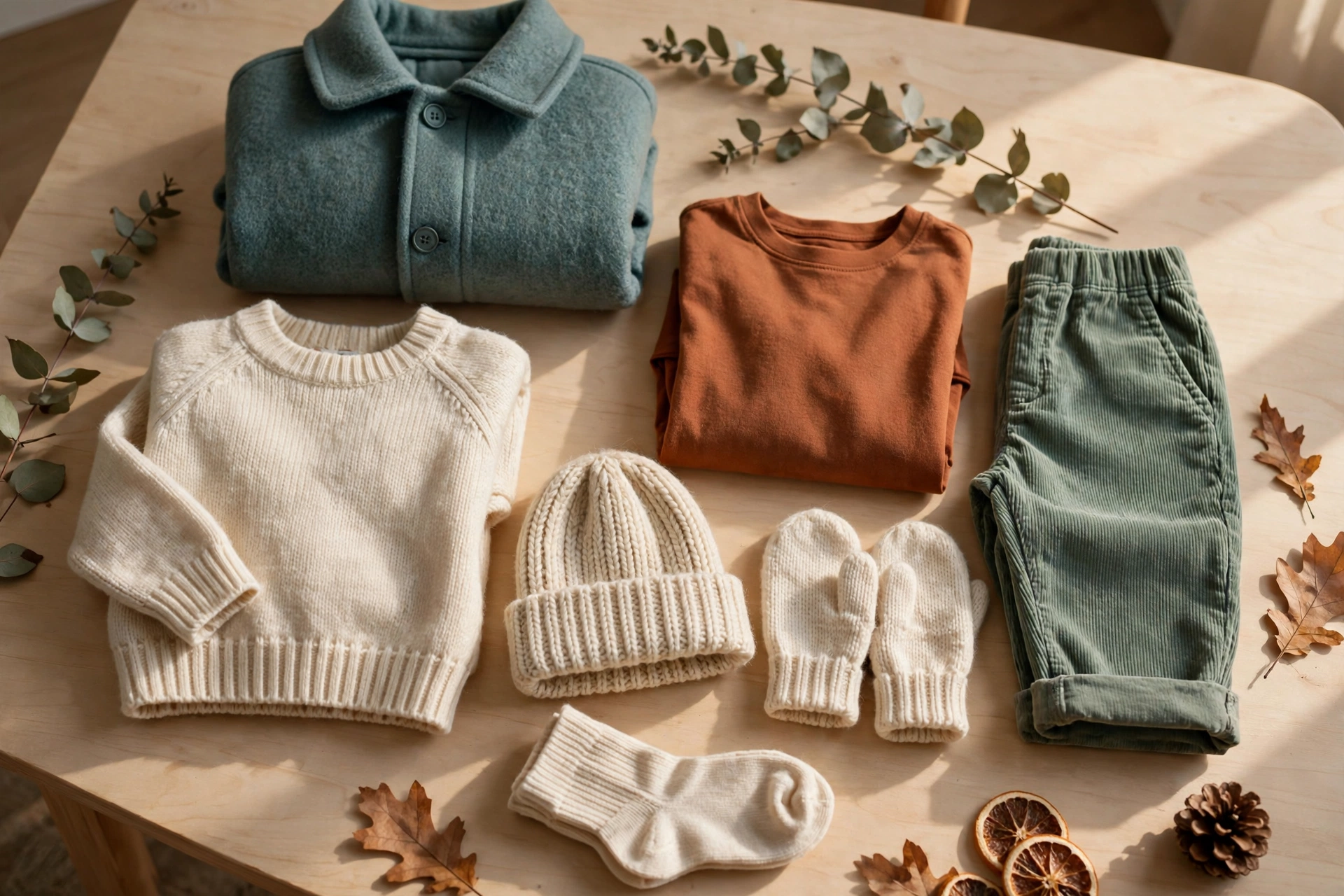
1. The rest of the base layer. Pair the verdict crew with the Ecoable Kids Merino Wool Leggings: 100 percent GOTS-certified organic merino, ribbed knit, made in Germany, the cleanest fiber line in this article. The Woolino Kids Merino Wool Leggings are the softer-feeling alternative, also 100 percent merino. If your kid runs hot, the MERIWOOL Kids Thermal Bottoms are the lightweight option in a fine 18.5 micron knit. Buy one bottom, not three: this is a layer, not a collection.
2. A second top, because laundry day exists. The Woolino Merino Wool Base Layer Top for Kids is 100 percent merino and OEKO-TEX Standard 100 certified, cut slim, and the better pick for younger kids. Honest con from the brand’s own reviewers: Woolino base layers run small, so size up. The value route is the LAPASA Kids Merino Wool Base Layer Top K13, also 100 percent merino per its listing, at the friendlier end of the price range. Read the LAPASA listing carefully at checkout: the same brand sells a mostly polyester kids thermal, and the K13 is the merino one.
3. The everyday cotton layer. Not every day needs wool. The Burt’s Bees Baby Shirt and Pant Set is 100 percent organic cotton, GOTS certified at the 95 to 100 percent organic content level, and it is the easy-wash backbone of the outfit. Its limit is size: the set tops out at 5T, so it serves the younger half of this age range. Older kids get the same job done with the sweater and cords below.
4. One real sweater. The Hope & Henry Organic Long Sleeve V-Neck Cricket Sweater is 100 percent organic cotton and GOTS certified, a proper knitted sweater rather than a printed sweatshirt. We could not verify a single kids wool sweater with a clean Amazon listing this season, which tells you something about the market, so the honest sweater pick is organic cotton knit. Check the size grid when you land on the listing: stock moves by size and color on this one.
5. Pants that are not leggings made of plastic. The Hope & Henry Organic Corduroy Pant is from the brand’s organic line and carries OEKO-TEX Standard 100 certification. Corduroy is the quiet winter winner for kids: cotton, warm for its weight, and tough at the knee. Worn over the merino leggings above, it handles genuinely cold days without a synthetic snow pant for everyday wear.
6. Head and hands, with the gap stated plainly. For toddlers and preschoolers, the Ecoable Kids Merino Wool Balaclava Hat and Neck Gaiter is the smartest design here: outer layer 100 percent organic merino, lining 100 percent organic cotton, covering ears and neck in one piece a small child cannot drop in a parking lot. Sizes top out around age five. The matching hands pick is the Ecoable Baby Thumbless Mittens in 100 percent organic merino fleece from Engel, on a string, in baby sizes. For a seven year old, we found no wool hat or mitten on Amazon we could verify this season. If you find the Disana boiled wool mittens through Ecoable’s own store, that is the big-kid answer.
7. Socks, where purity loses and we say so. The MERIWOOL Merino Wool Kids Hiking Socks are 50 percent merino and 50 percent acrylic. Half plastic, in an article about avoiding plastic, linked anyway, because socks are where the honest trade lives: pure wool socks wear through at the heel in weeks on an active kid, and every durable kids sock, including the famous wool hiking brands, leans on synthetic fiber for that reason. These at least put merino against the skin. Buy them with eyes open, or buy cotton socks and replace them. Pretending a 50 percent acrylic sock is plastic-free would not be defensible.
8. The outer layer. For the coat itself, our full guide to kids winter coats that do not shed plastic does the deep work, and its boiled wool pick carries into this outfit: the Disana boiled wool jacket sold by Ecoable, 100 percent organic boiled merino at a dense 420 weight, GOTS certified, made in Germany. Boiled wool is the traditional European answer to a kids winter coat: wind-resistant from the felting itself, no plastic membrane, no PFAS finish. It is the most expensive piece here and the most hand-downable.
9. Boots, leather first, synthetics disclosed. The KEEN Targhee 4 Low Waterproof Hiking Shoe for Kids uses waterproof leather from Leather Working Group certified tanneries and a PFC-free water repellent. It also uses performance mesh and a waterproof membrane, and both are synthetic. This is a leather-first boot, not a plastic-free boot, and for wet school days it is the realistic pick: full leather kids winter boots with verified listings were not there this season. In slush, this one wins on dry feet.
10. Sleep is a layer too. The Burt’s Bees Baby Pajamas, 2-Piece Long Sleeve Tee and Pant Set, is 100 percent cotton with GOTS certification at the 95 to 100 percent organic content level, snug-fitting as kids sleepwear safety rules intend, and sized from 12 months to 12 years, the one pick here that covers the whole age range. It replaces the polyester fleece pajama set, which is the single most common all-plastic garment in a kids drawer.
The ones we would skip. The polyester fleece pullover, in all its cute prints: the highest-shedding common kids garment in the washing literature, and the most likely to carry a stain-resistant finish. The acrylic “wool-look” sweater: plastic fiber wearing wool’s clothes, and it pills by Thanksgiving. And watch the name trap in base layers: a “merino blend” crew can be half recycled polyester under a nearly identical name to the 100 percent merino version. The fiber line, not the product name, is the truth.
Browse Our Full Amazon StorefrontAll our children’s clothing picks in one place →
What we would actually buy
The direct answer: one merino crew, one merino legging, one cotton set, one pair of cords, the pajamas, and then stop. For one child heading into winter: the Smartwool Kids Classic Thermal Merino Crew sized up, the Ecoable merino leggings, two Burt’s Bees cotton sets if your child is five or under (one on, one in the wash), the corduroy pants, and the pajamas. Add the balaclava if they are under six. Everything else in the ranked section is an upgrade, a second child, or a colder climate talking.
What we would skip spending on: a second merino top in a different brand (pick Woolino or LAPASA only if the Smartwool fit fails), premium socks (the honest sock is a compromise at any price), and any kids piece whose listing leads with stain resistance. Save the coat money for the coat: the boiled wool jacket is the one place the big spend keeps paying out across siblings.
Rapid-fire answers
What is the best natural fiber for kids winter base layers? Merino wool. It insulates when damp, regulates temperature in both directions, and resists odor, and the 100 percent merino picks above state their fiber content plainly on the listing.
Do natural fiber kids clothes shed microplastics? Wool and cotton shed fibers, but those fibers are natural materials that biodegrade. Plastic microfibers come from synthetic fabrics like polyester, acrylic and nylon, which is why the fiber line matters more than the shedding count alone.
Is a “merino blend” the same as 100 percent merino? No. Some well-known kids base layers sold as merino blends are half recycled polyester. Check the fiber percentages on the specific listing before buying, because the names are nearly identical.
Are stain-resistant kids clothes a problem? They are the flag to watch. Xia and colleagues (Environmental Science and Technology, 2022) found PFAS across stain-resistant children’s textiles including school uniforms, and the treatment, not the fiber, drove the levels. Untreated natural fiber is the safer default.
How do I wash merino kids clothes? Gentle cold cycle, mild detergent, lay flat or line dry, and wash less often than you wash cotton: merino resists odor, so most pieces need a wash after several wears, not after every one.
What about hats and gloves for older kids? Honestly, the Amazon selection is thin past age five or six, and we found no wool hat or mitten for older kids we could verify this season. The boiled wool lines sold through Ecoable’s own store are the place to look.
Where do I start if the full outfit is too much? With the verdict crew and the pajamas. Those two pieces cover the most hours of a child’s winter day and night, and both replace garments that are usually 100 percent polyester.
Add Us as a Preferred Source on GoogleOne tap, and our guides show up first in your Google results →
Keep Reading
Building the rest of a lower-plastic winter for your family? Start with our guide to kids winter coats that do not shed plastic, then the full merino base layers guide for the whole family. The matching adult outfits are in our men’s fall and winter clothing in natural fibers and women’s fall and winter clothing in natural fibers guides, the background is in fleece alternatives that do not shed plastic, and the sleep side of the drawer is covered in non-toxic kids bedding.